Research
Carleton University is recognized for its advanced research in the Department of Civil and Environmental Engineering, with expertise including structural, materials, and earthquake engineering; infrastructural protection and international security; fire safety; transportation engineering; geotechnical engineering; water resources and wastewater; air pollution; hydrogeology and waste management; and heritage and sustainable buildings.
Table of Contents
Labs and Facilities
- Advanced Geotechnical Research Laboratory
- Carleton Water Research and Microbiology
- Civil Engineering Structures Lab
- Computing Facilities
- Delta Controls Laboratory
- Environmental Engineering Laboratory
- Human-Building Interaction Laboratory
Organized Research Units
Collaborative research is conducted with other universities and research centres at the national and international levels. This cooperation includes institutions such as the University of Ottawa, The United Nations Educational, Scientific and Cultural Organization (UNESCO), the National Research Council of Canada, Department of Energy, Mines and Resources Canada, Public Works Canada, the Ministry of Transportation of Ontario, the University of Western Ontario, McGill University, and institutions in France (University of Grenoble), New Zealand (University of Auckland), Brazil and Egypt (Zagazig University).
A number of faculty members of diverse expertise but with common research interests have organized themselves into research units. Some of these units are listed below.

UNESCO Chair on Digital Twins for World Heritage Conservation
Hosted through the Carleton Immersive Media Studio at Carleton, the chair will be conducting research, collaboration, and dissemination activities through Carleton and the University of Azuay (Ecuador).
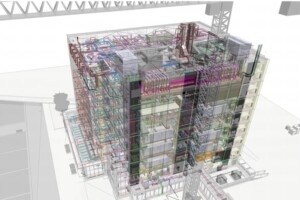
Building Performance Research Centre (BPRC)
BPRC seeks to advance the state of the art in building and community design and operations for low energy and greenhouse gas emissions, while improving comfort and usability.

Centre for Geosynthetics Research Information and Development (C-GRID)
C-GRID aims to train qualified engineers in geosynthetics design/applications and to provide the industry with a high-quality research facility & expert advice on geosynthetic materials & geosynthetic reinforced systems.
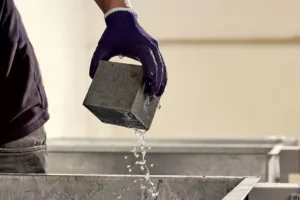
Centre of Excellence for High Performance Concrete
The centre combines the resources of seven university research groups, one of which is located at Carleton University, and two engineering firms to investigate and develop high-performance concrete and its applications.
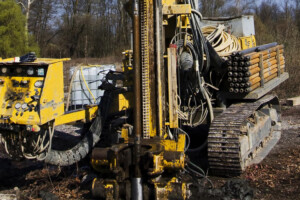
Geotechnical Engineering and Infrastructure Research Group (GEIRG)
The GEIRG leverages the expertise of a multidisciplinary team utilizing an integrated research framework that encompasses remote sensing, laboratory testing, physical modelling and numerical simulation tools.
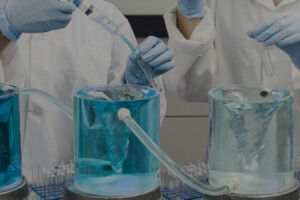
Global Water Institute
The Carleton Global Water Institute stands as a preeminent centre for advanced research and innovation in water treatment and management, addressing critical national and international water challenges.

Ottawa-Carleton Bridge Research Institute (OCBRI)
The primary functions of the OCBRI are: Coordinate and foster graduate study & research in the area of bridge engineering. To develop expertise and respond to industry’s research needs in the area of bridge engineering.

Transportation Research Centre
Tools to make roads, cars & drivers smarter through better planning, improved traffic control and safer vehicles are investigated, including building Intelligent Transportation Systems.
The Ottawa-Carleton Institute of Civil Engineering (OCICE) and Ottawa-Carleton Institute for Environmental Engineering (OCIENE) web pages include more information about joint graduate studies and research with our sister department at the University of Ottawa.
Library Resources

The focus of learning in any university is its library. At Carleton University, the MacOdrum Library houses more than a million volumes and almost a million other items that include an increasing collection of microfilms, archival material, maps, slides, and other items. The library also subscribes to a large number of national and international journals and periodicals and provides research support.
At the University of Ottawa, several specialized libraries exist, with a total collection of 1.4 million volumes and 3.4 million other documents and materials. The Vanier Library houses 167,000 volumes and 2,000 different periodicals on natural sciences and engineering. Students also have access to the humanities and social sciences, the health sciences, and the law libraries.
Additional library resources in the Ottawa region include The National Library of Canada, The Public Archives of Canada, National Science Library, the Library of Parliament and other specialized government libraries.