Research
Showcasing innovative faculty and student energy transition research that bridges technology, society, and policy.
Affiliated Researchers

Daniel Rosenbloom
- Assistant Professor and Rosamond Ivey Research Chair in Sustainability Transitions, Graduate Supervisor (Sustainable Energy), School of Public Policy and Administration – Governance of socio-technical transitions and net-zero pathways; climate policy and politics; Canadian energy political economy; science, technology, and innovation

James Meadowcroft
- Chancellor’s Professor, School of Public Policy and Administration – Low-carbon transition; environmental policy; sustainable development; energy policy; climate change; comparative environmental politics and policy

Alexandra Mallett
- Associate Professor, School of Public Policy and Administration – Sustainable energy and climate policy; emerging economies / developing countries; low carbon technology cooperation; innovation, science and technology policies

Stephan Schott
- Professor, School of Public Policy and Administration – Natural resource management; air quality control policy; northern development; common pool resources; experimental economics; energy policy and strategies

Kristen Schell
- Associate Professor, Canada Research Chair (Tier II) in Uncertainty Informed Net-Zero Energy System Modelling, Mechanical and Aerospace Engineering – Wind power modelling and forecasting; power systems planning for negative emissions; strategic behaviour in electricity markets; renewable energy policy design; design for adoption of adaptable, modular microgrids

Ahmed Abdulla
- Associate Professor, Mechanical and Aerospace Engineering – Energy system design for deep decarbonization; disruptive energy technologies; energy storage systems; advanced nuclear power; negative emissions technologies

Jean Duquette
- Associate Professor, Mechanical and Aerospace Engineering – Modelling and simulation of low energy buildings, and building-integrated sustainable energy systems; heat pump and refrigeration cycles (vapour compression, sorption, CO2); solar thermal energy; solar water purification; renewable energy integration in remote community energy systems; modelling and simulation of district heating and cooling networks; technical, economic, and policy aspects of emerging energy systems
Research Initiatives
CSERC features major research initiatives that generate actionable insights for accelerating energy transitions.

Alternative Pathways for the Energy Transition (APEX)
Alternative Pathways for the Energy Transition (APEX) is an interdisciplinary engineering group dedicated to advancing deep decarbonization in Canada and globally.

Bending the Curve with NETS
Bending the Curve with NETs addresses unrealistic NETs scaling and works to better integrate CO₂-removal technologies to meet climate goals.

Solar-Driven Adsorption Energy Storage for Northern Communities (SATES)
SATES develops solar-driven adsorption thermal storage as a clean, reliable, low-cost heating option for Northern communities.

Sustainability Transitions Research Network (STRN)
In December 2025, Carleton University became the first North American institutional member of the Sustainability Transitions Research Network, enhancing its global role in sustainability and transition research.
Recent News

Alexandra Mallett on CTV News: Hottest Decade on Record
The Carleton Sustainable Energy Research Centre is pleased to highlight a recent CTV feature with Alexandra Mallett, whose expertise continues to shape public conversations on Canada’s …

Carleton Students Compete at OEB’s Inaugural Energython
Carleton sustainable energy students showcased their expertise at the Ontario Energy Board’s inaugural Energython case competition held in Toronto on January 30, 2026. Representing Carleton …

Carleton’s Climate Leadership Recognized by Energy Modelling Hub
The partnership was announced today by Carleton Provost Pauline Rankin at the Energy Modelling Hub Annual Forum, entitled Navigating Uncertainties, Powering a stronger Canada. “We are thrilled to …
Challenges to energy transition in the global south: A review of the evidence–ranking and proposed solutions
Co Authored: Anthony Afful-Dadzie, Stephen Kobby Mensah, Alexandra Mallett Summary: An important cornerstone of energy transition, increasing renewable energy adoption, has never become more apparent given growing environmental stressors such …

Carleton University Becomes First North American Institutional Member of Global Sustainability Transitions Research Network
Carleton University has become the first North American institutional member of the Sustainability Transitions Research Network (STRN), the international network of scholars and practitioners studying and working …
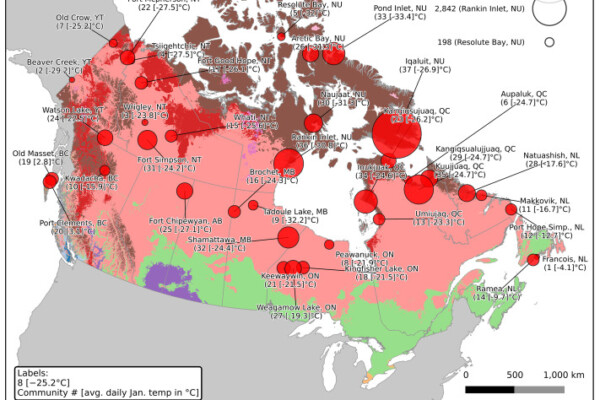
Hydrogen microgrids in the North
Most remote and northern communities in Canada rely on diesel for their electrical and thermal energy needs. Communities and governments are working toward diesel exit …