Critical Conversation™ on Canada’s supply chains
On nearly every measure of international competitiveness Canada is declining (e.g., GDP per capita, logistics performance index, trade and transportation infrastructure). Much of this comes from underperforming supply chains. Our transportation productivity has been flat since 2011, after two decades of continuous improvement following deregulation. With each passing year, the problem has become more pressing. The recently-announced goal of the federal government to double Canada’s non-U.S. exports in a decade makes improving the performance of Canada’s supply chains even more urgent.
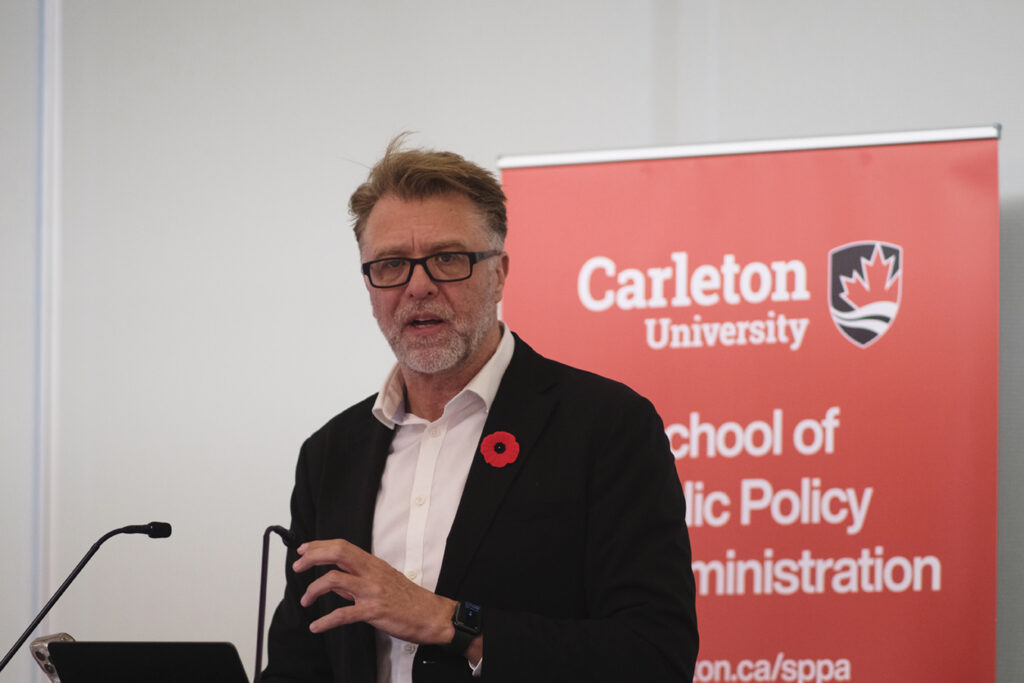
On November 5th, the Transportation Policy Innovation Centre (TPIC) hosted, with the assistance of the Chartered Institute of Logistics and Transportation – North America, a Critical Conversation™ event entitled “Moving Canada’s Transportation Policy into the 21st Century”. This event aimed to build industry consensus for a contemporary premise of transport policy that enables speed and throughput as a primary objective, and relies on principles of system dynamics to achieve it.

Close to 30 senior executives from private sector organizations across Canada gathered in Richcraft Hall to learn about the Theory of Constraints (ToC) from Dr. Alan Barnard, a top international expert in this area. After listening to the introductory remarks of the Dean of the FPGA, Dr. Brenda O’Neill, and a call to action from the Honourable Lisa Raitt, former federal minister and current co-chair of the Coalition for a Better Future, participants applied the ToC to real-life situations affecting the performance of Canada’s supply chains. A what-we-heard report will be presented to Transport Canada with recommendations for changes to public policy.