Politics Isn’t Neutral: How Race and Gender Shape Power in Canada
Field Notes
Erin Tolley, Political Science
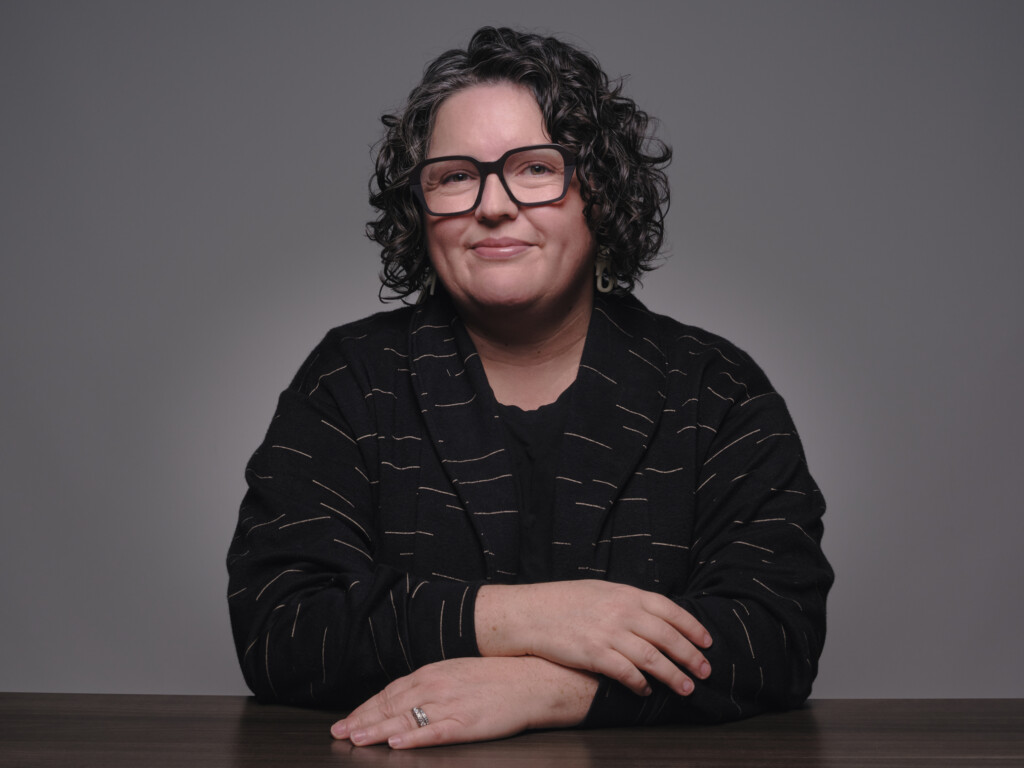
Professor Erin Tolley studies how race and gender shape who runs for office, who gets elected, and how power works in Canada. Her research challenges myths about representation and tackles urgent issues like the harassment of municipal leaders, helping build a more inclusive understanding of Canadian politics.
What are you working on these days?
Broadly, my research looks at how race and gender shape politics in Canada. This includes work that focuses on why women and racialized minorities run for office, the experiences they have once they get there, and how race and gender shape the ways Canadians think about political representation. I also spend a lot of time thinking about how to better study these questions and whether there are ways to improve our methodological toolkit.
What piqued your interest in the relationship between socio-demographic diversity and political representation in Canada?
For me, there wasn’t a clear a-ha moment where suddenly I knew what I was meant to do. However, looking back, I can see where some of the seeds were planted. I grew up in Saskatchewan in the 1990s when the country was embroiled in a series of constitutional crises, so politics was sort of all around me at that time. I went to university with the intention of becoming a journalist and, as part of that training, I was required to take a political science course, something I wasn’t particularly enthusiastic about. But that course made me realize that politics isn’t just something people read about in the newspaper or argue about around the dinner table: politics is about how we live and get along as a community. So that was a turning point. I then started to think about who gets to make those decisions, whether that power is equitably distributed, and how identities like race and gender might be part of the explanation.
What is a question you hope to answer with your research?
Introductory political science courses often tell students that politics is about “who gets what, when, and how,” which comes from the title of a book published in the 1930s. Nearly 100 years later, those questions all remain relevant. I hope that my research helps people understand that politics is not a neutral, disembodied space. Answers to questions about the distribution of power can’t be divorced from identity. As I tell my students, no one talks about the “mothers” of Confederation because they weren’t allowed at the decision-making table; that exclusion, and others, is infused into Canada’s institutional DNA. My research asks how these legacies continue to shape political behaviour, representation and outcomes today.
What is something people would be surprised to learn?
Almost 15 years ago, I published a paper called, “Do Women Do Better in Municipal Politics?” It countered the conventional (and somewhat stereotypical) wisdom that women will find greater electoral success in local politics, which is often viewed as kinder, gentler, and closer to so-called women’s interests. Although that belief was widespread, I showed there was little evidence for it: women’s electoral success was approximately the same at the federal, provincial and municipal levels in Canada, a conclusion that remains true today. Even so, the conventional wisdom persists, so people are often surprised to learn it’s not the case.
What’s the biggest misconception about your research area?
There are two misconceptions that I encounter fairly frequently. The first is that research incorporating attention to race and gender is “niche” and therefore less important than research on, say, national security or foreign policy. The reason this is a misconception is that race and gender absolutely shape how decisions about those areas are made, who makes them, and how they are received by the public. If we think that identity is somehow apolitical or pre-political or not political science, we aren’t fully understanding the world around us, and our conclusions will be flawed.
The second misconception is that only quantitative or statistical approaches to the study of politics are rigorous or sophisticated and that qualitative approaches are somehow “easier” and more “biased.” As someone who uses both types of methods, I find this viewpoint so limited and damaging. The political world is enormously complicated: people are unpredictable, they exist in uncontrolled environments, and they don’t always tell us the truth! So we need to study political problems using a variety of approaches. That’s the only way we’re going to get to rich, nuanced explanations that we are confident are leading us in the right direction.
Any new projects you’re excited about?
The last time I counted, I had more than a dozen different papers and projects on the go, so it’s hard to pick just one. But one that I am particularly focused on right now looks at the harassment of elected officials in Canadian municipalities. This study is part of the Canadian Municipal Barometer, which is funded by the Social Sciences and Humanities Research Council of Canada. Every year, our research team is surveying mayors and councillors across the country, so we now have a lot of new insights on their experiences, including differences related to their gender, race, and other factors. Municipal associations across the country have recently characterized harassment as a “serious problem” that has “reached crisis levels,” and our research will help address this issue.
What’s your favourite class to teach?
I have been lucky to always teach classes in areas that interest me, which means I’ve never had to slog through anything I really didn’t like. For the past few years, I’ve taught PSCI 4506, which focuses on Women, Power and Political Representation, which gives me an opportunity to read and discuss research directly related to my own interests. How lucky is that? Getting paid to do things you would want to do anyway! The other part of teaching that I value is the mentorship I get to engage in with students in my Gender, Race, and Inclusive Politics Lab. We write together collectively, and we meet regularly to talk about research and academic life. I love this kind of community-building, and it’s central to how I see my role as a researcher and teacher.