Power, Precedent, and the Commander-in-Chief
Field Notes
Philippe Lagassé, The Norman Paterson School of International Affairs
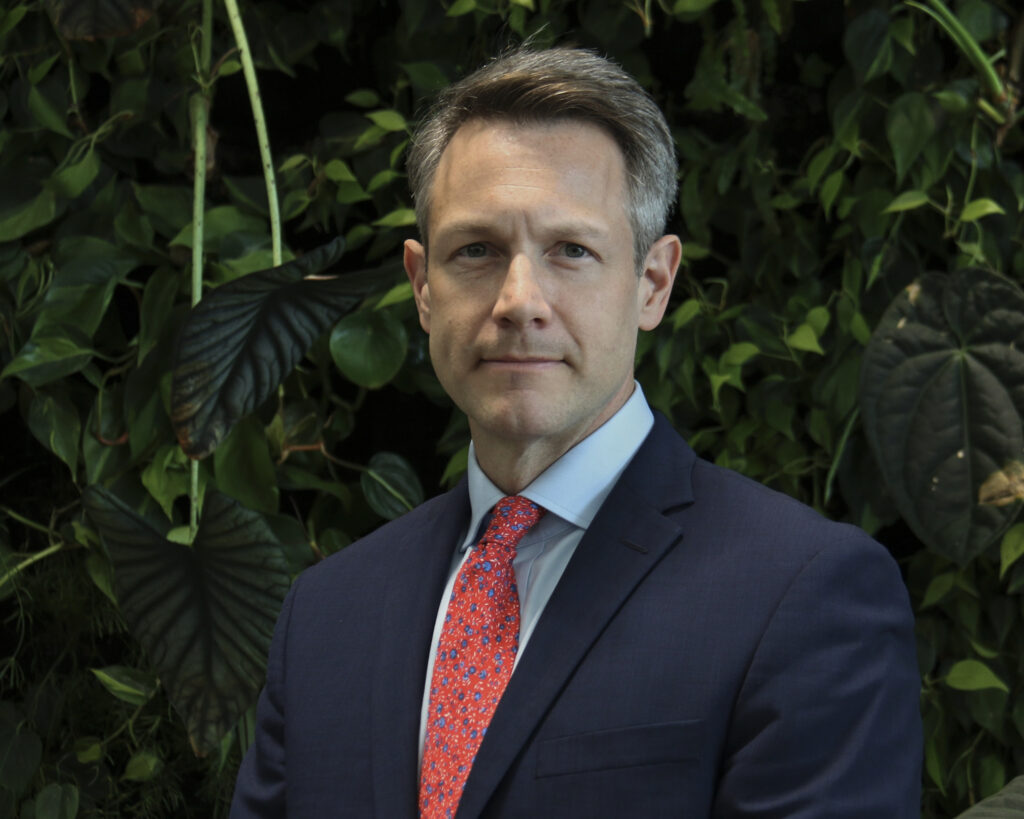
At a moment when executive authority is under renewed scrutiny, Philippe Lagassé is tracing the roots and limits of supreme military command. His work connects centuries-old constitutional ideas to modern debates on defence spending, procurement, and democratic accountability.
What are you focused on these days?
My academic research is focused on the history of supreme military command authority and contemporary powers of Commanders-in-Chief in liberal democracies. This is part of a new Insight Grant from the Social Sciences and Humanities Research Council. I’m leading a multidisciplinary team of political scientists, legal scholars, and historians examining how supreme military command authority has evolved over time and what powers are considered inherent in the office of Commanders-in-Chief today.
In addition to my academic work, I write two newsletters, one on Canadian defence policy and procurement, called Debating Canadian Defence, and the other on the Westminster system, called In Defence of Westminster. The newsletters are more targeted at practitioners and focused on contributing to public debate.
Why is this work important right now?
As we’re seeing with the second Trump presidency, the powers of Commanders-in-Chief are considerable. Chief executives are expected to use these powers, and the discretion they provide, to protect national security. But these powers can also be abused. Our project on Commanders-in-Chief became especially important after the Supreme Court of the United States ruled that a President enjoys immunity when acting in their official capacity. Since the Commander-in-Chief is an official capacity, the stakes involved with uses and abuses of these powers became even greater.
I use my Debating Canadian Defence newsletter to critically analyse, and offer sardonic takes on, defence policy and procurement at a time when these issues are becoming increasingly important in Canada. Prime Minister Carney has outlined a significant increase in defence spending and the government is looking to speed up the acquisition of military capabilities, notably through the establishment of a Defence Investment Agency. Canada is also increasing military spending by tens of billions. My aim is to put these developments in context and make sure that readers appreciate some of the trade-offs Canada is facing.
What is a question you hope to answer with your research?
Our project on supreme military command authority aims to understand what powers are inherent in offices of Commander-in-Chief and similar positions in liberal democracies today. To do that, we’re going all the way back to the Roman Republic to look at the original concept of supreme command authority, imperium, and tracing how it evolved over time until the present. We want to see how these authorities have expanded or contracted, and we want to compare how the powers of Commanders-in-Chief vary between countries. Basically, we want to know what powers are viewed as essential to these offices and under what conditions they are allowed to act independently of legislatures and with deference from the courts. We want to understand the boundaries that Commanders-in-Chief should operate under in liberal democracies today.
On the defence procurement side, I’m aiming to inform people about why it’s so hard to buy military capabilities, even when there’s a push to simplify processes. I also try to show why it will be hard for Canada to distance itself from the United States militarily, and what it will actually take to build up a vibrant defence industrial base.
What is something people would be surprised to learn?
I’ve been asked how I came to research two fairly distinct subjects, defence policy and constitutional studies. I originally began working on the Westminster system as part of a project on Canadian civil-military relations. I saw that one could only understand the constitutional and legal frameworks behind Canadian civil-military relations by studying the Crown, Cabinet, and Parliament. My current research on supreme military command authority extends that thinking to liberal democratic regimes beyond those that are part of the Westminster system. The project is animated by the idea that military and political authorities are closely connected and that we can understand a lot about constitutional systems by studying how they empower and constrain the use of armed force.
What’s the biggest misconception about your research area?
Studying defence policy and procurement doesn’t necessarily involve focusing on specific military capabilities or equipment. Defence policy and procurement are more about public administration and governance than military operations and tactics. It’s not that different from studying, say, health policy. Those who research health policy aren’t focused on medicine per se. Like students of defence policy and procurement, they’re often more focused on things like process and organizational structures.
Any new projects you’re excited about?
Right now, I’m excited about a book I’m co-authoring with Emmett Macfarlane from University of Waterloo on Canada’s unwritten constitution. We’re nearly done and the book feels like the culmination of many years of research on the subject for me.
What’s your favourite class to teach?
My class on Canadian government is definitely my favourite. I love discussing the finer points of our system of government and why it matters for students who are embarking on careers in the public service.