Professor Enriches Classroom Negotiations Using Artificial Intelligence
By Karen Kelly
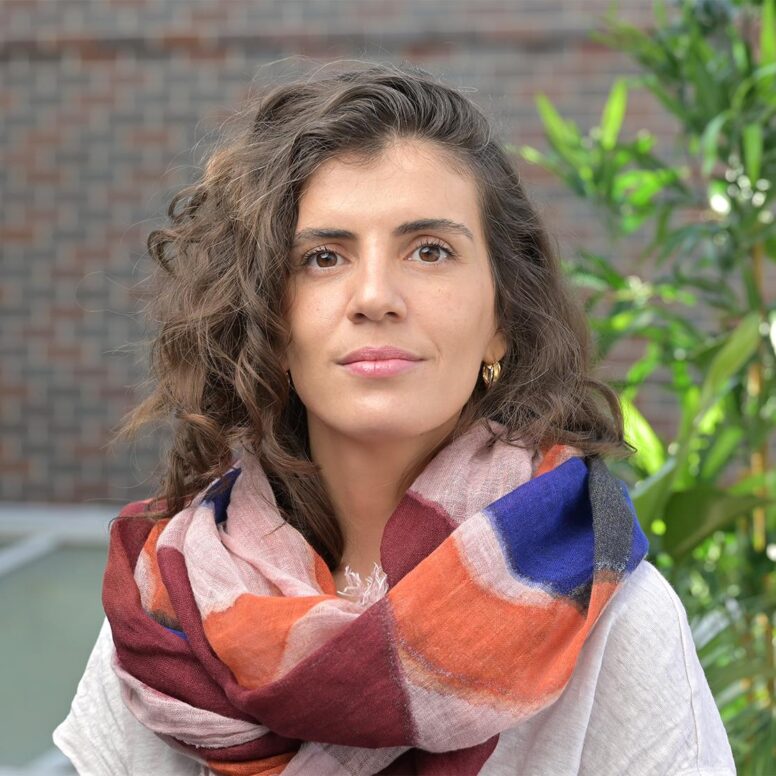
In her graduate course Global Social Policy in the Norman Paterson School of International Affairs, Professor Lama Mourad offers a hands-on experience in international negotiation on an issue of global importance to social policy.
Traditionally, this involved sending students off with an assigned role to do some research and then return with talking points that formed the basis of their negotiations with their peers. But there was something missing in that approach.
“It’s relatively static: the information they come in with is the information that they have,” she explains. “I started thinking about how I could integrate AI into the classroom so there would be ongoing learning and feedback throughout the simulation process.”
She created Protocol 97, a diplomatic simulation platform that immersed students in the 1997 Ottawa Treaty negotiations, which produced a ban on anti-personnel landmines.
The platform includes different stakeholders (some human, some AI-generated), rapid scenario testing, counter-argument generation, and reflective prompts—all supported by the artificial intelligence model Claude.
Mourad’s AI-assisted simulation earned her a 2025-26 Future Learning Innovation Fellowship from Carleton’s Teaching and Learning Services. The fellowship supports instructors who are “advancing innovative teaching and learning practices.”
After piloting the simulation last summer, Mourad was encouraged by the student feedback.
“Students in the summer pilot unanimously felt that it improved their understanding of the Ottawa Treaty. I think one of the things that was really interesting is that a lot of them really felt that the AI sped up the pace of negotiation and forced them to adapt to shifting positions much more quickly,” explains Mourad, who created a new simulation for the winter term. “Many of them highlighted that it felt more like real world negotiations. I also believe it helped them understand more clearly the positions of other stakeholders, including those not formally presented by groups in the classroom.”
Mourad has been an early adopter of artificial intelligence in the classroom, and she encourages her colleagues to consider it, as well.
“I believe that AI fluency is increasingly going to be an expectation of students in the workplace in different contexts, but also I think it’s really important for students to have a greater sense of both the limitations and strengths of these tools,” she explains. “We don’t want them leaving university without a sense of their own thoughts and grounded knowledge around this new technology, rather than blind trust or just a generalized fear.”