Learning About Oneself While Learning About the World
By Karen Kelly
As the eldest daughter in a Bangladeshi family, Sal-Sabila was hesitant to leave Toronto’s Regent Park neighbourhood, where she had lived since arriving in Canada at age 10. Moving to Ottawa meant leaving behind her family, familiar places, and the community that had shaped her.
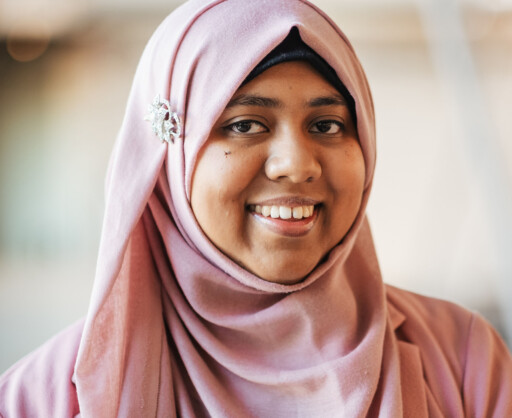
“Toronto is home. This is where my family is and it’s where I started my community work,” explained Sal-Sabila, who founded a grassroots organization that engages racialized youth in exploring issues affecting their communities, developing projects and sharing their experiences through research and advocacy.
“Moving to Ottawa meant so much more than just an academic decision. It was about reshaping what my community work would look like, what my support system would look like.”
Sal-Sabila, who is reclaiming her identity by choosing to use the single name she was given at birth, was ready for a new academic experience. After earning a B.A. in Sociology with minors in Diaspora and Transnational Studies and Equity Studies from the University of Toronto, she applied to both the Master of Social Work and the M.A., Migration and Diaspora Studies (MDS) at Carleton.
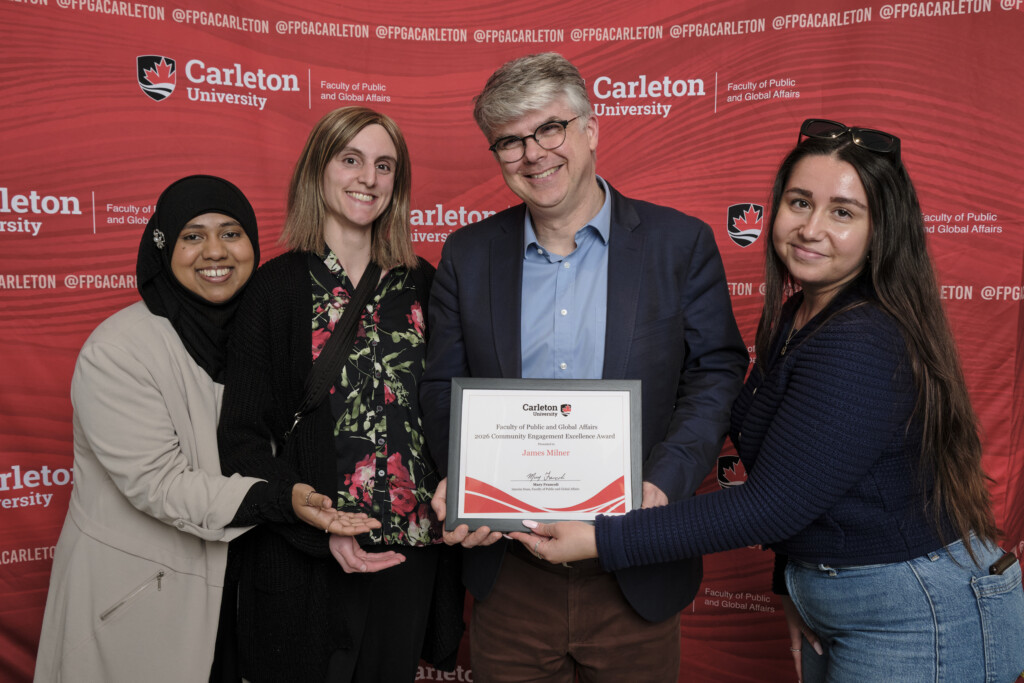
A conversation with James Milner, a professor in Migration and Diaspora Studies and Political Science, whom the students call their “academic dad,” convinced her to pursue the master’s degree in MDS.
“One of my biggest questions was how a program like Migration and Diaspora Studies would help me, especially with my community work,” explained Sal-Sabila, the founder of Youth Gravity. “He helped me understand that the academic work will inform my community practice, and my practice will inform my research. That’s how I knew it was the right fit.”
Accepting her offer at Carleton marked the beginning of a new chapter, one that brought academic growth, meaningful friendships, and opportunities to build community in Ottawa. Sal-Sabila accepted her offer at Carleton and embarked on both an academic journey and a personal journey.
“I remember walking in on the first day, and everyone did an introduction. There was a girl (Omema) who was sitting on my right; she also did her bachelor’s at the University of Toronto and also moved out of home to pursue her master’s. We connected and that was wonderful. We ended up becoming best friends and we successfully defended our theses on the same day.”
For her thesis, Inherited Wounds: The Role of Intergenerational Trauma in Preventing/Countering Violent Extremism Practices in Canada, Sal-Sabila examined how practitioners in Canada understand intergenerational trauma and whether they address it in their work with individuals, especially youth, vulnerable to radicalization to violent extremism. Her coursework in migration, security, and policymaking offered further opportunities to explore the relationships between lived experience, research, and community practice.
Among the highlights of the program, Sal-Sabila served as the president of the Migration and Diaspora Studies Student Society, working alongside fellow students to organize the program’s first student-led conference, Routes & Roots: Navigating Migration and Identity During her practicum at Immigrant Women Services Ottawa (IWSO), Sal-Sabila led a community-based research project exploring how migration shapes the mental health of racialized immigrant women who have survived gender-based violence. Through storytelling, she centred women’s lived experiences, examining how they navigate challenges, draw on sources of strength, and access support before and after migration.
She was also chosen for a prestigious internship with the Durable Solutions team at the United Nations High Commissioner for Refugees (UNHCR) in Canada.
“The UNHCR internship allowed me to contextualize a lot of my learnings in the classroom, and I came to understand the refugee protection and asylum system a lot better,” she explained. “I think I got a very little glimpse, almost like dipping my toe in the water, in terms of understanding the policy space, how it’s not always black or white.”
Her responsibilities included reviewing and summarizing Resettlement Registration Forms (RRF), which she described as “heavy on the heart.” It was all part of her healing journey, which was “grounded in lived experience”. The program also affirmed the importance of bringing that experience into academic spaces.
“Many of us in the program are immigrants with lived experiences of immigration and going through the refugee system,” she said. “One of our professors said that we are changing what the knowledge carriers look like. That made me realize that, okay, we belong to this space. It’s important to have our voices in the research space.”
After earning her degree, Sal-Sabila joined Matthew House, an organization that provides shelter and support to refugee claimants and furnishes homes for newcomers, low-income families, and people transitioning out of homelessness. She’s also a research assistant on a project at the Université du Québec à Montréal and is hoping to bring her community organization to Ottawa.
As she looks ahead, Sal-Sabila hopes to continue deepening the connection between her research and community work.