Carleton Celebrates Innovation and Collaboration at 2026 IP Impact Awards
On May 14, 2026, Carleton University welcomed researchers, industry partners and members of the innovation community to CU@Kanata for its second annual Intellectual Property (IP) Impact Awards Celebration—an event recognizing research and innovation making meaningful contributions beyond academia.
Presented by the Carleton Innovation Transfer Office (CITO) within Industry and Partnership Services (IPS), the awards celebrate Carleton-led projects demonstrating real-world economic, social, and environmental impact through research mobilization, commercialization, and collaboration.
This year’s celebration featured interactive demos and showcases from among 18 nominated teams across campus, highlighting innovations spanning novel therapeutics, artificial intelligence, advanced communications, sustainability, medical robotics, renewable energy, and digital infrastructure.
“The IP Impact Awards celebrate the incredible achievements of Carleton innovators and highlight the many pathways to creating societal and economic impact.” said Shoma Sinha, Director of Industry and Partnership Services.
“The CITO team is here to support Carleton researchers from all disciplines on their innovation journeys, by helping to identify, protect, and commercialize intellectual property arising from their research.”
Recognizing Innovation in Action
Building on the success of last year’s inaugural event, the 2026 celebration expanded to recognize three winning projects representing diverse approaches to innovation, collaboration, and commercialization.
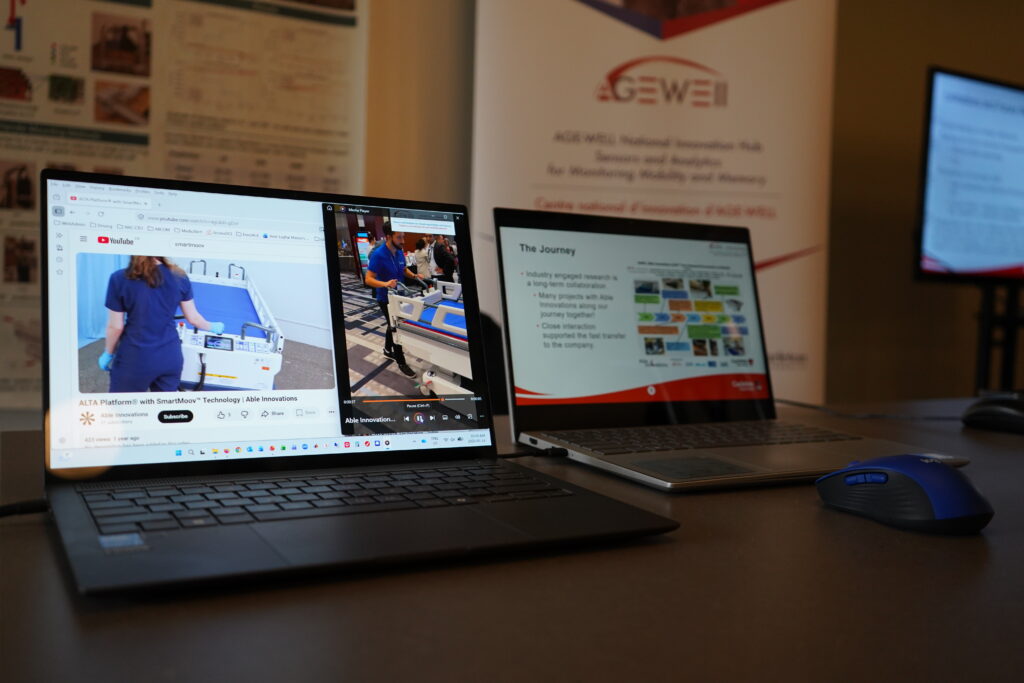
Adjunct Research Professor Bruce Wallace, Executive Director of the Sensors and Analytics for Monitoring Mobility and Memory (SAM3) AGE-WELL National Innovation Hub, and 2023 Carleton Master of Science graduate Bahareh Chimehi, a Project Manager and Research Associate with SAM3, were recognized for their collaboration with Ontario-based Able Innovations on a specialized system designed to improve patient transfers in healthcare settings. Integrated into the company’s Alta patient transfer platform, the sensor-enabled steering and drive-assist system helps healthcare workers safely maneuver the device while reducing physical strain and injury risk for both patients and staff.
The technology recently completed its first clinical trial at Bruyère Health Saint-Vincent Hospital in Ottawa and has already reached 10 deployments in hospitals across North America in 2026.
Also among this year’s winners was DarwinAI, an artificial intelligence platform designed to accelerate peptide drug innovation. Developed through a cross-disciplinary collaboration between Professor Kyle Biggar from the Department of Biology, Professor James Green from the Department of Systems and Computer Engineering, and Electrical and Computer Engineering PhD graduate François Charih, the platform uses biology-informed AI to support the faster and more efficient design of peptide therapeutics.
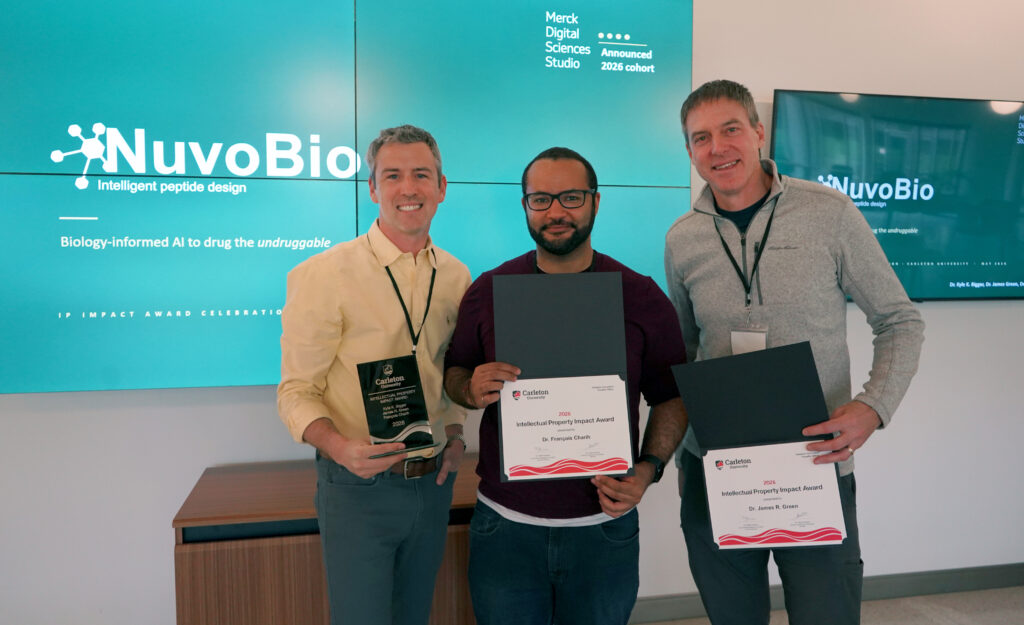
Commercialized through the innovative startup NuvoBio, DarwinAI helps identify potential drug candidates while predicting safety concerns earlier in development—supporting safer and more streamlined development of therapeutics. The company recently announced a major strategic partnership with global peptide drug leader Protagonist Therapeutics, reflecting growing industry interest in the platform’s capabilities.
Rounding out this year’s winning projects was a collaboration led by Department of Systems and Computer Engineering professors Babak Esfandiari and Thomas Kunz, focused on the application of machine learning to autonomous network management. Developed in partnership with Ciena’s Blue Planet, the project explores how predictive AI and digital twin technologies can help communication networks identify failures, optimize routing, and autonomously manage increasingly complex infrastructure.
The long-running collaboration has already resulted in multiple patents, industry-supported research initiatives, and the development of advanced network digital twin systems now being readied for commercial deployment.
“This year’s award recipients reflect how Carleton researchers are accelerating the transition from discovery to real-world application,” said Rafik Goubran, Vice-President (Research, Innovation and International).
“From healthcare technologies to advanced communications and AI-driven systems, these projects illustrate how Carleton experts are shaping key innovations within Canada and internationally.”
A Diverse Showcase of Research and Commercialization
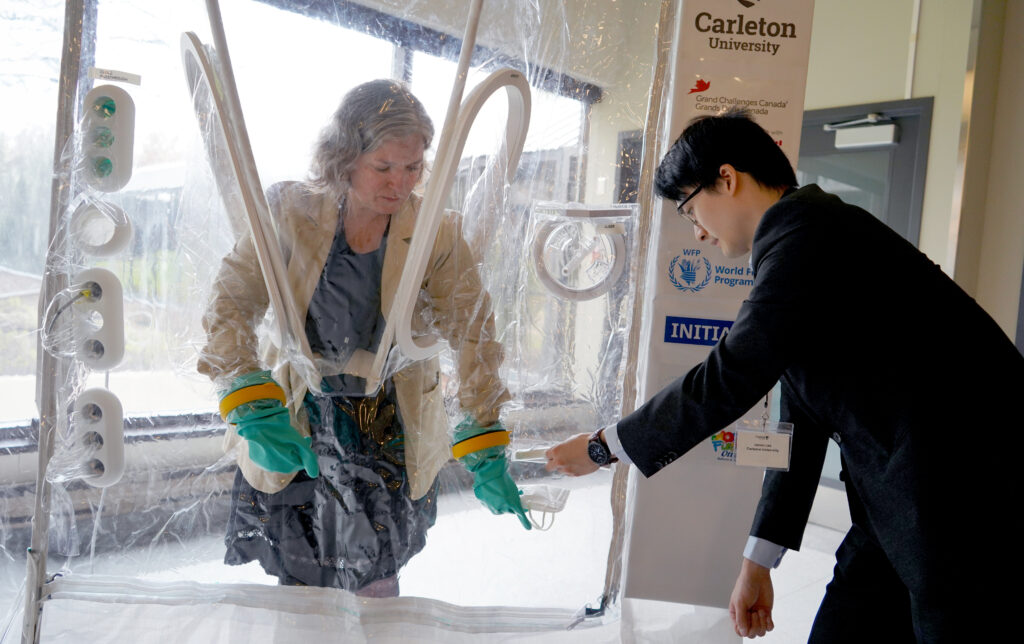
Beyond the winning projects, the celebration also featured demonstrations and displays from nominated teams working across a wide range of fields, including rapidly deployable treatment modules for infection prevention and control, therapeutics for neurodegenerative disease, fisheries conservation technologies, sustainable water systems, robotics, wearable health monitoring, digital twin platforms, advanced wind turbine design, and more.
The event also highlighted how partnerships with industry, healthcare organizations, government agencies, and startups are increasingly helping move Carleton research toward commercialization and implementation.
“Research has the greatest potential for impact when it’s connected to the environments and communities it’s intended to serve,” said Travis Flieler, CU@Kanata’s Director of Operations. “By bringing researchers, students, and industry partners into closer proximity, CU@Kanata helps create the conditions for ideas to be tested, refined, and transformed into opportunities.”
As Carleton’s research and innovation ecosystem continues to grow, IPS and CITO are helping support the partnerships and translational pathways that move ideas from discovery toward implementation and broader societal impact.
Interested in collaborating with Carleton researchers or exploring commercialization opportunities? Connect with IPS and CITO to learn more about innovation and partnership support.
2026 IP Impact Awards Sponsors and Supporters