The Future is Quantum
Canada and Finland Launch Northern Entanglement Partnership at Carleton
By
Ty Burke
Photo Credit:
Brenna Mackay
Quantum physics describes the properties of the universe at the smallest of scales.
At the sub-atomic level, matter and energy behave in very unexpected ways. And by understanding the mind-bending physics of the basic particles that make up the universe, we can build technologies far more advanced than what we have today.
In the future, microchips that control the flow of photons — or individual particles of light — will enable data centres to operate at room temperature, saving vast amounts of energy by reducing the cooling needs of artificial intelligence and cloud computing.
Quantum sensors will lead to measurements of extraordinary precision, creating new ways to image the human body’s organs or minerals buried deep in the Earth. And quantum computers will accelerate our ability to make complex calculations, such as simulating the interactions of billions of molecules to recommend different combinations that could work as medicines to cure currently untreatable diseases.
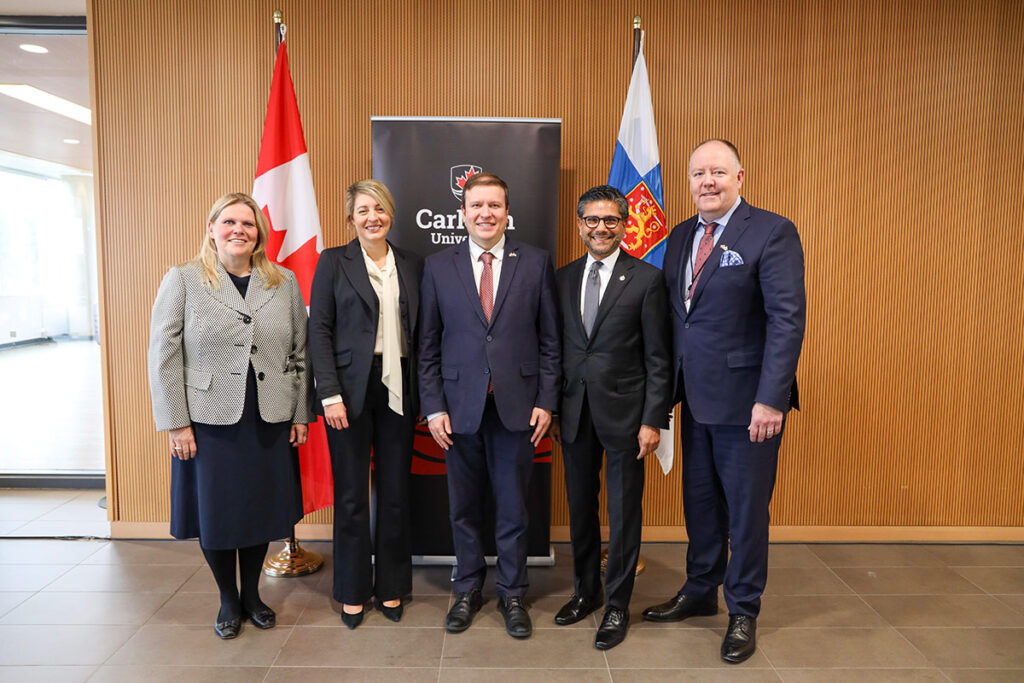
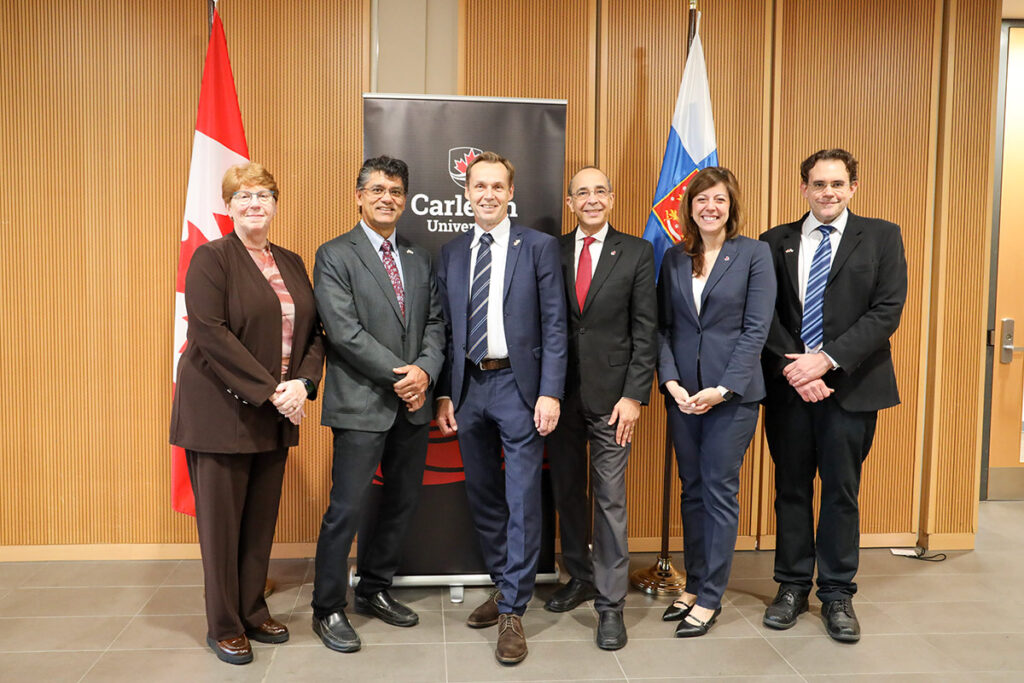
Quantum technologies may seem futuristic, but researchers are already laying the groundwork for these advances. On October 23, quantum researchers, academic and business leaders, and dignitaries and ministers from Finland and Canada, including Minister of Industry Mélanie Joly and Yasir Naqvi, Parliamentary Secretary to the Minister of International Trade and to the Secretary of State, gathered at Carleton University’s Richcraft Hall to launch a new strategic quantum partnership.
Called Northern Entanglement, it will seek to foster cooperation between Canada and Finland in the quantum realm.
“Quantum science is driving the next great technological revolution. It is reshaping industry and redefining innovation,” says Rafik Goubran, Carleton’s Vice-President (Research, Innovation and International). “Quantum technologies will transform how we solve challenges — and Carleton is at the forefront of this transformation.
“Advances in quantum communications, cryptography, mechanics and nanotechnologies are the foundation for real-word impacts. Research is a vital part of our mission. As a research-intensive university, we have global reach and impact.”
Carleton’s Quantum Community
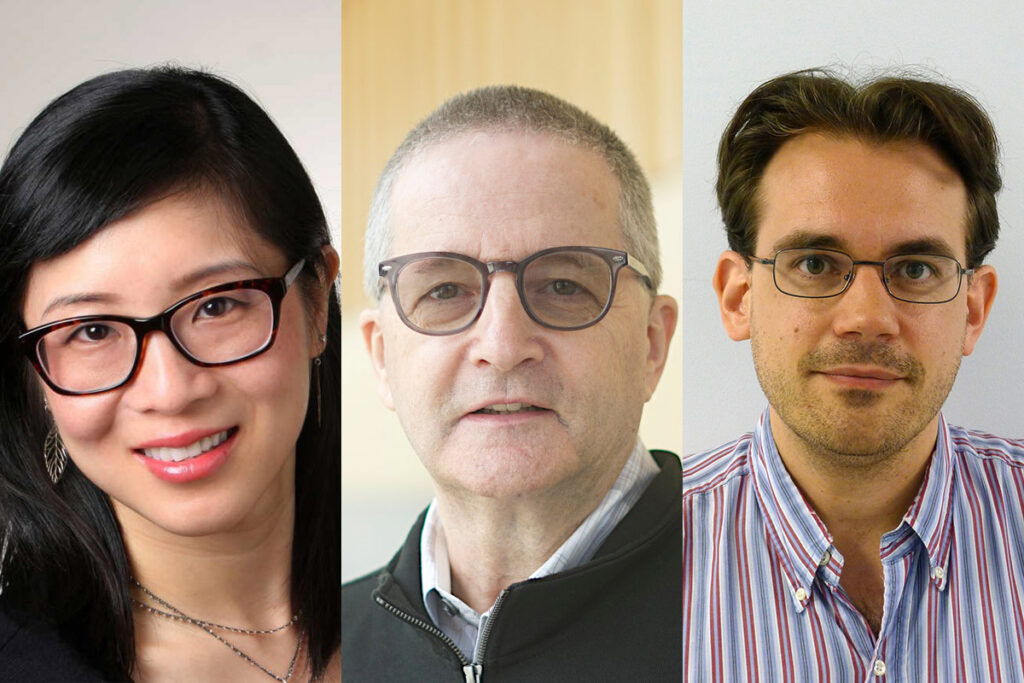
Carleton is home to more than 100 researchers working in quantum or quantum-adjacent fields, including:
- Winnie Ye, an electronics professor who designs and builds photonics microchips at the Carleton University MicroFabrication Facility. One of only a few university microfabrication facilities in Canada, the lab has been conducting experimental semiconductor research for more than 25 years.
- Michel Barbeau, a computer science professor who is applying his expertise in computer network architecture toward designing new, quantum-optimized communications networks.
- Matthias Neufang, a mathematics professor and Associate Dean (Graduate Affairs) in the Faculty of Science whose work probes the mathematical underpinnings of the science driving the quantum transformation.
Quantum research spans diverse disciplines and it is happening in 32 different Carleton labs.
The university is at the heart of a growing quantum research ecosystem in the National Capital Region, where researchers at leading academic institutions, government research organizations and companies such as Nokia in Ottawa’s multi-billion-dollar tech sector are working together to solve some of quantum’s most vexing challenges.
Why Quantum Collaboration Makes Sense
Keeping our communications secure is one of these challenges.
Quantum computers can perform complex calculations much more quickly than classical computers. As they improve, quantum computers could make the cryptography we rely on obsolete.
That’s a problem for individuals and companies that use the internet to make financial transactions. It’s also a challenge for national security in an increasingly uncertain world.
In hostile hands, code-breaking capabilities could have serious consequences for our critical infrastructure. And this is just one of the reasons why a strategic quantum partnership between Canada and Finland makes sense. The best defense against quantum-driven cyber-attacks is to develop your own quantum capabilities — to fight quantum with quantum.
“We look at the question of openness versus security, but I think we should phrase it as how to have openness and security at the same time,” says Ilona Lundström, Executive-in-Residence at Institute Q, a quantum research institute at Aalto University in Finland.
“This strategic partnership is one way we can cooperate to achieve this goal. Collaboration on research and education is already happening every day, but it needs to have a strategic angle. We need to identify the areas that we want to be competitive in together and need to identity how to make that possible.”
According to Finland’s Minister for Foreign Trade and Development, Ville Tavio, who delivered a keynote at the Carleton launch event, Canada and Finland are well suited for this type of collaboration.
“We must safeguard openness in science while protecting sensitive technologies,” says Tavio. “It is important to strive for as global a market as possible. Together, Finland and Canada are both stronger and safer. Let us build a trans-Atlantic quantum corridor that accelerates innovation and delivers real world innovation.”