The Historian and the House Cats
Lead image by VittoriaChe / iStock
By Ahmed Minhas
At Carleton University, historian Rod Phillips has built a career studying familiar yet overlooked subjects, from divorce and family life to wine and alcohol.
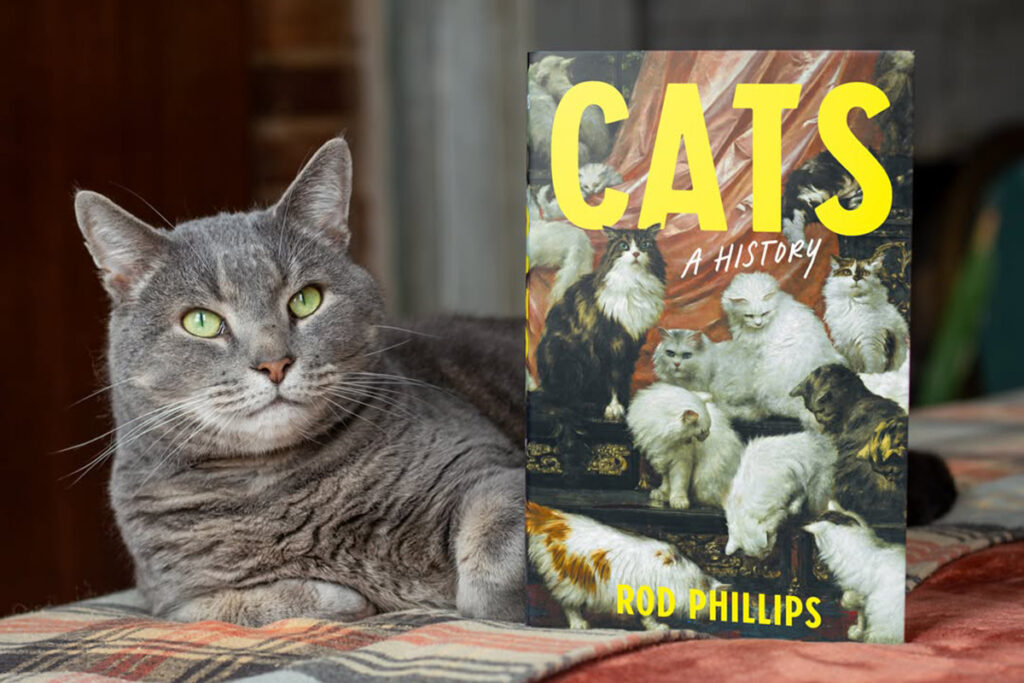
In his newest book, Cats: A History, Phillips turns to an animal that has lived alongside humans for thousands of years while remaining stubbornly difficult to define.
Cats are affectionate but aloof, useful but disruptive, familiar but mysterious. They enter human homes, accept food and comfort yet live on their own terms. For Phillips, that contrast makes them more than an intriguing subject.
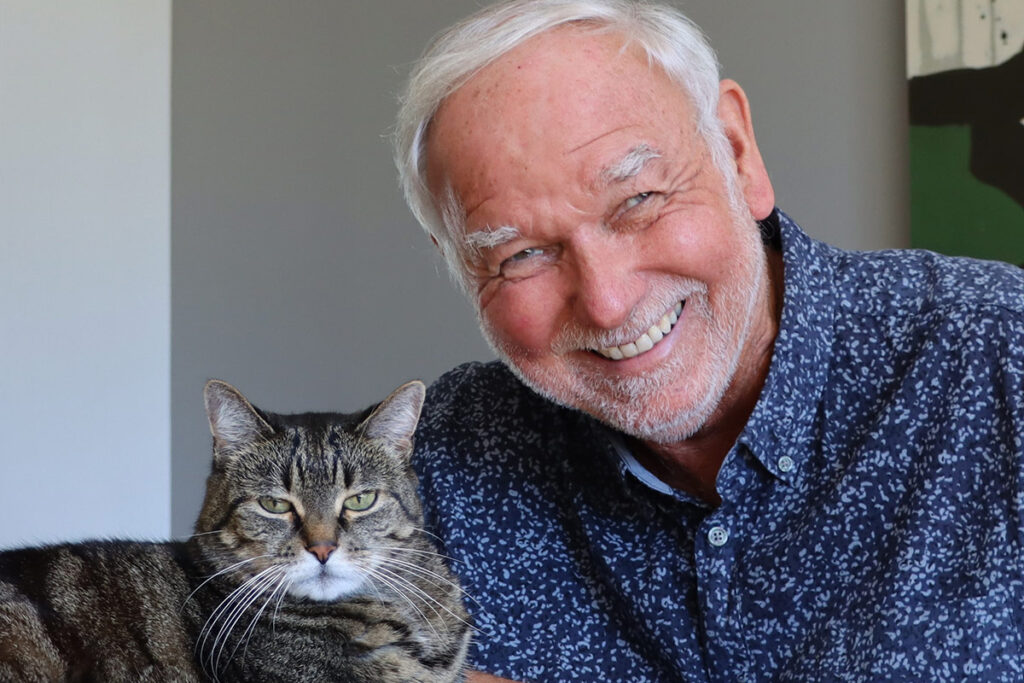
“I love cats,” says Phillips.
“I love watching them because they’re endlessly interesting. Not so much when they’re sleeping, but when they’re awake and moving around — they’re just odd. And that’s what drew me to them.”
Cats: A History traces how cats have been valued as hunters, feared as symbols of witchcraft, associated with women and outsiders, embraced as companions and turned into internet icons.
The subject may sound playful, though Phillips argues cats offer a serious way to examine how humans have understood animals, domestic life, gender, power and belonging.
“People might think writing about cats is frivolous and not a serious subject,” he says. “I think this is a serious piece of history of a human-animal relationship over thousands of years.”
A Historian of Unexpected Subjects
Phillips follows his curiosity when choosing subjects to write about.
His interest in divorce began as an undergraduate student, when a professor mentioned it was first legalized in France during the French Revolution. That detail led to a thesis, then a major book on the history of divorce.
Wine grew from a personal interest as a teenager (he was working as a sommelier at 17), a fascination that led to published books, a 17-year column for the Ottawa Citizen, travel to wine regions and broader scholarship on alcohol.
Cats: A History began as a long-held idea that became possible during the pandemic, influenced partly by his own two cats.
“I’d been thinking about writing a book on cats for some time and imagined it as a retirement project,” says Phillips.
“Then COVID came; I was stuck in Ottawa and started looking more closely at cats and found a history much richer than expected.”
Cats were everywhere in domestic life yet almost nowhere in the historical record. They came and went, caught mice and left few traces behind.
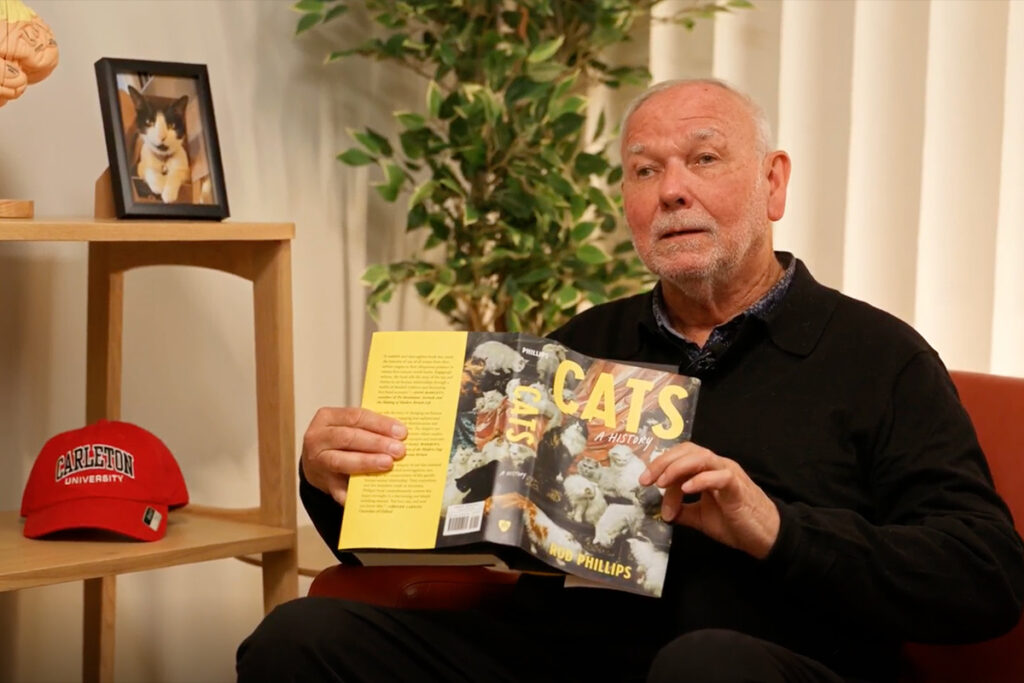
“They were always on the margins,” notes Phillips.
“And this is the way historians treated them as well. They’re difficult to write about because sources aren’t easily found.”
Divorce, wine, alcohol and cats may seem unrelated, however, each allows Phillips to use familiar subjects as entry points into larger questions about law, family, class, gender, morality and culture.
What Cats Reveal About Us
For Phillips, cats matter because attitudes towards them reveal larger social anxieties.
In medieval Christian Europe, cats were associated with heresy, witchcraft and the devil. In Ancient Egypt and the Muslim world, they were valued and respected. They were also linked to ideas about women, sexuality, disorder and distrust.
Although useful for controlling rodents, cats made people uneasy because they couldn’t be fully tamed.
“We say cats are aloof or unfriendly, that you can’t trust them because you don’t know what they’re going to do. But they’re just cats living their lives and we’re imposing human characteristics on them,” Phillips explains.
While dogs are praised for fidelity, cats are loved for different reasons. They interrupt, surprise and claim space without apology.
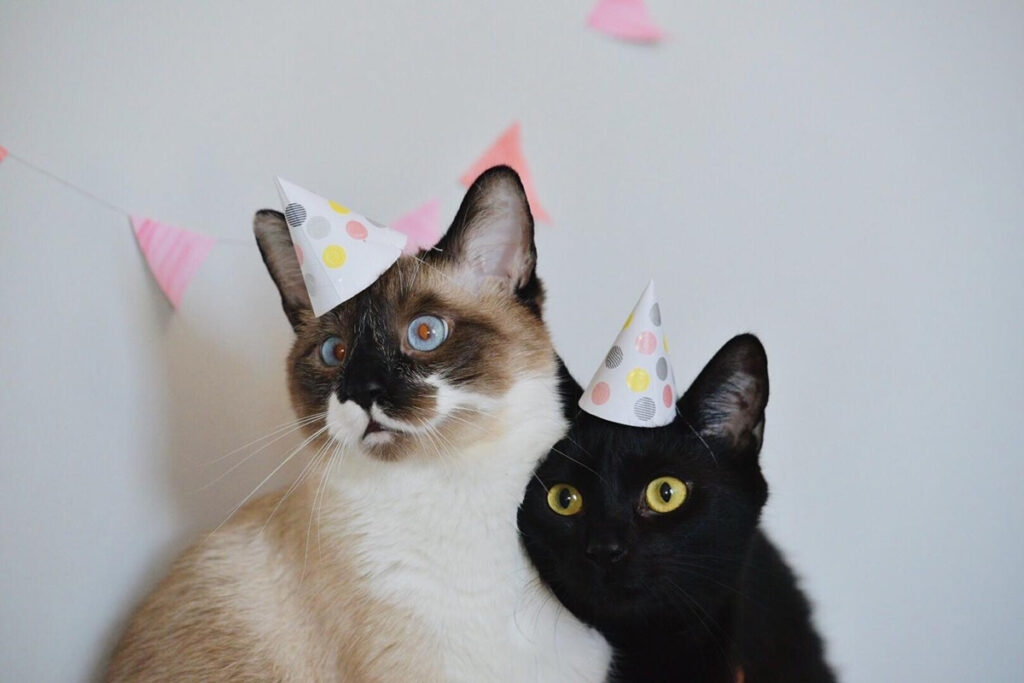
“The essence of cat videos is surprise,” says Phillips.
“We’re surprised by what the cat does, whether it puts its head under a running tap, slaps the printer and frightens itself or pushes a dog out of its bed and claims it. We’re thrilled by these things.”
At Carleton, Phillips’ research and teaching often cross-pollinate. His book on the history of alcohol grew out of his lectures. He expects to teach a course on cats in fall 2027, using the book as a text.
Subjects like alcohol, family life and animals show that history isn’t limited to major figures, wars and institutions. It can be found in everyday things that reveal how people understood the world.
“It’s important for students to see that you can take a commodity or a theme and open it up,” says Phillips.
“You can draw important conclusions about history from something familiar — whether it’s alcohol, divorce or cats. These aren’t soft subjects. They’re history through a different lens.”
The modern house cat may not care that its history has been written. And that seems fitting. Cats have never needed human approval to be interesting. They’ve always been interesting because they remain — in the end — cats.