From Kakuma to Shaping Refugee Policy
Lead image by Matija Kovac / Wikipedia, CC BY-SA 3.0
By Ahmed Minhas
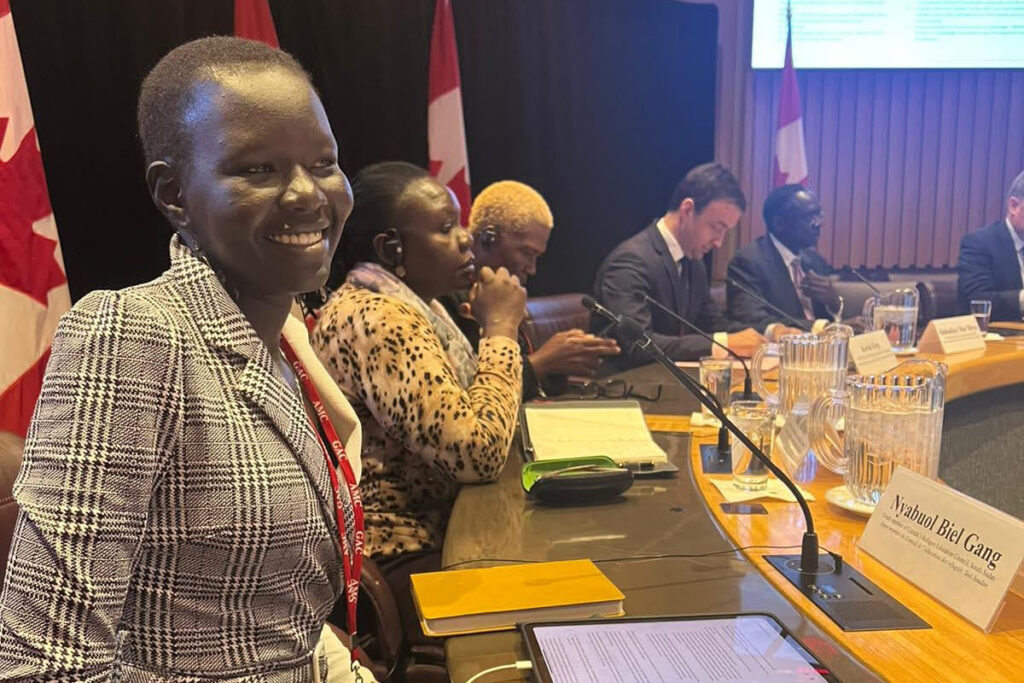
As the first refugee member of UNICEF’s Generation Unlimited Young People’s Action Team, Nyabuol Biel Gang listened closely as international youth leaders discussed preparing young people for green jobs.
“I remember my first day listening to these ideas and I thought, ‘From what perspective are we talking?'” says Gang, a fourth-year Bachelor of Global and International Studies student at Carleton University.
“This is the privileged youth that can move freely. What about youth that can’t move? What about youth that are restricted in terms of paperwork? What about refugees that aren’t allowed to move outside refugee camps?”

For Gang, these aren’t abstract questions. She spent nearly 20 years living in Kakuma Refugee Camp in north-western Kenya after her family fled the Sudanese civil war in 2002.
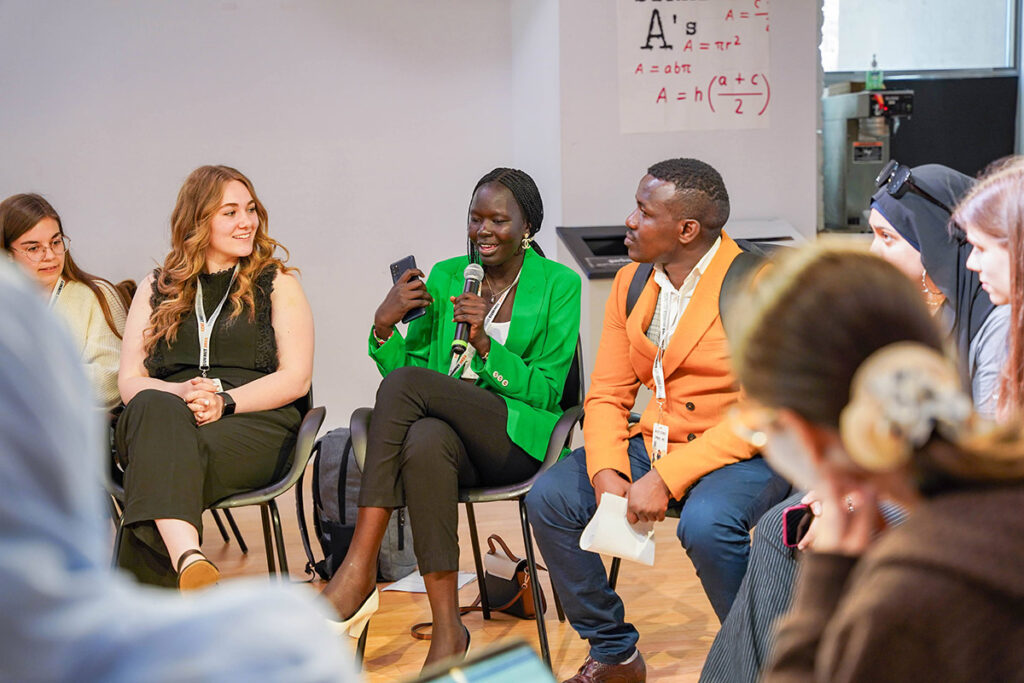
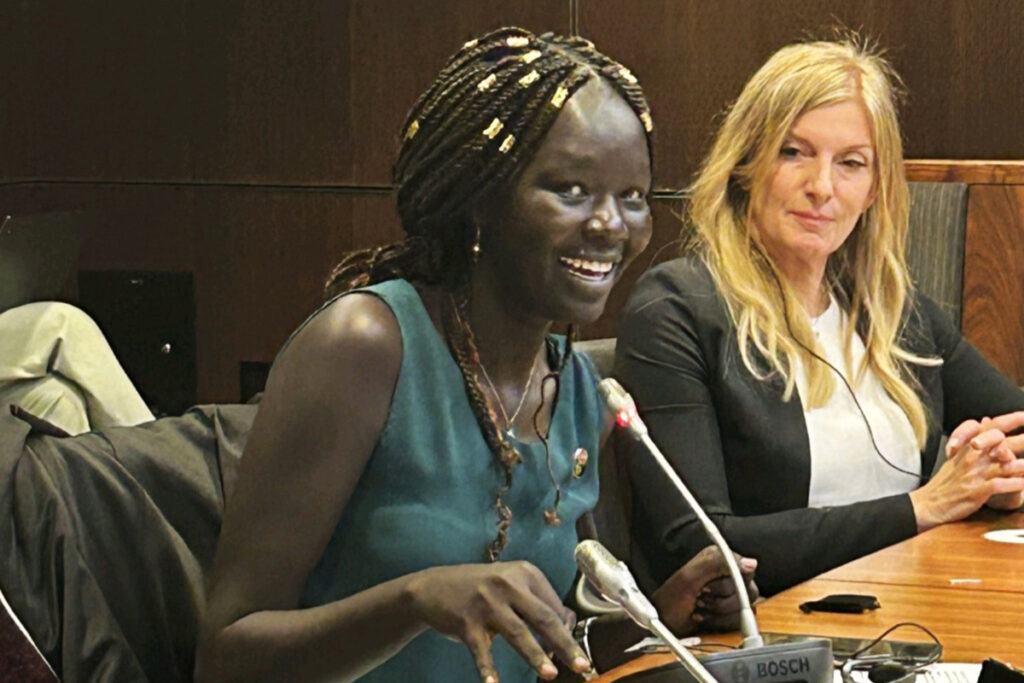
Now she’s bringing that lived experience into conversations about refugee policy and education and challenging decision-makers to consider whose voices are missing from the room.
That perspective is also at the heart of Gang’s work as the recipient of the C.J. Scott Memorial Award in International Relations and Diplomacy for students in the Faculty of Public and Global Affairs. She was selected for her international leadership, government-facing work and ambition to improve refugee policy through research and filmmaking.
Her own journey to higher education, however, was far from straightforward.
How Carleton’s Enriched Support Program Opened a Door
For much of Gang’s childhood and adolescence, opportunities to pursue education beyond secondary school were scarce. Movement outside Kakuma required permission and pursuing university was not a realistic option.
An employment program led Gang to Canada in 2022, but she never gave up on her dream of going to university.
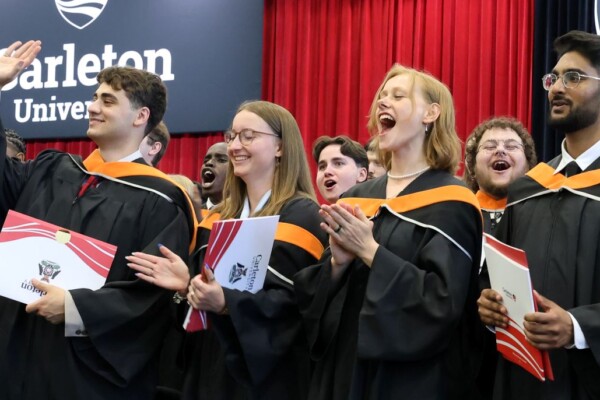
When she first applied to Carleton, she didn’t get in. But the university’s Enriched Support Program (ESP) offered another path. The full-time program allows students to begin first-year university studies while strengthening their academic skills and bridging to degree admission.
“All of a sudden, I’m uprooting everything and moving to Ottawa,” Gang recalls.
“At first, it was lonely. I didn’t know anyone. ESP made my transition easier because it was like a family. I met friends, I met mentors, I met people that were there for me.”
The support extended beyond academics. As she navigated the challenges of living independently, Gang turned to an ESP advisor when circumstances became overwhelming.
“I couldn’t articulate what I wanted to say or how to ask for help,” says Gang.
“I just broke down because I didn’t know what to do.”
The advisor listened and connected her with resources and provided ongoing support through regular check-ins. That experience informs Gang’s belief on how universities can support displaced students and their mental health, which is often overlooked.
Last year, Gang co-authored a University Affairs commentary with Carleton political science professor James Milner, arguing that universities can build on existing resources to expand opportunities for refugees and displaced students and scholars, while recognizing the experience and talent they bring to Canada.
Bringing Lived Experience into Policy and Film
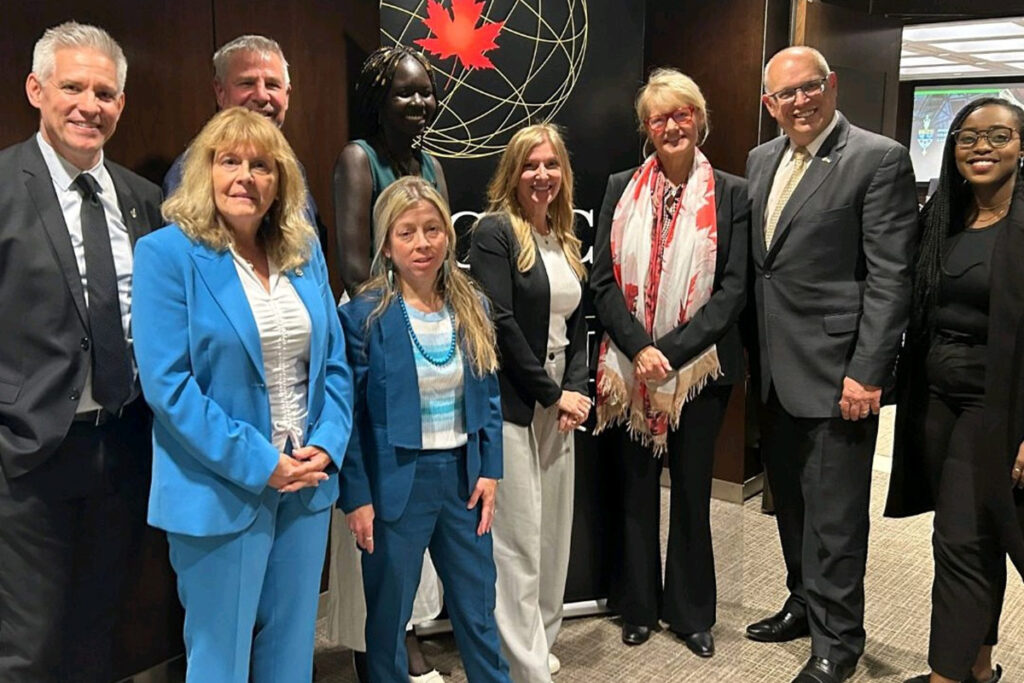
A member of the Canadian Refugee Education Council’s 2023 cohort, Gang contributed her insights and lived experience to Together for Learning, a three-year international campaign promoting education for refugees, displaced youth and young people in host communities.
“It was an opportunity to advocate for people not just here in Canada, but those I left back home,” she says.
Her family remains in Kakuma, meaning decisions about humanitarian aid, education and employment continue to affect people closest to her.
Lived experience needs a place alongside statistics and research when developing policy, according to Gang.
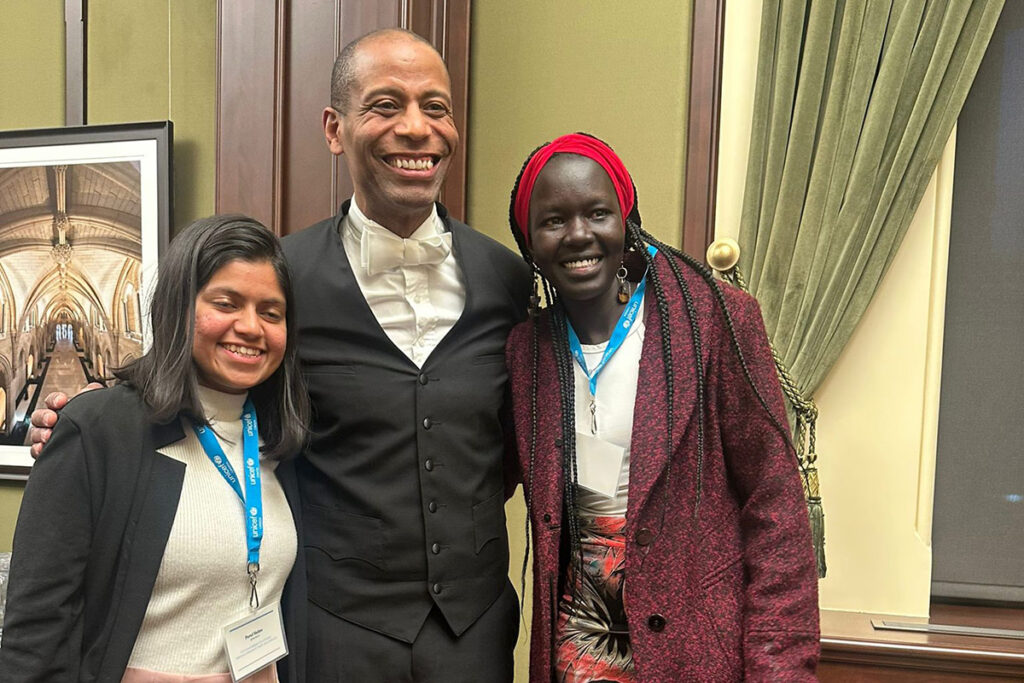
“When you read about the refugee crisis, it’s always about numbers and data,” she explains.
“We also need to humanize refugee stories. It’s not just the numbers of people that are impacted, but the faces behind those numbers.”
Filmmaking is one way to tell those stories.
Gang’s interest in storytelling began early in Kakuma. In her school library, she gravitated towards magazines and newspapers but became frustrated by the images she saw. Refugees were portrayed through suffering and crisis, a depiction that wasn’t reflective of the families, entrepreneurs, innovators and ambitious youth around her.
Her training in filmmaking allowed her to tell their stories through documentaries that were screened throughout the camp and presented in local news.
Storytelling and policy advocacy have become part of the same purpose — ensuring people affected by policy have a voice in shaping it.
While Gang recognizes her story is only one among many, she believes lived experience is an important form of expertise that can inform research and highlight the impacts of policy on diverse displaced communities.
“Every room that I go into, I move as an expert,” she says.
“I might not have the academic credentials, but I do have the lived experience. And that is enough.”