Improving Medical Marijuana
By
Tyrone Burke
Photo Credit:
Chris Roussakis
Dementia, epilepsy, Tourette’s syndrome. Its fiercest advocates insist that cannabis will cure whatever ails you, and there’s no shortage of anecdotes to support these claims. But when it comes to peer-reviewed research, facts are harder to come by.
Cannabis plants have more than 100 cannabinoids. These chemical compounds influence how messages are sent, received and processed by brain cells, and their proportions vary by strain.
Recreational cannabis has been bred to have high levels of tetrahydrocannabinol (THC), a mind-altering psychoactive cannabinoid which can also have health benefits, such as improving mood and appetite.
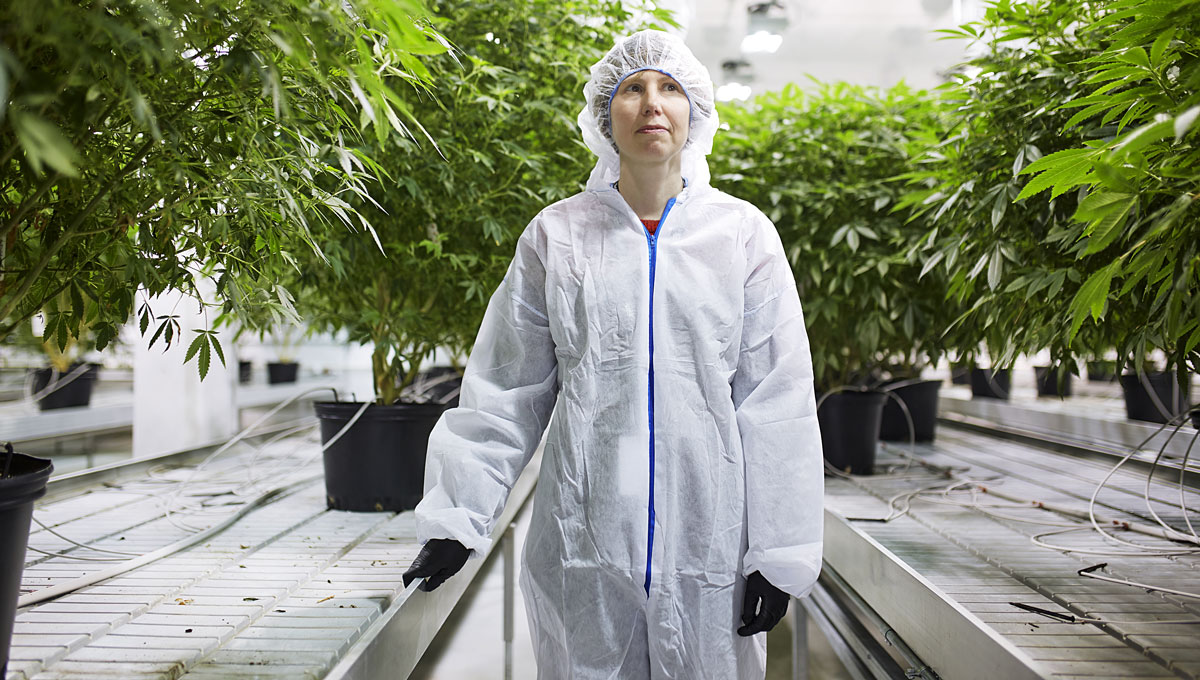
Medical marijuana has been bred for its cannabidiol (CBD) content, which alleviates symptoms such as pain, inflammation and anxiety and can also be desirable in recreational strains, even if it doesn’t make users high. Other cannabinoids could have additional medical applications.
“There’s a lot of diversity, and the mechanism of action for cannabinoids is still understudied,” says Carleton Biology Prof. Shelley Hepworth, who is working on a research project with cannabis giant Canopy Growth Corp., whose headquarters are in the former Hershey’s chocolate factory in Smiths Falls, Ont., southwest of Ottawa.
“They might have functions in our body. We don’t have that level of detail yet. There are many different cannabinoids, and strains with particular properties could be good for certain illnesses. We could target problems with greater precision.”
Increasing Genetic Diversity in Medical Marijuana
Funded by a $50,000 grant from the Ontario Centres of Excellence and NSERC, with additional support from Agriculture Canada, the goal of Hepworth’s project is to develop polyploid cannabis plants — which contain more than two sets of chromosomes — to increase genetic diversity.
“Polyploidization for the Improvement of Medical Cannabis” duplicates cannabis’ chromosomes. It enables plants to be bred to have characteristics which could otherwise not co-exist and it could lead to better medical cannabis, faster plant growth and novel strains.
“We have strains that are high THC and others that are high CBD,” says Hepworth. “If you have high THC, you have low CBD, and vice-versa. It’s an inverse relationship. We are looking to more precisely control the ratio and develop better medical strains.”
This would allow medical cannabis to simultaneously induce appetite with THC, for instance, while also alleviating pain with CBD. If applications for other cannabinoids are identified, their proportion could be increased.
Breaking Through the Red Tape
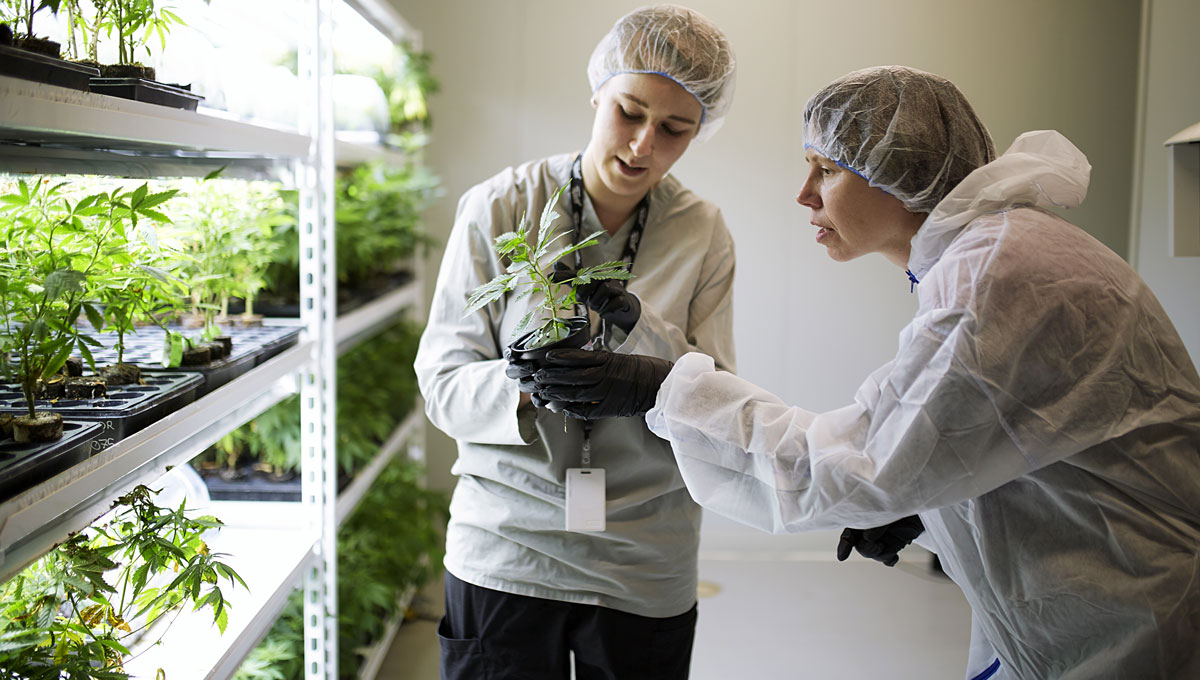
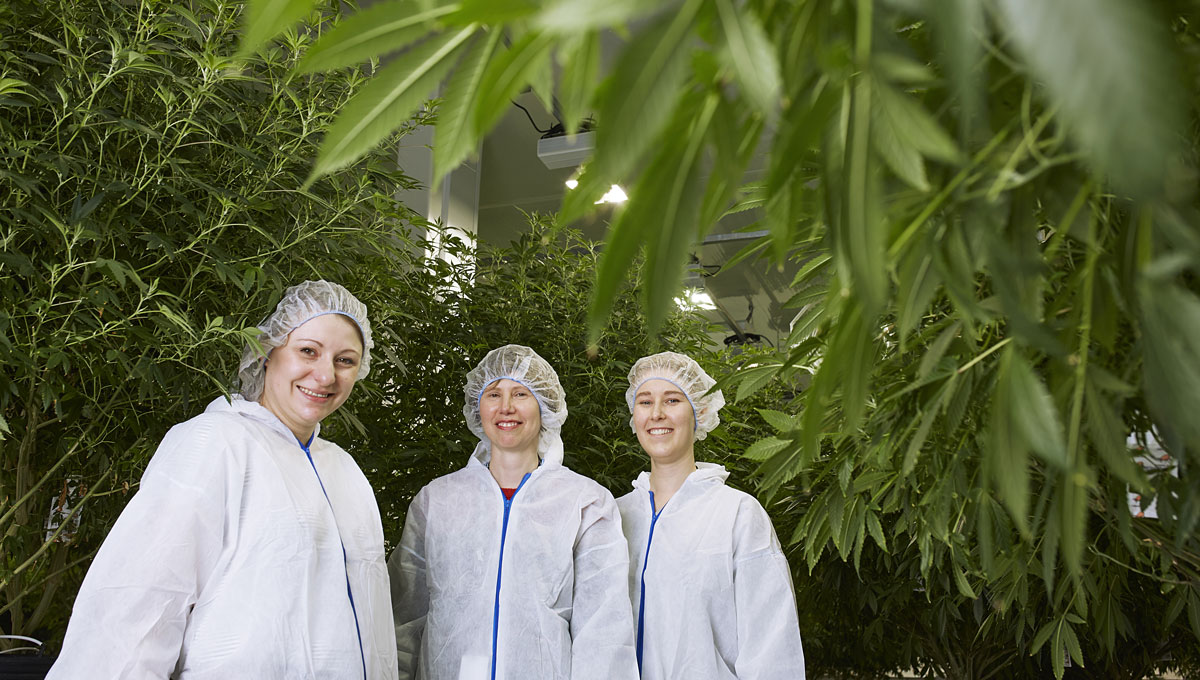
In a seed germination and cloning room at Canopy’s sprawling Smiths Falls facility, with hands-on help from Canopy special projects research assistant and Carleton Biology master’s graduate, Jessica Parsons, Hepworth is developing polyploid cannabis plants and using flow cytometry to quantify their DNA.
This technique suspends cells in fluid and passes them single file through a detector that uses lasers to measure their DNA content. Cannabis researchers haven’t always had access to advanced equipment, or even the plant itself, which has been illegal to grow and study. Even amid the process of legalization, there is still plenty of red tape.
“There hasn’t been much academic research done on cannabis botany and published in peer-reviewed journals, and certainly not much industry work until recently,” says Katya Boudko, Canopy’s manager of research and development.
“Certain people have been working with cannabis for a long time, but none of that information is readily available, or has been reviewed for scientific rigour. We’re really at the forefront of making these protocols available for cannabis researchers and the industry.
“Academic partnership possibilities are huge. With us knowing the cannabis side of things, and academics having a background in a specific scientific discipline, we can partner together and do some very cool research.”
“This is really exciting,” adds Hepworth. “Because cannabis was under prohibition before, we’re now able to develop brand new research techniques that could lead to more options for improving the health of Canadians.”