Permafrost Thaw is Turning Yukon Streams Orange
By Dan Rubinstein
Thawing permafrost is one of the most unsettling yet under-the-radar consequences of climate change in northern Canada.
As the layer of frozen soil, rock and sediment that underlays 40 per cent of the country’s land mass thaws, massive amounts of methane are released into the atmosphere, creating an invisible climate feedback loop that intensifies global warming. At the same time, solid ground slowly softens, damaging vital infrastructure such as roads and buildings and necessitating costly maintenance and repairs.
Carleton University Earth Sciences researcher Elliott Skierszkan is concerned about a more dramatic manifestation of permafrost thaw — the abrupt acidification of streams.
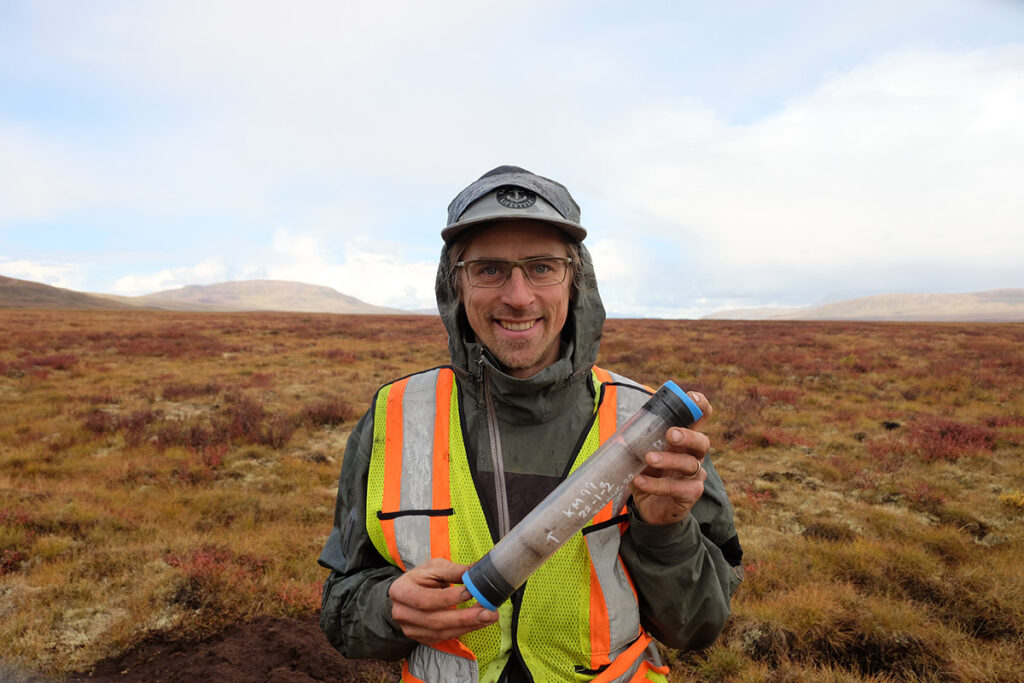
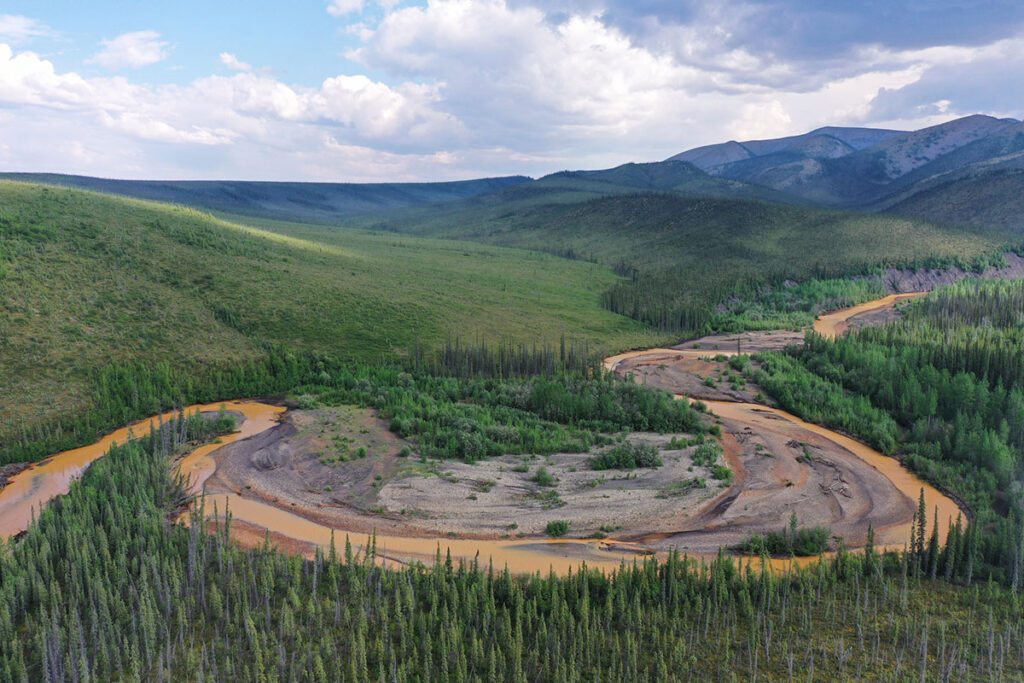
“It’s something that’s been overlooked and unanticipated until relatively recently, but when you see a clear stream turn orange, everyone notices,” says Skierszkan, an environmental geochemist who focuses on how natural contaminants move through landscapes.
“This is being seen around the world in cold regions. Our data and observations of several Yukon streams in the last few years show that formerly pristine Arctic streams are now receiving very toxic water.”
In a paper published in Science, Skierszkan and his collaborators detail how exposure to groundwater is leaching sulphide-rich minerals and iron out of thawing soil and rock. These reactions acidify the water, and iron reacts with oxygen to produce rust. The problem is particularly acute in regions where the geology is rich in sulphide minerals, including a large area extending from the Yukon-Northwest Territories border through northern Alaska.
In addition to this phenomenon, Skierszkan and his co-authors demonstrated that substantial amounts of carbon dioxide, a greenhouse gas, are being emitted.
“My original hypothesis was that we might see signs of increasing acid-rock drainage over 10 to 20 years,” he says.
“Three years into the data collection, I was floored when we saw these really dramatic shifts. Our data capture the forefront of an emerging issue.”
Naturally Occurring Contamination
During a Banting postdoctoral fellowship, Skierszkan studied how naturally occurring metals and metalloids such as uranium and arsenic can impact groundwater quality in permafrost regions.
“Certain geological conditions can produce naturally high concentrations of these contaminants,” he says.
“One of the most interesting parts of being an environmental scientist is trying to piece together different things to better understand the entire system. We’re not just looking at rocks. We’re also looking at water, soil and living organisms.”
Over the past eight or so years, Skierszkan’s work has focused on the weathering and breakdown of rocks and sulphide-rich minerals that had previously been locked in permafrost.
The acidification of Yukon streams documented by his team, which includes collaborators at McMaster University and the University of Saskatchewan, reflects what researchers have simultaneously observed in neighbouring Alaska.
“The abruptness of these changes, combined with the visuals, is what shocks people,” Skierszkan says.
“I’ve worked on thawing permafrost and uranium, but uranium is invisible. The chemical reactions involving sulphide minerals are similar to those occurring in mine tailings and mine waste, which produce bright orange discolouration of untreated water.”
Tombstone Territorial Park
When Skierszkan was looking for locations to collect water samples in the Yukon, he sought direction from the Tr’ondëk Hwëch’in First Nation to identify priority study areas. They suggested waters draining Tombstone Territorial Park, near the Alaska border.
The park, created for the conservation and preservation of Tr’ondëk Hwëch’in’s ancestral lands, remains an important place for fishing, hunting and trapping and an important source of water.
Sean Carey, one of Skierszkan’s Science co-authors, was already studying the impact of climate change on the hydrology of streams draining from the park.
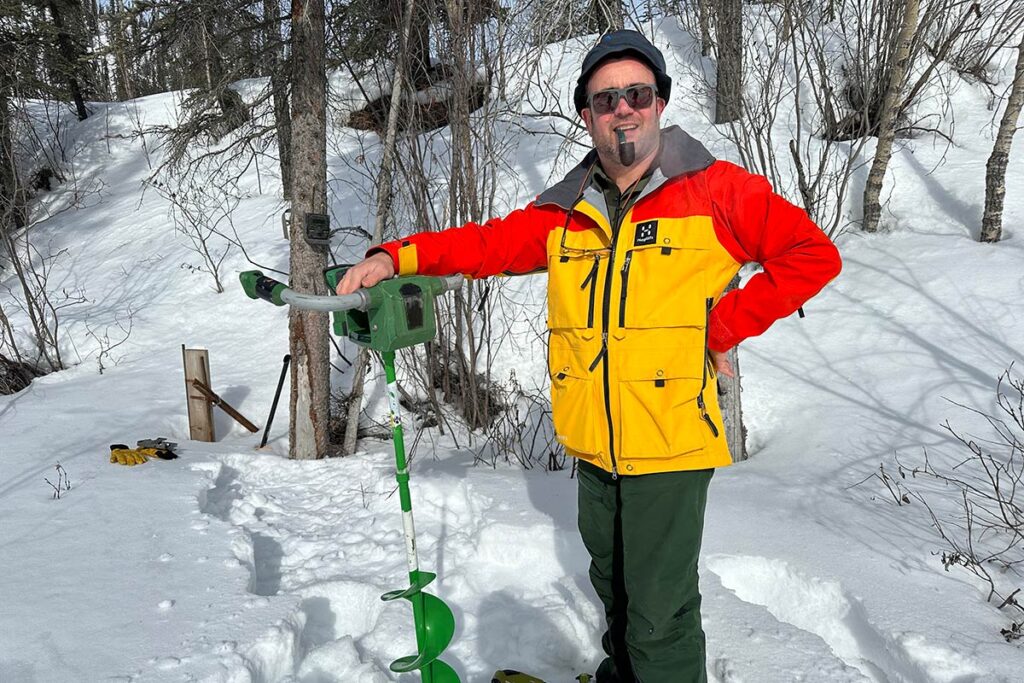
Skierszkan asked Carey if he could get a few extra water samples for testing, which initiated a multi-year partnership aimed at studying impacts of climate change on water quality.
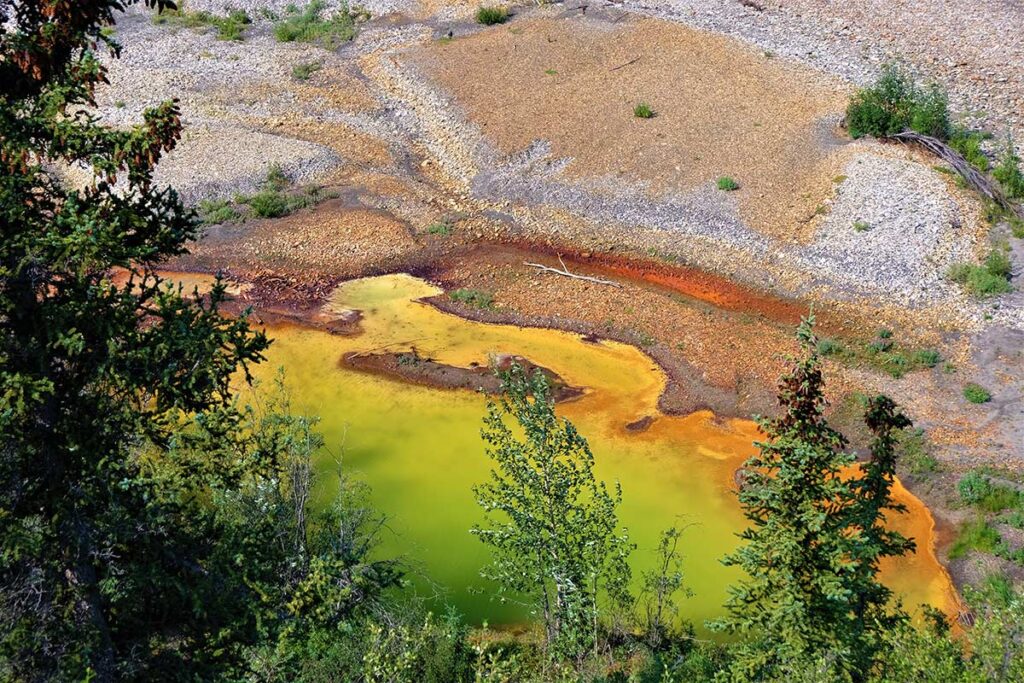
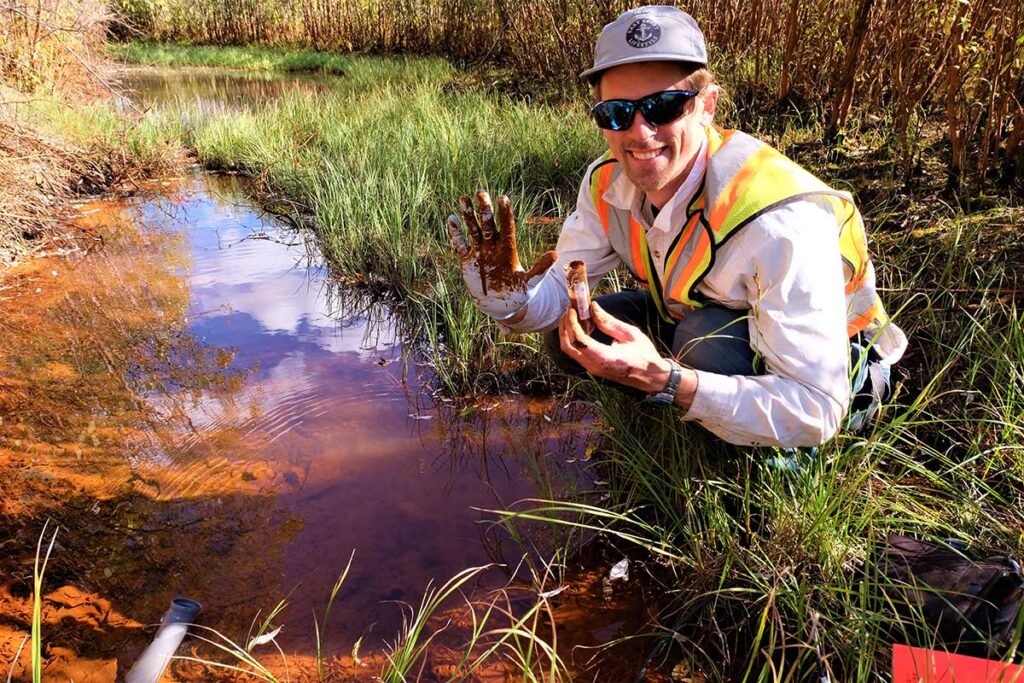
In the summer of 2023, they noticed an abrupt change to streams in Tombstone Park. “All of a sudden,” says Skierszkan, “the water became orange and there were patches of dead vegetation.”
In the summer of 2025, Skierszkan went to 10 field sites where satellite imagery indicated dead vegetation.
“When we dug test pits to collect the water that was ponding above the permafrost,” he says, “every single one of them was hyper acidic with high concentrations of toxic metals.”
These findings speak to the need for heightened environmental monitoring to safeguard drinking water sources and present a risk for fish downstream. The information collected so far, and through increased monitoring in future years, could be used to advise people about safe water and fish consumption.
This research could also inform watershed and conservation planning. When industrial developments such as mines are proposed, operators must factor shifting baseline water quality into their environmental protection plans.
“This pristine northern wilderness is home to thousands of people and visitors come from all over the world to experience it,” says Skierszkan, “so I hope this work provides more motivation for aggressive climate policies.”