Jean-Noé Landry
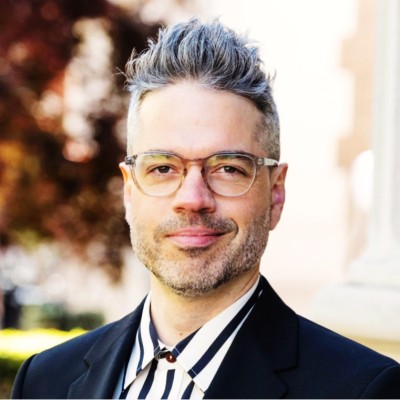
Bachelor of Humanities, Open Technology Advocate and Systems Mediator
B.Hum Graduate 2001
What was your experience like in the program and how has your degree helped your career?
When I graduated from the Bachelor of Humanities in 2001, I could not have predicted the path my career would take. After completing an MPhil in Philosophy at Trinity College Dublin in 2002, I began working in international democracy development with the National Democratic Institute and the United Nations. Over the following years, I supported democratic processes, electoral institutions, legislatures, civil society organizations, and political actors in contexts including Serbia, Russia, Kenya, Ukraine, Afghanistan, the West Bank, Algeria, and Tunisia.
Those experiences shaped my understanding of democracy not as a fixed model to be exported, but as a living practice that depends on legitimacy, trust, dialogue, institutions, and the ability to hold differences in common. Working in fragile, polarized, or transitional environments taught me how difficult—and how necessary—it is to build spaces where people with divergent histories, interests, and worldviews can still act together.
In many ways, that is the thread that has continued through my work ever since.
After returning to Canada, I became involved in the emerging open data and civic technology movements. In 2011, I co-founded Montréal Ouvert and Québec Ouvert, citizen-led initiatives that helped advance government transparency, public participation, and the use of open technologies in Canada. I later served as Executive Director of Open North, where I helped grow the organization from a civic tech start-up into a recognized leader in open data, data governance, and open smart communities.
Today, I work at the Institut de la résilience et de l’innovation urbaine, where I lead the development of the Federated Data Hub, a public-interest digital infrastructure that enables municipalities, researchers, civil society, and private-sector partners to share, co-govern, and use data responsibly. This work supports climate resilience, the energy transition, digital sovereignty, and decision-making tools based on analytics and artificial intelligence.
At first glance, this may seem far removed from the study of ancient texts, philosophy, religion, literature, and political thought. But to me, the connection is direct.
The College of the Humanities gave me a way of thinking from first principles. It taught me to read carefully, question boldly, listen seriously, and situate ideas within long historical arcs. It also taught me that institutions are not merely technical arrangements. They are built from values, narratives, conflicts, compromises, and shared understandings of what human beings owe to one another.
That formation has been central to my work in democracy, open government, data governance, and systems mediation. Whether supporting constitutional consultations in Tunisia, working with civic activists in Russia, helping Canadian cities adopt open data, or designing data-sharing infrastructure for climate action, I have often found myself returning to questions that animated my studies at the College: What is justice? What makes authority legitimate? How do communities deliberate? How do we reconcile reason, belief, freedom, responsibility, and the common good?
In 2021–22, I was selected as an Obama Scholar at Columbia University in New York, where I deepened my work at the intersection of data, technological change, and human transformation. Since then, I have co-founded Transition Bridges Project and contributed to the development of systems mediation practices—approaches that help people and institutions navigate complex change across sectors, disciplines, and power dynamics.
I have also remained active in civic mobilization efforts, including Transition en Commun and, more recently, the emerging Quebec-based anti-oligarchic Multitudes movement. These initiatives reflect a continued commitment to democratic renewal, collective power-building, and public action in response to rising inequality, democratic backsliding, ecological crisis, and the concentration of power.
Looking back, I see my Humanities education less as a preparation for one profession than as a foundation for moving across many worlds: international democracy, civic technology, data governance, urban innovation, and social transformation. The questions I encountered at the College have followed me everywhere. They have helped me remain grounded when working across cultures, institutions, and systems undergoing profound change.
The Humanities taught me that ideas matter because they shape the worlds we build. My work since leaving Carleton has been, in one way or another, an attempt to help build institutions, technologies, and forms of collaboration that remain worthy of human dignity, democratic life, and the common good.
Jean-Noé Landry is a leader in data governance, digital transformation, systems mediation, and multi-stakeholder collaboration. He currently leads the development of the Federated Data Hub at the Institut de la résilience et de l’innovation urbaine (IRIU), a public-interest digital infrastructure supporting community-led resilience, digital sovereignty, and responsible data collaboration. He previously served as Executive Director of Open North, co-founded Montréal Ouvert and Québec Ouvert, and was selected as an Obama Scholar at Columbia University in 2021–22. He holds a Bachelor of Humanities from Carleton University and an MPhil in Philosophy from Trinity College Dublin.