Greek and Roman Studies
Greek and Roman Studies (also known as Classics) is the study of the ancient civilizations of Greece, Rome, and the broader Mediterranean world from approximately 2000 BCE to 700 CE. Students can expect to study the languages, literatures, history, philosophy and archaeological remains of this region.
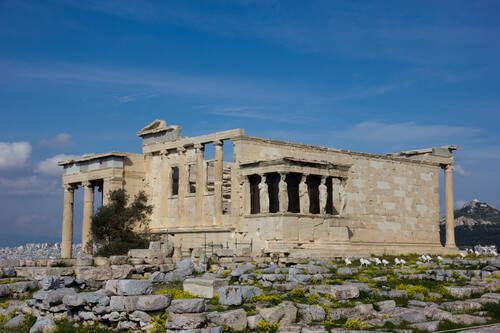

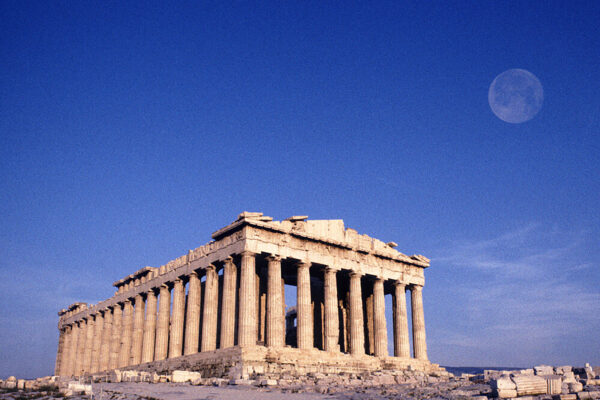
Table of Contents
What You Will Study
Study an Entire Civilization
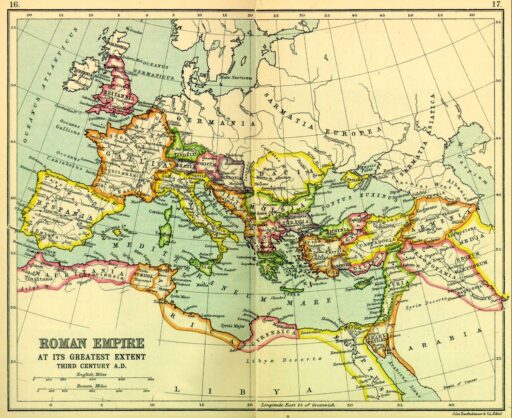
The world of the ancient Greeks and Romans stretched from Britain to the deserts of North Africa and Spain to Afghanistan, encompassing the entire Mediterranean and Black Seas coastline.
Ancient History
The Romans brought to the known world the common Hellenistic civilization, which they inherited from the Greeks, which itself had spread through the Middle East through the conquests of Alexander the Great. The political order, city-planning, and infrastructure, such as roads brought by the ‘Roman Peace’ (Pax Romana) fostered the rapid spread of political, artistic, and philosophical ideas. When the empire declined, in Late Antiquity, it bequeathed its rich philosophical and political heritage to Latin Medieval Christendom, Greek Byzantium, and the Islamic world.
Classics students study all aspects of this history, such as:
- Minoan and Mycenaean civilizations of Greece during the Bronze Age
- The archaic and classical periods in Greece, from the emergence of Greek city-states to the disastrous world-war between Athens and Sparta
- Alexander the Great and the birth of Hellenistic Greek civilization
- The rise of the Roman Republic and its transformation into a world empire
- Students study archaeological evidence such as architectural ruins, material remains, artistic products, etc.
- The relations between Rome and its non-Roman neighbours at the fringes of the empire
- The decline of Rome and the transition to Medieval Europe, Greek Byzantium, and the Islamic world
- Political change, social and economic forms, military campaigns
- Students read primary texts such as Herodotus’ The History, Thucydides’ The Peloponnesian War, Livy’s The History of Rome, Caesar’s The Gallic Wars, Tacitus’ The Annals, etc.
Ancient Literature
Greek and Latin literature is incredibly rich. Most of the literary forms we know either had their origin in the classical world, or had ancient parallels: epic, drama, lyric poetry, love poetry, satire, the novel, etc.
Classics students study the riches of Greek and Latin literatute, such as:
- Greek and Roman epic: Homer’s Iliad and Odyssey and Virgil’s Aeneid
- Greek Tragedy and Comedy: Aeschylus’ Oresteia, Sophocles’ Oedipus the King, Aristophanes’ Clouds
- Roman Comedy: Plautus’ Swaggering Soldier
- Greek and Latin lyric poetry, love poetry, etc.: Archilochus, Sappho, Simonides, Catullus, Propetius
- Satire: Horace and Juvenal
- The novel: Petronius’ Satyricon
Mythology
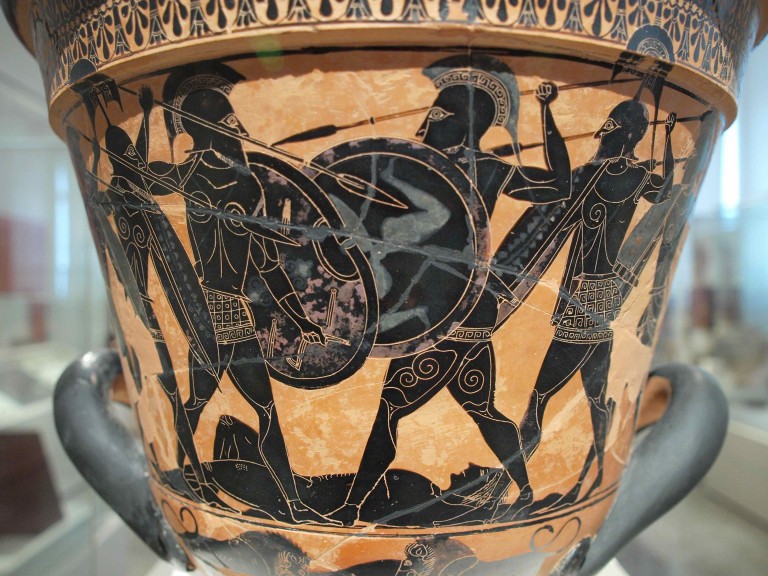
What we think of a ‘Greek Mythology’ are the stories about the gods and heroes found in Greek and Roman literature that, for the Ancients, were an important part of their religious life. The Olympian gods were imagined by the ancients in striking and vivid ways as just like human beings, only deathless and more powerful than us, and beyond us in wisdom and insight into the machinery of the universe.
Classics students study the sources of Greek and Roman mythology, like:
- The Greek pantheon: Zeus, Poseidon, Hades, Hera, Apollo, Athena, Demeter, Artemis, Aphrodite, Ares, Hermes, Hephaestus, Hestia, and Dionysus
- Known to the Romans as Jupiter, Neptune, Pluto, Juno, Apollo, Minerva, Ceres, Diana, Venus, Mars, Mercury, Vulcan, Vestia, and Bacchus
- Stories such as Jason and the Golden Fleece, the fall of the house of Atreus, Oedipus, the labours of Hercules, etc…
- Primary texts such as Hesiod’s Theogony, Aeschylus’ Prometheus Bound, Euripides’ Medea, and Ovid’s Metamorphoses
Art and Architecture
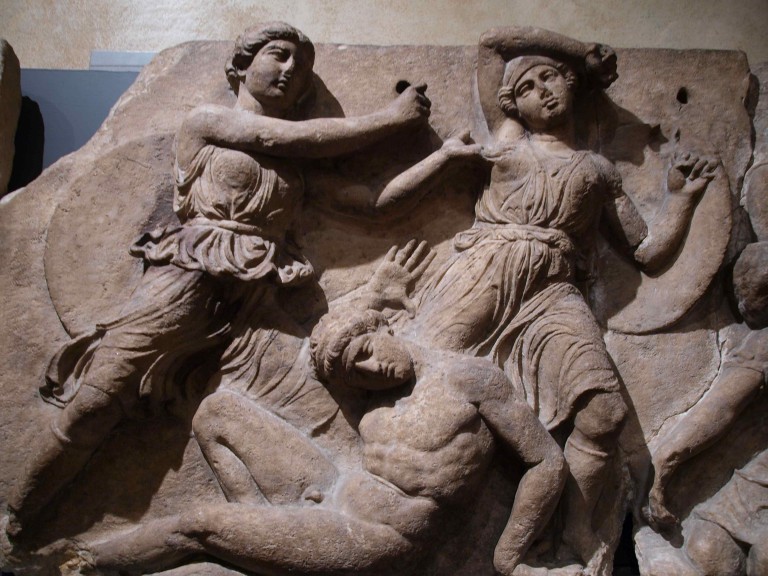
When we think of Greek and Roman art and architecture, we think of the symmetry and order, the perfect physique of the statue of a god or goddess, the incredible movement in Hellenistic sculpture, and the order and grandeur of Greek temples and Roman civic buildings. But, in addition to these aspects emphasised since the Renaissance, Ancient art includes the outlandish and grotesque, the ‘primitive’, and simple and moving images that give us insight into real people’s daily lives.
Classics students study all varieties of ancient art and architecture, such as:
- The evolution of major cities like Athens and Rome
- The form and function of Greek sanctuaries such as Delphi, Olympia, and the Athenian acropolis
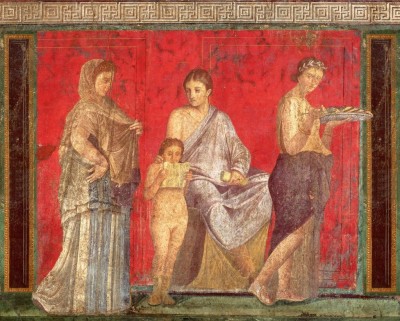
- Images of ancient vase paintings and wall frescoes, which are rich in the minor details of ancient daily life
- Ancient buildings such as The Parthenon, and the Roman Pantheon and Colosseum
- Artworks such Cycladic figures, the Aphrodite of Melos (Venus de Milo), Apollo Belvedere, and Winged Victory of Samothrace
- Religious artwork such as Comedic and Tragic Masks and Satyr images
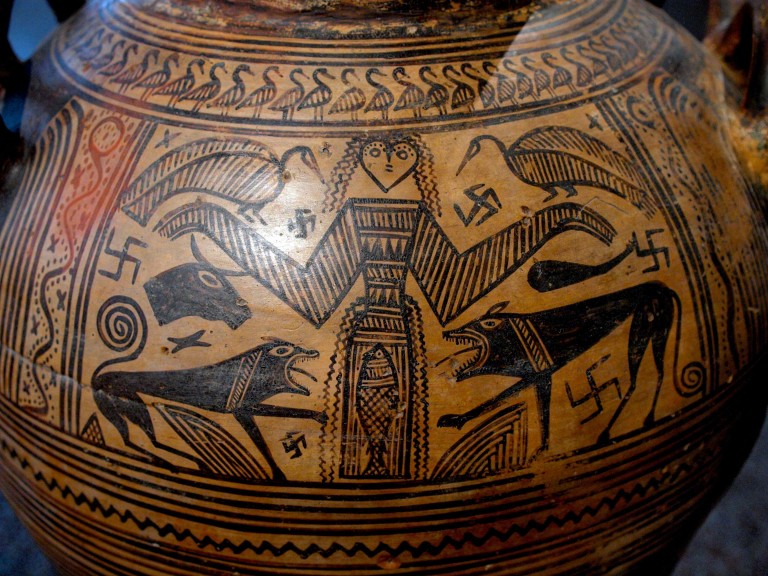
- The grotesque and ‘primitive’, such a The Mistress of Beasts vase image
Archaeology
Classical Archaeology is the study of the material remains of Ancient Greece and Rome. It ranges from the study of architectural remains, artistic works, and the implements of everyday life, from famous sites such as Troy, Mycenae, or Knossos, to Greek sites along the Ionian coast in modern-day Turkey, to Greek and Roman sites in Sicily, Italy, and as far afield as Africa, France, and Britain.
Meet Our Graduates


Ancient Philosophy, Rhetoric, and Political Theory
Classical Athens was the setting of intense discussions about the makeup of the cosmos, human nature, and how best to think and to speak, among philosophers such as Socrates, Plato, and Aristotle, and sophists and rhetoricians such as Protagoras and Isocrates. The Romans took what they found useful from the traditions of Platonism, Aristotelianism, and Stoicism, and added their own practical bent to it, to work out a theory and practice of politics suited for world government.
Classics students study the rich intellectual history of Greece and Rome:
- Presocratic Philosophy and Socrates
- Plato and Aristotle
- The Stoics, Epicureans and Sceptics
- Neoplatonism and Neo-Aristotelianism
- The Sophists and Rhetoricians
- Cicero, Seneca, Marcus Aurelius
- The adoption of Greek philosophy into Judaism, Christianity, and Islam
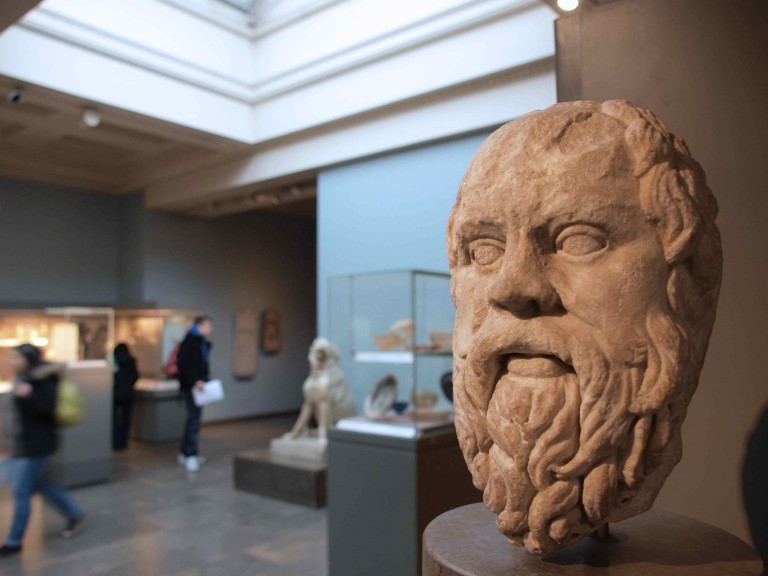
Socrates. British Museum, London. Roman copy of lost Greek original dating to 380—360 B.C.E.
Ancient Science
Our word ‘science’ expresses the Greek ἐπιστήμη (epistêmê) or Latin scientia, a knowledge of the orderly workings of nature. Ancient science was partly the same as ancient philosophy, and included inquiries into the basic makeup of the cosmos, from the revolutions of the heavenly spheres down to the four elements, the study of the physiology and behaviour of animals and plants, and pure mathematics, and extended to applied fields such as medicine and mechanics.
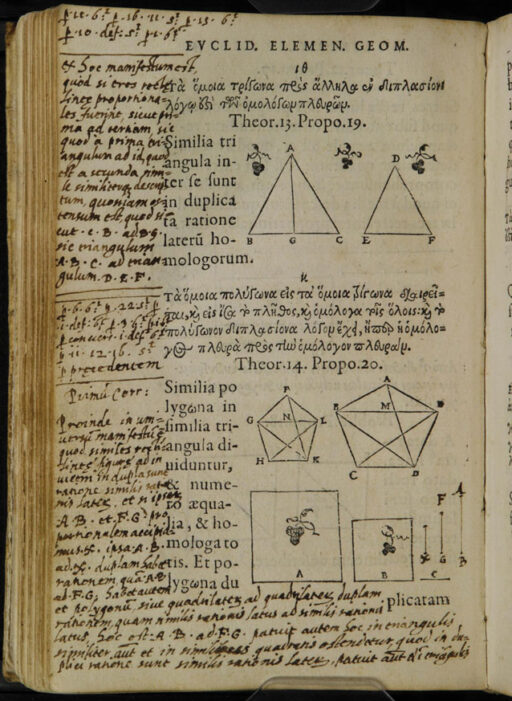
Greek and Latin
Carleton students can study the Ancient World without learning classical languages, but the experience is greatly enriched by learning Ancient Greek and/or Latin. Learning another culture’s language gives you invaluable insight into its patterns of thought. Unlike English, Greek is a fundamentally verb-based language, which gives it a rich fluidity and movement; Latin has a stark and spare beauty that comes from the fact that it has no word for ‘the’ or ‘a’, so that for example ‘a ship’ ‘the ship’ and ‘ship’ are all expressed by ‘navis’.