Defending the North: How Cultural Identity Shapes Security Policy in Canada and Ukraine
By: Valeriia Gusieva
Rooted in colonial ambitions and imperial revisionism, Russia’s ongoing invasion of Ukraine aims to dismantle the rules-based international order that many have taken for granted since WW2’s conclusion in 1945. The Russian Federation’s primary ontological claim centres around the belief that Ukraine was the creation of Russia and therefore, has no legitimate right to exist or exercise sovereignty. This narrative is often accompanied by accusations of the suppression of Russian-speaking Ukrainians that need to allegedly be “rescued” from Western influence. While territorial conquest has been a key objective of the Russian invasion, a significant focus has also been placed on erasing Ukrainian cultural identity, language, and heritage. Previous analyses explored this cultural destruction and colonial legacy that the war in Ukraine continues to expose. Despite these justifications, the Russian military has faced fierce resistance from both the Ukrainian Armed Forces and ordinary civilians. The Kremlin’s original plan to seize Ukraine within days collapsed in the face of extraordinary Ukrainian bravery and resilience, both on the battlefield and in the informational space, where Russian propaganda aimed to sway international opinion and sow division within Ukraine itself. The Bravery campaign, launched with the support of the Office of the President of Ukraine, the Cabinet of Ministers, the Ministry of Culture and Information Policy, and the Ministry of Digital Transformation, amplified the message of courage and resilience as a national resource, one that Ukrainians draw from their ancestors in a generational struggle against Russian expansion.
Canada’s most recent defence policy, Our North, Strong and Free: A Renewed Vision for Canada’s Defence, emphasizes national security and sovereignty as top priorities, particularly in relation to Canadian sovereignty in the Arctic and northern regions. Learning from Ukraine’s example, where national and cultural identity have served as strategic assets in strengthening military morale and national resilience, Canada should recognize Indigenous cultural knowledge and pride as vital components of its national security framework. Ukraine’s struggle to protect its national identity in the face of brutal Russian aggression resonates with the experiences of Indigenous peoples across Turtle Island, creating opportunities for solidarity and cultural diplomacy. While Canada has shown strong support for Ukraine’s resistance efforts, the government continues to overlook its responsibilities toward its own Indigenous population. This analysis will examine the role of Indigenous, particularly Inuit, communities in Canadian defence policy, with a focus on their involvement in the Canadian Rangers program. It will also explore the broader connection between cultural identity and national defence strategy, highlighting how cultural resilience can serve as a foundational pillar of security.
Arctic Defence in a Changing Security Landscape and Canadian Rangers
Our North, Strong and Free: A Renewed Vision for Canada’s Defence outlines the key security challenges facing Canada’s security landscape today. These include climate change, which is reshaping the Arctic landscape; rising global instability, particularly the return of war to Europe following Russia’s full-scale invasion of Ukraine; and the rapid advancement of technology, which is transforming the nature of warfare and understandings of security as we know it. While the Canadian government has recently taken steps to increase its NATO spending and strengthen partnerships with allies beyond NATO, Arctic defence remains a central pillar of its defence policy. Please refer to our earlier analyses to learn about New Defence Partnerships Beyond NATO and Canada’s evolving opportunities to contribute to European Security.
When it comes to demonstrating the strength of the Canadian military in the Arctic, the Canadian Armed Forces (CAF) rely on approximately 300 full-time personnel, alongside 1,700 Canadian Rangers. Additional personnel are regularly flown in for exercises designed to showcase operational capabilities such as surveillance and threat detection. The Canadian Rangers, often referred to as the “eyes and ears of the North,” play a critical role in maintaining territorial integrity and security in the region, helping to reaffirm Canadian sovereignty.
The Canadian Rangers, a subcomponent of the Canadian Army Reserve, serve only when placed on active duty or called upon during emergencies. Though sometimes mischaracterized as a purely military or Indigenous program, the Rangers are, in fact, a unique example of how the CAF leverage the diverse skill sets of Canadians from varied ethnic and social backgrounds to support home defence and public safety. As many operations take place within and around Indigenous communities, nations, and territories, the Rangers’ engagement with traditional Indigenous knowledge and their deep connection to the land have proven critical over time. In addition to their operational duties, Rangers also train CAF personnel in survival skills and land-based knowledge, bridging military capabilities with Indigenous stewardship and expertise. As of November 2022, Indigenous peoples made up 2.9% of the overall CAF, while approximately 23% of Canadian Rangers self-identify as Indigenous.
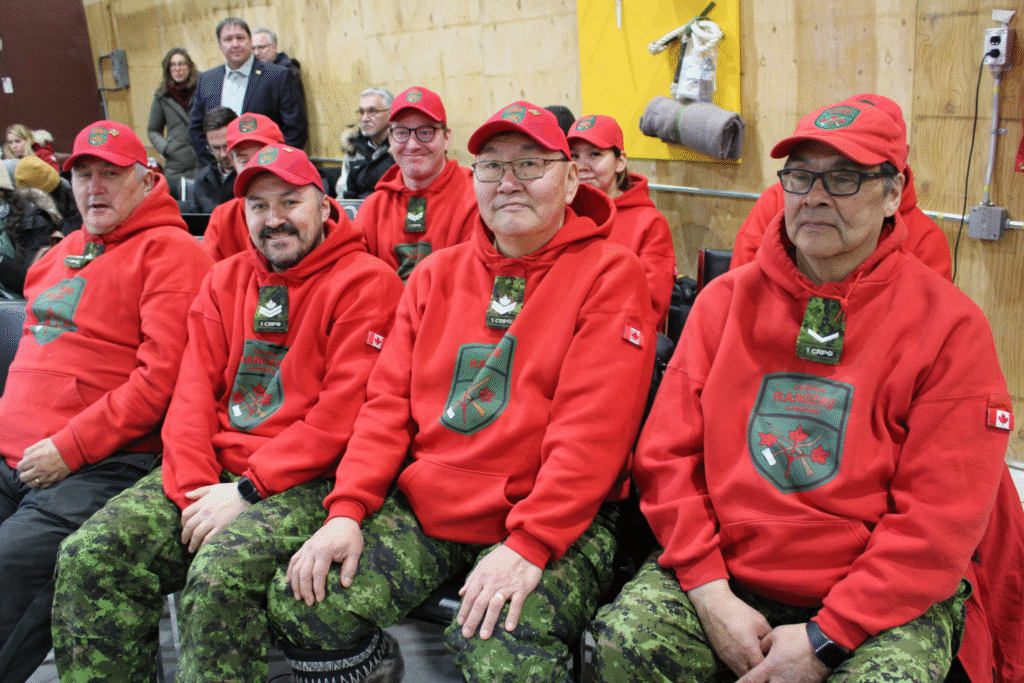
In March 2025, members of the CAF gathered to conduct a training exercise simulating what a northern defense operation might look like in the event of an attack. The annual exercise took place near the Cree Nation of Chisasibi in Eeyou Istchee, with buildings belonging to the Nation used as headquarters. Harsh weather conditions, snow, and temperatures dropping far below zero mirrored typical Arctic environments and served as a realistic challenge for the soldiers. The proximity to the Indigenous community also played an important role. Canadian Rangers, some of whom are members of the local community, participated in the exercise and shared their traditional knowledge on survival techniques, such as how to build shelters using small trees and other natural materials.
An essential step on the path toward reconciliation in Canada involves recognizing the distinct identities encompassed within the term “Indigenous communities,” which refers collectively to First Nations, Métis, and Inuit peoples. Each of these groups possesses unique cultural traditions, identities, knowledge systems, histories, and worldviews. While the Canadian federal government continues to work toward fulfilling the 94 Calls to Action outlined by the Truth and Reconciliation Commission, the persistent underrepresentation of Indigenous voices in policy-making processes remains a significant challenge. Historically, federal policy has instrumentalized Inuit communities in efforts to assert Canadian sovereignty in the North. One notable example is the forced relocation of 17 Inuit families from Inukjuak, Northern Quebec, to remote High Arctic settlements in 1953 and 1955. These relocations were executed with little concern for the hardships imposed on the 92 individuals involved; instead, they were intended to bolster national sovereignty in the face of perceived Danish and American territorial claims, as well as to provide low-cost labor for RCMP and RCAF installations.
In recent years, the federal government has highlighted initiatives like the Canadian Rangers as key examples of innovative Arctic defence strategies aimed at reinforcing Canadian sovereignty. During the 2025 federal election, support for the Canadian Rangers emerged as a rare point of consensus among the Liberal, Conservative, and New Democratic parties. However, this emphasis on sovereignty-driven defence initiatives risks reinforcing a historical pattern wherein Indigenous participation is leveraged to advance national interests, while the distinct social, economic, and cultural priorities of Inuit communities may be overlooked, marginalized, or misunderstood.
Language, Culture, and Security
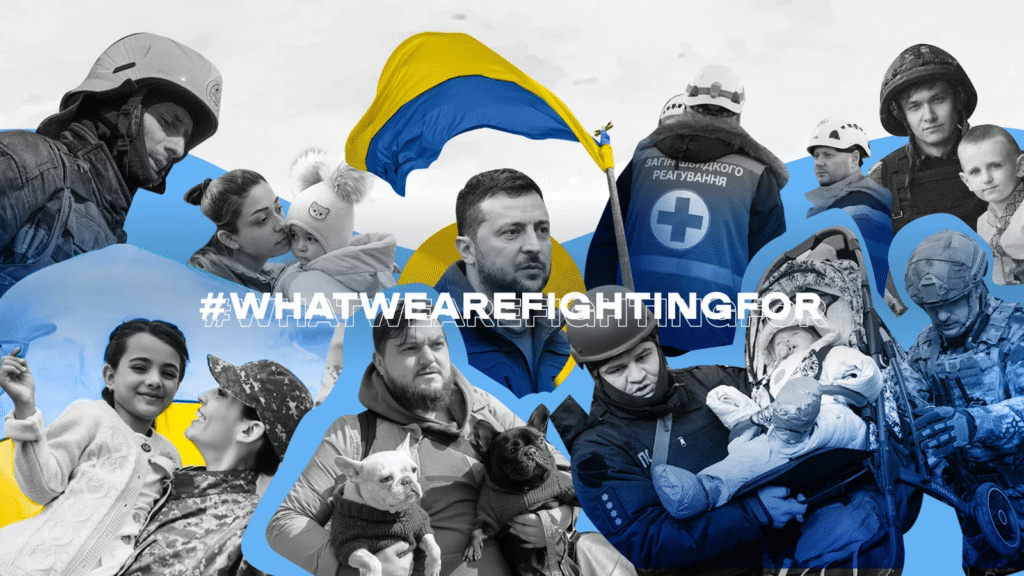
A notable example of a successful campaign that used culture as a unifying force and an effective tool for information dissemination, both domestically and internationally, is the Ukrainian Ministry of Foreign Affairs’ initiative, “What We Are Fighting For.” This project highlights the unique cultural and historical characteristics of each Ukrainian region through a series of 26 articles, available in both English and Ukrainian. Developed in collaboration with leading national historical institutions and experts, the campaign offers an in-depth exploration of the authentic and diverse history of Ukraine’s 24 regions, including Crimea. Many of these insights challenge long-standing Russian disinformation narratives, particularly those related to Crimea, Donetsk, and Luhansk. The campaign adopted the slogan, “We have 603,628 reasons for what we are fighting for”, a reference to the total area of independent Ukraine in square kilometers. This message reinforces the idea that, despite regional differences and distinct local traditions, Ukrainians remain united in their resistance to unjustified Russian aggression and territorial encroachment.
While Ukraine has actively mobilized cultural identity and historical narrative as tools of national resilience and international communication, Canada’s engagement with Indigenous communities, particularly through programs like the Canadian Rangers, reveals a more complex relationship, shaped by a history of colonialism and ongoing challenges in fully recognizing and supporting Indigenous knowledge, language, and self-determination. The historical concept of the Canadian Rangers is rooted in the incorporation of the unique knowledge and perspectives of northern Indigenous communities to support efficient military operations, while also providing an opportunity for the northern Indigenous population to participate in the CAF and bring their community-first perspective into the equation. Traditional skills such as living off the land, along with holistic well-being, are central to Indigenous communities. In the case of Inuit communities, these include survival skills in harsh Arctic conditions, skills that, if not shared and practiced, could be at risk of being lost. Their celebration and sharing through joint military exercises point to the increasing recognition of the value of Indigenous traditional knowledge and the appreciation of their unique identity.
Language plays a vital role in shaping any culture. This is evident among Ukrainians, who have made significant efforts to preserve and promote their language as a key marker of national identity, distinct from Russia. A similar commitment to language preservation can be seen in many Indigenous communities across Canada. The Truth and Reconciliation Commission highlighted how the residential school system sought to erase Indigenous identities by forbidding children from speaking their native languages, often punishing them for doing so. Today, over 70 Indigenous languages are still spoken by First Nations, Métis, and Inuit peoples in Canada. However, the number of Indigenous people fluent in these languages continues to decline as a result of settler colonial practices and systems.
In their report “Measuring the Success of the Canadian Rangers”, Lackenbauer and Kikkert emphasize the importance of language in both community-building and cultural preservation. They note how Ranger patrols have created opportunities for intergenerational learning, with young Rangers practicing and improving their Inuinnaqtun under the guidance of senior leaders. These leaders encourage youth to use traditional terms for place names and give commands in their native tongue, all while building confidence and strengthening cultural identity.
While military strength is often measured in terms of equipment, technology, or the number of personnel, the cultural dimension of defence is frequently overlooked. Canada can learn from Ukraine’s example, where national identity and cultural heritage have been strategically mobilized to strengthen resistance and resilience. In particular, Canada has the opportunity to recognize and integrate the unique knowledge systems of Indigenous communities, such as the survival expertise of Inuit peoples in the Arctic, into its broader defence strategy. This approach not only enhances national security but also aligns with Canada’s commitments under the Truth and Reconciliation Commission’s Calls to Action. Strengthening public awareness of the Canadian Rangers and their critical role in Arctic defence is essential, especially as global power dynamics shift and actors like Russia increasingly challenge the international rules-based order, including through heightened interest in the Arctic. By valuing Indigenous knowledge and fostering inclusive defence frameworks, Canada can build a more resilient and ethical approach to national security.