NATO Commitments and Initiatives to Ukraine since 2022
By Sam Paquette
The NATO Summit Declarations are the main method of communication through which member states discuss the Alliance’s collective security challenges and priorities. Since Russia’s full-scale invasion of Ukraine in 2022, each Declaration has made successively stronger political statements pledging increasingly larger amounts of military and financial assistance to Ukraine. The analysis below provides a chronological overview of the key initiatives and commitments made to Ukraine at the 2022 Madrid Summit, the 2023 Vilnius Summit, the 2024 Washington Summit, and the 2025 Hague Summit. The commitments made from 2022 to 2024 show how NATO has steadily developed, built, and embedded structures to support Ukraine. In contrast, the 2025 Hague Declaration’s weak language and focus on collective spending commitments make NATO’s support to Ukraine increasingly ambiguous.
The 2022 Summit in Madrid, Spain:
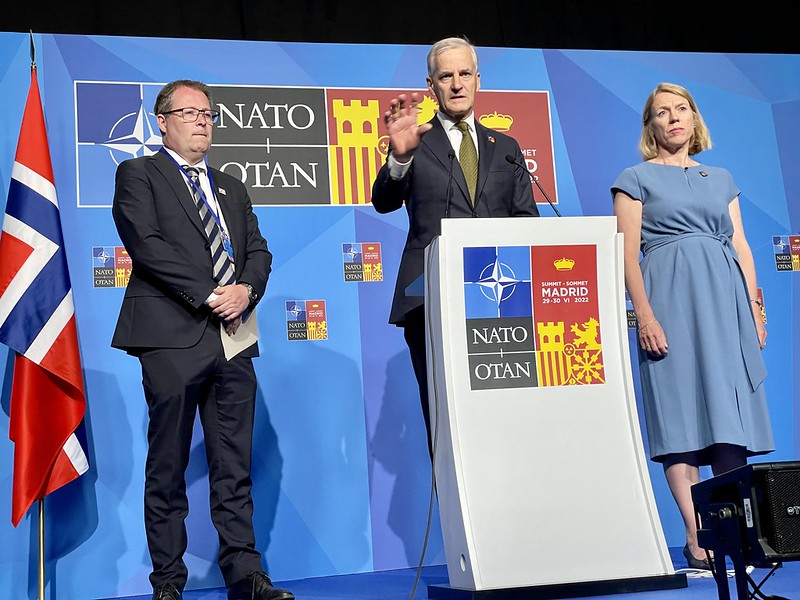
The 2022 NATO Summit in Madrid is the first Summit that exemplifies NATO’s shift to large-scale support for Ukraine following Russia’s full-scale invasion. During this Summit, NATO updated its strategic concept document, which committed to increasing troops on NATO’s eastern flank and framed Russia’s invasion of Ukraine as the foremost threat to transatlantic security. The document also reaffirmed NATO’s decision – made during the 2008 NATO Bucharest Summit – to eventually make Ukraine and Georgia NATO members.
At this Summit, NATO members also agreed to strengthen the Comprehensive Assistance Package (CAP) for Ukraine. First initiated at the Warsaw Summit in 2016, the CAP involves the delivery of non-lethal military equipment (fuel, medical supplies, body armour) and provides capacity-building support to Ukrainian forces over the short term. However, the aid package announced in the 2022 Declaration contained no specific dollar amount and was instead contingent on the annual political will of NATO members. In sum, the 2022 Declaration expresses strong solidarity for Ukraine but also relies heavily on non-binding commitments by member states to provide material support for the Ukrainian Armed Forces.
The 2023 Summit in Vilnius, Lithuania:
In contrast, the 2023 Vilnius Declaration makes three significant commitments that solidify NATO’s support for Ukraine over the long term. First, NATO leaders committed to ensuring that the CAP is transformed into a multi-year assistance program to modernize Ukraine’s defence sector and improve interoperability with NATO. Compared to the 2022 Summit, this multi-year funding commitment provided Ukraine with a guarantee of long-term financial support, as well as the start of an institutionalized partnership with NATO that would lock its members’ promises to bring Ukraine into the Alliance.
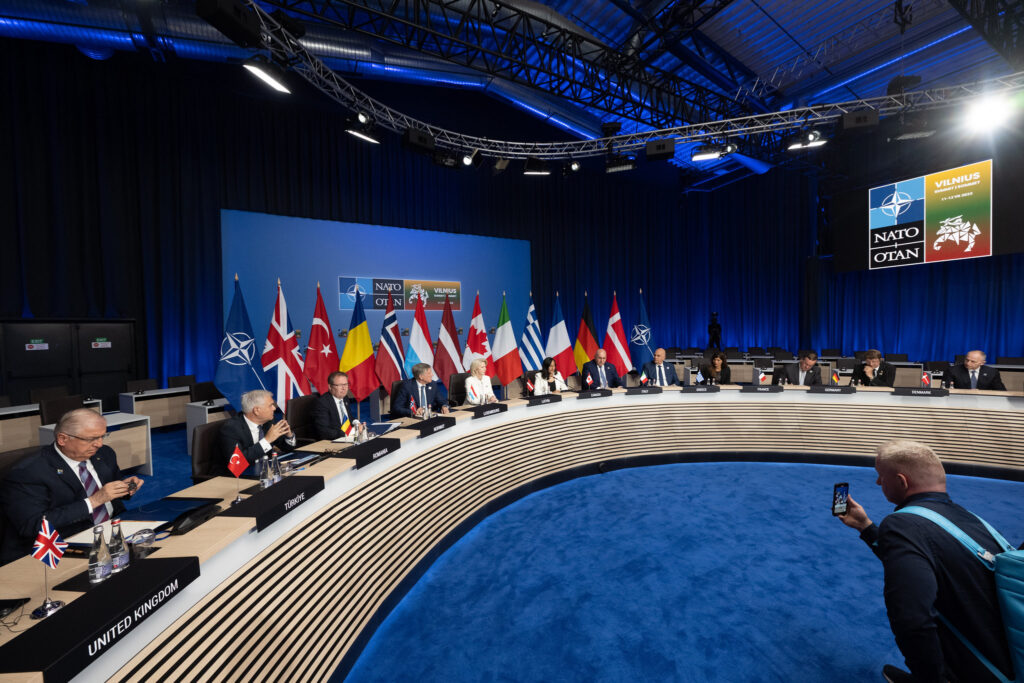
Second, the Declaration noted that Ukraine will no longer need a Membership Action Plan (MAP) to become a NATO member. In NATO accession procedures, a MAP outlines the political and military reforms that potential members need to make in order to meet NATO standards. While this move to waive Ukraine’s MAP requirement was not a formal invitation to join NATO, it did remove several procedural hurdles needed for Ukraine to become a full member. In 2023, the consensus among several NATO members was that Ukraine would only join after the current Russia-Ukraine war finishes.
Third, the Vilnius Summit Declaration established the NATO-Ukraine Council, a high-level forum for Ukrainian political and military leaders to meet with their NATO counterparts to deepen NATO’s integration into the Alliance. The Council also serves as a crisis consultation mechanism, providing Ukraine with greater access to NATO’s senior leadership. Thus, in contrast to the rhetorical and non-committal nature seen in 2022, the 2023 Declaration takes a big step to formalize NATO’s support and alignment with Ukraine.
The 2024 Summit in Washington, DC, United States:
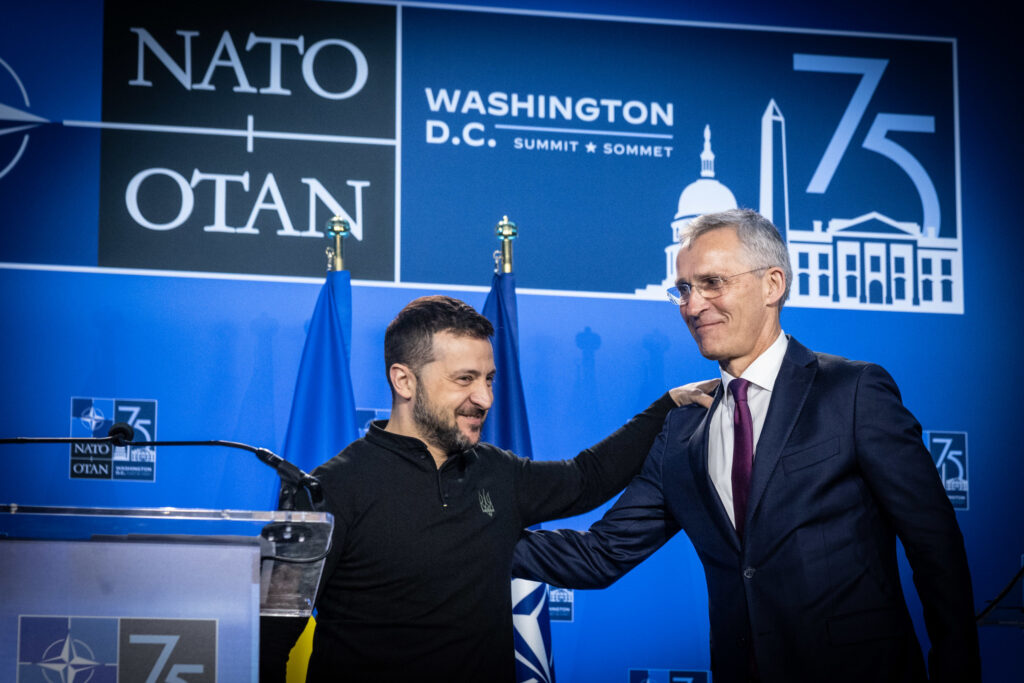
At the 2024 Summit in Washington, NATO leaders further institutionalized support for Ukraine by announcing a minimum baseline funding of €40 billion for the CAP. Because the 2023 CAP financing did not include specific figures, this €40 billion pledge was the first detailed funding given to the program, effectively transforming the CAP from a policy goal to an active, trackable commitment. This pledge also provided the necessary financial backing to establish the NATO Security Assistance and Training for Ukraine (NSATU), which serves as a key logistical hub for the provision of military equipment to Ukraine and to support Ukraine’s defence industrial base. Completing the NATSU’s logistical role, the 2024 Summit also saw the creation of the NATO-Ukraine Joint Analysis, Training and Education (JATEC), which provides analysis on lessons learned from Ukraine and the testing of new military concepts for NATO.
The Declaration also includes strong language regarding Ukraine’s membership in NATO, such as “[NATO]… will continue to support [Ukraine] on its irreversible path to full Euro-Atlantic integration, including NATO membership.” Similar to previous Summits, NATO leaders established joint centres to enhance defence industrial cooperation with Ukrainian armed forces to gain insights from their experience and to promote reforms that further deepen Ukraine’s accession into NATO.
The 2025 Summit in The Hague, Netherlands:
The 2025 Summit Declaration, by contrast, was composed of five main commitments, with its primary focus being the 5 percent GDP spending pledge. Taken at face value, this Declaration frames Russia as NATO’s greatest threat but lacks strong diplomatic language supporting Ukraine compared to earlier declarations. It also makes no mention of Ukraine joining NATO, which was emphasized in last year’s Declaration.
Given President Trump’s reluctance to expand aid for Ukraine, European leaders decided to shift their focus towards a narrative focused on promoting European security. Importantly, Ukraine was folded into this larger narrative of European Security with NATO members agreeing to pay more for their own defence as long as “support to Ukraine” could be counted under that same 5 percent GDP commitment.
Conclusion:
In conclusion, the commitments made in the NATO Declarations from 2022 to 2024 evolved from voluntary acts of support to long-term commitments aimed at bringing Ukraine into NATO. However, the 2025 Summit Declaration marked a shift in priorities, no longer framing support for Ukraine as a key priority for the Alliance. Unlike previous Declarations, the 2025 Declaration did not contain any meaningful language on Ukraine’s accession to NATO. This change reflects internal divisions within NATO, particularly tied to the US’s unclear security guarantees towards Europe and skepticism about sending aid to Ukraine.
While NATO’s stance remains ambiguous and divided, support for Ukraine will likely continue in the form of bilateral assistance and issue-based coalitions, with actors such as Canada and the European Union stepping up to provide more aid. Ultimately, this trajectory raises concerns about NATO’s long-term decision-making capacity and credibility in following through on its previous commitments.