Russia in the Gulf – A Calculated Partner or a Strategic Disruptor?
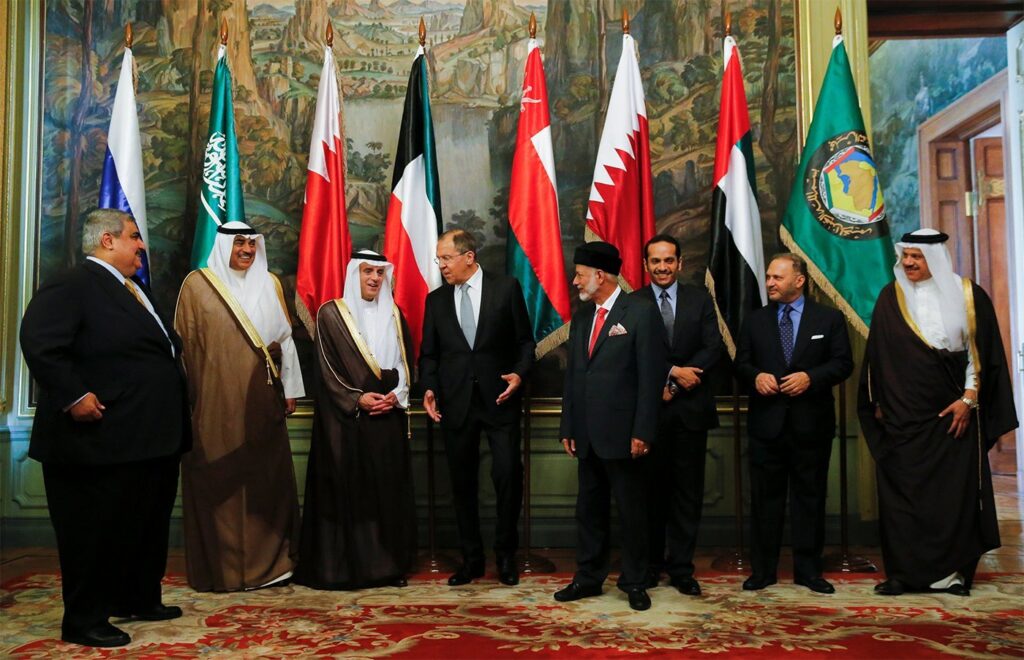
Russia’s relationship with the Gulf Cooperation Council (GCC) is defined by cautious yet purposeful engagement, rooted in shared interests rather than deep strategic alignment. This dynamic was on display during the 7th Russia-GCC Strategic Dialogue held in Riyadh in September 2024, where both sides reaffirmed their commitment to cooperating on a wide range of areas including trade, security, and sustainable development as set out in their 2023-2027 Joint Action Plan. (Gulf Research Center, 2025).
At the heart of this engagement lies a mutual emphasis on multilateral diplomacy and conflict resolution. Russia, seeking to assert itself as a counterweight to Western influence, has carefully positioned its diplomacy in the Gulf as part of a broader strategy of global repositioning. For the GCC states, engagement with Moscow serves a more tactical purpose: maintaining open lines with all major powers while preserving strategic autonomy. The partnership facilitates diversification of international relations, coordination within the Organization of the Petroleum Exporting Countries (OPEC) and the broader OPEC+ group, as well as a role in managing regional crises, particularly those involving Syria and Iran (Gulf Research Center, 2025).
Economic Partnerships and Investment
Economic cooperation – especially in the energy sector – has become a cornerstone of Russia’s engagement with the GCC, rooted in shared interests and Moscow’s strategic efforts to evade Western sanctions. As the world’s second-largest oil and gas producer, Russia plays a critical role in coordinating global energy markets, particularly through OPEC+ and the Gas Exporting Countries Forum (GECF). From Russia’s perspective, collaborative efforts within these multilateral frameworks not only serve its long-term national interests but also help stabilize the economies of participating states. The 62% increase in trade volume with Saudi Arabia in 2024, which has since quadrupled in the first quarter of 2025, reflects how energy coordination has deepened into broader economic engagement (Fazelyanov, 2021; Novak, 2025).
The United Arab Emirates (UAE) has emerged alongside Saudi Arabia as a particularly significant economic partner for Russia. Bilateral trade between Russia and the UAE rose from US$3.5 billion in 2019 to US$11.2 billion in 2023 before dropping slightly to US$9.5 billion by the end of 2024. Concurrently, shipments from the UAE to Russia rose sharply – from US$300 million to US$800 million – over the same period. This surge is largely due to the establishment of approximately 4,000 Russian companies in the UAE, many of which facilitate parallel imports of Western goods and streamline payments, effectively turning the UAE into a critical logistics and financial hub for Russia’s international trade (Russia’s Pivot to Asia, 2025).
Investment relations between Russia and the Gulf states have also strengthened significantly. Over the past decade, Russia and Saudi Arabia have launched more than 40 joint investment projects across key sectors including IT, transport, infrastructure, and petrochemicals (Novak, 2025). The creation of the Russian-Saudi Economic Council (RSEC) in 2019 formalized this cooperation, focusing on large-scale ventures, localizing production in Saudi Arabia, and facilitating Russian business entry into the Kingdom’s markets (Fazelyanov, 2021). In the UAE, Russian investment exceeded US$30 billion, while Emirati investments in Russia reached US$16.8 billion by 2024, further highlighting the depth of bilateral economic integration (Russia’s Pivot to Asia, 2025).
Beyond energy and investment, new areas of collaboration are emerging. Tourism between Russia and Saudi Arabia has grown nearly fivefold over five years, with a sixfold rise in Saudi citizens visiting Russia in 2024 (Novak, 2025). Russia also ranked second in terms of total visitors to the UAE that year, accounting for 7% of all entries (Russia’s Pivot to Asia, 2025). In the automotive sector, the assembly of the Russian luxury car Aurus Senat began in Abu Dhabi in November 2023, with plans for SUV production currently underway. Financial ties have expanded as well, with the UAE sovereign wealth fund acquiring a 6.86% stake in the Moscow Stock Exchange in late 2024. Additionally, a Free Trade Agreement (FTA) between Russia and the UAE – part of a broader pact with the Eurasian Economic Union – is expected by the end of June 2025 (Russia’s Pivot to Asia, 2025). Notably, Russia’s proposal to establish a BRICS Grain Exchange was discussed in June 2025, highlighting an effort to further diversify trade and strengthen food security among BRICS nations (Novak, 2025).
Military and security outreach
Since the early 2010s, Russia’s potential entry into the Persian Gulf arms market has been a subject of ongoing discussion, spurred by Saudi Arabia and the UAE’s exploration of defence cooperation with Moscow. Saudi Arabia expressed interest in acquiring advanced Russian military hardware, such as the S-400 air defence system and anti-tank guided missile systems, leading to a formal military cooperation agreement signed in August 2021. This move was seen as part of Riyadh’s broader strategy to diversify defence partnerships and reduce reliance on the US. Similarly, the UAE has engaged in talks with Russia, including discussions on jointly producing the Su-57 fighter jet. Despite these initiatives, actual implementation has been limited, likely influenced by Gulf states’ cautious approach to balancing their diversification efforts with longstanding security ties to Washington. While refraining from joining Western sanctions after Russia’s full-scale invasion of Ukraine in 2022, Gulf states have maintained a neutral stance to preserve ongoing military dialogues with Russia (Shaaban, 2025).
Despite expressions of interest and signed agreements, Russian arms exports to the broader Middle East have significantly declined in recent years. Between 2019 and 2023, Russia accounted for just 4.6% of the region’s total arms imports, a sharp drop of 61% compared to the 2014–2018 period. In 2022, there were no reported major arms exports from Moscow to the Middle East. This decline reflects both logistical disruptions from the war in Ukraine and a growing preference among regional buyers for Western or domestically produced systems (Hussain, 2024).
Soft Power via Religion (Orthodox-Islamic dialogue), Media, and Disinformation.
With Islam as Russia’s second-largest religion, the Kremlin leverages this cultural and religious connection as a foundation for strengthening ties with the Middle East. Initiatives like the Islamic banking pilot program, aimed at fostering financial cooperation and mutual understanding, are designed to attract investment from Gulf countries. Additionally, events such as KazanForum 2025 promote economic, scientific, and cultural collaboration, highlighting shared civilizational values. Together, these efforts underscore Russia’s pragmatic strategy of using soft power and cultural affinity to deepen its relationships with GCC states (Bifolchi, 2025).

This approach reflects what some scholars call “authoritarian soft power,” which contrasts with Western models focused on promoting liberal democratic values. Rather than advocating for democracy or civil society, Russia emphasizes stability, sovereignty, and traditionalism, resonating with regimes in the Middle East that are wary of Western liberalism. By positioning itself as a consistent, non-interventionist partner, Russia seeks to fill the gap left by declining Western influence and the increasing demand for alternative partnerships. Unlike Joseph Nye’s model, which defines soft power as the ability to attract through culture, political values, and foreign policy, Russia’s version of soft power is rooted in authoritarian ideals. It uses cultural diplomacy, religious affinity, and economic cooperation to appeal to actors who value hierarchy, conservatism, and order, thereby reinforcing alternative models of governance and social organization (Borshchevskaya, 2021).
Local Perceptions within the GCC States
The evolving relationship between Russia and the GCC states reflects a complex interplay of strategic pragmatism, geopolitical recalibration, and cautious engagement. Official Gulf media coverage and regional think tank analyses reveal a carefully managed narrative that highlights cooperation with Russia within multilateral frameworks like OPEC+ and BRICS, while maintaining an overarching policy of neutrality and diversification. As the global order becomes increasingly multipolar and US regional commitments appear more uncertain, GCC states are actively expanding ties with non-Western powers such as Russia and China. However, this realignment is not without its challenges, particularly given Russia’s deepening ties with Iran and its divergent stances on critical regional conflicts, such as those in Syria and Yemen.
Media Opinion
Coverage of Russia in official Gulf media outlets is generally limited and not highly divergent, reflecting a cautious and pragmatic editorial line. While differences in emphasis exist, reporting tends to align with state policies of neutrality and strategic balancing. The overview provided here offers a general sense of how Russia-related developments are framed across key platforms, rather than capturing deep editorial contrasts.
Saudi outlets such as the Saudi Press Agency (SPA) regularly report on Russia’s foreign policy activities, including high-level meetings such as those between Russian Foreign Minister Sergey Lavrov and European Union (EU) officials concerning the Libyan crisis (Saudi Press Agency, 2025). SPA also highlights events like the “Russia and the Islamic World: Practical Steps in Media Cooperation” conference, emphasizing Russia’s historical ties and growing engagement with Islamic countries (Saudi Press Agency, 2022). Coverage of OPEC+ meetings is prominent, often commending Saudi Arabia’s leadership in ensuring oil market stability while noting Russia’s compliance with production cuts and its role as a cooperative partner (Saudi Press Agency, 2024).
The Emirates News Agency (WAM) focuses on Russia’s role within the BRICS framework, reporting on joint initiatives in areas such as science, innovation, healthcare, culture, and security (Emirates News Agency, 2024). WAM underscores the significance of OPEC+ as a six-year partnership built on mutual trust among 23 oil-producing countries (Al-Nuaimi, 2022). It reflects the UAE’s broader diplomatic philosophy of maintaining balanced relations globally, describing the country’s approach as having “friends everywhere,” with strong ties to Russia, China, India, Europe, and the US (Al‑Sayegh, 2022).
The Qatar News Agency (QNA) provides coverage of Russia-related developments through a geopolitical lens, including EU sanctions on Russia’s oil tanker fleet (Qatar News Agency, 2025). It also reports on Russia’s updated foreign policy strategy, which reflects Moscow’s view of a transformed international system and identifies the US as the central force behind anti-Russian initiatives (Qatar News Agency, 2023).
A Perspective from Leading Arab Think Tanks
Arab think tanks broadly agree that one of the main drivers behind the GCC’s diversification of international relations is the perceived ambiguity and shifting priorities of US policy in the Middle East. The strategy of “peaceful and low-cost solutions” adopted by the Biden administration was interpreted by the Gulf States as enabling rivals like Iran to re-assert their power in the region. In response, GCC countries have adopted a proactive strategy to enhance strategic autonomy, motivated not only by the uncertainty surrounding US commitments, but also by the need for varied sources of military, technical, and diplomatic support (Gharaf, 2024).
This shift is framed by analysts as a deliberate policy of active neutrality, allowing GCC states to assert their international standing and build relationships with non-Western powers, including Russia and China. Rather than pivoting away from the West entirely, Gulf countries are leveraging the multipolar global order to broaden their options and reduce dependency on any single external actor. The emergence of a China-Russia axis provides greater room for maneuvering, thus enabling the pursuit of national interests even when they diverge from those of the US (Al-Turki, 2015; Dalay, 2023; Gharaf, 2024).
However, this diversification comes with complications, particularly in light of the deepening Russia-Iran partnership. The proposed “Comprehensive Strategic Partnership Treaty” between Moscow and Tehran raises serious concerns in the Gulf, especially regarding joint cooperation on issues such as Yemen and nuclear technology, which could pose direct security concerns to GCC states. While some Arab countries see value in engaging with the Russia-China bloc to potentially curb Iran’s regional ambitions, the difference between Russia and China complicates this calculus. China has sought to mediate between Gulf states and Iran, whereas Russia maintains strong ties with Tehran while balancing its OPEC+ interests with Riyadh and Abu Dhabi (Samaan, 2025).
Additional tensions arise from conflicting positions on key regional issues, most notably Syria and Yemen. Russia’s previous longstanding support for Bashar al-Assad, in opposition to GCC-backed rebel groups, has placed it at odds with Gulf strategies, particularly when factoring in Iran and Hezbollah’s roles in the conflict. These divergences underscore the complexity of Russia-GCC relations, which, while offering strategic opportunities, also introduce new layers of geopolitical friction (Al-Turki, 2015).
References
Gulf Research Center. (2025). Russia – GCC Relations. Gulf Research Center.
https://www.grc.net/documents/684e6aef7e97aRussiagccCountryProfileApril252.pdf
Fazelyanov, E. M. (2021). Russia and Saudi Arabia: Partnership and common interests. Vestnik of Saint Petersburg University. Asian and African Studies. https://scispace.com/pdf/russia-and-saudi-arabia-partnership-and-common-interests-36lcyeb5c5.pdf
Novak, A. (2025). Over 40 Russian-Saudi joint investment projects implemented in 10 years. The Russian Government. http://government.ru/en/news/55392/
Russia’s Pivot to Asia. (2025). Russia-UAE Bilateral Trade Booms: Analysis. RUSSIA’S PIVOT TO ASIA. https://russiaspivottoasia.com/russia-uae-bilateral-trade-booms-analysis/
Shaaban, M. (2025). Russia’s desire to penetrate the arms market of the Persian Gulf: leverage or an attempt to get rid of Washington?. VPK.name. https://vpk.name/en/1009112_russias-desire-to-penetrate-the-arms-market-of-the-persian-gulf-leverage-or-an-attempt-to-get-rid-of-washington-raseef22-lebanon.html
Hussain, Z. (2024). Russian Arms Exports to the Middle East and North Africa. Manara Magazine. https://manaramagazine.org/2024/07/russian-arms-exports-to-the-middle-east-and-north-africa/
Bifolchi, G. (2025). Russia, the Arab-Muslim World and the Israel-Iran conflict. SpecialEurasia. https://www.specialeurasia.com/2025/06/16/russia-arab-world-iran-israel/
Borshchevskaya, A. L. (2021). Russia’s soft power projection in the Middle East. Military Review. Retrieved from https://www.armyupress.army.mil/Portals/7/military-review/Archives/English/ND-21/Borschevskaya-Russia-Soft-Power.pdf
Saudi Press Agency. (2025). Al-Malik Salman yaltaqi bi-al-ra’īs al-Rūsi fī al-Riyāḍ [King Salman meets with Russian president in Riyadh]. Saudi Press Agency. https://www.spa.gov.sa/1425751
Saudi Press Agency. (2022). Mu’tamar “Rūsiyā wa-al-‘ālam al-islāmī”: Khuṭuwāt ‘amalīyah fī al-ta‘āwun al-i‘lāmī [Conference “Russia and the Islamic World”: Practical steps in media cooperation]. Saudi Press Agency. https://www.spa.gov.sa/w1827407
Saudi Press Agency. (2024). Al-ijtima‘ al-wuzarī al-thāmin wa-thalāthūn limajmū‘at ʾŪbak-Plus yan‘aqid wa-yashkur al-Mamlakah ‘alā qiyādatihā al-istithnā’īyah wa-iltizāmihā al-rāsikh bi-istiqrār sūq al-bitūl al-‘ālamī [The 38th ministerial meeting of the OPEC+ group convenes and praises the Kingdom for its exceptional leadership and steadfast commitment to global oil market stability]. Saudi Press Agency. https://www.spa.gov.sa/N2219845
Emirates News Agency. (2024). Musāʿid al-raʾīs al-Rūsī: al-taʿāwun ḍimn “al-Brīks” aḥad al-ʿawāmil al-raʾīsīyah lil-siyāsah al-khārijīyah li-Rūsiyā ʿalā al-madā al-ṭawīl [Russian President’s aide: Cooperation within BRICS is one of the key long-term factors in Russia’s foreign policy]. WAM – Emirates News Agency. https://www.wam.ae/ar/article/13sttac-%D9%85%D8%B3%D8%A7%D8%B9%D8%AF-%D8%A7%D9%84%D8%B1%D8%A6%D9%8A%D8%B3-%D8%A7%D9%84%D8%B1%D9%88%D8%B3%D9%8A-%D8%A7%D9%84%D8%AA%D8%B9%D8%A7%D9%88%D9%86-%D8%B6%D9%85%D9%86-%E2%80%9C%D8%A7%D9%84%D8%A8%D8%B1%D9%8A%D9%83%D8%B3%E2%80%9D-%D8%A3%D8%AD%D8%AF
Al-Nuaimi, A. (2022). “Ūbak Blis”: 6 sanawāt min al-taʿāwun li-istiqrār sūq al-naft wa-ḍamān amn al-ṭāqah [“OPEC Plus”: Six years of cooperation for oil market stability and energy security]. WAM – Emirates News Agency. https://www.wam.ae/ar/article/hszrg2cq-%D8%A3%D9%88%D8%A8%D9%83-%D8%A8%D9%84%D8%B3-%D8%B3%D9%86%D9%88%D8%A7%D8%AA-%D8%A7%D9%84%D8%AA%D8%B9%D8%A7%D9%88%D9%86-%D9%84%D8%A7%D8%B3%D8%AA%D9%82%D8%B1%D8%A7%D8%B1-%D8%B3%D9%88%D9%82-%D8%A7%D9%84%D9%86%D9%81%D8%B7-%D9%88%D8%B6%D9%85%D8%A7%D9%86
Al‑Sayegh, A. b. A. M. (2022). Ḥiwār al-mustaqbal maʿa al-wuzarāʾ yastashrif māʾālāt al-iqtiṣād fī al-ẓurūf al-ʿālamīyah [“Future Dialogue with Ministers” anticipates the trajectories of the economy under global conditions]. WAM – Emirates News Agency. https://www.wam.ae/ar/details/1395302800042
Qatar News Agency. (2025). Al-ittiḥād al-awrūbbī yaqarr ḥaḍmat ʿuqūbāt jadīdah ʿalā Rūsiyā [European Union adopts new sanctions package on Russia]. Qatar News Agency. https://qna.org.qa/ar-QA/news/news-details?id=الاتحاد-الأوروبي-يقرر-حزمة-عقوبات-جديدة-على-روسيا&date=20/05/2025
Qatar News Agency. (2023, March 31). Al-Raʾīs al-Rūsī yuqirr al-istrātījiyyah al-jadīdah lil-siyāsah al-khārijiyyah li-bilādihi [Russian President approves new foreign policy strategy for his country]. https://qna.org.qa/ar-QA/news/news-details?id=0057-%D8%A7%D9%84%D8%B1%D8%A6%D9%8A%D8%B3-%D8%A7%D9%84%D8%B1%D9%88%D8%B3%D9%8A-%D9%8A%D9%82%D8%B1-%D8%A7%D9%84%D8%A7%D8%B3%D8%AA%D8%B1%D8%A7%D8%AA%D9%8A%D8%AC%D9%8A%D8%A9-%D8%A7%D9%84%D8%AC%D8%AF%D9%8A%D8%AF%D8%A9-%D9%84%D9%84%D8%B3%D9%8A%D8%A7%D8%B3%D8%A9-%D8%A7%D9%84%D8%AE%D8%A7%D8%B1%D8%AC%D9%8A%D8%A9-%D9%84%D8%A8%D9%84%D8%A7%D8%AF%D9%87&date=31/03/2023
Gharaf, A. R. (2024). Taṣāʿud al-sharākah al-istrātījiyyah bayn Rūsyā wa al-Ṣīn min manẓūr ʿArabī – Khalījī: Ḥudūd al-makāsib wa ḥajm al-rahānāt [The escalation of the strategic partnership between Russia and China from an Arab-Gulf perspective: Limits of gains and scale of stakes]. Gulf Research Center.
Dalay, G. (2023). Rūsiyā tatlāshá qabḍatuhā: Kayfa tanʿakis ḥarb Ūkrāniyā ʿalá nufūdh Mūskū fī al-Sharq al-Awsaṭ? [Russia’s fading grip: How the war in Ukraine affects Moscow’s influence in the Middle East?]. Middle East Council on Global Affairs. https://mecouncil.org/ar/publication/%D8%B1%D9%88%D8%B3%D9%8A%D8%A7-%D8%AA%D8%AA%D9%84%D8%A7%D8%B4%D9%89-%D9%82%D8%A8%D8%B6%D8%AA%D9%87%D8%A7-%D9%83%D9%8A%D9%81-%D8%AA%D9%86%D8%B9%D9%83%D8%B3-%D8%AD%D8%B1%D8%A8-%D8%A3%D9%88%D9%83%D8%B1/
Al-Turki, M. A. (2015, July 2). Bawāʿith wa dalālāt al-taqārub al-Saʿūdī-al-Rūsī [Motives and implications of the Saudi-Russian rapprochement]. Al Jazeera Centre for Studies. https://studies.aljazeera.net/ar/reports/2015/07/20157284116189985.html
Samaan, J.-L. (2025, February 13). Hal tuhaddid muʿāhadat al-sharākah al-istrātījīyah al-shāmilah bayna Rūsiyā wa Īrān amn al-Khalīj? [Does the comprehensive strategic partnership treaty between Russia and Iran threaten Gulf security?]. Middle East Council on Global Affairs. https://mecouncil.org/ar/blog_posts/%D9%87%D9%84-%D8%AA%D9%87%D8%AF%D9%91%D8%AF-%D9%85%D8%B9%D8%A7%D9%87%D8%AF%D8%A9-%D8%A7%D9%84%D8%B4%D8%B1%D8%A7%D9%83%D8%A9-%D8%A7%D9%84%D8%A5%D8%B3%D8%AA%D8%B1%D8%A7%D8%AA%D9%8A%D8%AC%D9%8A%D8%A9/