“Where’s Ukraine’s Dostoevsky? Being Killed by Russia.” Cultural Destruction, Colonial Legacies and What Canada Must Learn from Russia’s War on Ukrainian Identity
By: Valeriia Gusieva
Russian aggression in Ukraine has not only undermined the rules-based international order in a bid to reconfigure the global system, but is also characterized by colonial and imperial logics that recall the practices of the Russian Empire and Soviet Union – where the erasure of national identities of smaller nations and republics was a core tactic of domination. This analysis explores how Russian aggression in Ukraine is not merely a territorial conflict but a war over culture, language, and control over a historical narrative. It also considers what Canada, with its own complex colonial legacy, can learn about cultural awareness as a vital component of future foreign and defence policies.
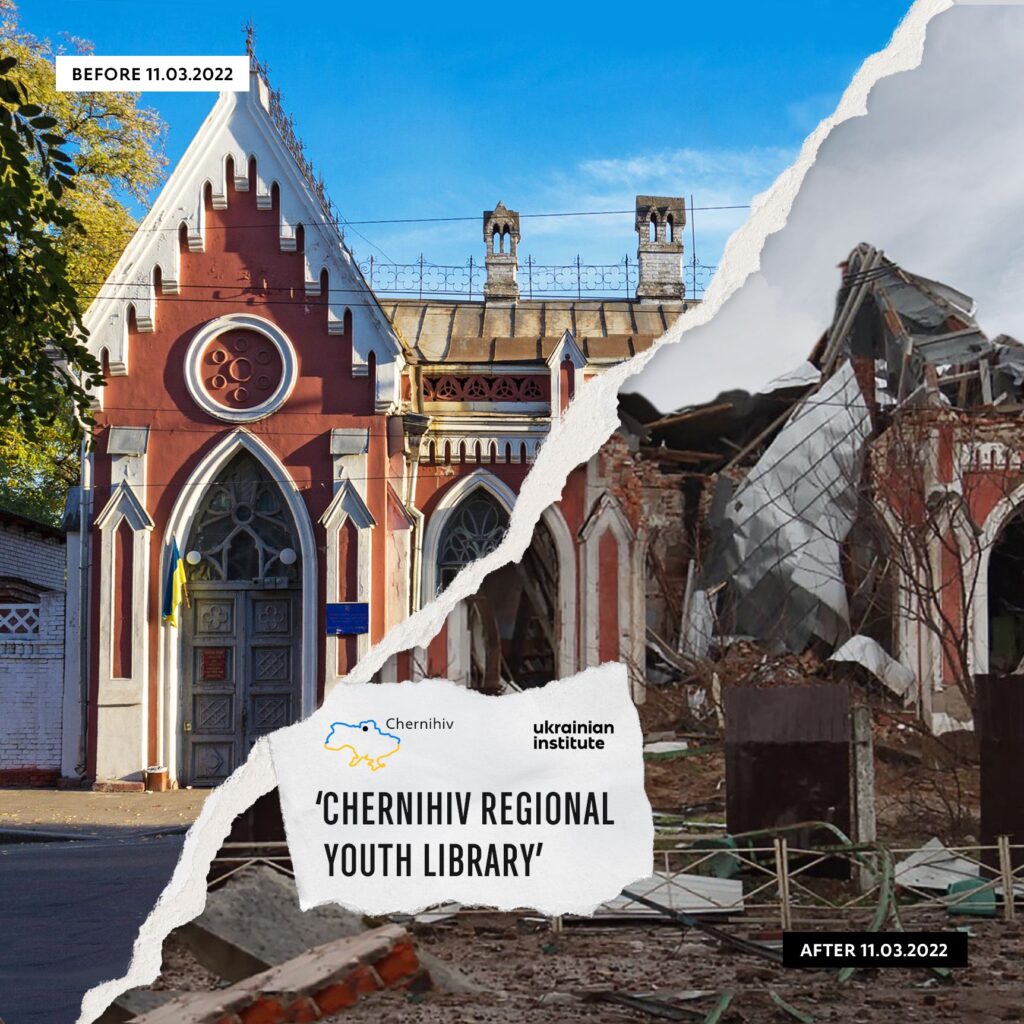
In its quest to conquer Ukrainian territory, the Russian government is attacking Ukrainian culture, language, and artistic expression. While the exact number of Ukrainian artists killed in the war remains unknown, as of December 2025, PEN Ukraine, a non-governmental organization dedicated to protecting and promoting authors’ rights, had compiled at least 181 names of artists, musicians, actors, and other cultural figures whose lives have been lost to Russian aggression. According to Ukraine’s Minister of Culture, Russian soldiers have destroyed or damaged more than 1,000 cultural heritage sites, underscoring a deliberate effort to erase Ukrainian identity for future generations. This violence against culture is not new; it draws from a long-standing Russian playbook: From Catherine II’s 1763 ban on the Ukrainian language (among others), to the Soviet Union’s “Executed Renaissance,” which saw the repression and execution of hundreds of Ukrainian intellectuals and artists, cultural suppression has long served as a deliberate Russian strategy. Today, Ukraine faces a new generation of “executed artists” (as referenced by the Ukrainian Minister of Culture).
Mourning as Resistance: Cultural Memory and National Identity
On June 19, 2025, hundreds of Ukrainians gathered to bid farewell to Ukrainian soldier and former actor Yuriy Felipenko, who was killed in action on the front lines. Yuriy’s death was the latest blow to Ukraine’s artistic community, as he symbolized for many a new era of modern, young Ukrainian actors. Yuriy served in the Achilles Strike Drone Battalion, one of the most effective drone units in the country. His wife, Ukrainian blogger and influencer Kateryna Motrych, paid tribute to his life and used the moment to remind Ukrainians of the root cause of their suffering:
“I don’t blame anyone for this death, except Russia. I want to ask everyone here to kill everything Russian inside themselves. Forget this language and this culture forever, because it is only because of Russia that we are all forced to be here now.”
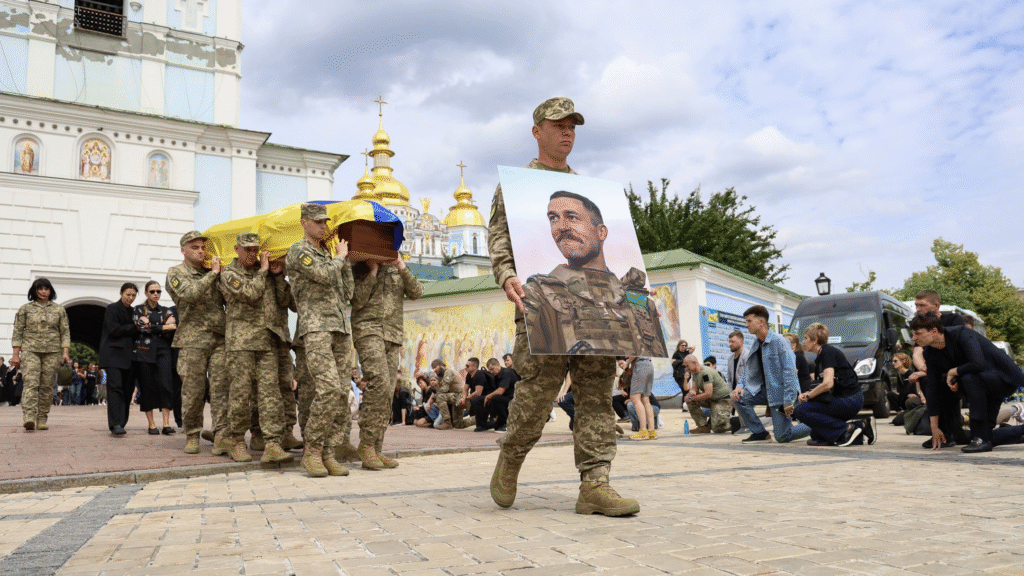
Motrych’s words resonated widely, becoming a rallying cry and a reminder of who started the war at a time when many Ukrainians are experiencing fatigue from relentless nightly drone attacks and a shifting geopolitical climate; this has been made even more acute through the Trump administration’s varied stand on supporting the war. Ten days after Yuriy’s death, Motrych launched a fundraiser with the goal of raising 2 million Ukrainian hryvnias – approximately 70,000 Canadian dollars – to support his battalion. Many Ukrainians joined her effort, and the campaign ultimately raised nearly 6 million hryvnias – around 200,000 Canadian dollars. The fundraiser then evolved into a mass flash mob, with Ukrainians across the country and abroad showing support as it became a powerful symbol of public mourning. Beyond its political message, the fundraiser became a symbol of collective cultural memory. Even strangers mourned Yuriy’s death alongside his family, recognizing that Russia is not only killing Ukrainians, but also targeting a future generation of artists who have worked to promote Ukrainian culture at home and abroad.
The collective mourning of Yuriy’s death served as a stark reminder to Ukrainians that they are fighting not only to preserve their national identity, but also to resist Russia’s colonial ambitions – to seize territory and erase their culture, language, and art. Just as Yuriy’s death underscored the broader struggle against this erasure of Ukrainian identity, another example of this colonial violence at work is the forced removal of Ukrainian children from their families – an attempt to sever future generations from their cultural practices, expression, and homeland. For more details, please refer to the analysis Stolen Generation: How Russia is Erasing Ukraine’s Future, One Child at a Time.
Russia’s unjustified aggression against Ukraine has affected all spheres of Ukrainian cultural expression. Among those killed in combat or as a result of missile attacks, a common tactic employed by Russia, are numerous artists, writers, and cultural figures. One such loss was Victoria Amelina, a Ukrainian nonfiction writer who had turned to documenting war crimes. She died in July 2023 after sustaining fatal injuries during a Russian missile strike on a restaurant in Kramatorsk. Since the beginning of Russia’s full-scale reinvasion, Amelina had been actively raising awareness about the atrocities committed in Ukraine. Her final project evolved into a book titled Looking at Women Looking at War, which focused on the experiences of Ukrainian women seeking justice. Amelina also played a crucial role in preserving the cultural memory of the war; she recovered the diary of Ukrainian writer Volodymyr Vakulenko, who was abducted and later killed by Russian forces. She posthumously edited and published his diary as I Am Transforming… A Diary of Occupation, a vital testimony of life under Russian occupation and an account of the early months of the invasion. Another tragic loss is that of Liubov Panchenko, a Ukrainian designer and member of the Sixtiers movement, a dissident cultural movement during the Soviet era. Panchenko was living alone in Bucha during the Russian occupation. She died of starvation, deprived of social assistance and trapped under occupation – a death that underscores the precarity of Ukraine’s elder cultural generation, including those who had previously survived the Soviet regime. . While these examples illustrate the profound impact of the Russian aggression on Ukraine’s cultural sphere, the full extent of such losses remains difficult to quantify. For more accounts of artists and cultural workers who have been killed, please read These Ukrainian artists, writers were killed by Russia’s war.
Ukraine’s ongoing effort to distance itself from the concept of the Russkii Mir, a worldview in which Russian culture, history, and language are considered superior, is perceived by the Kremlin as a direct threat to the idea of a “Great Russia” that would encompass the so-called lost territories of the former Soviet Union. In its attempt to reconnect with its imperial past, modern Russia does not envision a future in which Ukrainians, or so-called “Little Russians,” have the right to self-determination over their political, economic, and overall global trajectory.
Canada’s Colonial Legacy and Its Global Responsibility
Canada’s early recognition of Ukrainian independence and its robust support of Ukrainian culture – both within its borders and abroad – reflect a longstanding commitment and partnership, shaped in part by its vibrant Ukrainian diaspora. At the same time, this outward-facing solidarity must be accompanied by an inward-facing reckoning with its settler colonial foundations. As Indigenous feminist Audra Simpson has discussed, settler colonialism is not a past event but an ongoing structure that aims to eliminate Indigenous presence in order to secure settler sovereignty over land. As Simpson highlights, this operates through a variety of public and private mechanisms, including legal frameworks, governance structures, and broader civil society organizations, each of them masking the ongoing dispossession and colonial violence. In doing so, colonialism is often portrayed as a historical moment of the past, one that has since been resolved despite it actively continuing through economic, political, and symbolic means.
The legacy of Indigenous dispossession and its entanglement with contemporary defence and sovereignty discourses – particularly in relation to the Arctic – are increasingly salient, especially as narratives from the United States (U.S.) continue to challenge Canada’s geopolitical autonomy.
The Final Report of the Truth and Reconciliation Commission highlighted that Canada committed cultural genocide against Indigenous communities. As a result, many Indigenous cultural practices, traditions, and languages were either lost entirely or are now on the verge of extinction. Indigenous communities across Canada have been working to hold the federal government accountable for fulfilling the 94 Calls to Action, which address areas such as child welfare, education, and the criminal justice system, with the goal of creating space for Indigenous peoples in Canada to thrive alongside other Canadians.
Shared Histories, Shared Struggles
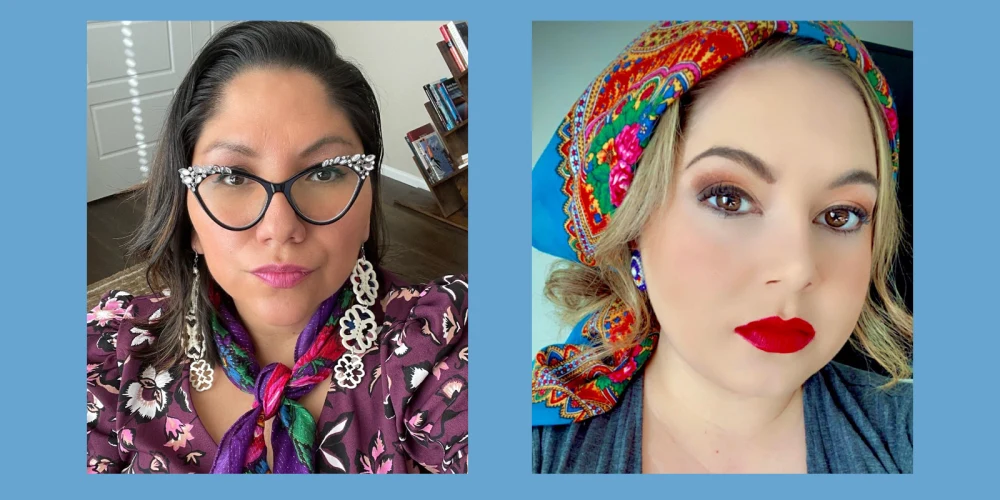
Ukraine’s struggle to protect its national identity in the face of brutal Russian aggression resonates with the experiences of Indigenous peoples across Turtle Island, creating opportunities for solidarity and cultural diplomacy. Historically, Indigenous peoples welcomed the first Ukrainian settlers who arrived on the Canadian Prairies; a visual symbol of this unique connection is the kokum scarf, or Ukrainian hustka. In a show of solidarity following the full-scale invasion of Ukraine, Indigenous people across Canada wore kokum scarves to express their support for Ukrainians.
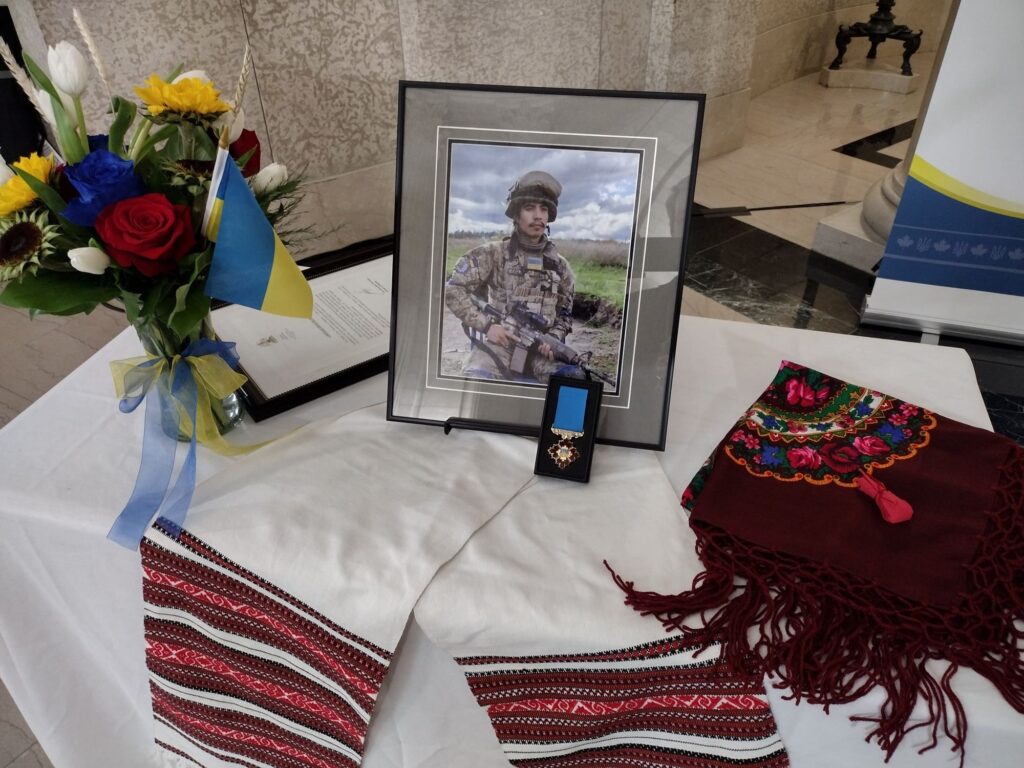
Some even went so far as to answer the Ukrainian president’s call to volunteer as fighters at the beginning of the full-scale invasion. One of them, Austin Lathlin-Bercier from Opaskwayak Cree Nation, was killed in combat in 2023 in Donetsk Oblast. He was a member of the International Legion and had previously received training with the Canadian Armed Forces (CAF) through the Bold Eagle program, a unique initiative that combines Indigenous culture and teachings with military training. In May 2025, he was posthumously awarded the Ukrainian Canadian Sacrifice Medal.
Canada’s response to Russia’s war against Ukraine has included federally coordinated humanitarian aid and military support, alongside strong grassroots mobilization from community members who recognize the threat this aggression poses to both European stability and the broader rules-based international order. As a country in the process of reconciling with its own colonial past, Canada holds a unique responsibility to stand up for nations under threat, whether Indigenous communities at home or Ukrainians abroad. The analysis to come in the weeks ahead will explore the role of Indigenous communities in Canadian defence policy, with particular attention to their participation in the Canadian Rangers program. It will also examine the broader connection between cultural identity and national defence strategy, highlighting how cultural resilience can serve as a critical pillar of security.
If you are interested in exploring the topic of Russian aggression and its impact on Ukrainian culture in greater depth, please refer to the resources listed below.
- Art under attack: How Russia destroys Ukraine’s cultural heritage
To watch a reportage from Kyiv Independent: tps://www.youtube.com/watch?v=bTUF0HNo1Sk&t=2s
- Uncovering FSB’s secret operation to steal Ukraine’s valuable art
To watch a reportage from Kyiv Independent: https://www.youtube.com/watch?v=Y0r4rvGIIrE