Not just the United States: Canada and the Future of European Transatlantic Cooperation
By Eva Palo, Università di Napoli L’Orientale
Executive Summary
Transatlantic relations are currently facing growing uncertainty due to significant strategic divergences in the fields of trade, security, technology, and global governance. From the trade tariff disputes to President of the United States (US) Donald Trump’s territorial claims on Greenland, ties between the European Union (EU) and the US are under growing stress. This tension has heavy repercussions on the EU and its member states. Fears about an effective transatlantic decoupling have reenergized calls for the EU to acquire a capacity to act on its own. In this context, Canada can play a decisive role. Stronger EU-Canada cooperation could provide an answer to this new strategic anxiety. It would also allow to reduce dependency on the US and help develop both Canadian and European strategic autonomy.
Changing Transatlantic Relations: An Opening for Deeper Canada-EU Ties
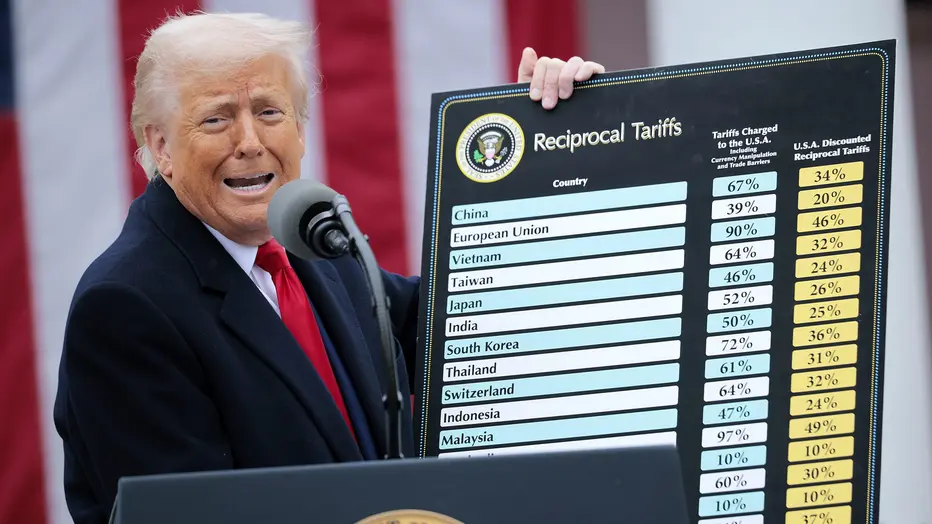
While the first Trump administration tested traditional transatlantic relations, Trump’s second term has marked a significant recalibration of US foreign policy that has fundamentally challenged the core values that have underpinned this relationship for the last 80 years. From recurring trade tariff disputes to territorial claims over Greenland, Trump’s actions have often questioned – and even opposed – the US’s role as the principal guarantor of transatlantic stability and security. His administration has delegitimized multilateralism in favour of a “selective engagement” strategy with individual US partners. The recent US National Security Strategy, released in November 2025, formalized this major shift in American foreign policy. This new strategy reorders global priorities, reframes NATO Allies’ roles, and seeks stability in Europe to allow Washington to redirect its focus and resources to the Indo-Pacific and the Western Hemisphere. At the same time, it adopts confrontational language toward the EU, portraying it as a source of instability and accusing it of undermining political liberty, sovereignty, and social cohesion.
These dynamics raise fundamental questions about the stability, predictability, and future shape of the transatlantic relationship. For the EU, the implications are immediate: increased strategic risk, reduced certainties, and stronger pressure to develop autonomous capabilities and diversified partnerships.
Why Canada Matters to the EU (and why the EU Matters to Canada)
In this rapidly-changing international environment marked by geopolitical fragmentation, erratic US behaviour, and Russia’s ongoing war against Ukraine, the EU must meet three conditions in order to become a more credible and decisive actor at the global level: one, it must sway sufficient economic power; two, it must demonstrate political will to act cohesively both amongst its member states and with its international partners; and three, it must be perceived as a legitimate and credible entity by other democracies.
To achieve these conditions, the EU needs to strengthen its ties with like-minded democracies, such as Australia, Canada, Japan, and South Korea. Among them, Canada appears as an especially natural and highly compatible partner for the EU. Throughout the last 50 years, Canada and the EU have built an exemplary partnership based on shared democratic values and worldview. But in today’s challenging global landscape, the EU and Canada stand together more firmly than ever as stable and trusted partners. And while the 2017 Comprehensive and Economic Trade Agreement (CETA) and Strategic Partnership Agreement serve as the foundation of the contemporary EU-Canada relationship, increased cooperation to both reinforce current areas of coopetition – such as security and defence – as well as joint ventures in new sectors – including the digital domain – will play key roles in the near future.
Security and Defence Cooperation Between Canada and the EU: A Win-Win Opportunity
Canada’s contribution to European security and defence policy is hardly new: Ottawa has been a valued contributor to EU-led security and defence efforts for over a decade. It was the first country to establish a Security and Defence Dialogue with the EU in 2015; it participates in CSDP missions and has contributed to PESCO projects on military mobility and logistical support.
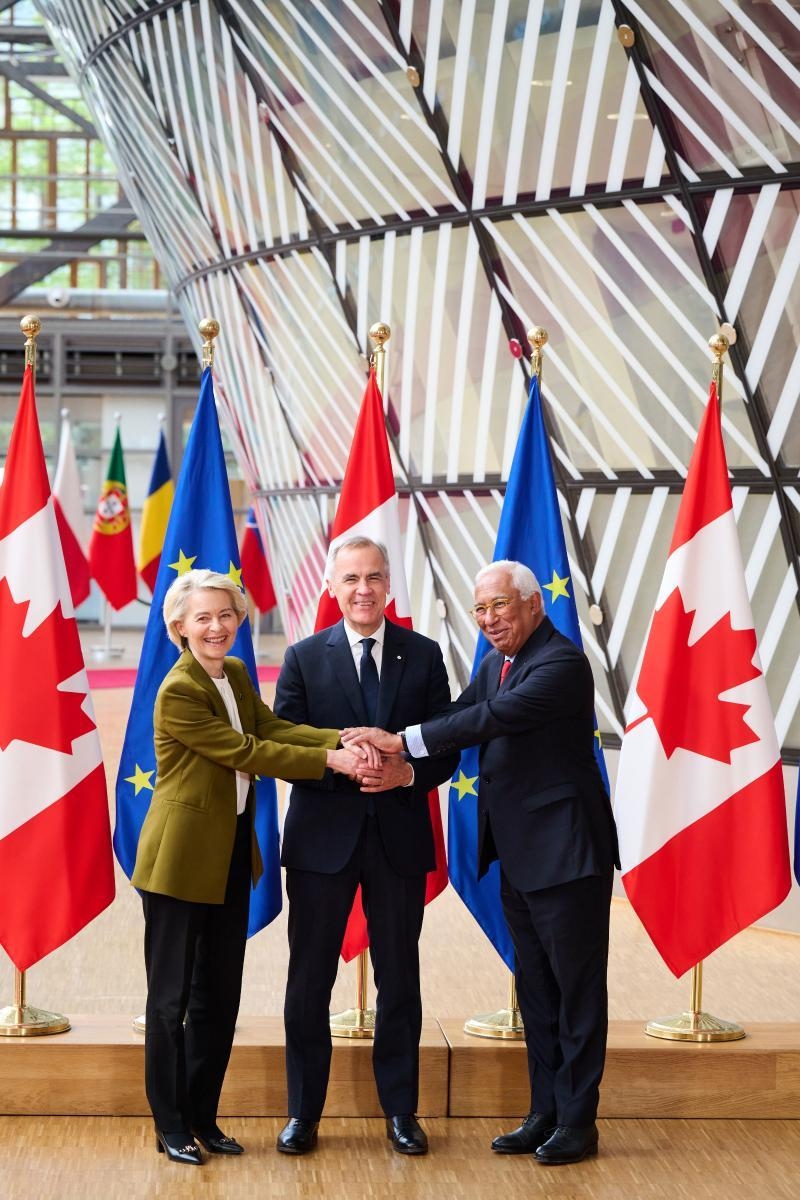
However, at the 20th EU–Canada Summit in Brussels last June, António Costa, President of the European Council, Ursula von der Leyen, President of the European Commission, and Mark Carney, Prime Minister of Canada, together pledged to further strengthen their bilateral cooperation. Both sides committed to an ambitious and comprehensive partnership, the new EU-Canada Partnership of the Future, aimed at deepening cooperation across key areas such as trade, security, energy and other critical sectors.
As part of their re-energized relationship, the EU High Representative of Foreign Affairs, Kaja Kallas, the Canadian Minister of Foreign Affairs, Anita Anand, and the Canadian Minister of Defense, David J. McGuinty, also signed the 2025 Security and Defence Partnership, which provides a framework for cooperation on cyber defence, hybrid threats, space security, maritime issues, crisis response and assistance to partners, such as Ukraine. This agreement also includes provisions for joint research in emerging technologies, which can help position both Canada and the EU as global leaders in these fields.
This new agreement importantly lays the groundwork for increased defence procurement collaboration, primarily related to the EU’s Re-Arm Europe Plan. It also opened the door for Canada to join the Security Action For Europe (SAFE) – a new European loan instrument for joint procurement – and for an administrative arrangement between Canada and the European Defence Agency, the body that supports cooperative European defence projects and provides a forum for European ministries of defence to coordinate their policies. As a result of this increased cooperation, both Brussels and Ottawa have made tangible steps to diversify their defence partnership and become less reliant and vulnerable to Washington’s shifting moods on collective security. Similarly, this new agreement enhances the resiliency of the European pillar within NATO, without either undermining the NATO Alliance or trying to substitute it.
New Areas of Cooperation in the Digital Domain
As part of their cooperative efforts, the Canadian Minister of Artificial Intelligence and Digital Innovation, Evan Solomon, and the Executive Vice-President of the European Commission for Technological Sovereignty, Security and Democracy, Henna Virkkunen, have also agreed to strengthen cooperation in the digital domain. On 8 December 2025, the first meeting of the EU-Canada Digital Partnership Council took place in Montreal, Quebec. The Joint Statement made at the conclusion of that meeting showed that both sides recognized the importance that digital partnership plays in advancing bilateral efforts to boost competitiveness, innovation, and economic resilience. This meeting also resulted in Canada and the EU This meeting also resulted in Canada and the signing two memoranda of understanding, one on cooperation on artificial intelligence, and another on digital credentials, digital identity wallets, and trust services. This new partnership will guide collaboration on AI governance, quantum technologies, cybersecurity, and digital standards. The ultimate goal of this partnership is to build digital systems that are secure, transparent, and centred on public trust.
Conclusion
The ongoing reconfiguration of US foreign policy and the end of predictable transatlantic relations have led the EU and its member states to reconsider their strategic goals and explore alternative strategies to promote their own interests and societal well-being. In this context, cooperation with Canada would be a win-win opportunity, allowing both sides to reduce dependencies on the US and bolster collective defence capabilities without undermining NATO. Strengthening the EU-Canada relationship could also help show other countries that – in an era of re-emerging great power rivalry – there is still an opportunity for states to create and benefit from collective partnerships.
Policy Recommendations
In order to make the EU-Canada cooperation effective and concrete, both sides should consider the following policy recommendations:
- Take an active approach to promote Canada’s involvement in joint procurement projects through SAFE, including encouragement of domestic defence industries to actively utilize this instrument to gain increased access to external markets.
- Encourage all EU member states to ratify CETA, as only 17 member states have ratified the agreement thus far. Finalizing the ratification of CETA would ensure stability and continuity for the agreement and would signal increased confidence in the overall Canada-EU trade relationship going forward.
- Strengthen efforts aimed at enhancing their bilateral trade and investment relationship, to advance and diversify trade, promote economic security and resilience, and create investment opportunities.
- Increase cooperation in the extraction and trading of energy and critical raw materials. Deepening ties in this area could help reduce dependencies on unreliable partners while strengthening internal supply chains.
- Improve cooperation on AI testbeds, regulatory sandboxes, and industrial AI applications while at the same time continue working together in order to balance innovation with ethical considerations and standards. This includes joint investments on AI-driven sustainability solutions, the adoption of accountability measures for violators of AI regulations, and the enforcement of policies that support both technological advancement and societal well-being.
- Utilize the strong EU-Canada relationship as a stepping stone to reinforce multilateral partnerships with like-minded democratic partners, such as Japan, South Korea, Australia, and Taiwan.