Disinformation and risks of political radicalization: the public discourse about the Istanbul Convention in Latvia
By Eva Gaigalniece, PhD student – University of Latvia
The issue
In November 2023, Latvia ratified the Istanbul Convention, a core international treaty which aims to prevent violence towards women, including domestic and sexual violence. The Istanbul Convention has since then been at the centre of a contentious political debate in Latvia, becoming a symbolic issue in Latvia’s cultural wars, and bringing about a clash of ideologies on gender, nationality, and constitutional issues.
The debate on the Istanbul Convention reflects a broader shift in societal values and political loyalties in Latvia. On 30 October 2025, a majority vote in the Saeima (Latvia’s parliament) to denounce the Istanbul Convention unexpectedly succeeded, as one of the partners in the ruling coalition – Union of Greens and Farmers – changed its position to oppose the Convention. The vote led to public protests: on October 29, at least 5,000 people protested outside the Saeima against Latvia’s withdrawal from the Istanbul Convention; on November 6, at least 10,000 protested at Dome Square in Riga, organizing a petition with more than 67,000 signatures. A veto by President Edgars Rinkēvičs has put the issue on the back burner until after the parliamentary elections scheduled for early October 2026. Depending on the results of that election, Latvia could become the first member state of the European Union to withdraw from the Istanbul Convention.
This policy brief aims to examine how disinformation narratives and radicalization risks emerged and evolved throughout the public debate on the Istanbul Convention in Latvia from 2023 to 2025. For each phase (the ratification phase in 2023; the withdrawal mobilization phase in 2025; and the post-decision phase in late-2025), the study reviews the 15 most popular Facebook posts and the 80 most liked comments (a total of 45 posts and 240 comments) by manually coding them for narrative type, emotional intensity, disinformation indicators, and evidence of radicalization. This methodological approach was chosen to select a representative but manageable sample of a highly visible discourse. The policy brief is structured as a three-phase analysis of the debate, followed by a synthesis of findings and concluding remarks.
Phase 1: Ratification and Immediate Online Backlash (2023)
Division and debate over the Istanbul Convention appeared immediately after the Latvian parliament voted – by incredibly slim margins – to ratify the Convention on November 30, 2023. Women’s rights organizations and liberal bloggers in Latvia saw this as proof of their country’s integration with other European states in upholding liberal democratic norms. On the other hand, an ardent anti-Convention movement sprang up in social networks, claiming that ratifying the Conventions was a betrayal of national interests and gender values. Furthermore, right-wing politicians publicly criticized lawmakers for violating Latvian values in support of the Convention.
The anti-Convention group was represented in public declarations by the former social welfare minister Ramona Petraviča, who argued that “Latvian culture is based on [traditional] gender roles.” In monitoring disinformation about the Convention, Re:Baltica’s findings included many misconceptions about the Convention circulating in the last quarter of 2023. On Facebook and on Latvian blogging sites, rumors spread about new policies teaching children to be gay at school; about gender reassignment surgeries taking place at the age of 14 without parents’ consent for children interested in such procedures; and about foreign agents taking children from their parents. Such misinformation, usually centered around the Convention’s use of the word ‘gender,’ were disseminated by right-leaning bloggers such as musician Kaspars Pudniks and author Vija Beinerte, who both claimed that ratifying the Convention would involve teaching in schools about gender transition and same-sex relationships.
Thus, the online discussion and disinformation on the Istanbul Convention showed considerable polarization, moving away from its actual goal of combating domestic violence. Instead of focusing on the objectives of the Istanbul Convention, the online discussion turned into a moral battle between those who claimed to defend traditional gender values and those who were perceived to represent a radical liberal agenda. In this regard, the ratification of the Istanbul Convention fueled cultural conflicts online, thereby undermining positive communication and discussions on how to end domestic violence.
Phase 2: Disinformation Surge and Withdrawal Campaign (2025)
Latvia’s ratification of the Istanbul Convention remained a key issue for Latvian far-right movements thorough the post-ratification period. This opposition reached a new level in September 2025, when started a campaign advocating for the withdrawal of Latvia from the Istanbul Convention. The political movement initiated a flood of conspiratorial posts on social media platforms and messaging applications. Facebook continued to be the central platform wherein these posts were made, but heated debates also took place on Telegram and TikTok, where messaging was aimed at specific target groups. Ainārs Šlesers, a prominent Latvian oligarch and leader of the right-wing Latvia First Policy, was one such key player in the online disinformation campaign. His Facebook posts in 2025 clearly demonstrated the use of the concept of ‘tactical reframing’, shifting the debate from the Convention’s legal purpose of preventing violence against women and domestic violence to alleged threats to children, the “natural family”, national sovereignty, and traditional values. A group of nationalist and populist MPs started a campaign advocating for the withdrawal of Latvia from the Istanbul Convention. The political movement initiated a flood of conspiratorial posts on social media platforms and messaging applications.
Šlesers has himself claimed, without any evidence in the treaty text, that the Istanbul Convention forces the concept of a ‘117 gender policy’ on Latvia, which aims to “threaten the natural family.” This video represents another case of complex problems being reduced to ‘us vs. them’ dichotomies, fostering polarization and discord in society. According to research done by Baltic researchers in the online space, platforms like TikTok and YouTube are flooded with memes about culture wars as well as general fear-mongering content. This finding fits with the posting trend of Šlesers and others in this group, who lashed out at progressive actors being “[Leninists]/global gangsters” – often pairing these posts with accompanying memes and manipulated photos – in addition to their specific opposition to the Convention.
For instance, Linda Liepiņa, a parliament member of the Latvia First Party who originally advocated for the ratification of the Convention in 2023, also began to criticize the Convention on Facebook and Telegram. Liepiņa’s speech, which was delivered in the Saeima and reached large audiences online, claiming that a “foreign ideology tries to creep into our everyday lives” and that “what’s abnormal will be declared normal.” She also argued that “we are asking children to dress up as members of the opposite sex.” Another MP, Mārcis Jencītis, also a member of the Latvia First Party, called the Convention a “Trojan horse in Europe,” a term that was subsequently picked up by pro-withdrawal bloggers.
By mid-2025, anti-Convention-related online activism increased; yet, the shift in parliamentary voting was mainly caused by political trends that developed at the time. In the period from 2023 to 2025, splits in the ruling coalition in the Saeima became more pronounced, and some MPs readjusted their stances because of pressure from conservative groups and their voters. Furthermore, the problem became more politically relevant and was recast by the opposition in terms of the issues of sovereignty and values, which resonated with the pre-election discourse.
At the same time, continuous online activism contributed to perceptions of growing popular dissent, which affected the decisions of many MPs and forced them to change their stances, especially among those whose constituencies were electorally competitive. By 2025, supporting withdrawal from the European Convention became a useful political tool to reach out to conservatives and demonstrate a distinct position, with the majority now being in favour of the idea (56-32).
Phase 3: President’s Intervention and Digital Aftermath (Late 2025)
The Saeima’s vote in late October to withdraw from the Convention was a shock to many Latvians and reflected and a high level of polarization in Latvian politics. The result also surprised President Edgars Rinkēvičs, who declined to sign the bill into law and instead called for a period of reflection. On the 5th and 6th of November, the Saeima agreed to postpone the decision until the next parliamentary term, that is, after the 2026 election scheduled for early October. The online reactions to these moves were mixed, with some expressing both relief and resentment at the decision. Supporters of the Convention hailed the decision as a victory, with Prime Minister Evika Silina posting on her Facebook page that the decision to postpone the decision was “a victory for Latvia.”
This intervention effectively stalled Latvia’s exit from the Istanbul Convention, throwing a lifeline to supporters and provoking a new wave of hostile reactions across digital media. Online, Rinkēvičs’ move was met with an outpouring of both relief and vitriol – reflecting entrenched polarization. On one side, women’s rights organizations and liberal civil society celebrated the veto as a courageous step against populism. Activists like Beata Jonite of the MARTA Centre – an organization that provides specialized support to victims of domestic violence and human trafficking – shared the President’s message via social media. Jonite, who had been posting on TikTok and Instagram throughout the fall to debunk myths and rally youth support, posted an emotional TikTok video thanking Rinkēvičs for “protecting Latvia’s women and girls.” That video garnered tens of thousands of views and comments expressing sentiments like “Finally, sanity prevails!” and “Thank you, President!” Meanwhile, a Manabalss.lv petition urging the President to stop the denunciation of the Convention gathered over 67,000 signatures within just a few days by early November.
Based on public opinion polls on the issue, Latvian society has not been divided into two clear camps, despite the polarization that appears online. In reality, there appears to be a relatively large segment of the population that is opposed to withdrawal, a relatively small segment of the population that is in favour of withdrawal, and a large segment of the population that is undecided. The results of a survey carried out in May 2023 by Berg Research indicate a high level of public support for the ratification of the Convention, with 71% of the total number of respondents showing their approval in May; the results of the survey conducted in June 2023 among Latvian citizens show a similar level of support, with 73% of the total number of respondents showing their approval.
These results show that support for the Convention among the general public was relatively strong in terms of the surveys conducted in 2023. In contrast, the Berg Research survey conducted in October 2025 shows that there was greater division among respondents in terms of their positions but not necessarily polarization. Specifically, 49% of respondents were against withdrawing from the Convention, 31% were in favor of it, and 20% were still undecided. These results support the position of this policy brief that the rhetoric surrounding the issue has been able to produce the illusion of greater polarization compared to what public opinion figures actually show. While anti-Convention narratives had gained a lot of traction and emotional appeal online, public opinion was actually more complex and could be influenced by both political parties involved.
Emotional Sentiment and Ideological Framing in Latvia’s Istanbul Convention Debate
The force of public engagement may thus be seen as emanating from the change in the nature of the Convention, from being primarily a legal document dealing with violence against women to becoming a symbol representing a number of emotionally charged topics, including children, family, nationhood, sovereignty, and skepticism toward political elites. The shift served to increase the potency of the disinformation narrative, which was no longer tied to any deep familiarity with the text of the Convention but, instead, tapped into preexisting emotions
and value differences. Hence, the case represents one more feature of modern Latvian online political communication: the tendency for a complicated policy issue to quickly transform into a medium for simplified culture wars, where emotion and suspicion often outweigh law and facts.
According to Google Trends data, public interest in the Istanbul Convention remained relatively low from early 2023 to the point where a strong surge occurred towards the end of 2025. These findings of increased searches towards the end of 2025 do correspond with renewed political struggles and mobilization efforts in the form of mass protests and intensive debates within parliament on withdrawing from the Convention. One of the most interesting findings is how public interest is geographically distributed regarding the searches conducted, where smaller towns (Inčukalns, Lielvārde, Ozolnieki, Garkalne, and Sigulda) show the greatest levels of activity.
Figure 1. Google Trends search interest in the Istanbul Convention in Latvia, 2023- 2025.
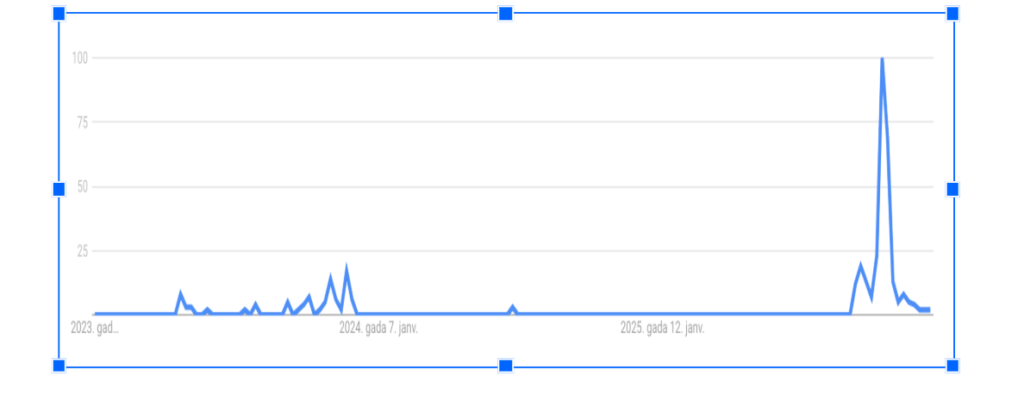
Figure 2. Geographic distribution of Google searches related to the Istanbul Convention in Latvia.
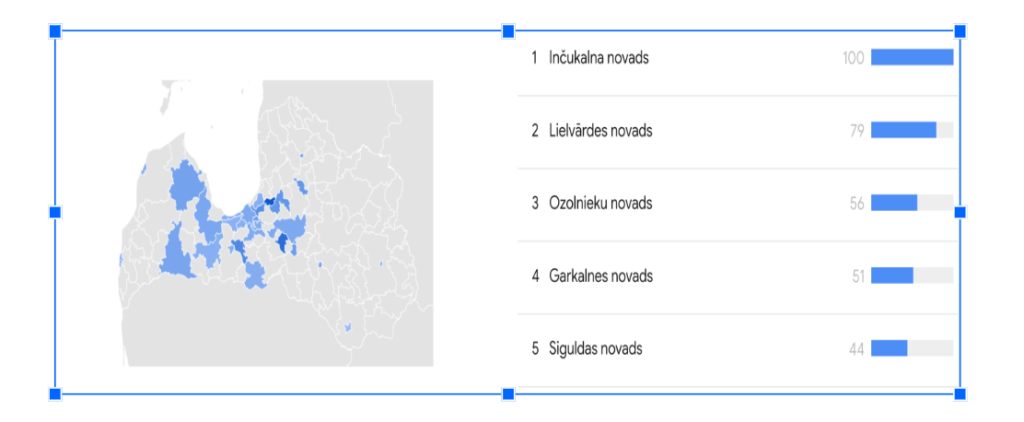
The data indicates that online engagement has not been isolated to Riga and major cities, as rural communities are just as likely to search for this topic online.
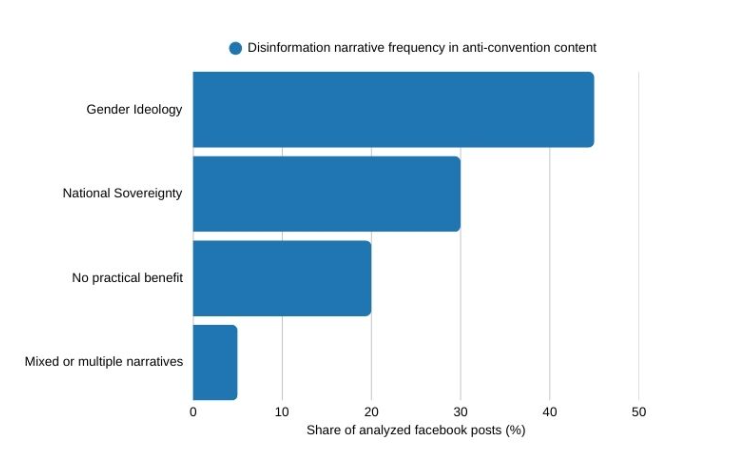
The analysis of the discourse on the Istanbul Convention on Facebook in Latvia reveals a clear pattern of coordinated disinformation, emotionally polarized audiences, and radicalization of political discourse. The dominant discourse against the Istanbul Convention is based on three distinct narratives: (1) the notion that the Convention promotes a dangerous “gender ideology” that undermines traditional morality and family values (45% of the analyzed content); (2) the idea that the Convention is an external threat to national sovereignty and legal independence of Latvia (30%); and (3) the notion that the Convention has no practical benefits in combating violence and instead distracted from legitimate issues, such as the rights of the LGBT community (20%). The dominant disinformation in the discourse on the Istanbul Convention in Latvia was not peripheral; instead, it was central to the dominant discourse.
The persistence of disinformation, such as the trope of the ‘117 genders,’ the claim that the Convention would replace the words ‘mother’ and ‘father’ with ‘Parent 1 and 2,’ and the claim that the Convention would sexualize children, were all widespread. Not only was this this disinformation apparent in all three phases of the Convention debate, but it was also visible in the rhetoric of Latvian parliamentarians, suggesting that it had become normalized in the political discourse on the Convention.
The audience’s reactions varied depending on the narrative. The ‘gender ideology’ threat narrative elicited the highest number of ‘angry’ emoji reactions (50%). This was closely followed by the ‘sovereignty’ narrative (45%). The audience reactions to the narrative on the protection of women were different. In this case, ‘Like’ and ‘Love’ combined for 40% of the audience reactions; ‘Angry’ was seen in 15% of reactions. The ‘Laughing’ emoji reactions were higher in the case of the ‘exaggerated’ narrative (20%). These findings show that while the audience reacted with anger to the ideological threat narrative, another part of the audience reacted with mockery to the exaggerated narrative.
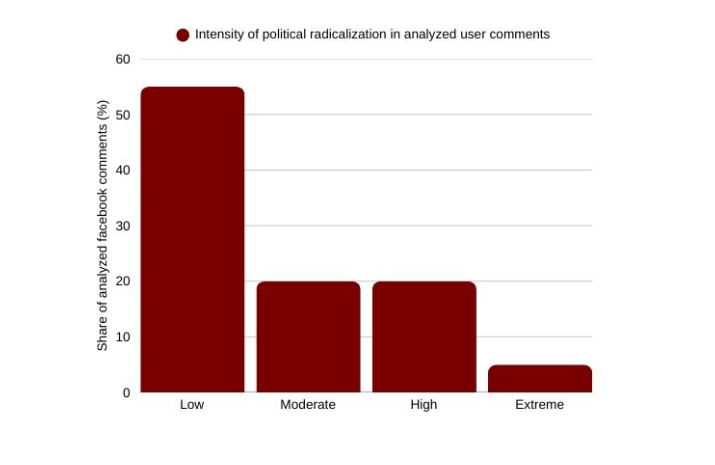
The analysis also shows that there are signs of discursive political radicalization. Of the approximately 30 high-engagement posts, 6-8 showed strong signs of radicalization. These included alarmist rhetoric, conspiracy theories, and delegitimization of democratic actors. Radicalization was also more evident in the comments sections of each post. In some posts, 15% to 25% of the comments contained dehumanizing metaphors, accusations of treason, or appeals for silencing or expelling political opponents. The politicians who took the side of the Convention were called “traitors,” “foreign agents”, or “corrupt pigs,” while the veto of the withdrawal decision by the President was described as “betrayal.” Some of the comments also contained appeals for “rising up”, “expelling” the supporters of the Convention, and “saving the nation.”
The radicalization of the discourse was also asymmetrical. The posts of the supporters of the Convention sometimes showed signs of frustration or irony but rarely used hostile language or rejected the idea of democratic pluralism. Arguments mostly focused on the legal content of the Convention, women’s rights, and the refutation of disinformation. However, the level of engagement of the posts was significantly lower than that of the opponents.
Conclusion
Across all three phases, the Latvia-based discussion on the Istanbul Convention illustrates the manner in which a policy debate can be transformed into a debate on cultural values via disinformation and powerful emotive appeals. Disinformation was consistently used to galvanize opposition and link the Convention to unrelated concerns, such as those surrounding children, gender ideology, and identity. As such, highly emotive and divisive messages achieved greater traction than evidence-based messages, undermining the space for constructive debate and normalizing hostile, delegitimizing rhetoric.
The case highlights the extent to which online discourse may distort the perception of public opinion. According to polls, Latvian society was not divided into two equally strong groups; instead, an active online minority shaping part of the discussion gave the impression of wider opposition. More generally, Latvia is symptomatic of a gender backlash that is taking place across Europe, including in post-Soviet and Central-Eastern countries. In this backlash, gender equality policies are presented as endangering the traditional family, children, national identity, and even state sovereignty.
In Latvia, the convention came to symbolize an ideological struggle over gender norms and social values. The debate is still ongoing, with the final resolution scheduled for sometime after the October 2026 Saeima elections. Thus, the Convention will continue to be a relevant topic on the political agenda. Without a consensus, the survival of the Istanbul Convention in Latvia will depend on the next parliamentary composition and the willingness of actors to keep spreading anti-gender narratives or return to fact-based discussions about violence prevention and victim protection.