Event Report Security in a Turbulent World: Canada, Eurasia, and the Arctic
Prepared by EETN members
Security in a Turbulent World: Canada, Eurasia, and the Arctic
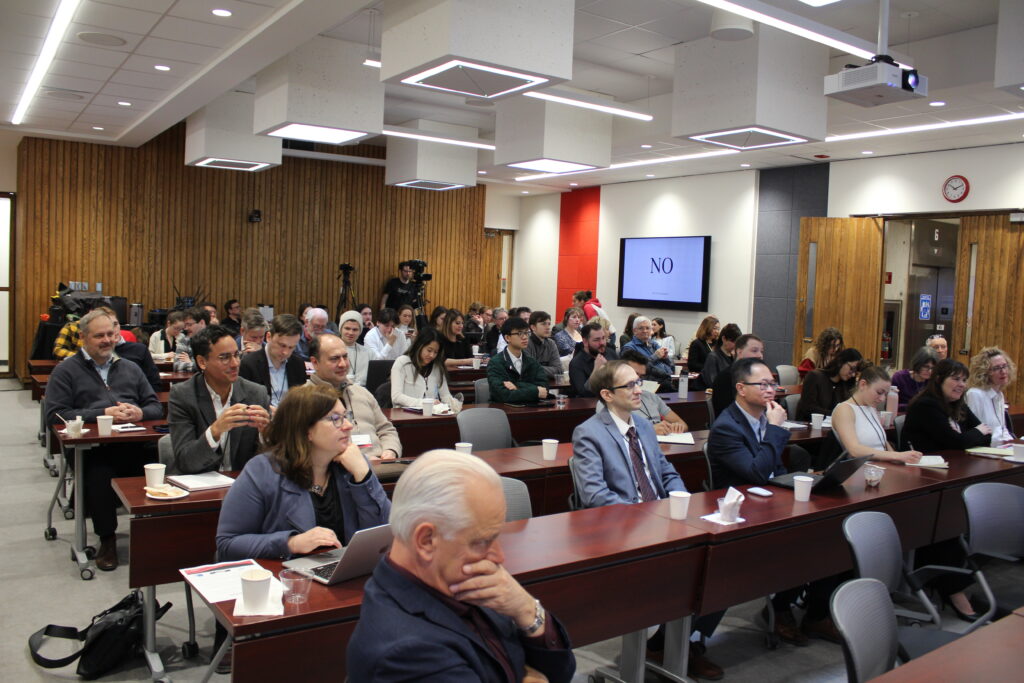
In March, the Eastern Europe and Transatlantic Network hosted Security in a Turbulent World: Canada, Eurasia, and the Arctic at Carleton University. The event brought together scholars and practitioners to examine Russia’s war against Ukraine, transatlantic security, Arctic dynamics, and disinformation.
Panel One: Russia’s Invasion of Ukraine, Year 5: Conciliation or Continued Conflict
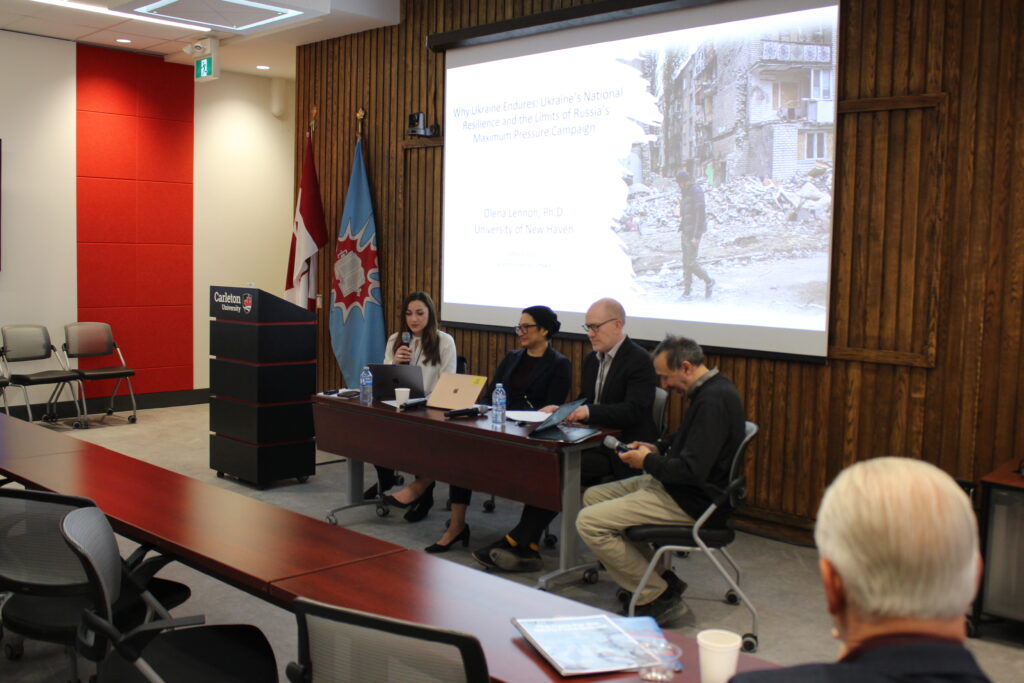
The first panel examined how four years of Russia’s full-scale war against Ukraine have shaped Russian, Ukrainian, and neighbouring societies, as well as what the ongoing nature of the war means for the future of the region. The panel featured Dr. Olena Lennon, University of New Haven; Dr. Erica Marat, National Defence University; and Dr. Brian Taylor, Syracuse University. It was moderated by EETN Co-Lead Dr. Jeff Sahadeo, Carleton University.
Dr. Olena Lennon: Why Ukraine Endures
Dr. Lennon framed her presentation around the underlying strategies of Russia and Ukraine in the ongoing war, as well as how the war itself has evolved battlefield strategy.
She argued that Ukraine has been largely successful in limiting Russian strategic and territorial gains. At the same time, Russia’s increased focus on eliminating Ukraine’s physical and cultural statehood continues to pose a major strategic concern.
This strategy includes the destruction of infrastructure, extensive mine-laying campaigns, and the abduction and forced re-education of Ukrainian children.
Dr. Lennon emphasized that Russia’s high casualty count and limited territorial gains represent a major strategic failure. However, she cautioned that Western states should not assume these costs will necessarily push President Vladimir Putin toward ending the war.
In her view, Putin’s decision-making is not primarily shaped by the war’s economic or personnel costs, but by the goal of inflicting maximum damage on Ukraine’s sovereignty.
She described Russia’s current approach as a “new Cold War,” in which Moscow attempts to compensate for battlefield failures by targeting civilian energy infrastructure during the winter months in an effort to weaken Ukrainian morale.
During the 2025–2026 winter season, Russia’s maximum pressure campaign created serious hardship for Ukrainian society, but failed to turn public opinion against the war.
Dr. Lennon highlighted several ways in which Ukrainian society has adapted, including rolling blackouts, rapid repairs to damaged energy infrastructure, and increased electricity imports from regional partners.
She concluded that Ukrainian endurance remains central to the country’s ability to survive a war of attrition against Russia, despite the imbalance in military and economic resources.
At the same time, she argued that the war is likely to continue because both Russia and Ukraine still believe that victory is possible and that defeat is unacceptable.
Dr. Erica Marat: Ukrainian Resistance and the South Caucasus
State-level responses
Dr. Marat discussed how countries in the South Caucasus and the broader Eastern European region have learned from Ukrainian resistance, and how this has strengthened similar processes across the region.
She divided her presentation into lessons learned at both the state and societal levels.
At the state level, Dr. Marat highlighted recent regional political and economic partnership projects that have helped countries in the South Caucasus distance themselves from Russian political and economic pressure.
Two major examples were the Organization of Turkic States and the Middle Corridor Trade Network. These initiatives use intra-regional integration to create distance from Russia’s sphere of influence in culture, infrastructure, and trade.
Economically, Dr. Marat argued that South Caucasus states are learning to use their geographic position between Asia, Africa, Europe, and the Middle East to balance partnerships with actors such as China and Türkiye.
At the societal level, she argued that Russian aggression, culminating in the full-scale invasion of Ukraine, has encouraged people across the former Soviet Union to question how history is told and whether inherited narratives can be reframed.
She explained that these efforts often connect the transition to independence after the dissolution of the Soviet Union with processes of decolonization in Africa and Southeast Asia during the 1960s.
By drawing these parallels, former Soviet states increasingly emphasize their own histories and cultures as distinct from Russia.
Dr. Marat also noted that this process is taking root within the Asian Russian diaspora, where Russian-dominated narratives about the history and culture of Eastern Russia are being challenged.
She concluded by discussing how these developments are raising questions about whether communities within Eastern Russia should push for greater autonomy, and in some cases even independence, in the future.
Dr. Brian Taylor: Does Russia Want Peace?
Dr. Taylor focused on Russia’s strategic goals as the war enters its fifth year, and whether a realistic peace agreement is currently possible.
He argued that Russia’s maximalist goals, including territorial control and influence over Ukrainian culture and politics, continue to shape Moscow’s decision-making and make peace extremely difficult to achieve.
Dr. Taylor identified three key issues in negotiations between Russia and Ukraine: territory, security, and Ukrainian domestic politics.
Territorial issues receive the most media and political attention and are often presented as the area where compromise may be most possible. However, Dr. Taylor stressed that this is only in comparison to even more difficult issues of security and domestic politics.
Russia continues to demand full control over territories in eastern Ukraine occupied during the initial phase of the war. Ukraine rejects these demands, as they would violate its constitution and undermine its sovereignty.
Dr. Taylor argued that American diplomatic efforts have placed strong emphasis on the territorial dimension of the war. He suggested that this has led some negotiators to see territory as the primary obstacle to peace, while underestimating the importance of security and political sovereignty.
On security, Russia demands that Ukraine remain neutral and non-nuclear, abandon present and future NATO aspirations, and significantly limit the size of its post-war military.
These demands directly conflict with Ukraine’s continued push for closer ties with NATO and its rejection of limits on its military capacity.
On domestic politics, Russia continues to demand the “de-Nazification” of Ukraine. Dr. Taylor described this as a veiled attempt to gain control over Ukraine’s democratic decision-making, cultural policy, and education system.
For Ukraine, these demands remain unacceptable and would represent a fundamental violation of sovereignty.
Dr. Taylor concluded that although Russian and Ukrainian diplomats may present negotiations in positive terms, a true end to the war remains far off.
Q&A: Key Themes
Western support
Ukraine seeks stronger ties with NATO.
It views membership as a way to secure long-term independence.
Aid and transparency
Ukraine has faced corruption concerns.
However, it continues to emphasize transparency and cooperation with Western partners.
Global context
The US-Israeli war with Iran may benefit Russia in the short term.
However, it also signals a broader shift toward great-power competition.
European security
The war has changed European thinking.
The EU now focuses more on defence readiness and strategic autonomy.
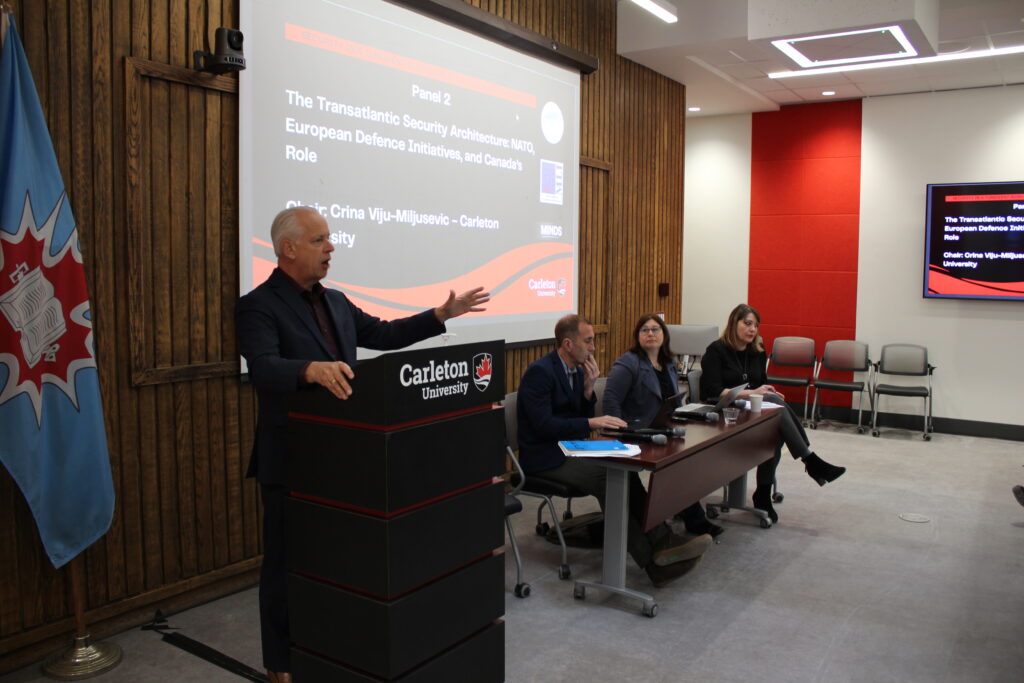
Panel 2: The Transatlantic Security Architecture: NATO, European Defence Initiatives, and Canada’s Role
The second panel examined the changing global security environment and its impact on NATO’s role and strategy. The discussion focused on the return of war to the European continent, increased American unilateralism and isolationism, and the broader weakening of the rules-based international order. The panel featured Dr. Alex Moens, Simon Fraser University; Dr. Luca Ratti, University of Rome III; and Dr. Chantal Lavallee, Royal Military College Saint-Jean. It was moderated by Dr. Crina Viju-Miljusevic, Carleton University.
Dr. Alex Moens: NATO and Political Leadership
Dr. Moens outlined two major conditions that have historically allowed NATO to function effectively: persuasive political power, primarily stemming from the United States’ ability to consolidate allies, and the willingness of the United States to lead in terms of military capacity, quality, and readiness.
He argued that because these two factors have been central to NATO’s success, reduced American cooperation creates serious challenges for the alliance.
However, Dr. Moens did not suggest that NATO is defunct. Instead, he argued that Europe can provide new pillars of support.
He noted that Europe is in a stronger position to do so than in the past, as political will and military preparedness have become major priorities for many countries.
He highlighted France and the United Kingdom as examples of countries that have become less skeptical of European security cooperation.
Dr. Moens also emphasized that the growing relationship between Canada and Europe creates an important opportunity for more effective transatlantic action.
At the same time, he argued that NATO still requires what he called a “benevolent executor of political will”: a leader capable of coordinating and directing a 32-member alliance.
Dr. Luca Ratti: NATO’s Adaptation and Resilience
Dr. Ratti offered a historical analysis of NATO’s development and emphasized the alliance’s long history of adaptation. He argued that NATO has repeatedly adjusted to changing geopolitical conditions, and that this adaptability is one of its sources of resilience. From this perspective, decreased American cooperation presents serious challenges, but also opportunities for NATO to reinvent itself.
Dr. Ratti emphasized that European states must strengthen their commitment and capabilities if NATO is to remain effective. If this is done successfully, he argued, NATO may become better equipped to make strategic decisions that reaffirm both its values and strategic ambitions. He also identified internal ideological fractures within Europe as a major vulnerability, noting that these divisions affect both the principles and policies of member states.
Despite these challenges, Dr. Ratti offered a more optimistic outlook on NATO’s continued strength and cautioned against viewing changes in American positioning as the determining factor in the alliance’s future.
Dr. Chantal Lavallee: A Changing Transatlantic Partnership
Dr. Lavallee argued that the transatlantic partnership is evolving due to a broader paradigm shift and changing political momentum. She identified a shift toward wartime readiness, which has pushed NATO to mobilize more effectively. This shift is visible both at the level of the European Union and within domestic politics across member states. For European states, a growing threat perception has created a stronger sense of responsibility to establish a coordinated security framework. Examples include the Versailles Declaration of the European Union and the return of compulsory military service in several member states.
For Canada, Dr. Lavallee argued that this paradigm shift is reflected in domestic policy and creates an opportunity to strengthen partnerships within NATO.
She concluded that this shift is essential for understanding the framing of NATO’s current strategies and decisions.
Q&A
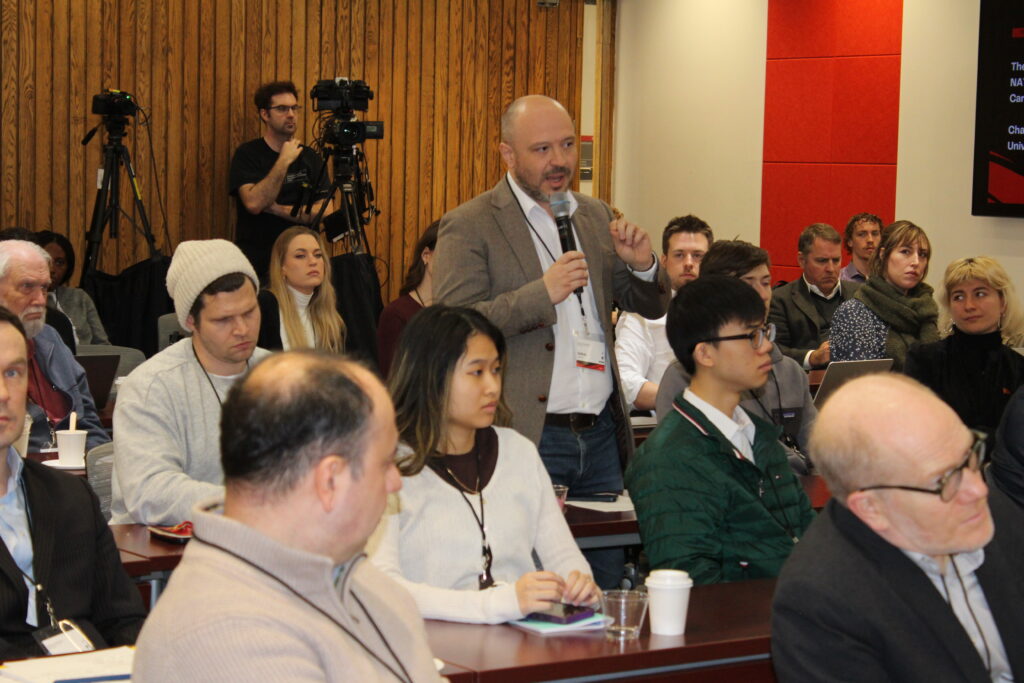
The Q&A period focused on American unilateralism and whether current developments represent a new phenomenon or an intensification of earlier American behaviour. The discussion also addressed how NATO might be rebalanced and what kind of leadership would be needed if a new coordinating actor were to emerge.
This raised broader concerns about fragmentation within Europe and the need to balance current and future relations with Russia.
Canada’s role was another central theme. Participants discussed Canada as a support system for European countries and as a potential cornerstone in protecting the liberal international order.
Panel Three: From Cooperation to Contestation: Security Dynamics in the Circumpolar North
The third panel examined changing security dynamics in the Circumpolar North, including Arctic defence, the legal status of the Northwest Passage, the European Union’s Arctic role, and Russian strategic narratives.
The panel featured Dr. Andrea Charron, University of Manitoba; Dr. Suzanne Lalonde, Université de Montréal; Dr. Andreas Raspotnik, High North Centre, Nord University; and Dr. Kari Roberts, Mount Royal University.
The panel was chaired by Balkan Devlen, Macdonald-Laurier Institute.
Dr. Andrea Charron: The Arctic as an Avenue of Attack
Dr. Charron emphasized that the Arctic is a critical strategic frontier for North American security.
The Arctic Ocean provides potential adversaries with the most direct approach to the continent. Across this polar corridor, hostile states can project power using long-range missiles, strategic bombers, submarines, and other advanced weapons systems.
These capabilities could threaten the United States and Canada and constrain North America’s ability to support European and other allies during a crisis.
Dr. Charron explained that this geostrategic reality is not new. It has long served as a foundational rationale for the establishment and evolution of the North American Aerospace Defense Command, known as NORAD.
While the United States, Canada, and Russia generally refer to the region as the “Arctic,” NATO and many European actors prefer the term “High North.”
She noted that the nature of the threat differs across the Atlantic space. For North America, the principal concern remains aerospace threats approaching over polar routes. For Europe, maritime access in the northern seas represents a primary vulnerability.
Alaska occupies a particularly important position because it is exposed to both air and maritime vectors, including potential threats from Russia and, increasingly, China.
Dr. Charron outlined NORAD’s three core missions: aerospace warning, aerospace control, and maritime warning. These are carried out through a unique binational command structure that reflects the shared responsibility of the United States and Canada for continental defence.
Because most Canadian defence infrastructure is concentrated in the southern part of the country, the North relies heavily on surveillance and projection capabilities.
Current modernization efforts therefore, focus on strengthening Arctic detection and awareness systems. These include Arctic Over-the-Horizon Radar, expanded satellite and space-based sensing, and maritime sensor networks.
Dr. Charron also noted that cooperation across the transatlantic space is improving, especially in multidomain coordination between North America and European allies.
Within this evolving architecture, Greenland has acquired renewed importance as a strategic location for sensor installations capable of extending surveillance across polar approaches.
Dr. Suzanne Lalonde: The Legal Status of the Northwest Passage
Dr. Lalonde discussed Canada’s legal position regarding the Northwest Passage. Canada maintains that the waters of the Arctic Archipelago constitute Canadian internal waters by virtue of historic title. According to this position, the waters enclosed by baselines drawn around the Arctic Archipelago fall under Canadian sovereignty and do not constitute an international strait.
Under international law, a state may establish historic title if it can demonstrate that it has exercised effective and exclusive authority over a maritime area for a considerable period of time, and that this authority has been accepted by other states, particularly those directly affected. Canada’s argument therefore rests on the claim that its administration and regulation of Arctic waters, combined with the absence of sustained international navigation through the Northwest Passage, supports the status of these waters as internal waters.
This interpretation contrasts with the official position of the United States, which maintains that an international strait passes through the Archipelago. Under this view, ships and aircraft of all nations would have a right of transit passage. The American position reflects a broader concern among maritime powers to preserve the principle of unimpeded navigation and overflight, especially through major international chokepoints. Canada rejects the applicability of this logic to the Northwest Passage, arguing that the route has never historically served as a corridor of international navigation and therefore does not meet the criteria of an international strait.
Dr. Lalonde emphasized that Canadian policy has focused on stewardship and regulatory responsibility rather than the closure of the waters to navigation. Measures such as the Arctic Waters Pollution Prevention Act of 1970 reflect Canada’s claim of responsibility for regulating navigation in order to protect the fragile Arctic environment and the welfare of Inuit and other northern inhabitants. The scale of the Arctic Archipelago, which includes a major share of Canada’s landmass, coastline, and islands, reinforces the strategic and legal significance of these waters for Canadian sovereignty.
At the same time, Canada has managed its dispute with the United States pragmatically. The 1988 Arctic Cooperation Agreement established a practice whereby US icebreaker voyages through waters claimed by Canada as internal are conducted with the consent of the Canadian government, while both countries preserve their legal positions.
This “agree to disagree” arrangement reflects the broader recognition that designating an international strait through Canada’s Arctic Archipelago may not serve North American or allied security interests, especially as the region becomes more strategically important.
Dr. Andreas Raspotnik: Redefining Arctic Alliances
Dr. Raspotnik examined the European Union’s evolving role in the Arctic and its attempt to articulate a broader political vision for Europe’s Northern Dimension. Although the European Union is not an Arctic coastal actor, it increasingly presents itself as an Arctic actor. This position has been institutionalized through the development of an Arctic policy framework beginning in 2008.
Rather than a comprehensive strategy, the EU’s Arctic policy has largely revolved around three priorities: addressing climate change, supporting sustainable development in the European Arctic, and contributing to peace and stability in the region. Within these areas, the EU has become the largest funder of Arctic climate research. This reflects its effort to shape Arctic governance through scientific cooperation, environmental stewardship, and regulatory influence. However, Dr. Raspotnik emphasized that the European Arctic remains politically fragmented. Individual European states maintain their own Arctic policies, strategies, and guidelines, often reflecting national interests that do not always align with the broader EU framework.
This fragmentation has complicated the emergence of a unified European Arctic vision, especially as crises elsewhere in Europe have pushed Arctic issues down the policy agenda. Nevertheless, renewed strategic attention to Greenland, the growing relevance of Arctic-Baltic connectivity, and the region’s potential as a source of critical minerals have drawn the Arctic back into European strategic debates. Dr. Raspotnik argued that these developments raise key questions about the future of Europe’s engagement in the region.
These include whether the EU needs a more clearly articulated Arctic strategy, what counts as a strategic interest in the Arctic, and how Arctic security should be understood. In European debates, security increasingly includes not only traditional military concerns, but also environmental resilience, human security, and economic sustainability. The evolving discussion therefore reflects a search for a new narrative capable of situating the Arctic within Europe’s broader geopolitical and economic landscape.
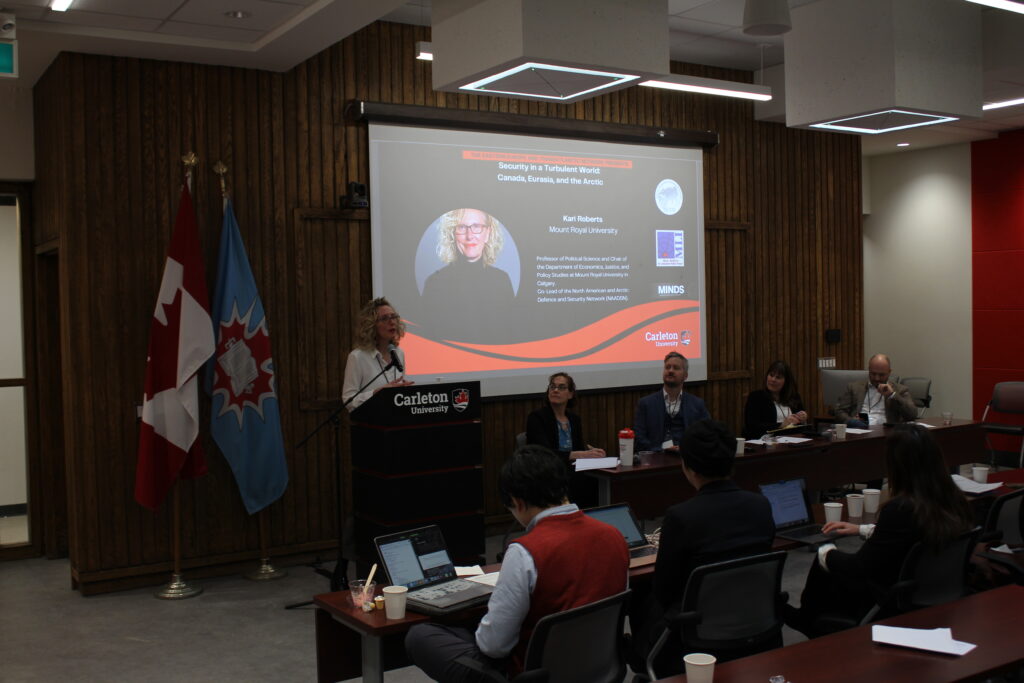
Dr. Kari Roberts: Russian Foreign Policy Priorities and Strategic Narratives
Dr. Roberts discussed how contemporary Russian Arctic policy is shaped by dominant narratives that present the region as central to Russia’s status, development, and geopolitical positioning. The first narrative frames the Arctic as a domain through which Russia can present itself as a powerful and independent global actor, capable of operating as a peer competitor to the United States and China. This narrative emphasizes sovereignty, strategic reach, and the revival of Russia’s great-power status through significant remilitarization of the Arctic. This includes the reopening of Soviet-era bases and the strengthening of capabilities for defence and power projection along the Northern Sea Route.
The second narrative reflects Russia’s broader geopolitical reorientation toward Eurasia, emphasizing closer partnerships with China, India, and other non-Western actors. Cooperation with China has become especially significant in areas such as resource extraction, infrastructure development along the Northern Sea Route, and the broader economic integration of Arctic shipping corridors.
The third narrative links Arctic policy to the social and economic development of the Russian North. In this framing, the Northern Sea Route is presented as a strategic artery that can stimulate regional growth while strengthening Russia’s control over maritime transit across the Arctic.
Dr. Roberts also discussed Russia’s use of hybrid instruments in the region, including electronic jamming, sabotage, interference with undersea communication cables, and the use of civilian vessels for surveillance and covert activity. Despite this, official Russian narratives continue to emphasize peace and international law, portraying Russia as a responsible Arctic steward while accusing Western actors of destabilizing the region. This dual messaging reflects a broader strategy of ambiguity and political warfare.
Domestically, Russian propaganda highlights alleged imperial ambitions of the United States, including claims that American interest in Greenland reflects fear of Russian power. Dr. Roberts argued that these narratives allow Moscow to legitimize its own military and geopolitical activities in the Arctic while framing them as defensive responses to Western encroachment.
Panel Four: Disinformation and Strategic Narratives in Russia’s War on Ukraine
The final panel examined how Russian disinformation circulates, why some audiences are more receptive to it than others, and what governments, researchers, and civil society can do to respond more effectively. Across the three presentations, a common theme emerged: disinformation is not only about false content, but also about trust, credibility, and the structure of the media environments through which narratives travel. The panel was chaired by Dr. Paul Goode, Carleton University.
Dr. Juris Pupcenoks: Public Opinion and Trust in NATO
Dr. Pupcenoks focused on public opinion and the role of institutional trust in shaping attitudes toward Russia’s war against Ukraine. Drawing on survey research conducted across NATO countries, including Canada, he argued that trust in NATO is one of the strongest predictors of whether people accept the view that Russia is responsible for the war, or instead become more open to narratives claiming that the West provoked it.
In the Canadian data presented, a large majority blamed Russia for the war, while a much smaller share blamed the West, NATO, or Ukraine. Dr. Pupcenoks stressed that people who trust NATO are far more likely to accept NATO’s framing of the war, while lower trust correlates with greater openness to Kremlin-aligned narratives. He suggested that countering disinformation, therefore, requires more than fact-checking alone. It also requires building institutional legitimacy, “prebunking” manipulative narratives before they spread, and communicating NATO’s relevance to Canadians in concrete terms, including security and Arctic stability.
He also proposed that public trust in NATO should be treated as an early warning indicator of vulnerability to hostile narratives.
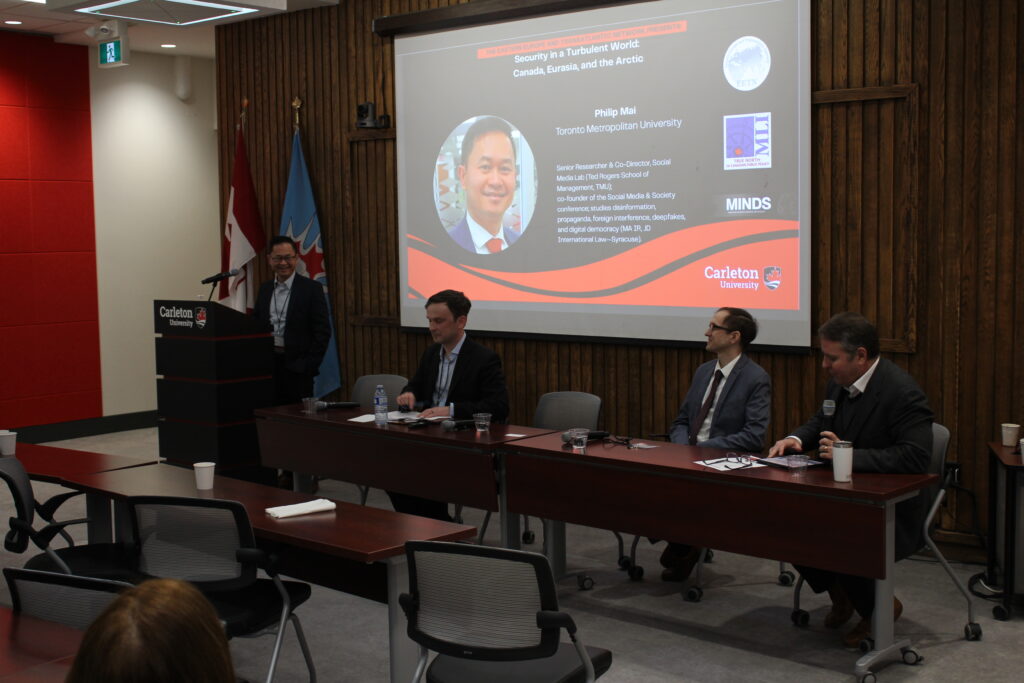
Dr. Philip Mai: Mapping Kremlin Propaganda Online
Dr. Mai presented the work of the Social Media Lab at Toronto Metropolitan University on mapping Kremlin propaganda and disinformation online. He introduced the lab’s Conflict Misinfo Research Portal and dashboard, which aggregate fact-checks related to Russia’s war against Ukraine from more than 200 fact-checking organizations worldwide.
The project was designed to make scattered and multilingual information more accessible to researchers, analysts, diplomats, and the public. Dr. Mai noted that the database now contains more than 7,000 fact-checks dating back to December 2021, with claims standardized into categories such as true, false, or misleading. He also highlighted related research from the lab, including survey work in Canada, suggesting that more conservative respondents and those who are highly online are more likely to believe some Russian narratives.
Additional experimental work showed that content warnings, blur screens, and footnotes can reduce engagement with misinformation, even as some platforms have moved away from these interventions.
Dr. Anatoliy Gruzd: Telegram and Networked Disinformation
Dr. Gruzd closed the panel with a case study on Telegram as a key information space in the war.
Using Telegram’s API and a snowball sampling method, his team began with a core set of Russia-Ukraine-related channels and expanded the dataset across multiple iterations, ultimately mapping a large network of public channels and groups.
Dr. Gruzd argued that this ecosystem is only weakly contested and is dominated by Russian and pro-Russian actors, with Ukrainian accounts forming only one part of a much broader pro-Kremlin environment.
His analysis paid particular attention to English-language verified Telegram channels, which can appear more credible to Western audiences.
These channels often act as bridges between official Russian messaging and influencers in North America and other English-speaking contexts.
Dr. Gruzd noted that some of these actors may amplify Kremlin narratives ideologically, while others have reportedly been connected to more direct forms of influence.
The presentation emphasized that the structure of these networks makes them resilient. Removing individual channels does little to disrupt the broader system.
Dr. Gruzd suggested that future research should continue examining English-language channels, unverified actors, and official Russian diplomatic accounts that push divisive messaging to Western audiences.
Conclusion
Overall, Security in a Turbulent World: Canada, Eurasia, and the Arctic highlighted the interconnected nature of contemporary security challenges.
Across the four panels, speakers examined Russia’s war against Ukraine, the future of NATO and transatlantic defence, the growing strategic importance of the Arctic, and the role of disinformation in shaping public opinion and political narratives.
The event underscored that security today cannot be understood through military developments alone. It also depends on political trust, institutional resilience, regional cooperation, public communication, and the ability of democratic societies to respond to both conventional and hybrid threats.