Event Report The Emerging Scholars Workshop in Riga: Security, Resilience and Strategic Thinking in a Changing Europe
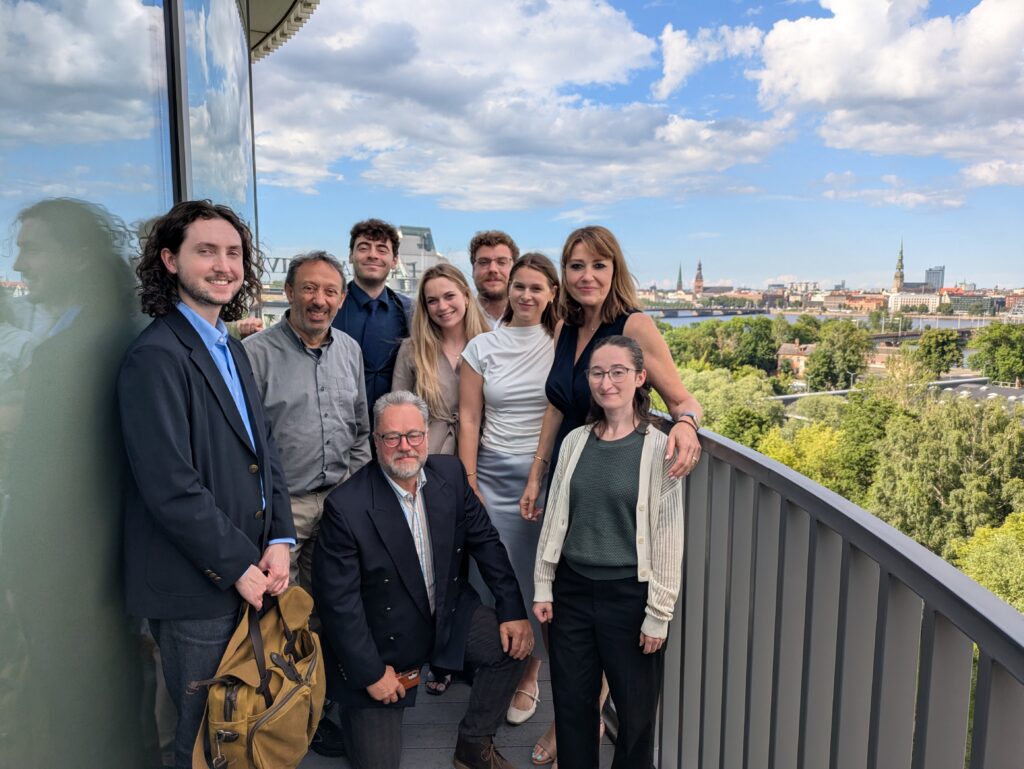
On 2 July 2026, the University of Latvia hosted the one-day international “Emerging Scholars Workshop” co-organized by the Eastern Europe and Transatlantic Network (EETN) and the University of Latvia. The EETN is an initiative funded by Canada’s Department of National Defence through the Mobilizing Insights in Defence and Security program and is hosted by the Institute of European, Russian and Eurasian Studies at Carleton University, Canada.
The workshop brought together emerging researchers and experts from the University of Latvia, Carleton University, the University of Helsinki, the Peace Research Institute Frankfurt, the University of Roma Tre and other institutions. The programme combined academic analysis with practical security-policy perspectives, focusing on Russia’s war against Ukraine, hybrid threats, NATO deterrence, strategic stability, political memory and radicalization risks in the digital environment.
The central insight of the workshop was that security today extends beyond the military domain. The keynote discussions on Baltic security challenges and NATO deterrence underscored that Europe is currently operating in a strategic environment situated between peace and open conflict. As one presentation put it: “Not at peace, not at war.” The phrase captures a reality in which military presence, political signalling, societal resilience, technological innovation and strategic communication have become interconnected instruments of deterrence.
The first panel, on Russia’s war, hybrid threats and European security, demonstrated the diversity of hybrid warfare. Presentations on the Sahel and the Western Balkans showed how Russian influence often exploits political fragmentation, weak media environments, historical grievances and the promise of alternative partnerships. The presentation on Russia’s adaptation to drone warfare in Ukraine emphasized that technological change on the battlefield has direct political consequences: it affects operational capabilities, but also a state’s ability to sustain a narrative of control and competence. A key takeaway was that hybrid attacks against Europe can simultaneously weaken support for Ukraine, test vulnerabilities and normalize grey-zone incidents.
The second panel, on strategic stability and regional realignments, addressed Europe’s capacity to become a more autonomous strategic actor. The presentations discussed the weakening of arms control regimes, the compression of decision-making timelines caused by hypersonic weapons and artificial intelligence, and the need to strengthen air and missile defence, drones and counter-drone systems, cyber resilience, ammunition production and military mobility. One presentation formulated the challenge clearly: “Superpower or not, Europe must become a capable & autonomous strategic actor.” In the Latvian context, this discussion was complemented by a presentation on defence innovation and layered deterrence.
The third panel broadened the understanding of security beyond the narrowly military sphere. Presentations on Armenian resistance to Sovietization, minority schools, Russia’s strategic national mythmaking, wartime media and legal framings of domestic violence, and radicalization trends in Latvian social media showed that state power, memory politics, law and the digital environment are all security-relevant. The Latvian case was particularly important: society as a whole is not radicalized, but risks are concentrated in specific groups and discourses. Prevention therefore needs to be targeted, evidence-based and focused on strengthening democratic resilience.
Overall, the workshop showed that military deterrence, technological innovation, alliance politics, societal resilience, historical memory and the information space form one security ecosystem. The workshop also highlighted Canada’s growing contribution to European and transatlantic security. Through its leadership of the NATO Multinational Brigade Latvia and a long-standing commitment to supporting Ukraine, Canada is increasingly engaged in addressing the military, technological, and societal dimensions of contemporary security challenges. At the same time, Canada’s engagement extends beyond the military sphere to include defence innovation, resilience-building, research collaboration, and policy dialogue, reflecting the increasingly comprehensive nature of contemporary security.
The main added value of the workshop was interdisciplinary dialogue, allowing emerging scholars to connect empirical case studies with broader questions about the future of European security. In this context, Riga became an important discussion point on NATO’s eastern flank, where theoretical debates on deterrence and hybrid threats carry direct political significance.