Tsitsino Lobzhanidze
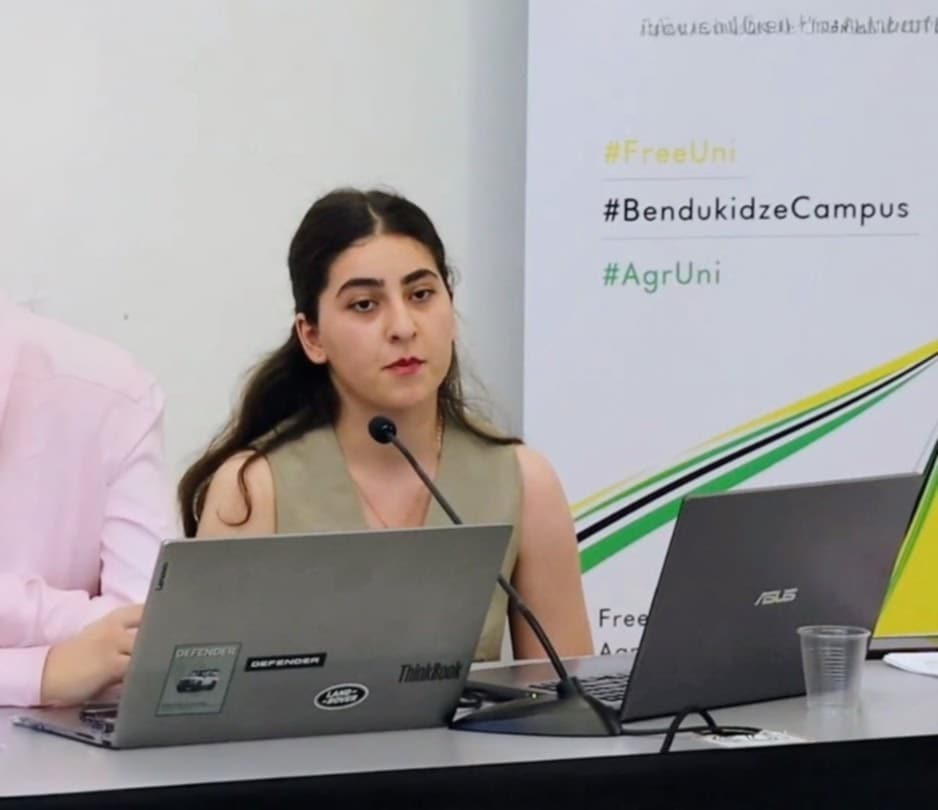
Tsitsino Lobzhanidze is an Undergraduate student at the Free University of Tbilisi and a member of the 2025 mentorship program. She co-authored a policy memo titled “Foreign Fighters and Regional Security in the Black Sea Region: Policy Imperatives Amid the Russia-Ukraine War” that examined the threats posed by Foreign Terrorist Fighters in the Black Sea region.
Mentorship Program 2025 Testimonial
Tsitsino kindly shared her perspective on the mentorship program and highlighted the benefit that her participation had on her academic and professional development.
Can you tell me a little bit about your experience in the mentorship program?
My experience in the EETN’s mentorship program was incredibly rewarding, both professionally and personally. As a Georgian student in International Relations with a focus on the Middle East, I found working within this program fascinating, as I engaged with topics that closely aligned with my interests. Participating in this project enabled me to apply theoretical knowledge in real-world contexts and gain a deeper understanding of the complexity of the modern geopolitical landscape, as well as the importance of contributing to its resolution. Writing a policy memo was a novel experience for me, and the process was highly engaging. The research phase and formulating practical solutions for the issues addressed in my policy memo were particularly compelling. This experience was exceptionally valuable, as it enhanced my research, teamwork, critical analysis, and clear, structured writing skills. This project benefited me not only professionally, but also personally.
During the conference hosted by The Free University of Tbilisi, I had the opportunity to connect with experienced and emerging scholars and share perspectives on major policy challenges, especially the effects of the Russia-Ukraine war on international security. Understanding how global issues are viewed by foreign countries, such as Canada, was a distinctive experience that enabled me to assess geopolitical challenges from a different perspective. Overall, participating in the mentorship program was truly invaluable for me, and the experience reaffirmed my commitment to an academic career focused on analyzing political and security challenges and addressing current geopolitical issues.
What was the process of working with your mentor like? How did your relationship aid in the drafting of your policy memo?
Working with my mentor, Dr. Tinatin Karosanidze, was a truly unique and enriching experience. As an accomplished and professional scholar, her guidance made the entire process incredibly engaging. Our weekly meetings were invaluable as she always provided our team with insightful advice and clear directions, helping us to delve deeply into the details of our policy memo and consider different perspectives. Her practical and applicable advice made the process highly manageable and comfortable for my team and me. Beyond the academic and research benefits, Ms. Tinatin also demonstrated what it means to be a true leader. Having known her from my university—where she is the Dean of the School of International Relations and a lecturer—our existing relationship greatly facilitated our collaboration. I felt completely comfortable asking for her assistance and sharing my thoughts on the topic. She was always supportive and open to new ideas from my co-authors and me. Overall, working with such a professional mentor was an undoubtedly priceless experience, and her guidance was instrumental in the successful drafting of my policy memo.
How did this experience change the way that you think of academic work?
I had always thought of academic work as a somewhat tedious process—hours spent reading, analyzing existing resources, and then drafting a paper. What surprised me, however, was how interesting and engaging the process actually turned out to be. I realized that if a person is truly passionate about the topic and has a good mentor to provide guidance, academic work can become extremely rewarding. This is especially true when working on real geopolitical issues, where policy recommendations have the potential to make a meaningful impact. The final conference, where participants presented our research, further demonstrated the importance of such initiatives. Many attendees showed genuine interest in our topics, which made it clear that academic work is not just words on paper, but also a tool for raising awareness and shaping perspectives on vital global issues. For me, this project was an invaluable opportunity to contribute to that process.
How important was the mentorship program to you and your development as a young scholar?
The mentorship program was an invaluable experience that confirmed I’ve chosen the right career path. The entire process—from writing a policy memo to presenting it to a diverse audience—convinced me that this is exactly the kind of work I want to pursue in the future. Through the program, I gained a firsthand look at how academic work is conducted from start to finish. I learned how to structure research, build compelling arguments, and draft policy papers with precision. While I had experience with academic writing at my university, this project was completely different. It showed me just how important every single word is and how much attention to detail is required to produce clear and impactful work. Overall, the program was a priceless opportunity for developing the skills essential for young scholars. I now have a stronger grasp of the academic process, a better understanding of the technical aspects of policy writing, and the invaluable experience of engaging with an international network of people who share my research interests. This has not only sharpened my skills but also deepened my motivation to continue on this academic and professional path.
What would you like future generations of young scholars enrolled in the mentorship program to know?
I would like future generations of young scholars enrolled in the mentorship program to know that this initiative is one of the most valuable opportunities for their academic and professional development. The experience participants gain will be priceless—not only in terms of strengthening research and policy-writing skills, but also for developing critical thinking, problem-solving abilities, and building meaningful connections with peers and professionals from around the world. The program also provides a unique opportunity to engage with real-world geopolitical issues, apply theoretical knowledge in practice, and gain confidence in presenting ideas to diverse audiences. My main advice to future participants is to clearly identify their interests beforehand, as this will make the process smoother, more focused, and even more engaging. Overall, this initiative is truly invaluable. It equips participants with essential academic and professional skills while inspiring a deeper understanding of global challenges and the crucial role of policy analysis in addressing them. By fully engaging with the program, future scholars can expand their knowledge, develop lasting professional relationships, and gain the confidence and insight needed to make meaningful contributions to policy discussions and decision-making processes.