The Skill of Kindness
Please enjoy this transcript of Dr. Anne Bowker’s remarks from Carleton University’s Spring 2026 Convocation
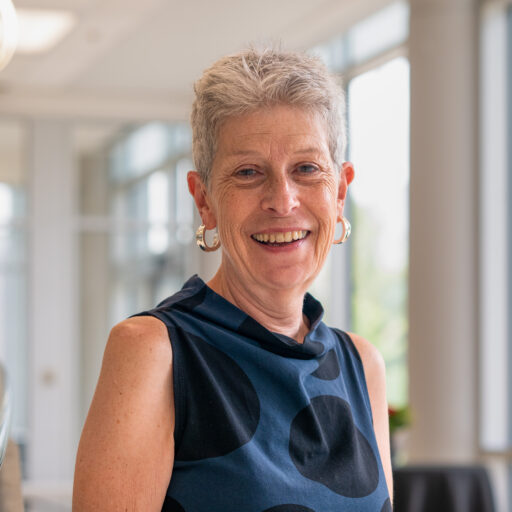
Good morning, everyone. It is such a pleasure to be here with you today.
For those who don’t know me, my name is Dr. Anne Bowker, and I have the privilege of serving as Dean of the Faculty of Arts and Social Sciences and as a professor of Developmental Psychology.
To the family members, friends, faculty, staff, mentors, and supporters who have helped our graduates reach this milestone, thank you. Today is a celebration of individual achievement, but it is also a celebration of community. None of us arrives at a moment like this entirely on our own.
And to the Class of 2026: Congratulations! You have worked incredibly hard to get here, and you should be so proud of what you’ve accomplished.
As I look out at you today, I find myself thinking not only about where you’re going next, but about how much you’ve changed since you first arrived at Carleton.
Four years ago, many of you arrived on campus carrying a mixture of excitement, uncertainty, ambition, and perhaps a few assumptions about how the world worked. Since then, you’ve encountered new ideas, complicated questions, unfamiliar perspectives, and people whose experiences challenged and contrasted your own.
You have each learned a great deal in classrooms and lecture halls, libraries, studios, labs, work and field placements, community groups, and late-night conversations with friends. But education is never just about acquiring information. It is also about comprehensive personal evolution.
One of the great joys of working in a university is having the opportunity to watch students grow over time. I’ve had the honour of seeing that growth in many of you, and what strikes me most today is not simply the expertise you’ve developed through your disciplines. It’s who you’ve become.
Through your classes, experiences, and relationships at Carleton, you have become people who are better equipped to understand the world around you. And I don’t use the word understand lightly.
In my view, understanding is one of the most powerful skills a person can possess. It helps us make sense of a complicated world, build meaningful friendships, contribute to our communities, and become the kind of leaders people trust and want to follow. It is a skill that enriches every part of our lives, personally and professionally.
Throughout your Arts and Social Sciences education, you’ve developed that skill in ways both big and small. You’ve examined multifaceted questions from multiple perspectives, challenged your own assumptions, and learned to look beneath the surface. You’ve discovered that understanding the world around us requires curiosity and a willingness to engage with complexity.
Those habits of mind may not always provide quick answers, but they often lead to better ones.
The world you are graduating into is fast-moving and often overwhelming. Information is abundant. Opinions are everywhere. Artificial intelligence can generate answers in seconds.
Yet understanding remains as important, and as difficult, as ever. Because true understanding requires something more than information. It requires inquisitiveness, good judgment, and the willingness to see beyond our own experiences.
Whether you studied psychology, English, history, music, sociology, cognitive science, or any of the many disciplines represented here today, you have spent your time exploring the human experience and developing the capacity to understand it more deeply.
As all of you now understand, the most important challenges facing our communities are not simply technical problems waiting for technical solutions. They are human challenges. And human challenges require people who can build connections, navigate nuance, and bring people together.
In other words, they require leadership. And while leadership is often associated with authority, expertise, or visibility, the most effective leaders I have known possess something much more human. They understand people. They pay attention to context. And they recognize that meaningful progress depends on trust, and that listening is often more valuable than speaking.
And that brings me to my core point I hope you’ll remember from my remarks today.
Understanding matters. But what matters even more is what we do with that understanding.
Understanding is the foundation. Kindness is the application. Understanding allows us to see people more clearly. Kindness is what we do with that understanding.
We often talk about kindness as though it were simply a personality trait. A virtue. Something you’re either born with or not. Something admirable, perhaps, but not especially useful in a competitive world.
I see it differently. To me, kindness is a skill. It is the practical application of empathy and understanding. It is how we build trust, strengthen communities, and help others feel valued. And despite what we sometimes hear, these qualities are not obstacles to success. They are often the foundation of it.
The people who build strong organizations, meaningful connections, and healthy communities are rarely those who move through the world thinking only about themselves. More often, they are people who understand others, who earn trust, and who recognize that connecting and belonging matter.
Maya Angelou once observed that it takes courage to be kind. I think she was right. Kindness requires courage. It takes courage to remain curious when certainty would be easier. It takes courage to reconsider our assumptions. And it takes courage to genuinely try to understand people whose experiences differ from our own. But I believe kindness is one of the most valuable skills you can carry into the future.
Whether in your career, your relationships, or your community, kindness will help you build trust and bring people together in a world that often feels divided and uncertain, and frankly requires mending.
One of the great privileges of my career has been spending more than three decades teaching, mentoring, and learning alongside students like you.
People sometimes assume that learning flows in only one direction. That professors teach and students learn. My experience has been quite different.
What I can tell you is that year after year, students continue to challenge my assumptions, expand my perspective, and remind me that every generation brings new ideas, new energy, and new possibilities. They also remind me that kindness is far more common, and far more powerful, than we often give it credit for.
And that is one of the reasons I remain so hopeful. I have spent my career meeting the people who will shape the future. I see them sitting in front of me today.
So, as you leave Carleton, I hope you carry forward the habits of mind you’ve developed here. Continue asking thoughtful questions. Continue seeking understanding before rushing toward simple answers.
But most importantly, please continue practicing your acquired and highly dynamic and refined skill of kindness. Not because it is easy, and not because it is expected, but because it is powerful if practiced consistently and with intention.
Thank you for choosing Carleton and for enriching our Faculty with your intelligence, creativity, generosity, and of course, your skill of kindness.
Congratulations, Class of 2026. We are so proud of you and cannot wait to see where your talents take you next.