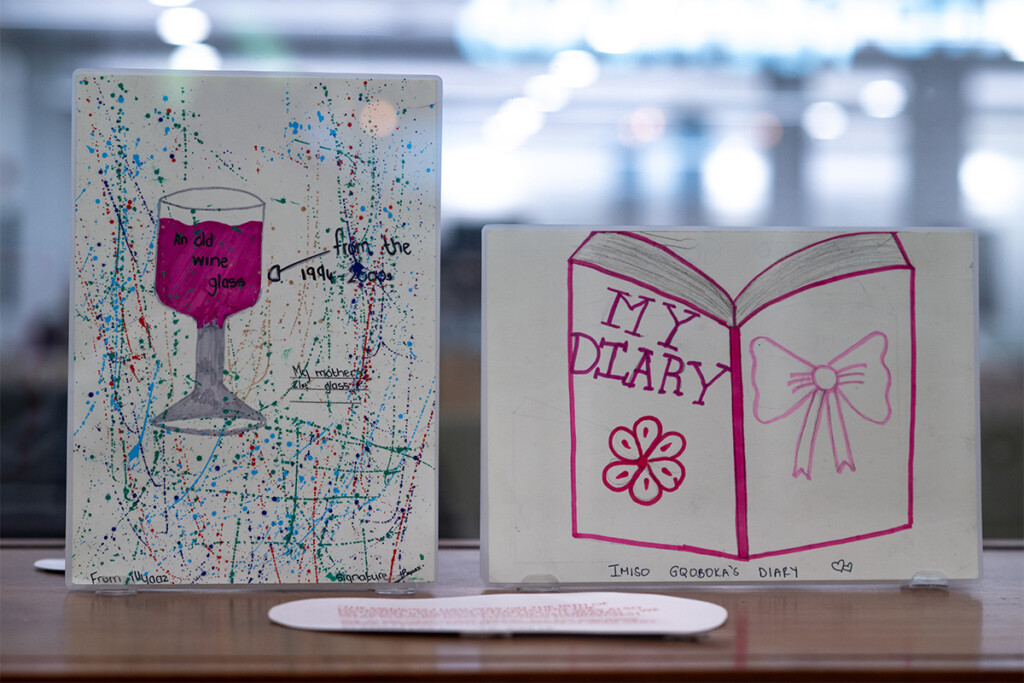
Young Curators Exhibit Their Work at MacOdrum Library
Prof. Monica Eileen Patterson’s community-engaged research puts children’s perspectives at the centre of exhibition-making.
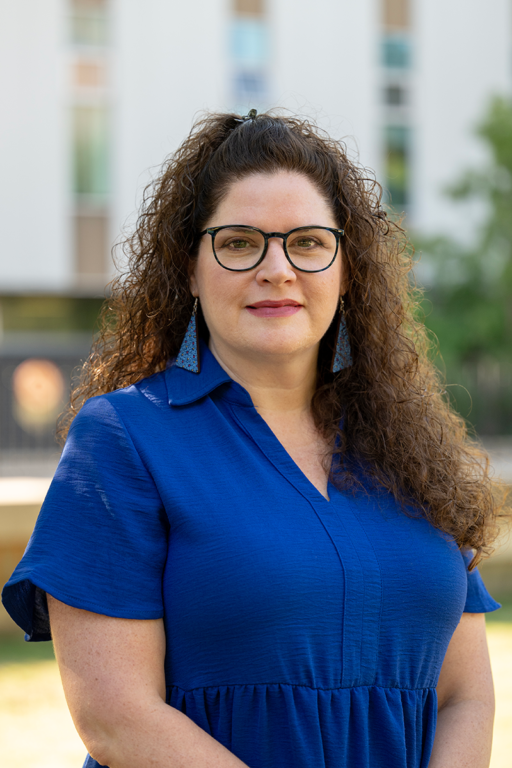
Young Voices, Big Visions emerged over a week-long curation camp outside Cape Town, South Africa, led by Dr. Monica Eileen Patterson, an Associate Professor in the School of Interdisciplinary Studies and Assistant Director of the graduate program in Curatorial Studies.
A feat of community-engaged research, the success of Young Voices, Big Visions built on Patterson’s longstanding relationship with the Children’s Movement, a national grassroots organization in South Africa.
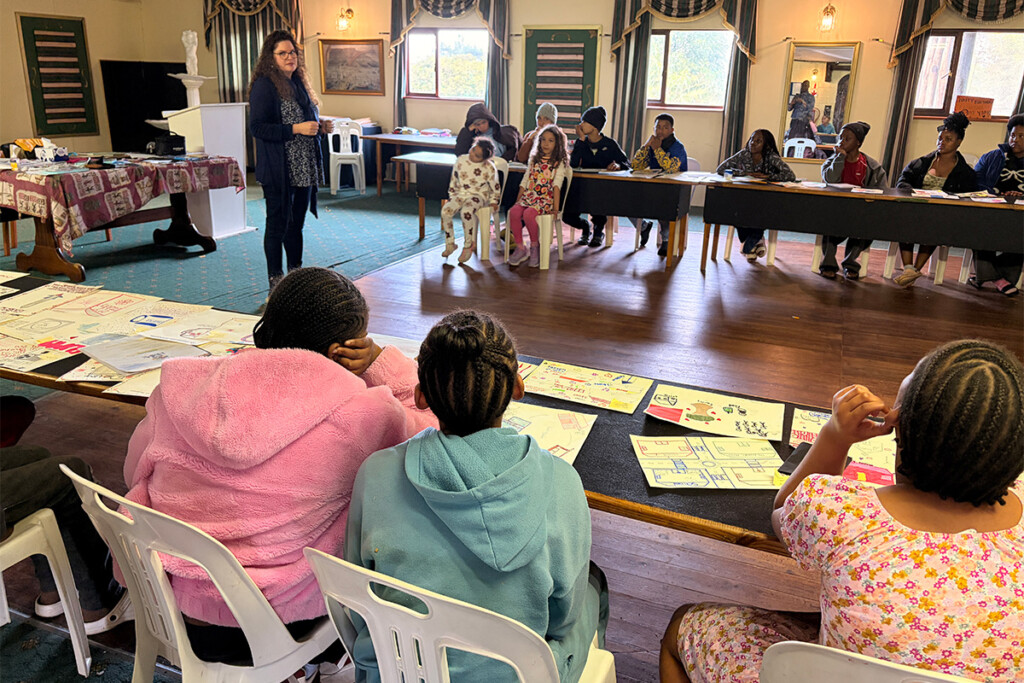
Two children from each of the thirteen chapters across the Cape Metro area were invited to attend the camp, where facilitators from the Children’s Movement, sensitive to the participants’ social and cultural upbringing, stayed on-site.
“Their involvement was really important,” says Patterson. “All of the participants are multilingual, and the facilitators ensured the children could communicate in a language other than English.”
While adult facilitators helped the camp ran smoothly, the children shaped its direction. Rebecca Friend, Patterson’s co-facilitator on the project, recalls arriving to camp with an itemized breakdown of the week’s schedule, only to realize the itinerary would soon be made obsolete: “By the end of day one, I was ripping it up,” says Rebecca. She continues, “We really tried our best to share authority with the children, so that our approach was responsive and reactive to their interests and needs.”
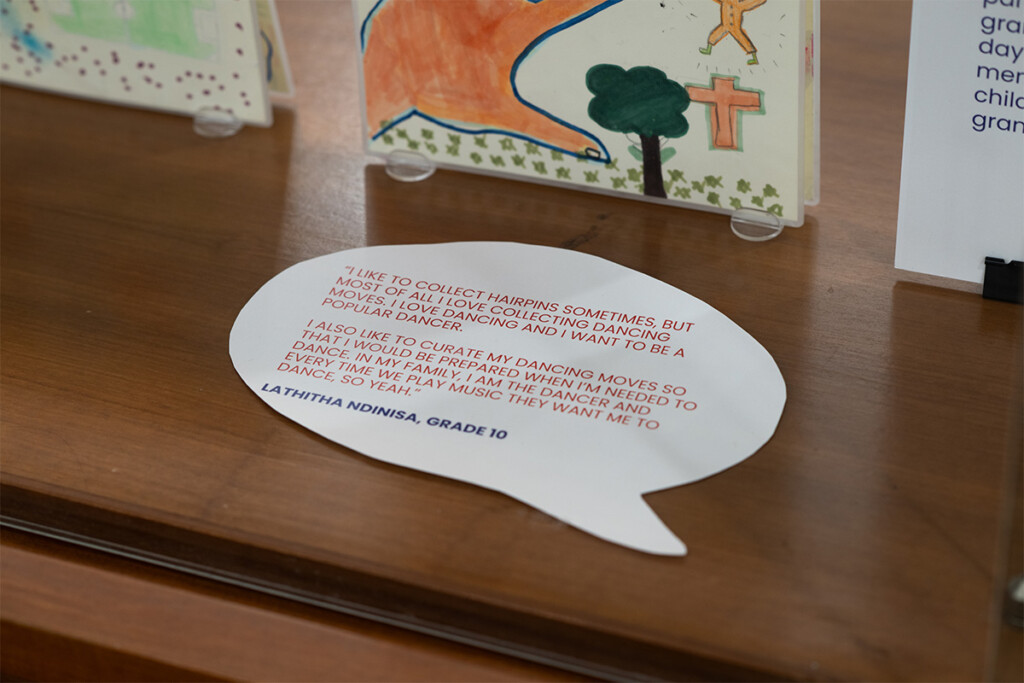
As an example, the curators insisted on including the children’s portraits, full names, and signatures in the exhibition rather than identifying participants more generally as a collective.
Central to Young Voices, Big Visions is a curatorial practice known as children’s museology, which recognizes children as capable cultural interpreters and producers. “The core idea behind my development of a children’s museology is to carve out space for contributions by and with children,” says Patterson.
Museums often engage children through educational programming designed and delivered by adults. Children’s museology gives young audiences the opportunity to decide which stories are told and how they are presented.
But this approach isn’t simply about relinquishing control: for intergenerational collaboration to work, children must feel supported by their adult counterparts.
“Throughout this experience, I learnt that providing structure can also be a form of respect,” Patterson reflects. “If things are too open-ended, people can flounder. An exhibit will not come together without some parameters, some constraints, and some guidelines.”
As an example, when the camp began, the participants had varying degrees of familiarity with museums and exhibition design. With a little instruction, however, they came to understand the concept of curation.
“We’re all curating different aspects of our lives,” says Patterson.
“Children are exceptionally good curators because they are often thinking about collecting things and arranging them in a particular way for an audience.”
Robyn Leigh Busch, a member of the Young Voices, Big Visions cohort, describes a curator as someone who protects stories, culture, and memories. Speaking on behalf of her peers, she reflects:
“We want people to look at what we made and see more than just drawings and crafts. We want you to see the love, the teamwork, and the unity behind it. It shows our culture, our background, and where we come from. It shows that when we work together, we can create something powerful.”
Young Voices, Big Visions is on display at MacOdrum Library until Feb. 12, 2027, before traveling to Toronto Metropolitan University and Concordia University.
To check out behind-the-scenes content of the camp, videos filmed by Bandile Nocande are available to watch. You’re also invited to share a message with the curators.