Notice:
This event occurs in the past.
The Place of AI in the City: Intelligent Machines and the Changing Shape of Social Relationships
Monday, February 9, 2026 from 6:30 pm to 9:00 pm

- In-person event
- Carleton Dominion-Chalmers Centre , Ottawa , ON , K2P 0E2
As our day-to-day interactions with AI become increasingly more frequent and complex, artificial systems are beginning to occupy roles that once belonged only to other humans. This panel explores what it means to relate to AI socially: whether social connections with artificial systems can be genuine, what might be missing if they are not, and how these interactions may reshape human expectations of companionship, care, and trust. Along the way, the discussion will situate these questions within a broader examination of what today’s AI systems can and cannot do, and what the future trajectory of AI might look like. Register below.
Moderator
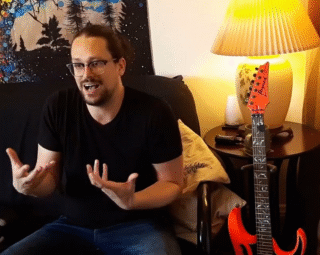
Department of Philosophy, Carleton University
Dr. Josh Redstone holds degrees in Philosophy (BA, MA) and Cognitive Science (PhD). His research concerns philosophical and empirical questions that arise at the intersection of philosophy of mind, cognitive science, robotics, and AI. He is also interested in consciousness, the emotions, and belief in pseudoscience.
Panelists
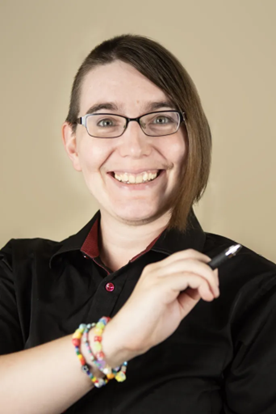
Author
Photo by Amy Walton
Ada Hoffmann is the author of the OUTSIDE space opera trilogy, the collections MONSTERS IN MY MIND and MILLION-YEAR ELEGIES, and dozens of speculative short stories and poems. Ada’s work has been a finalist for the Philip K. Dick Award (2020, THE OUTSIDE), the Compton Crook Award (2020, THE OUTSIDE), and the WSFA Small Press Award (2020, “Fairest of All”).
Ada was diagnosed with autism at the age of 13 and is passionate about autistic self-advocacy. Their Autistic Book Party review series is devoted to in-depth discussions of autism representation in speculative fiction. Much of their own work also features autistic characters.
Ada is an adjunct professor of computer science at a major Canadian university, and they did their PhD thesis (in 2018) on teaching computers to write poetry. They are a former semi-professional soprano, tabletop gaming enthusiast, and LARPer. They live in eastern Ontario.
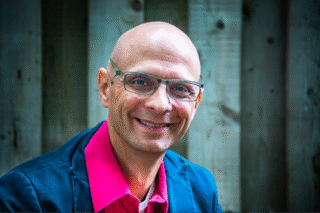
Department of Cognitive Science, Carleton University
Photo by Franklin McCoy
Dr. Jim Davies is a full professor in the Department of Cognitive Science at Carleton University, where he has won awards for his teaching and research. He has degrees in philosophy, computer science, and cognitive psychology. As director of the Science of Imagination Laboratory, he explores processes of imagination in humans and machines, and specializes in artificial intelligence, analogy, problem-solving, and the psychology of art, religion, and creativity. His work has shown how people use visual thinking to solve problems, and how they visualize imagined situations and worlds.
He is author of over 50 peer-reviewed publications in the fields of cognitive science, artificial intelligence, philosophy, and psychology. He wrote the popular science books Riveted: The Science of Why Jokes Make us Laugh, Movies Make us Cry, and Religion Makes us Feel One with the Universe, Imagination: The Science of Your Mind’s Greatest Power, and Being the Person Your Dog Thinks You Are: The Science of a Better You. He has been asked to speak at four TEDx events, and is co-host of the award-winning Minding the Brain podcast.
In his spare time, he is a published poet, an internationally-produced playwright, game designer, and a professional painter and calligrapher.
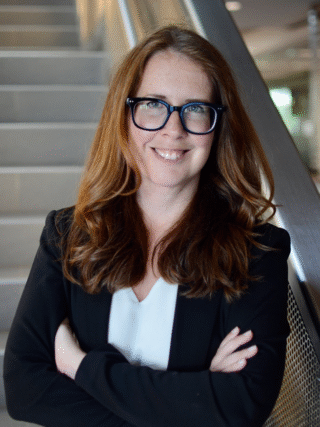
School of Electrical Engineering and Computer Science, University of Ottawa
Dr. Kathleen Fraser is an associate professor in the University of Ottawa School of Electrical Engineering and Computer Science. Her research focuses on natural language processing (NLP), artificial intelligence (AI), and the social impacts of these technologies. One aspect of her research examines the social biases that end up encoded in artificial intelligence systems. She has authored multiple papers on ethical considerations in NLP, on topics such as racial and gender biases in image generation models, ethical and human rights issues in toxic language detection, and detecting and mitigating stereotypes spread on social media. Dr. Fraser received her PhD in computer science from the University of Toronto and worked as a research scientist at the National Research Council of Canada for several years, before joining the University of Ottawa in 2025.
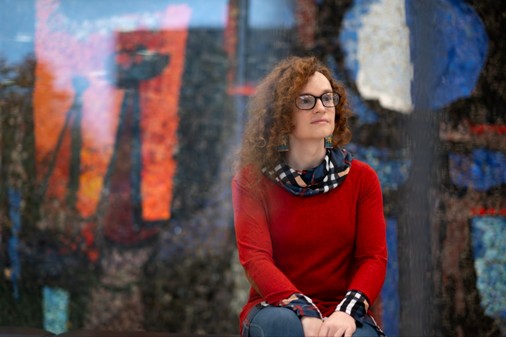
Department of Cognitive Science, Carleton University
Dr. Mary Kelly is the principal investigator of the ANIMUS lab and an Assistant Professor in the Department of Cognitive Science. She is a cognitive scientist with a background in machine learning, cognitive psychology, and psycholinguistics. Her research has two goals: (1) to advance the scientific understanding of the basic cognitive functions that underpin human learning, knowledge, and language acquisition, and (2) to develop biologically-inspired machine learning systems capable of achieving expert performance on arbitrary tasks through learning.
Registration
Personal information collected through this form will be used and disclosed by Carleton University under the authority of the Carleton University Act, and in accordance with sections 39, 41 and 42 of Ontario’s Freedom of Information and Protection of Privacy Act. The purpose of this processing is for advancement activities and alumni development purposes. If you have any questions about the processing of personal information by Carleton University, please contact the Manager, Privacy & Access to Information, by phone at 613-520-2600 ext. 2047 or by e-mail via University_Privacy_Office@carleton.ca. You may also visit carleton.ca/privacy for additional information and notices.