Discovery University Shows What Accessible Education Can Look Like
A long-running partnership between Carleton University, the Ottawa Mission, and local post-secondary institutions is opening the classroom to forms of learning, discussion, and intellectual community that extend beyond the traditional boundaries of higher education.
For more than two decades, Discovery University has opened the classroom to people who are too often excluded from spaces like it.
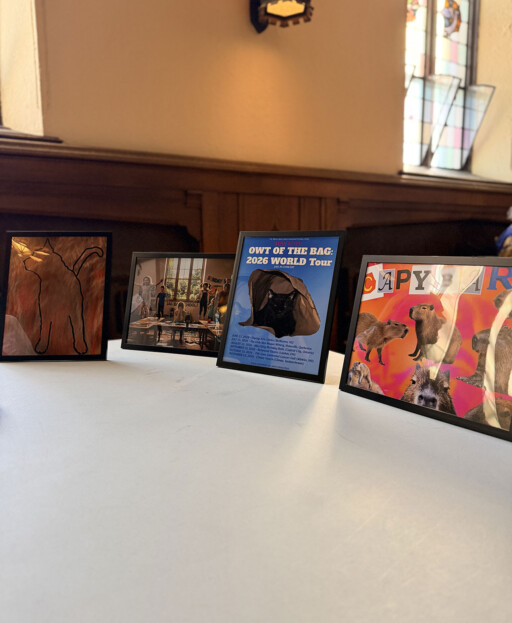
Run through a partnership between the Ottawa Mission, Carleton University, and other post-secondary universities, the program offers free, non-credit university courses in the humanities and social sciences to adults living on low incomes or experiencing homelessness. Courses are taught by university professors and span subjects ranging from philosophy and creative writing to music, psychology, and social movements.

Discovery University offers students a classroom shaped by creative and intellectual exchange, where learning, curiosity, and community matter more than circumstance.
“I think DU reminds us that education is not just about credentials,” says Susan Burhoe, associate director and assistant professor (teaching) in Carleton’s Centre for Initiatives in Education. “It is also social, intellectual, and deeply human.”
Burhoe sees Discovery University as a natural extension of the Centre for Initiatives in Education’s (CIE) longstanding commitment to accessibility and inclusive learning.
“Expanding access to education is at the core of what we do, particularly for communities that may not otherwise find a pathway to university,” she says. “Discovery University really embodies that mission. It opens up the university as a site of learning, curiosity, and connection in ways that extend beyond traditional pathways.”
That idea, that universities have a responsibility not only to educate, but to remain connected and accountable to the broader communities around them, runs throughout the program.
For the Faculty of Arts and Social Sciences at Carleton, home of CIE, Discovery University also reflects many of the values at the centre of humanities and social science education itself: critical thinking, dialogue, public engagement, and asking difficult questions about how people live together.
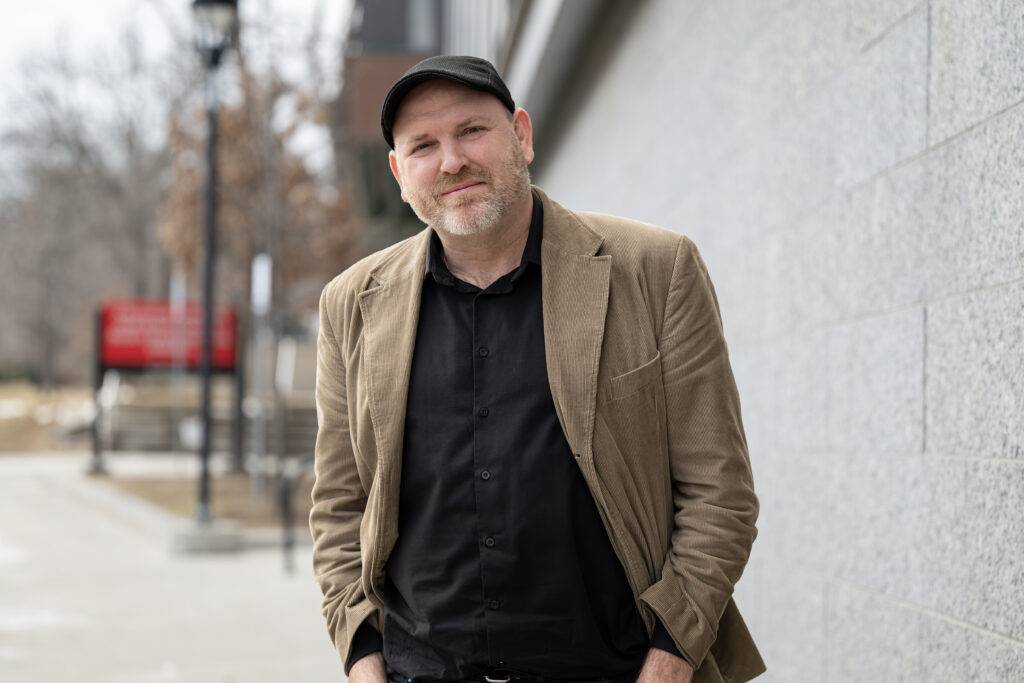
Music professor and artist Jesse Stewart has taught multiple courses through Discovery University, where improvisation, collaboration, and collective learning shape the classroom experience.
“The humanities and social sciences invite us to ask questions about power, identity, culture, and how we live together,” Burhoe says. “Discovery University centres those same questions in ways that are accessible and embedded in the community.”
Those ideas come alive in the classroom.
Jesse Stewart, professor and head of Music at Carleton, has taught multiple courses through Discovery University and helped bring Carleton into the partnership early on. An award-winning musician, artist, and educator whose work often explores improvisation, accessibility, and collaborative learning, Stewart says the program aligns closely with the values that shape both his artistic practice and his teaching. “Discovery U offers a space where learning is relational, reciprocal, and grounded in human connection,” he says.
Stewart describes Discovery University classrooms as unusually engaged spaces, shaped by openness, flexibility, and the wide range of lived experiences students bring into discussion.
“One of the most striking things about Discovery U is the level of intentionality in the room,” he says. “People are there because they want to be, not because they have to be, and that shifts the dynamic in important ways.”
In his classes, improvisation becomes less about music and more about listening and responding to others in real time.
“Knowledge is generated collectively,” Stewart says. “It requires a certain flexibility and a willingness to relinquish some control, but it also opens up possibilities that are difficult to access through more rigid pedagogical models.”
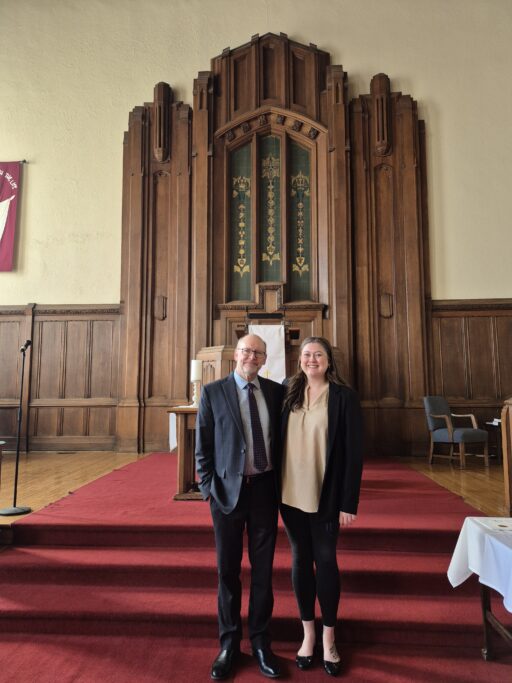
That sense of community and collective learning stands out immediately to Emma Pratt, Discovery University Coordinator at the Ottawa Mission, who works closely with students throughout the term.
“We work hard to foster an environment that is non-judgmental, safe, and encourages critical thinking,” Pratt says. “Our hope is that the program provides students with educational opportunities they may not have been able to access otherwise, fosters connection between students, and works to reduce isolation within communities that are prone to experiencing it.”
Pratt says some of the most meaningful moments come through watching students gradually become more confident in themselves and more connected to one another.

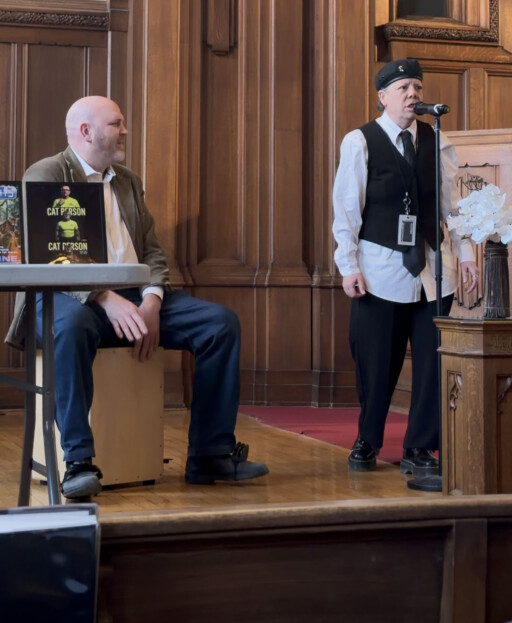
She recalls one student who initially found public speaking deeply intimidating during a creative writing course, but later volunteered to sing at a graduation ceremony.
“The growth that this shows in terms of confidence, self-worth, and leaning into vulnerability was really inspiring to witness,” Pratt says.
In another course, she watched initially quiet discussion groups become “boisterous, collaborative and full of life” by the end of the semester.
“The connections that we’re able to see form in these classes is magical,” she says.
For Stewart, experiences like these continue to reshape his own understanding of teaching.
“Discovery U embodies what teaching can be at its best,” he says. “A collaborative process of inquiry grounded in listening, care, and curiosity.”
At a moment when conversations around higher education are often framed in narrow and transactional terms, Discovery University reminds us what universities can look like at their best: places deeply connected to their communities, where people come together to learn alongside one another.