How Curiosity Helped Carleton Alum Rudolf Stussi Build a Creative Life
An openness to unexpected opportunities has guided painter Rudolf Stussi (BA 71) through an international career in the arts.
When Rudolf Stussi arrived at Carleton University from Switzerland in the late 1960s to pursue a degree in English literature, he didn’t have a carefully mapped-out career plan. What he did have was a love of reading and a willingness to follow his curiosity wherever it led.
One of his memories from his undergraduate studies captures the spirit of those formative years. Living in an apartment in the Glebe, Stussi and a friend noticed that the Liberal Party of Canada was holding their leadership convention just across the street at Lansdowne Park.
“We faked some press badges and picked up a button on the floor to get in,” he recalls with a laugh.
The leader who was elected that day? Pierre Elliott Trudeau, the future Prime Minister of Canada.
“It was quite an introduction to Canadian politics!”
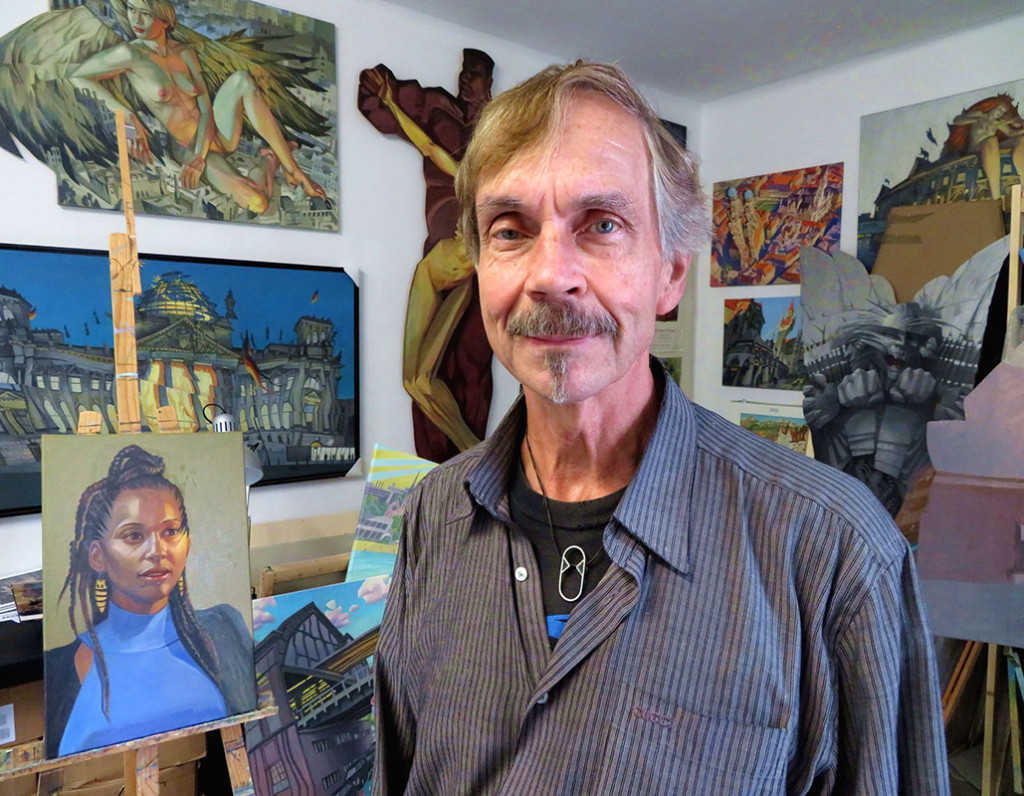
More than five decades later, that same inquisitiveness continues to shape Stussi’s career as a painter, illustrator, art director, animator, and teacher.
“One of the reasons to go to university is to find out what you want to do,” says Stussi, who graduated with a Bachelor of Arts Honours in English in 1971. He later returned to Carleton to study journalism — an experience he says ended up being helpful for his future art career, because it taught him how to deal with the press.
Finding Community Through Student Theatre
Born in Zurich, Switzerland, Stussi spent part of his childhood in the United States before returning to Europe for high school. An avid reader from an early age, he was drawn to studying English literature and chose Carleton because he had family connections in Ottawa.
Stussi initially found the coursework challenging, particularly writing at the university level in his second language. But it was the people he met at Carleton who left the deepest impression.
“The best part about university is that you get a feeling for others, their emotional and intellectual depths, that you don’t get to see in other spaces,” he says. “It’s very conducive to building relationships and other experiences.”
“Stay open-minded, let things come to you and react and be open to them. Something may suddenly catch your imagination that you hadn’t planned for — don’t let that go.”
Some of those relationships began in an unexpected place: the green room beneath Theatre A.
After taking a French course focused on Molière, Stussi became involved with Carleton’s Sock ‘n’ Buskin theatre company — the oldest student-run theatre company in all of Canada. There, he joined a vibrant community of aspiring performers and directors, many of whom would go on to significant careers in the arts.
Stussi performed in several productions alongside actor Dan Aykroyd and other future leaders in Canadian theatre and broadcasting, including Bill Lane, best known for creating and producing the influential CBC Radio drama series Vanishing Point, theatre director Gerry Potter, and actor Gay Hauser.
“We still stay in touch,” says Stussi. “We’re talking about friendships that go back to the 1970s.”
Those Carleton connections also opened professional doors. After graduation, fellow alum Ken Chubb invited Stussi to London, England, to join a new theatre company as a stage designer. He spent a year working in the city’s fringe theatre scene, including productions at the King’s Head Theatre, a venue above the pub.
By then, Stussi was beginning to realize where his true passion lay.
“I had decided that painting was what I wanted to do.”
Painting Buildings with Personality
After leaving London, Stussi enrolled at the Ontario College of Art in Toronto, graduating in 1978.
He taught art throughout Ontario while exhibiting work across Canada and Europe, serving as president of the Canadian Society of Painters in Water Colour from 1988 to 1991, where his leadership helped establish Canada’s first national watercolour collection and foster international collaborations between watercolor organizations from Canada, Britain and the United States.
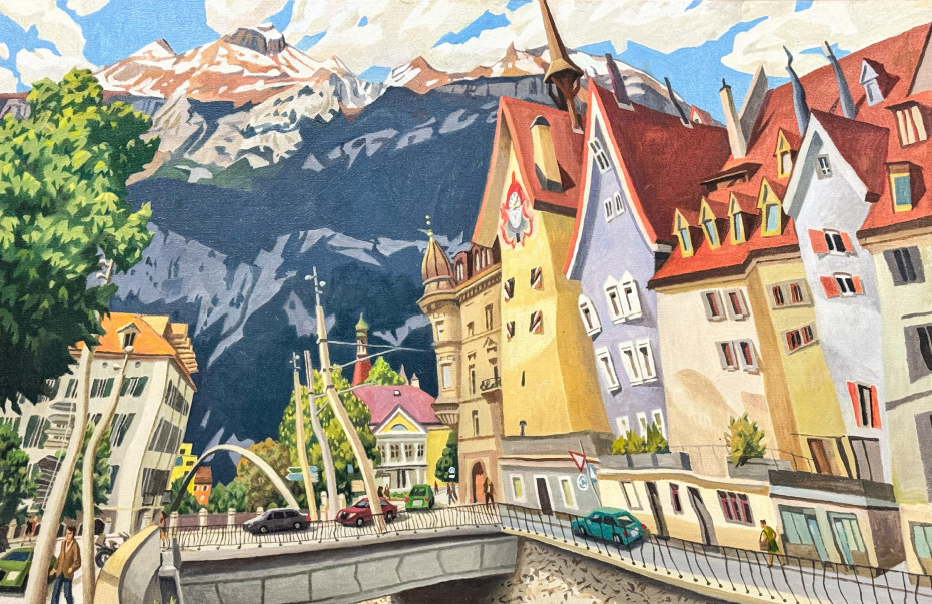
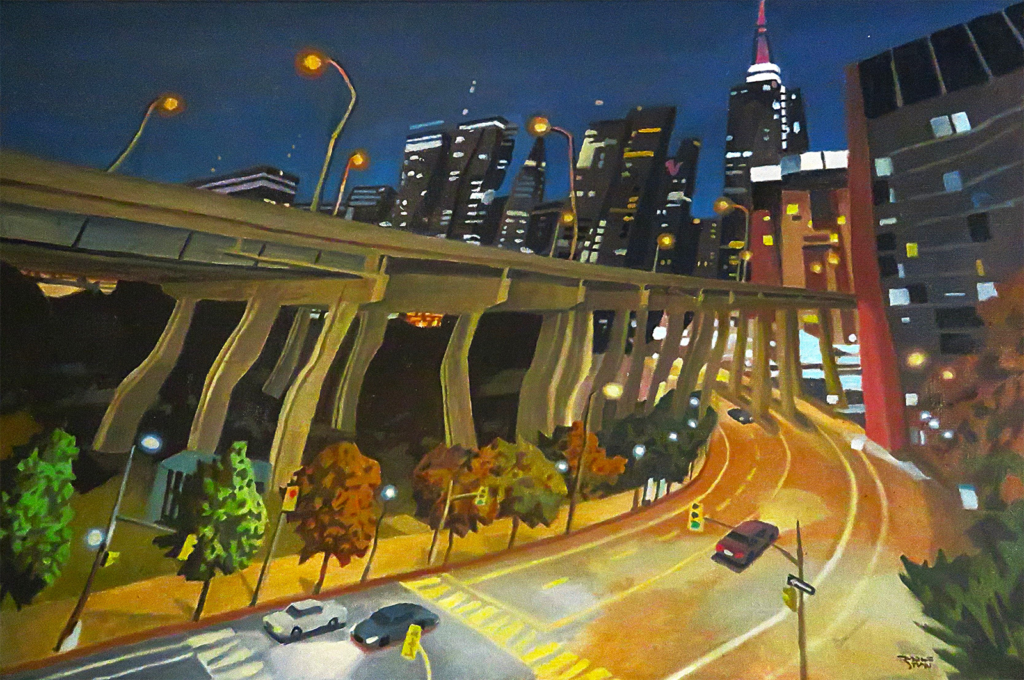
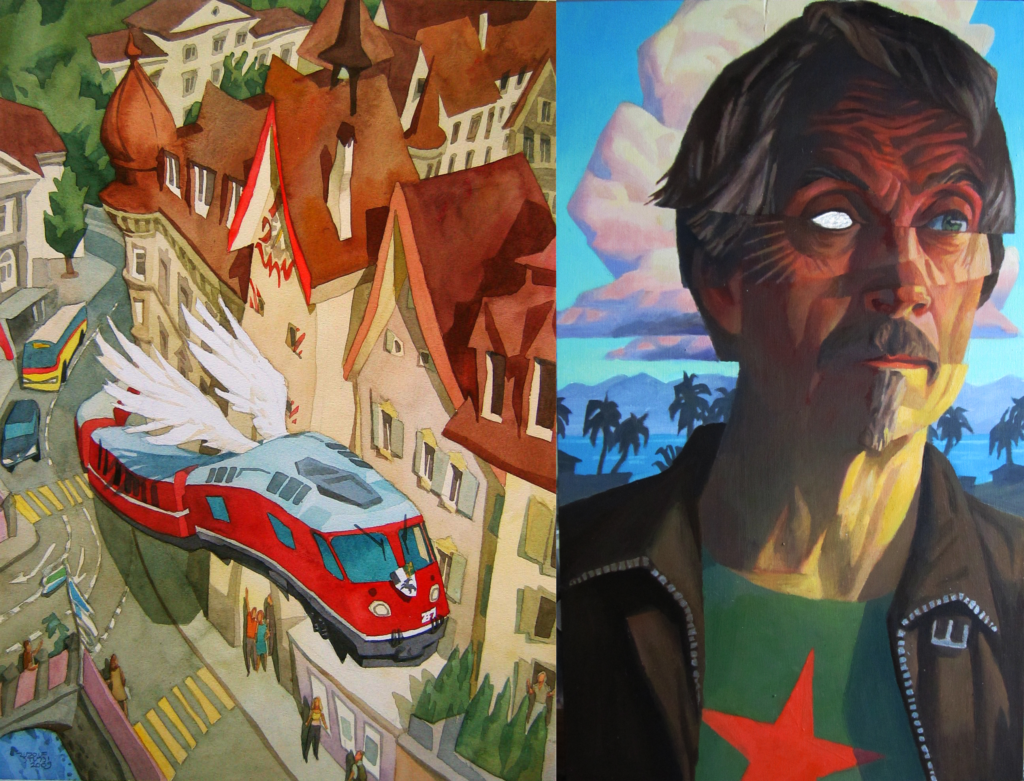
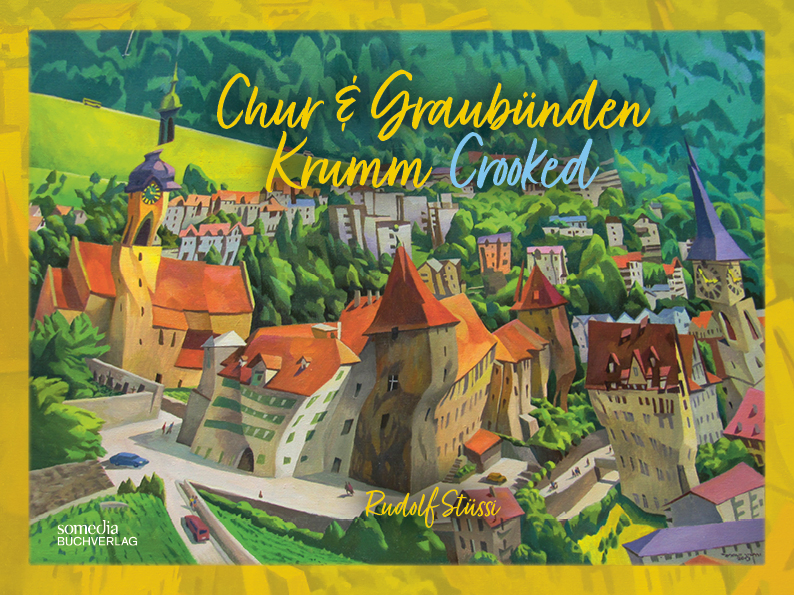
His distinctive watercolour paintings are immediately recognizable for their colourful, distorted depictions of urban streetscapes and historic architecture.
For him, buildings are never simply buildings. His paintings frequently merge architectural and human characteristics. Columns become limbs. Facades lean and stretch. City streets seem alive with movement and emotion.
“I try to feel the personality behind the scene,” he explains.
“Buildings have a human dimension; they grow frail and crooked and so on. I try to highlight that a bit. They have their own personalities and dark sides too.”
His artistic approach eventually led him to develop what he calls the “Fifth Perspective,” a unique visual system that bends and curves traditional perspective lines while maintaining recognizable depth and distance.
“Unlike conventional perspectives, [the Fifth Perspective] doesn’t have straight X and Y axes,” he explains. “It’s a real perspective, but much more dynamic and movement conscious.”
From Fine Art to Children’s Animation
Stussi’s move into animation began with a practical concern — qualifying for a mortgage.
Unable to secure one without stable employment (a common struggle for artists who often work on contract or freelance), he accepted a job at Toronto-based animation studio Nelvana, where friends had encouraged him to apply.
At Nelvana, Stussi worked on beloved Canadian children’s programs including Care Bears, Little Bear and Rolie Polie Olie. He started off painting backgrounds and eventually served as art director on several productions.
While working on Little Bear, he collaborated with acclaimed author and illustrator Maurice Sendak.
“We worked very well together,” he recalls.
Stussi’s Swiss background proved especially valuable when he served as the art director on the animated feature, Heidi. Research trips through the Swiss countryside not only informed the film but eventually led to a successful illustrated edition of the classic story. The project became so popular that the famous Heidi Village in Switzerland purchased and displayed his illustrations.
The transition from fine art to children’s animation was, for Stussi, more natural than one might think.
“All children have something artistic in them,” he says. “But for most, it stops at some point. And that’s a shame.”
He credits his mother, an illustrator of several Swiss children’s books herself, for encouraging him to never lose that imaginative spark.
Still Exploring, Still Creating
Today, Stussi divides his time between Berlin and Switzerland, occasionally returning to Canada for exhibitions and family visits. A member of the Royal Canadian Academy of Arts and the author of several books (including three children’s books which he illustrated), his latest project focuses on Graubünden, Switzerland’s largest canton, a mountainous region rich in artistic and cultural history.
“You’re constantly surprised there,” he says. “You turn a corner and suddenly there’s a new vista.”
His new art book, Chur & Graubünden Crooked, features nearly 100 paintings alongside Stussi’s own writing, continuing a practice that reaches back to his years at Carleton where, as an English student, he once submitted a painting in place of a traditional essay on Shakespeare. Today he still sees writing and art as complementary forms of expression.
“With my artwork, I always write stories based on my experiences,” he says. “I see so many art books where the artist never talks about their experiences. I want to have a visual voice and a written voice.”