FPGA Researchers Awarded More than $1 Million in Research Funding
Researchers in the fields of public policy, international affairs, economics, communication, law and political science have been recognized by the Social Sciences and Humanities Research Council (SSHRC).
While the majority of the awards are under embargo, three were announced publicly recently. They include a SSHRC Partnership Engage Grant, which supports a short-term partnered research activity, and SSHRC Connection Grants, which support those running a knowledge mobilization event or outreach activity.
SSHRC Partnership Engage Grant
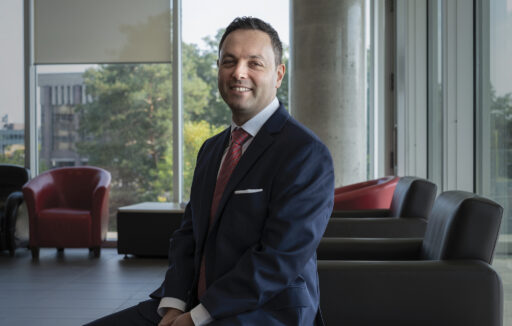
Daniel Rosenbloom, Ivey Research Chair in Sustainability Transitions
School of Public Policy and Administration
Project Title: Assessing systemic outcomes of smart grid demonstrations: A transitions-informed, transdisciplinary approach
Description: This project responds to the urgent need to accelerate sustainable energy transitions, recognizing these shifts require
not only technological innovation but also long-term changes in institutions, practices, and policy frameworks (i.e., system change). As real-world experiments for emerging technologies and approaches, demonstration projects are central to these transitions (IEA, 2024). However, their long-run contributions to system change are difficult to assess, limiting the ability of governments and other societal actors to determine when, where, and how to support such interventions to encourage transitions (Janssen et al., 2022). This challenge is heightened in Canada, where regional energy diversity, uneven decarbonization pathways, and complex jurisdictional arrangements shape heterogeneous trajectories of change (Meadowcroft, 2016).
To address this gap, the project will combine academic expertise in sustainability transitions with practitioner insight from Natural Resources Canada’s Office of Energy Research and Development (NRCan-OERD) to: design a practical,
transition-informed approach for assessing demonstration projects within processes of system change; test and apply this approach to three longitudinal case studies drawn from diverse regional contexts, using Smart Grid Program data from NRCan-OERD; and share lessons with relevant societal actors regarding the mechanisms through which demonstration projects contribute to transitions.
SSHRC Connection Grants

Elisabeth Gilmore, Associate Professor
Norman Paterson School of International Affairs
Project Title: Bridging scales of action: Operationalising the Global Goal on Adaptation in Canada
Description: “Climate change is already reshaping communities across Canada. Floods in British Columbia, wildfires in Alberta, permafrost thaw in the North, and coastal erosion in Atlantic Canada are no longer future projections—they are present realities requiring urgent action. While the Paris Agreement commits nations to adapting to climate change, there has been no agreed way to measure whether these efforts are actually working. That changed in 2025 when the United Nations adopted a framework of indicators to track global adaptation progress.
Three Canadians, the leaders of this project, were among the 78 international experts who developed these indicators. Dr. Elisabeth Gilmore (Carleton University), Dr. Ousmane Seidou (University of Ottawa), and Laura Lynes (The Resilience Institute) now seek to lead Canada’s domestic engagement with this framework, ensuring it reflects Canadian priorities around reconciliation, regional diversity, and equity.”
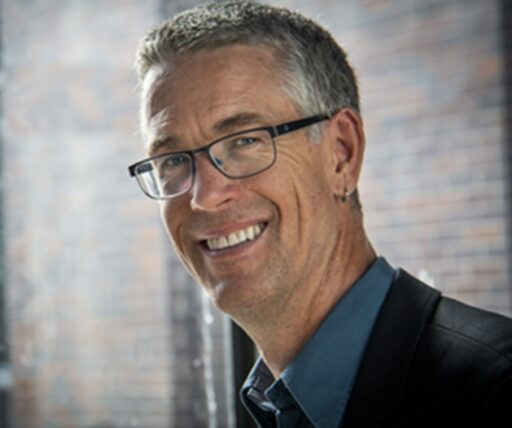
Peter Andrée, Associate Professor
Department of Political Science
Project Title: Living relations Wananga: Relational engagement for Indigenous-led sustainable food systems transitions in Aotearoa New Zealand and Turtle Island Canada
Description: “Living Relations Wananga will expand the reach and impact of existing research by refining and mobilizing outputs, incorporating new organizational partners and Indigenous researchers, broadening community engagement, and training students in decolonizing methodologies. LRW will foreground relational knowledge exchange while catalyzing a range of actors to see the growing role of Indigenous approaches and leadership in the sustainability transition.”