Graduate Programs
Our graduate programs prepare students for leadership in public policy, international affairs, governance, and security—combining rigorous scholarship with real-world impact through experiential learning and research opportunities.
The Faculty of Public and Global Affairs (FPGA) is home to several prestigious schools, departments, and institutes offering advanced degrees at the master’s and PhD levels and opportunities for postdoctoral researchers. The Faculty’s exceptional records of leadership and excellence in policy-focused and community-engaged research provide exciting opportunities for outstanding students to produce scholarships with impact and to strengthen their professional skills for an ever-changing workforce.
To learn more about our undergraduate degrees, click here.
FPGA faculty members have received more than $100M in funding from Canadian and international agencies and foundations and lead numerous major research projects and community engagement initiatives on such diverse topics as Canada’s defence and security network, global media and Internet concentration, global refugee regimes and support networks, and climate change communication, among others. This expansive research environment creates a dynamic and supportive learning space for graduate students and postdoctoral fellows to contribute directly to faculty research while receiving mentorship, guidance, and funding for undertaking their own research.
Graduate students and postdoctoral fellows in FPGA also have an impressive record of achievement in winning major external awards, including Canada Graduate Scholarships, SSHRC Talent Impact Awards, Three Minute Thesis (3MT) Awards, Vanier Graduate Scholarships, MITACS Awards, Banting Postdoctoral Fellowships, and more. These awards are funding graduate students and postdoctoral fellows to conduct innovative research on counterterrorism, intelligence and national security, science communication, reproductive care and international relations, conspiracy theories, and addiction education, plus many other critical topics, problems, and issues.
FPGA graduate students and postdoctoral fellows lean into the advanced training and professional networks they develop at Carleton to launch careers in diverse industries and sectors. Notable alumnae include Canada’s Ambassador for Climate Change, a graduate of the School of Public Policy and Administration; Canada’s Minister of Families, Children, and Social Development, who completed an MA in the Department of Economics; the CEOs of Abacus Data and Ipsos Public Affairs both completed their graduate degrees in the Department of Political Science; Canada’s parliament, Senate, and political parties are served by staffers with a Master’s of Political Management, while graduates of the Master of Philanthropy and Nonprofit Leadership program serve in executive positions at leading charities, as fundraising directors, and as university advancement officers; several of Canada’s leading journalists and broadcasters are graduates of Carleton’s Master of Journalism program.
Regardless of the School, Department, or Institute, students completing a graduate degree at Carleton’s Faculty of Public and Global Affairs are ideally positioned for career success in academia, the philanthropic/nonprofit sector, government, or industry.
FPGA Graduate Programs
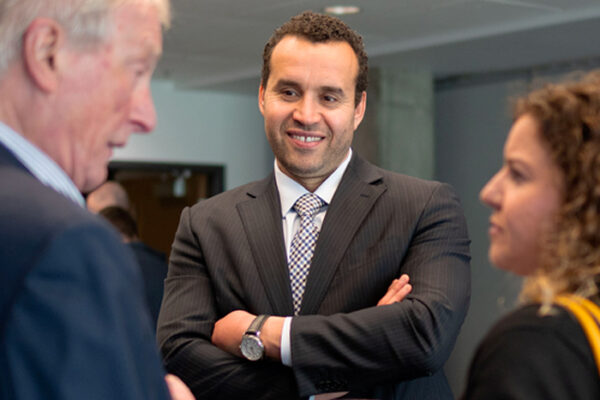
Doctorate Programs
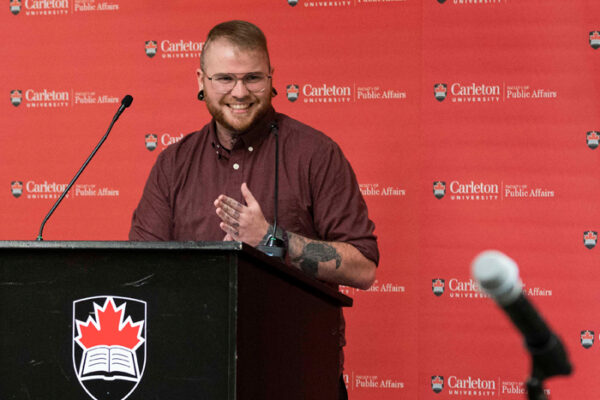
Graduate Diplomas