Sonia Gulati
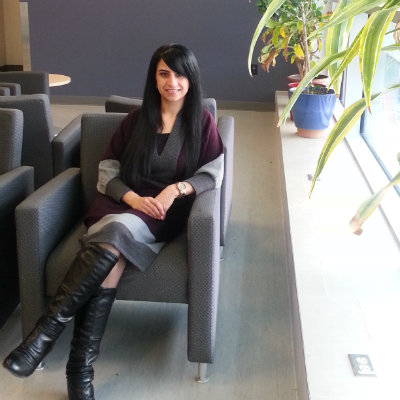
Associate Professor (Teaching Stream), OT Reg. (Ont.)
- BScOT (Queen’s), PhD (Queen’s, School of Rehabilitation Therapy), Post-Doc (McMaster, Department of Pediatrics)
- Email Sonia Gulati
Dr. Sonia Gulati is also the Undergraduate Field Placement Advisor.
Primary Fields of Specialization:
Disability, Global Health, Community-Based Rehabilitation, Children & Youth with Disabilities
Courses taught:
HLTH1001: Principles of Health
HLTH3101: Global Health
HLTH3503: Disability and Chronic Health Conditions
HLTH4503: Trauma-related Disability and Impairments
HLTH4906: Capstone-Research Essay
HLTH4909: Capstone-Field Placement and Research Project
Academic Interests:
I value being in a position that provides me the opportunity to work with a dynamic student body in order to shape the learning environment. I teach primarily in the areas of disability, rehabilitation, and global health. I am also responsible for developing research-based field placements locally, nationally, and internationally for undergraduate students. As a faculty member in a growing department, I have a strong interest in curriculum design, classroom instruction, and experiential learning. I have designed and implemented courses on global health, disability and illness, determinants of health, psychosocial aspects of aging, health communication, population trends & international development, and research methods.
I am also a registered Occupational Therapist. Clinically, most of my experience has been in hospital settings working with adults/older adults in acute care, complex continuing care, geriatric rehabilitation, and outpatient vocational rehabilitation. I value the therapist-client relationship and feel that it makes a significant contribution to my understanding of health conditions and the challenges that people face when living with an illness or a disability.
My primary research interests are in the following broad areas: global health, community-based rehabilitation in underserved areas, children/youth with disabilities, therapeutic communication, and action research methodologies. To date, my global health work has involved collaborating with organizations in India, Trinidad, Guyana, and Belize. I have also conducted multi-centered/multi-province research that focused on immigrant health and health service delivery in pediatric oncology.
My current research interests align well with my teaching responsibilities, clinical training, and research experience. I am a member of the Researchers in Accessibility initiative at Carleton. I am interested in exploring how to make field placement education – in undergraduate/graduate health sciences programs – more accessible for students with chronic health conditions or disabilities. Most recently, I completed a project where the overall aim of the research was to develop a patient-reported outcome measure for children/youth with hypospadias.
Previously, I served on Carleton’s Senate and I was a member of the Carleton Committee on Community Engaged Pedagogy. I was the Carleton delegate for the Eastern Ontario Academic Health Sciences Network. I also served on the Board of Directors of Mental Health Without Borders, a non-profit organization based in Waterloo.
Carleton Honours/Awards:
Professional Achievement Award
New Faculty Excellence in Teaching Award
Selected Publications:
Keays, M. A., Tsangaris, E., Shah, Y. B., Hyacinthe, N., Gulati, S., Gordon, A., Fernandez, N., Bosse, P., Klassen, A., & Long, C. J. (2026). Online health educational resources for hypospadias diagnosis and treatment: An evaluation of contemporary websites and qualitative review of patient and family information needs. Journal of Pediatric Urology, 22(1). doi.org/10.1016/j.jpurol.2025.12.001
Keays, M. A., Tsangaris, E., Gulati, S., Long, C., McNamara, E., Braga, L. H., Klassen, A. (2025). Protocol for the development of a patient-reported outcome measure for patients with hypospadias. BMJ Open, 15(5), 15:e088619. doi:10.1136/ bmjopen-2024-088619
Wiley, B., Cameron, D., Gulati, S., & Hogg, A. (2014). Exploring the use of tablets (iPads) with children and young adults with disabilities in Trinidad. Disability and Rehabilitation: Assistive Technology. doi:10.3109/17483107.2014.914251
Gulati, S.,Klassen, A., & Dix, D. (2014). Demands and rewards of working within multidisciplinary teams in pediatric oncology: The experiences of Canadian health care providers. The Qualitative Report, 19(36), 1-15.
Klassen, A., Gulati, S., & Dix, D. (2012). Health care providers’ perspectives about working with parents of children with cancer: A qualitative study. Journal of Pediatric Oncology Nursing, 29(2), 92-97.
Gulati, S., Watt, L., Shaw, N., Sung, L., Poureslami, I., Klaassen, R., Dix, D. B., & Klassen, A. F. (2012). Communication and language challenges experienced by Chinese and South Asian immigrant parents of children with cancer in Canada: Implications for health services delivery. Pediatric Blood and Cancer, 58(4), 572-578.
Watt, L., Gulati, S., Shaw, N., Sung, L., Dix, D., Poureslami, I., & Klassen, A. (2012). Perceptions about complementary and alternative medicine use among Chinese immigrant parents of children with cancer. Supportive Care in Cancer, 20(2), 253-260.
Klassen, A., Gulati, S., Watt, L., Banerjee, A., Sung, L., Klaassen, R., Dix, D., Poureslami, I., & Shaw, N. (2012). Immigrant to Canada, newcomer to childhood cancer: A qualitative study of challenges faced by immigrant parents. Psycho-Oncology, 21(5), 558-562.
Klassen, A., Gulati, S., Granek, L., Rosenberg-Yunger, Z., Watt, L., Sung, L., Klaassen, R., Dix, D., & Shaw, N. T. (2012). Understanding the health impact of caregiving: A qualitative study of immigrant parents and single parents of children with cancer. Quality of Life Research, 21(9), 1595-1605.
Gulati, S., Paterson, M., Medves, J., & Luce-Kapler, R. (2011). Adolescent group empowerment: Group-centred occupations to empower adolescents with disabilities in the urban slums of North India. Occupational Therapy International, 18(2), 67-84.
Gulati, S., Paterson, M., Medves, J., & Luce-Kapler, R. (2011). Reflecting on the methodological aspects of a critical ethnographic approach used to inform change for adolescents with disabilities.The Qualitative Report, 16(2), 523-562.