Notice:
This event occurs in the past.
Book Launch: The Right to Research
Monday, April 24, 2023 from 8:30 am to 10:00 am
- In-Person event
- Contact
- lerrn@carleton.ca
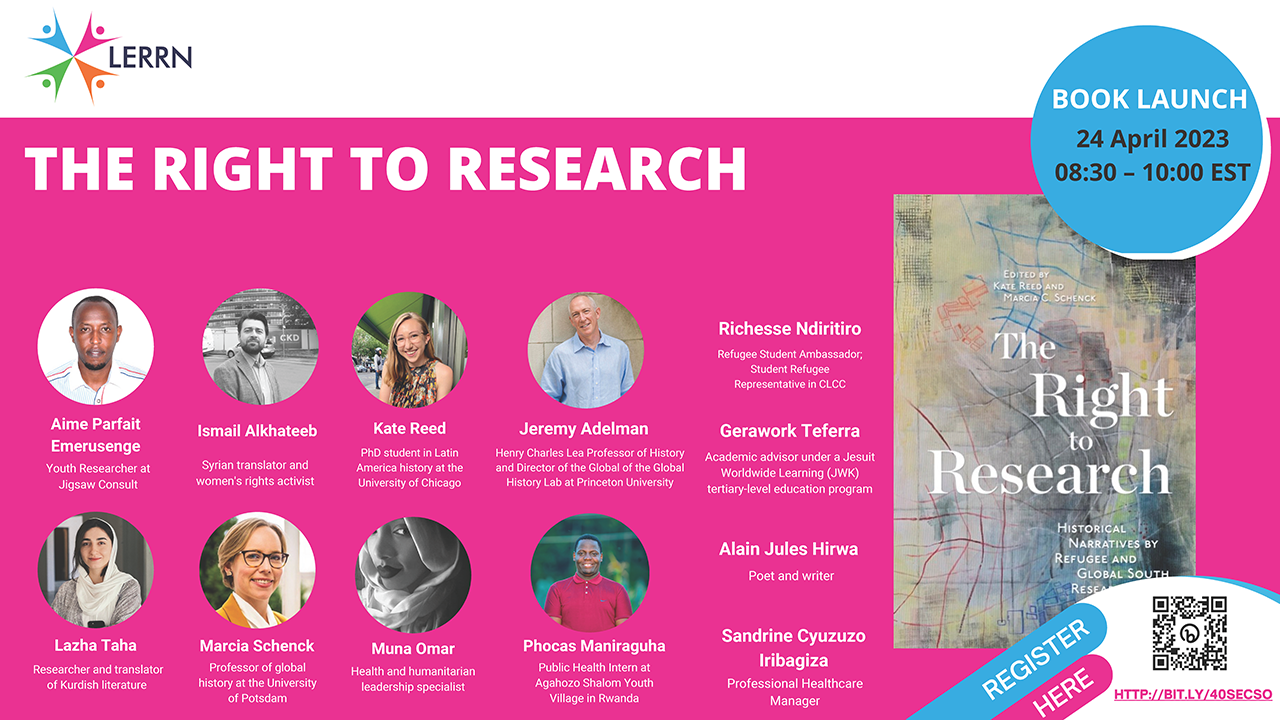
The Right to Research brings together the scholarship of nine historians with lived experience of displacement or statelessness. Covering topics from Burundian refugee drummers to Kurdish photojournalism to pottery and identity in Rwandan refugee camps, the volume asks what it would mean to take seriously a “right to research.” In this conversation, moderated by Professor Jeremy Adelman (Princeton), the contributors and editors will share their work and reflect on their experiences as part of a global research collaboration. They will share what becoming historians has meant for them, their views on “the right to research,” and the challenges and opportunities they see for changing what it means to produce historical scholarship from and in displacement.
The Right To Research: Interview with Kate Reed, Marcia C. Schenck and Jeremy Adelman
The Right to Research: Interview with Ismail Alkhateeb
The Right To Research: Interview with Gina D’Alesandro and Muna Omar
The Right To Research: Interview with Dr. Staci B. Martin and Gerawork Gizaw
LERRN Podcast Series: Discussion with The Right to Research Book Editors and Contributors
Book Launch: The Right to Research
-
The Right to Research
Historical Narratives by Refugee and Global South Researchers
How historical scholarship can benefit from refugee voices as historians in their own right.
Refugees and displaced people rarely figure as historical actors, and almost never as historical narrators. We often assume a person residing in a refugee camp, lacking funding, training, social networks, and other material resources that enable the research and writing of academic history, cannot be a historian because a historian cannot be a person residing in a refugee camp. The Right to Research disrupts this tautology by featuring nine works by refugee and host-community researchers from across Africa, Europe, and the Middle East. Identifying the intrinsic challenges of making space for diverse voices within a research framework and infrastructure that is inherently unequal, this edited volume offers a critical reflection on what history means, who narrates it, and what happens when those long excluded from authorship bring their knowledge and perspectives to bear. Chapters address topics such as education in Kakuma Refugee Camp, the political power of hip-hop in Rwanda, women migrants to Yemen, and the development of photojournalism in Kurdistan. Exploring what it means to become a researcher, The Right to Research understands historical scholarship as an ongoing conversation – one in which we all have a right to participate.
Please note: the default price shown on the MQUP store page is for the Library-bound Edition (CAD$120.00). The Paperback Edition (CAD$34.95) or eBook versions can be found in the right-hand menu.
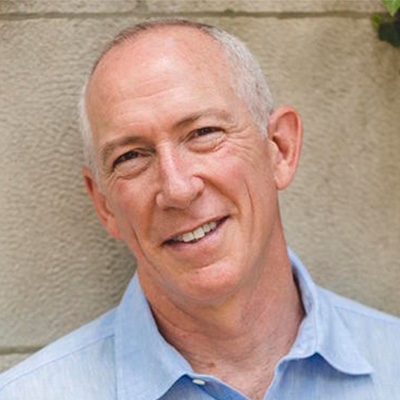
Moderator:
Presenters:

MQUP Forced Migration Studies Series
Series edited by Megan Bradley and James Milner
The McGill-Queen’s Refugee and Forced Migration Studies series aim to advance in-depth examination of diverse forms, dimensions, and experiences of displacement, including in the context of conflict and violence, repression and persecution, and disasters and environmental change. The series will explore responses to refugees, internal displacement, and other forms of forced migration to illuminate the dynamics surrounding forced migration in global, national, and local contexts, including Canada, the perspectives of displaced individuals and communities, and the connections to broader patterns of human mobility.