Adventskaffee an der Carleton University
Thanks to everyone who came out to Friday’s Adventskaffee in SP 306…and with Plätzchen (Christmas cookies), coffee, and Haribo, who could resist?
But it wasn’t all fun and games. There was some serious learning involved too. For instance, did you know that there are 2500+ Christmas markets in Germany every year; and that the Steiezelmarkt in Dresden alone attracts crowds of more than two million?! Or did you know that, the night before December 6th, German children (the “Kinder” in Kindergarten) clean their boots and put them outside the door so St. Nikolaus can fill them with goodies (nuts, oranges, and candy) or not-so-goodies (sticks or coal)?
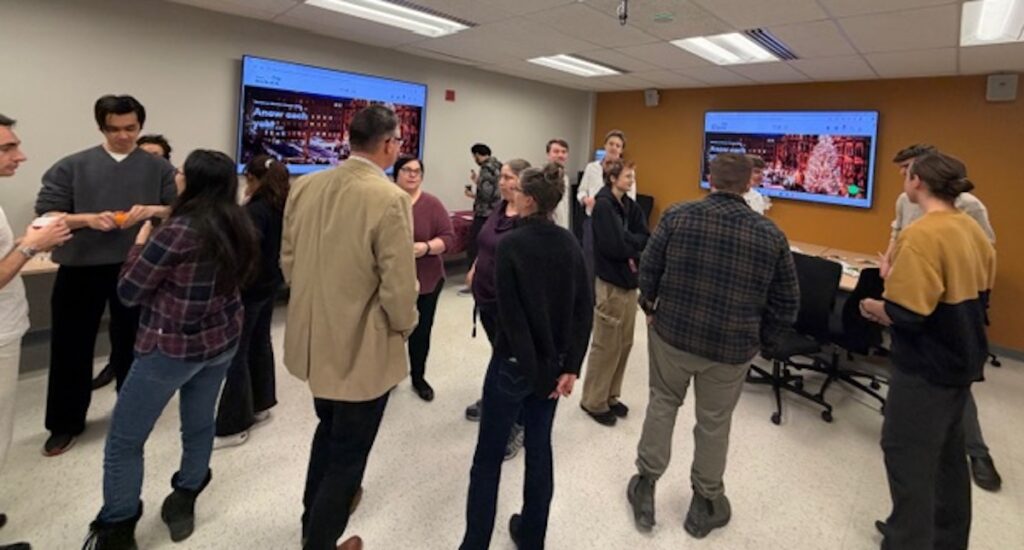
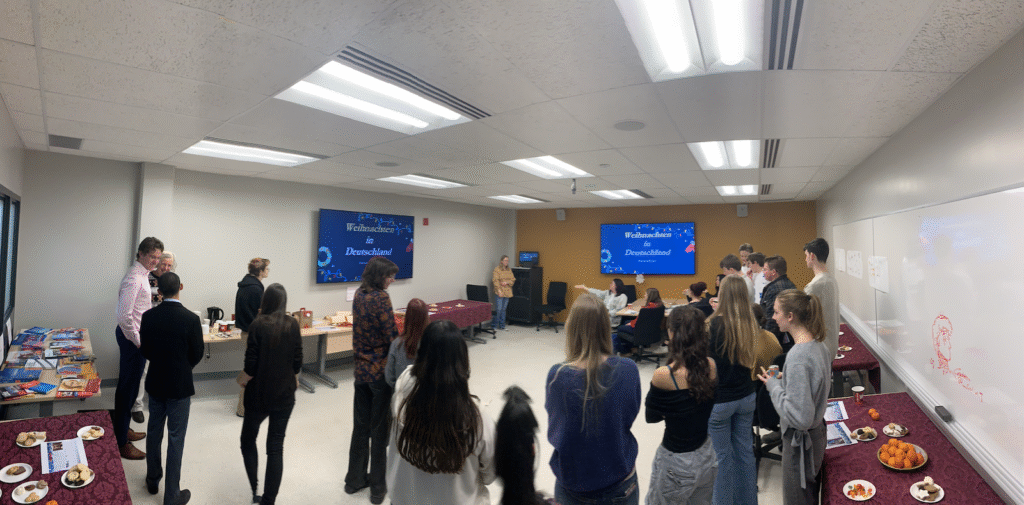
Other little-known facts include:
- the advent calendar was invented in 1838 by a Hamburg school master who wanted to show his students how many days remained until Christmas;
- Germans generally put up their Christmas trees (Tannenbaum) no earlier than Christmas Eve;
- speaking of trees, there is also a growing market for “rented” Christmas trees in Germany as people look for more sustainable options;
- and finally, this author can attest to the fact that Germans take their Christmas cookies very seriously indeed, having sampled liberally from the many trays available in the room; Stollen, a traditional Christmas fruit bread dating back to 1329, was a particular fan favourite!
Thanks to German TA Leilah Bielser for putting together a presentation and trivia game to share all this info with the group and a big thank you TA Sarah Young for helping spread fascination of all things German!
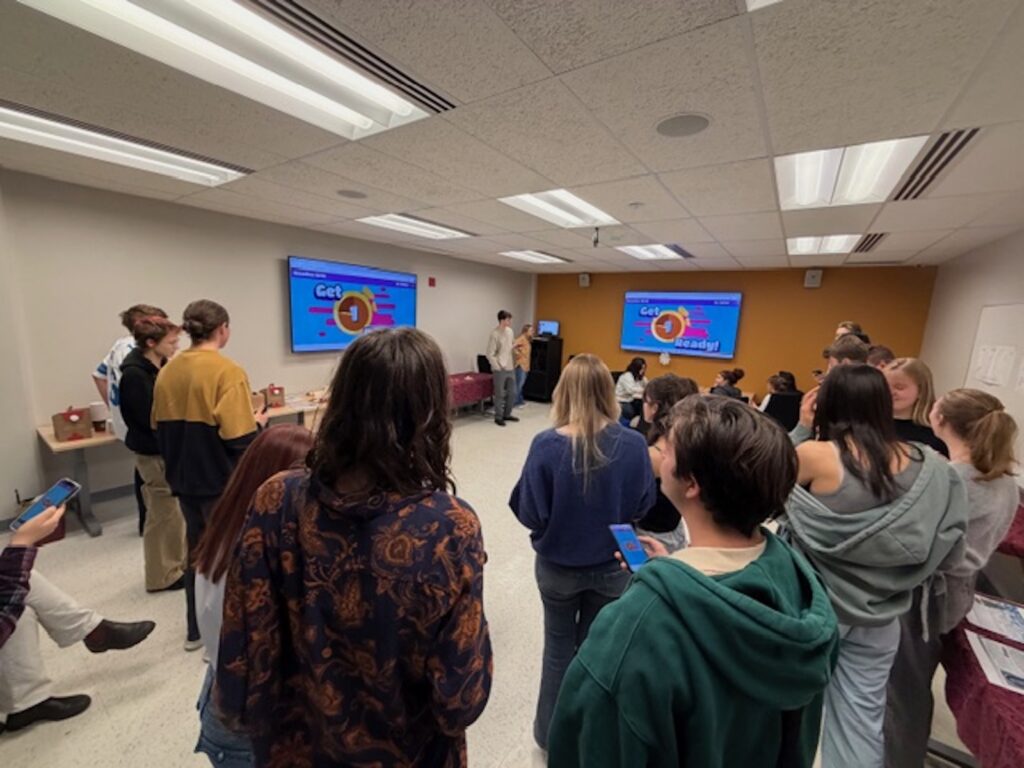
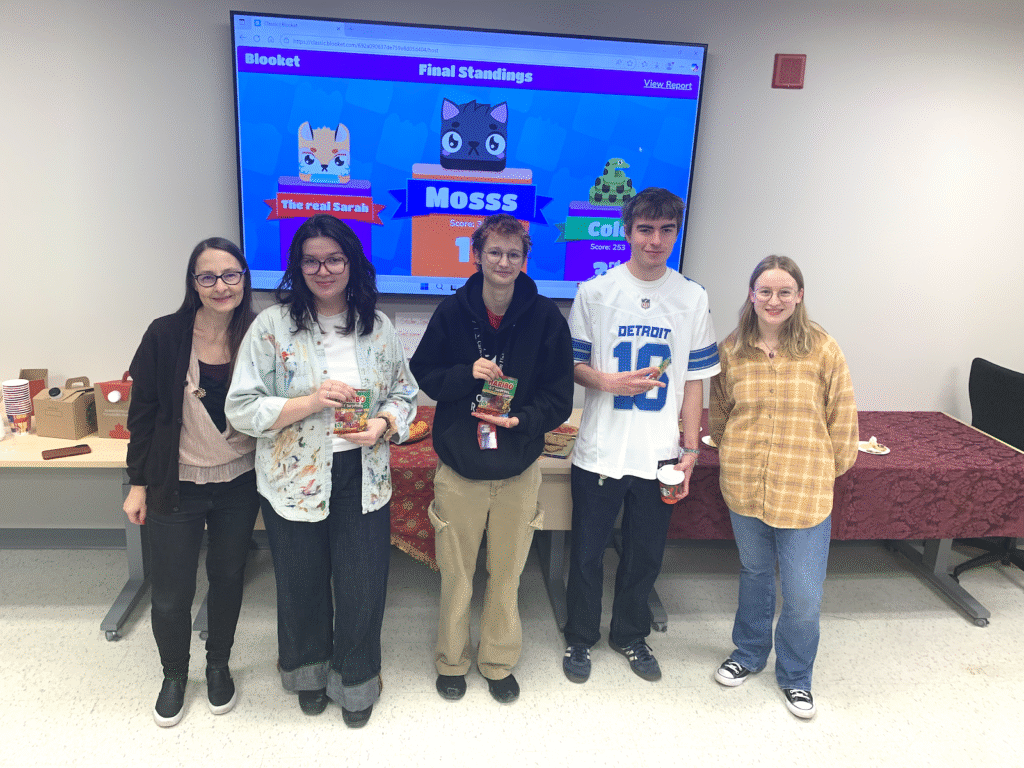
Thanks also to second year students Mia Zach and James Constantin for their research (delivered in absentia by Frau Finger) into three particularly renowned Christmas markets:
- Dresden Striezelmarkt dates back almost 600 years to the early days of the now famous and officially protected Dresden Stollen, a style of Christmas loaf that can ONLY be baked in designated bakeries in the region.
- München Christkindelsmarkt where the Christkind, often portrayed as a blond-haired young woman rather than St. Nikolaus, is said to bring gifts to children.
- And Nürnberg Christkindlesmarkt, where Glühwein (mulled wine or literally “glow wine”) is drunk peacefully from gently warmed mugs while Feuerzangenbowle (literally “fire tongs punch”) – essentially Glühwein topped with a rum-soaked sugarloaf then set on fire – offers a decidedly more smoky flavour and more dynamic spectacle!
Then finally, before the event wrapped up, we all had an opportunity to rediscover our inner child with a little Schneeflocken schneiden (snowflake cutting).
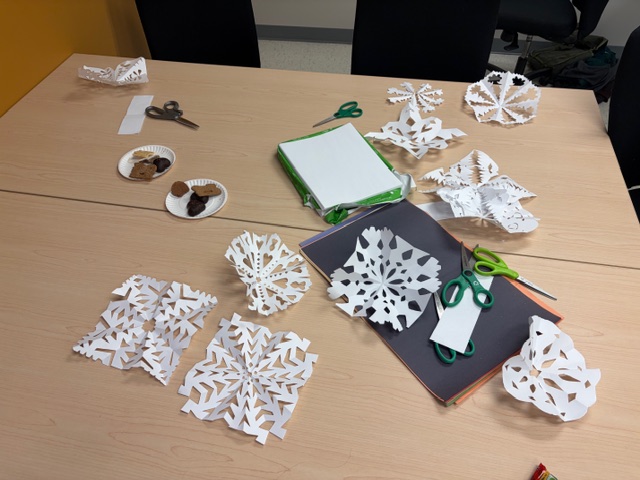
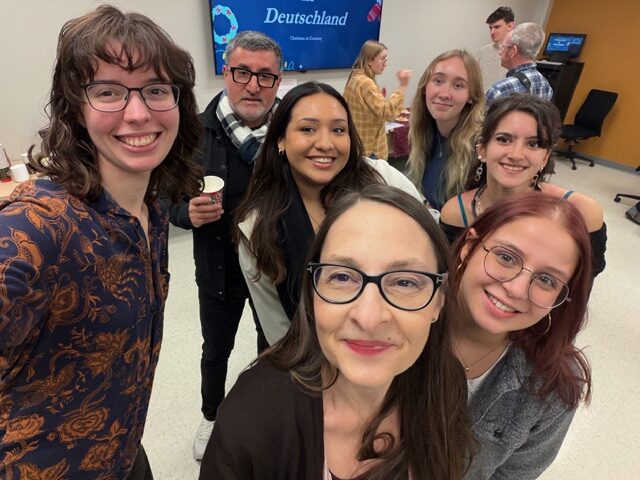
Set to an audio background of Deutsche Weihnachtslieder (German Christmas caroles), the whole event made for a pleasing way to spend a Friday afternoon.
Many thanks to German department coordinator, Cristina Finger for all her hard work in preparing the event and to all the German students, current and former, for attending and jumping in 100% on the activities!