Linguavision
Linguavision is an annual singing competition for Carleton language learners. Contestants (individuals and groups) sing songs in the language they’re learning in front of a live audience. A panel of judges (and the audience) scores performances on both language and performance criteria. Cash prizes and bragging rights to be had!
- Date: Friday, April 2, 2027 (6:30 – 9:30 PM)
- Location: Kailash Mital Theatre
ONLINE REGISTRATION
Currently closed. Online registration for Linguavision 2027 will open at 10:00 AM on Monday, November 30, 2026.
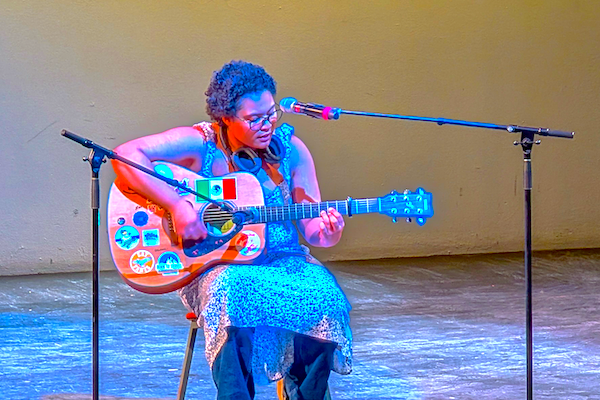
Date & Location
Join us on Friday, April 2, 2027 at the Kailash Mital Theatre (Southam Hall)
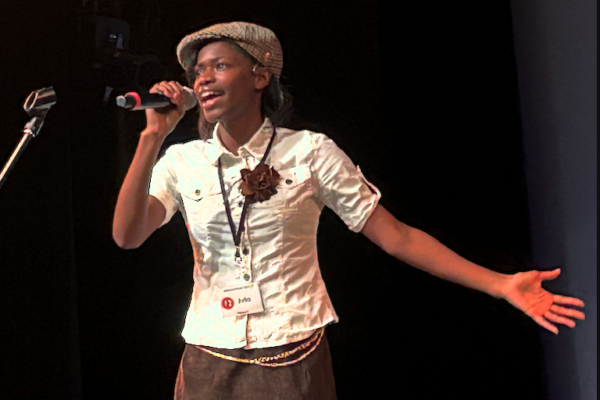
FREE Admission
The event is free to attend and open to the public
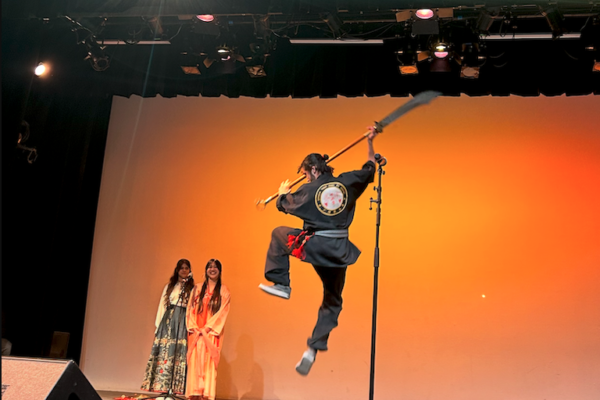
Prizes
Cash prizes awarded by a multilingual panel of judges
How Does it Work?
❶ Register to participate: In the interest of time and efficiency, we can only admit a limited number of contestants into Linguavision. You can register as an individual or a group. To ensure a diversity of languages, there is a limited number of entries per language, up to a maximum of 20 total entries.
➋ Select a Song: Don’t just go to Spotify and type “Italian”. Spend some time exploring the music and musical culture of the country or countries where the language you’re learning is spoken. Who knows what you’ll find. Or, you (and your group members) can write your own song or translate a song from one language to another.
❸ Prepare: If the past few years is any indication, there is A LOT of talent and enthusiasm out there…so definitely spend some time getting ready!
❹ Submit Music, Lyrics, and Bio: Prior to the competition, performers using a musical backing track must submit it to organizers. Sending this information in on time and complete is part of the judging criteria, so please stay on top of it. Lyrics must also be submitted at this time. These help our judging panel evaluate your language proficiency. Source information for both audio tracks and lyrics must be submitted in APA format.
❺ Take the Stage!: Now’s the time to step out into the spotlight. The event will be approximately 3 hours long.
Number of Performers
Space is limited to 20 total entries with caps on each language based on enrolment.
Additional prospective entries above the cap will be placed on a waiting list and if space still remains after the registration deadline, they may be added.
If there are not a lot of spaces in your language, consider performing as a group with your classmates.
IMPORTANT
In the interest of fairness, past contestants who won more than $150 are not eligible to register during the first week of registration. If space remains after this first week, we may open registration to these past competitors.
Prizes
- 1st Prize: $250
- 2nd Prize: $200
- 3rd Prize: $150
- Honourable Mention (2x): $75
- Audience Choice: $175
Judging
Performers will be judged by a panel of experts in language and/or music. All prize winners will be selected by the judging panel except the “Audience Choice” prize which will be chosen through audience participation. Judges’ decisions are final. Judging takes into account:
- originality, interpretation, and creativity
- linguistics accuracy and complexity
- accent/pronunciation
- costumes, stagecraft, and choreography
- spirit and enthusiasm
- playing an instrument vs. karaoke
- required materials submitted on time
* Performers can only win 1 prize
Audience Choice & Judges’ Choice
In addition to adjudication by the panel, audience members receive a ballot when they arrive and use it to cast their vote for the “Audience Choice” award ($175).
Lastly, judges can collectively select a number of “Judges’ Choice” awards. The number of prizes of this type is at the discretion of our judging team with final decisions made by our “Super Judges.”
Rules
- Participants must be current Carleton students and must sing in the language they are (or have been) studying at Carleton. In order to be eligible, singers must be taking or have successfully completed a language learning course at Carleton between September 2024 and Winter 2027 and the language they sing in may not be their home language or mother tongue. An individual can only compete in one entry.
- Songs must be in one of these languages taught at Carleton including: French, German, Italian, Japanese, Korean, Mandarin Chinese, Russian, or Spanish. ESLA students are also encouraged to sing in English. Only ESLA students are eligible to sing in English.
- Participants may sing individually or in groups.
- Groups can sing in more than one language, provided that each person who sings is singing in the language they are learning (e.g. a duet with one English speaker singing in Chinese and one Chinese speaker singing in English). Exceptions to this rule may be considered by judges, at their discretion, in situations in which there is a shared chorus or other parts.
- Lyrics must adhere to the University’s Human Rights Policies and Procedures and Student’s Rights and Responsibilities Policy.
- Songs must be no longer than 3 minutes in length. If sung with a musical backing track, the track must have only minimal vocals and/or vocal imitations on it and must be from a legal source. Organizers reserve the right to determine what “minimal vocals and/or vocal imitations” means. If you are using a backing track, you must submit it to organizers well before the deadline.
- Participants wishing to play instruments must contact organizers in advance to discuss feasibility and requirements (culanguage@carleton.ca).
- Professional musicians are not eligible to compete.**
- Given limitations of time and space, organizers reserve the right to close registration at their discretion. A waiting list will be available. Organizers also reserve the autonomy to make decisions, where appropriate, to ensure a balanced representation of languages.
* For the purposes of this competition, “professional” means a person who make their living exclusively by playing music.
Become a Volunteer
Click here to volunteer.
Rationale
Language offers a unique window on the nation (or nations) and/or culture in which it is spoken as a mother tongue; even in diaspora, language tells a story. And by looking at the words people use to express their emotions, needs, and aspirations, to talk to (and about) their loved ones, their neighbours, and their governments, we can learn a lot about a country, its history, and its people. One of the most accessible ways to discover samples of this “language in action” is by exploring a country’s music. From Beijing to Bogota, Hokkaido to Hamburg, people have always looked to the power of song to tell their stories…of bad times not forgotten and good times yet to come. This competition is about creating an opportunity for you to take your language learning outside the classroom, to dig deeper into the language you’re studying…and to uncover the music the people who use it have created.