Japanese
| Details | |
|---|---|
| Course Code | JAPA |
| Co-ordinator | Mami Sasaki |
| Levels Offered | 1st, 2nd, 3rd, 4th year | Full course list * * Not all courses are offered every term. Please check Carleton Central and/or the Public Class Schedule for course availability. |
IMPORTANT
All students must complete a Language Background Questionnaire (LBQ) prior to enrolling in a language course at Carleton and a placement test may be required for students with previous knowledge of the language. Click here to learn more.
Study Japanese at Carleton University
Sushi, manga, sumo wrestling, and high end electronics are just a few of the many things one may associate with Japan. But a country is so much more than just its stereotypes, and Japan, with its rich cultural history, thriving economy, and distinctive artistic traditions, continues to play an influential role in our global community. Plus, if you scratch the surface of the language…even just a little bit…you’ll uncover a puzzle as complex and curious as a cross between Sudoku, cryptography, and a choose-your-own-adventure!
To start with, Japanese uses 3 different writing systems:
- kanji: words borrowed from Chinese
- hiragana: a phonetic writing system used exclusively for Japanese words
- katakana: used to spell out words borrowed from other languages
But they also have something called romaji, which uses the Roman alphabet (the same as English) to spell out the sounds of Japanese words to help with pronunciation. And, just keep things interesting, Japanese can be written vertically from right to left or horizontally from top to bottom.
And, if it’s true that language tells you something about the people who use it, then take a look at the Japanese words below to get an idea of the things Japanese speakers feel are important:
- honne (本音) vs. tatemae (建前): what you truly believe vs. the behaviours and opinions you show in public
- omotenashi (おもてなし): the spirit of showing great hospitality and treating guests wholeheartedly
- irusu (居留守): pretending to be out when someone knocks on your door
- komorebi (木洩れ日): sunlight filtering through leaves
- betsubara (べつばら): literally this means “having another stomach” but it actually means having room for dessert even though you have already eaten a full dinner
- shichitenhakki (七転八起): an expression of resilience; literally “to fall down 7 times but get up 8”
Students who choose to minor in Japanese at Carleton come from a wide range of degree programs (political science, international business, applied linguistics, computer science, and engineering to name a few) and often choose to spend at least some time in Japan either on exchange or after graduation. Others choose to go as part of the JET Programme. While others have even fallen in love, gotten married, and now live in Japan!
Registration Information
Space in language courses is limited. Register as early as possible. If the course is full when you attempt to register, please submit a Registration Override Request.
Meet our Alumni

Mala Chakravarty

John Graham

Alec Louis-Seize

Yo
Latest Japanese News
-
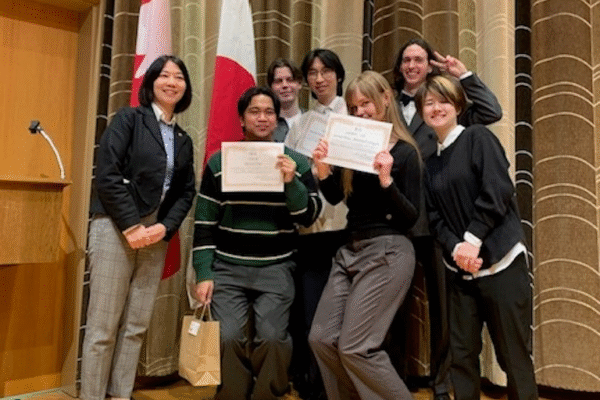
Carleton Students Shine in Japanese Speech Contest
Nine students from the Carleton Japanese program participated in the Japanese speech contest this past weekend at the Embassy of Japan in Ottawa.
-
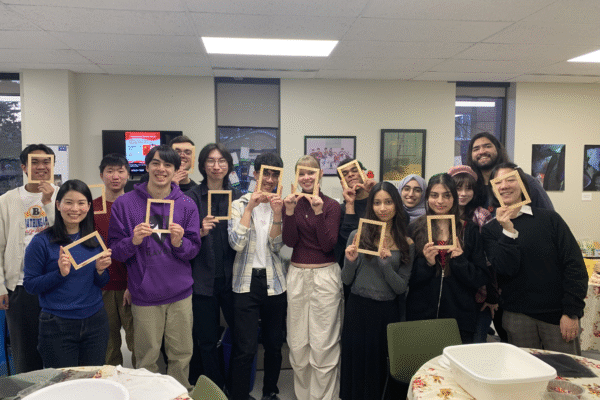
Making Washi
Wa (和) and shi (紙) literally means “Japanese paper” and the practice of creating it dates back hundreds of years. In the workshop, participants began…
-
Meet the Recipients of the Phil Boland Memorial Scholarship
Congratulations to Archisman Nath and Ian Tran on receiving this year’s Phil Boland Memorial Scholarship in recognition of outstanding students pursuing a minor in Japanese…
-
Where Learning a Language Can Take You (John)
“I fell in love with Japanese after starting the classes and it totally changed my career (and life) trajectory.“
-
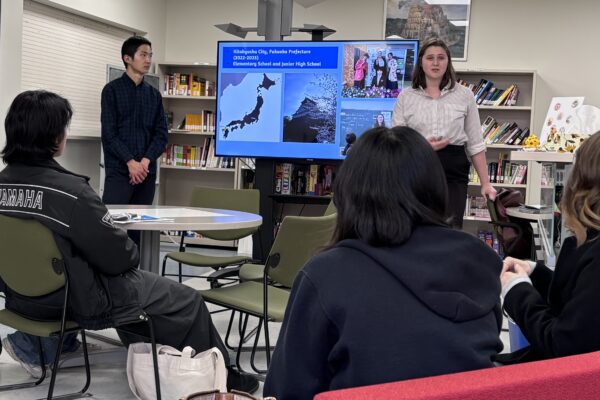
JET Info Session
Both returning JETs, these two had a lot of practical knowledge, stories, and enthusiasm to share! Thanks too to the Carleton students who came out…
-
Where Learning a Language Can Take You (Alec)
“…if you have the chance, go study abroad! Immerse yourself in the culture and language…because that will just completely change your ability to speak and…