Alex S. Wilner
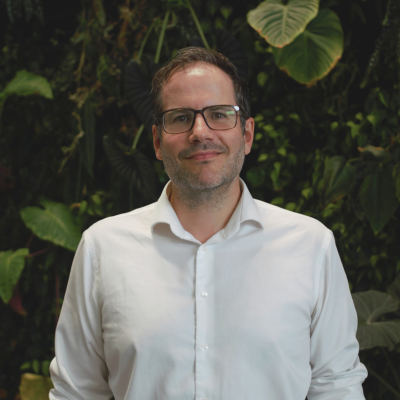
Associate Professor; Director, IPIS; Chair, Cybersecurity Collaborative Specialization
- PhD Political Science, Dalhousie University; MA Political Science, Dalhousie University; BA Political Science/Biology McGill University; Post Doc, ETH Zurich, Switzerland
- 5106 Richcraft Hall, Carleton University
- 1125 Colonel By Drive, Ottawa, ON, K1S 5B6
- Email Alex S. Wilner
Dr. Alex Wilner is an Associate Professor at the Norman Paterson School of International Affairs, Director of the Infrastructure Protection and International Security (IPIS) program, and Chair of Carleton’s Collaborative Specialization in Cybersecurity. He is also Co-director of Triple Helix, a Department of National Defence MINDS-funded Network jointly run with the Canadian Global Affairs Institute. Prof Wilner teaches classes on terrorism and radicalization, intelligence in international affairs, strategic foresight in public policy, and a capstone course on Canadian security policy in partnership with external government stakeholders. In 2023, he received an Outstanding Faculty Graduate Mentor Award by the Carleton’s Faculty of Graduate and Postdoctoral Affairs.
Overall Research Focus/Expertise
Prof Wilner is a leading global scholar of contemporary deterrence theory and practice, with an emerging research interest in strategic foresight in Canadian public policy.
His research on deterrence – which explores the nexus between coercion and emerging technology, security domains, and environments – has shaped the fourth, and now fifth, generation of deterrence scholarship. Among his over three dozen peer-reviewed journal publications, his research on the subject of deterring terrorism, cyber deterrence, and AI deterrence has been published in top-ranked IR journals, including International Security, Journal of Global Security, Journal of Strategic Studies, Security Studies, and Studies in Conflict & Terrorism. His books on the subject include Deterrence by Denial: Theory and Practice (eds., Cambria Press, 2021), Deterring Rational Fanatics (University of Pennsylvania Press, 2015), and Deterring Terrorism: Theory and Practice (eds., Stanford University Press, 2012).
Prof Wilner’s research on the use and utility of strategic foresight in Canadian public policy stems from over a decade of engaging with and providing methodological training to dozens of Canadian federal and provincial departments. Since 2017, he has trained over 1400 Canadian public servants in foresight tools and techniques, facilitating multi-day workshops for the Department of National Defence, Global Affairs Canada, Natural Resources Canada, Environment and Climate Change Canada, Standards Council of Canada, Canada’s intelligence community, and others. Prior to joining Carleton, he was recruited into public service through the Recruitment of Policy Leaders program, and worked at Policy Horizons Canada, the federal foresight laboratory.
Current Projects
Since joining NPSIA in 2015, his broader scholarship has been awarded over $2.2M (CAD) in research funding. He was awarded a Government of Canada SSHRC Insight Development Grant (2016-2017), a prestigious SSHRC Insight Grant (2020-2025), and a Government of Ontario Early Researcher Award (2021-2026) to study state and non-state cyber deterrence; two major IDEaS grants (2018-2021) and several MINDS grant (2019, 2020, 2025) from the Department of National Defence to explore Artificial Intelligence (AI) and deterrence; a SSHRC Partnership Engage Grant (with Global Affairs Canada) to evaluate foresight in international policy; a MINDS Collaborative Network Grant to support Triple Helix; several grants from the Canadian Network on Terrorism, Security, and Society (TSAS) to study contemporary terrorism; and a major Mitacs grant (2020-2022) to explore emerging technology and Canadian defence policy and strategy.
His current projects include an assessment of how deepfake technologies serve as tools of statecraft, strategic communication, and coercion; the manner in which AI shapes, informs, and influences deterrence in contemporary conflict; surveys of Canadian attitudes towards national defence and civil service; and empirical evaluations of strategic foresight within Canadian public, defence, and intelligence policy and decision-making.
Recent Publications
Alex Wilner and Talya Stein, “Revisiting the Use and Utility of Domain Mapping: A Comparative Study of the Future(s) of Diplomacy and International Affairs,” Futures & Foresight Science 7:1 (2025).
Corinne Ibalanky* and Alex Wilner, “Applying AI to Canada’s Financial Intelligence System,” International Journal 80:2 (2025).
Alex Wilner and Ryan Atkinson. “Artificial Intelligence and National Defence: A Strategic Foresight Analysis,” CIGI Paper No. 316, Centre for International Governance Innovation, (2025).
Inbal Marcovitch and Alex Wilner, “Applying Strategic Foresight to Standardization: Lessons from the Standards Council of Canada,” International Journal 79:4 (2025).
Heather Holden, Lina Tsakiris, Victor Munro, and Alex Wilner, “‘The pull to do nothing would be strong’: Limitations & Opportunities in Reporting Insider Threats,” Information Security Journal 34:1 (2025).
Alex Wilner, “Deterrence by Delegitimization in the Information Environment: Concept, Theory, and Practice,” in Deterrence in the 21st Century: Statecraft in the Information Environment , Ouellet, D’Agata, Stweart (eds), (University of Calgary Press, 2024).
Fraser Reilly-King, Colleen Duggan, Alex Wilner, “Foresight and futures thinking for international development and co-operation,” Development Policy Review 42:S1 (2024).
Marshall Palmer and Alex Wilner, “Deterrence and Foreign Election Intervention: Securing Democracy through Punishment, Denial, and Delegitimization,” Journal of Global Security Studies 9:2 (2024).
Alex Wilner, et al., “Offensive Cyber Operations and State Power: Lessons from Russia in Ukraine,” International Journal 79:1 (2024)
Alex Salt and Alex Wilner, “Emerging Technology and Five Eyes: Implications for Canadian Defence,” Policy Perspective, Canadian Global Affairs Institute, 2024.
Alex Salt and Alex Wilner, “Emerging Technology and Canadian Defence: From Strong, Secure, Engaged to Present,” Policy Perspective, Canadian Global Affairs Institute, 2024.
Kevin Budning, Alex Wilner, Guillaume Cote, “From Nascent Technology to Canadian Defence Policy: Revisiting the Merits of a Connected Battlespace,” Policy Perspective, Canadian Global Affairs Institute, 2023.
Kevin Budning, Alex Wilner, Guillaume Cote, “Semiconductors and Canadian National Security: Causes, Consequences, and Considerations,” Policy Perspective, Canadian Global Affairs Institute, 2023.
Brent Mills and Alex Wilner, “The Science behind ‘Values’: Applying Moral Foundations Theory to Strategic Foresight,” Futures & Foresight Science 5:1 (2022), 1-12.
Jessica Davis and Alex Wilner, “Paying Terrorist Ransoms: Frayed Consensus, Uneven Outcomes, and Undue Harm,” International Journal 77:2 (2022), 356-367.
Kevin Budning, Alex Wilner, and Guillaume Cote, “From Physical to Virtual to Digital: The Synthetic Environment and its Impact on Canadian Defence Policy,” International Journal, 77:2 (2022), 335-355.
Alex Wilner, *et. al., “Research at Risk: Global Challenges International Perspectives and Canadian Solutions,” International Journal, 77:1 (2022), 26-50.
Alex Wilner, *et. al., “From Public Health to Cyber Hygiene: Cybersecurity and Canada’s Healthcare Sector,” International Journal 76:4 (2022), 522-543
*Kevin Budning, Alex Wilner, and Guillaume Cote, “A View from Above: Space and the Canadian Armed Forces,” International Journal, 76:4 (2022), 594-605
Willing to support students in the following areas of research
Deterrence theory and coercion; Cybersecurity; Emerging technology and national defence; Strategic foresight in public policy