Dr. Tarek Benzouak, M.D., C.M.
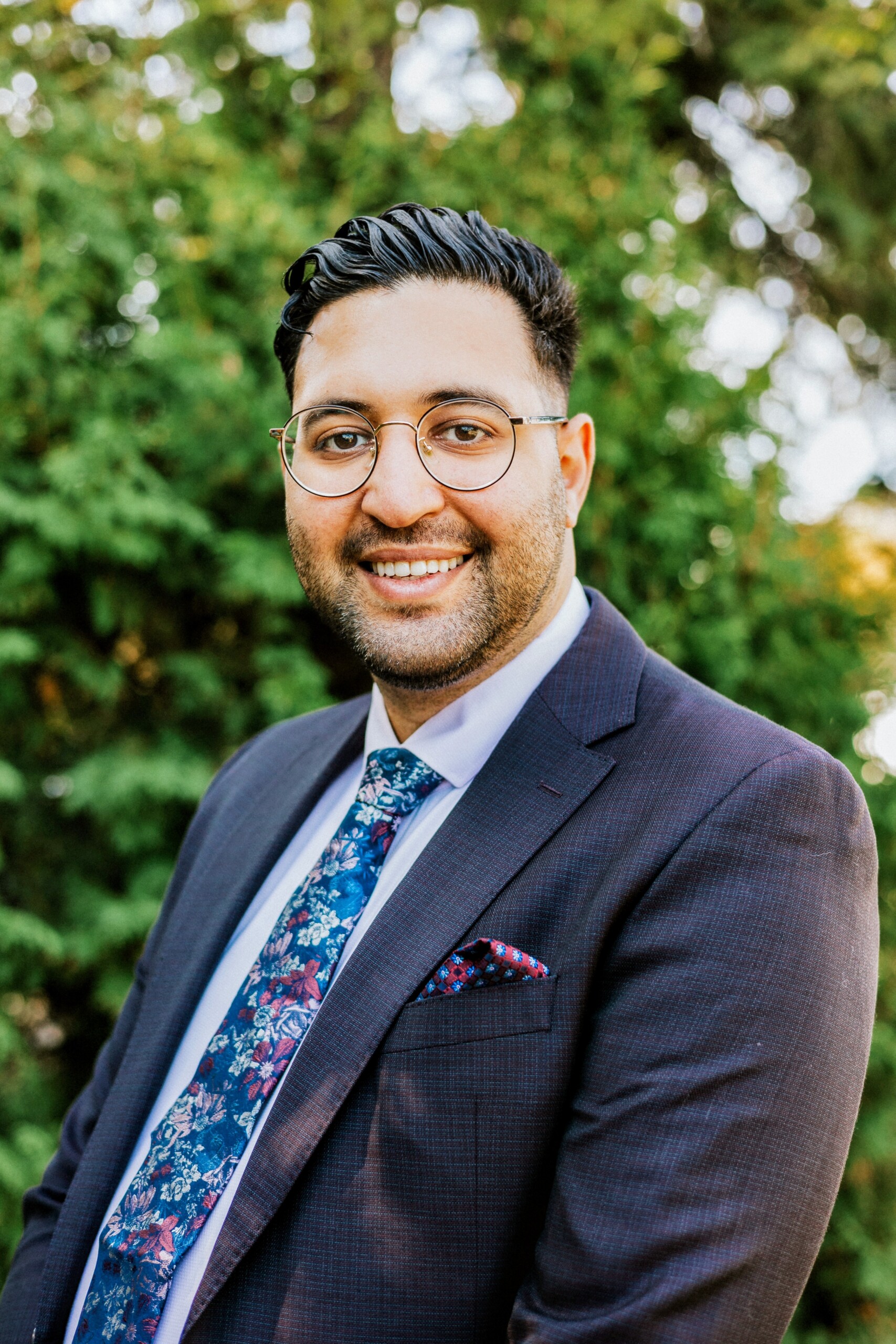
- Honours Bachelor of Arts in Psychology with a Concentration in Health Psychology and Well-being; Minor in Neuroscience and Mental Health (2020)
After completing his Honours B.A. in Psychology in 2020, specializing in Health Psychology and Well-being with a minor in Neuroscience and Mental Health, Tarek pursued a postgraduate specialization in Family Medicine. He is now a Resident Physician in the Department of Family Medicine at McGill University.
“I would tell them that not knowing yet is not the same as being behind. The pressure students feel to name a destination early is mostly an illusion, and some of the most useful things I carry now came from a path I could not have mapped in advance. Time spent going deep on something that genuinely interests you is rarely wasted, even when it doesn’t lead where you expected, because the skills and the ways of thinking tend to come with you.
My one concrete piece of advice is to follow the questions that won’t leave you alone, rather than the titles that look impressive from the outside. A title only tells you where someone works; a question tells you what they couldn’t stop thinking about, and that is a far better compass. If you pay attention to what you keep circling back to, the next step usually reveals itself, and it is often more interesting than anything you would have chosen by trying to optimize.
You rarely get to see how the pieces fit until later, so the task in the meantime is simply to do each thing well and trust that it will add up.“
Brief description of what I do!
I’m a Family Medicine Resident at McGill University, where my training runs from the clinic to the intensive care unit and the emergency department, with further rotations through internal medicine, psychiatry, and obstetrics. I chose family medicine because it’s the one discipline that refuses to specialize away from the whole person, and the high-acuity settings are where that commitment to breadth gets tested hardest. In clinic, I care for my own panel of patients, following them over time in the continuous, relationship-based way that drew me to the field.
Alongside clinical work, I’m a Clinician-Researcher with more than 25 peer-reviewed publications spanning medicine, psychiatry, surgery, and epidemiology. My work uses evidence synthesis and causal inference to get at a question that matters more than it might seem: which treatments actually work, and for whom. I came to that question through my time in the psychology department at Carleton University, where I learned to base my conclusions on evidence rather than on what simply sounds right.
What inspired your career path after graduation?
For a long time, what drew me was simply wanting to understand people. Psychology gave me one way to do that, but I kept feeling there was more to a person than any single field could capture.
The pull toward medicine came first from watching physicians care for people I loved. Sitting in those rooms, I saw what a doctor could do that no one else could: meeting someone at their most frightened and making the fear smaller. I felt it most clearly while volunteering in palliative care. One patient had been anxious for days, the kind of anxiety that takes a person away from themselves. I walked in one afternoon and found her sitting with her doctor, laughing. It was the first time all week she looked like herself, present and smiling. Nothing about her diagnosis had changed. What had changed was how she was living it. I understood then that medicine, done well, treats not just the disease in the body but the person carrying it.
That is the kind of doctor I wanted to become, and family medicine is where that belief lives. It is the one field that asks me to hold the whole person at once, the biology, the psychology, and the social and cultural world they live inside. For me, it is the only place where I can have a direct hand in people’s lives, using every part of what it means to be human. I didn’t so much choose medicine as keep arriving at it, and I haven’t once wished I’d landed anywhere else.
How did your experience in the psychology program shape your journey?
Psychology taught me how to ask a good question, which turned out to be the most useful thing I learned there. Before Carleton, I thought understanding people was a matter of intuition. The program replaced that with the habit of asking what the evidence actually shows, and how to tell a strong claim from a weak one.
Two lessons have stayed with me. The first is that people are not reducible to any single layer. Studying the mind alongside the brain, through the concentration in health psychology and my work in neuroscience, gave me an early appreciation for the biopsychosocial view, the belief that you cannot understand someone by looking at any one part of them in isolation. It is a way of seeing I have never been able to switch off, and I wouldn’t want to.
The second is methodological. Psychology is a field that takes measurement seriously, that argues about how we know what we claim to know. I learned to care about those questions there, and I have carried them ever since. They became the foundation of the research I do today, and the reason I keep returning to the same stubborn question about whether our treatments deliver what they promise.
What skills or experiences were most valuable after graduation?
The most portable skill I carried forward was statistical fluency. I learned to work in R during my graduate research at Carleton, and it has proven invaluable in medicine, giving me the ability to engage with data first-hand rather than only through a study’s conclusions. It is the engine behind everything I have published, and it lets me read the medical literature as someone equipped to interrogate it, not only to absorb it.
Teaching was the other formative experience. Several years as a teaching assistant taught me how to take something I understood well and make it land for someone encountering it for the first time, and how to notice when a concept is connecting and when I need to try a different way in. That is the same skill I now rely on with the medical students I help train, and it transferred far more directly than I expected.
Beyond any single technique, what lasted was a way of working. The patience to see a long research project through from a vague idea to a finished, defensible piece of work, and the comfort with writing that turns dense findings into something a reader can actually follow. Those habits were built slowly during my years at Carleton, and they are the quiet infrastructure underneath most of what I have done since.
Are there specific Psychology courses, professors, or experiences that stood out during your time at Carleton?
Carleton was full of people who left a mark on me, more than I could name here, but a few stand out as having shaped who I became in ways I still feel every day.
In my first year, when I was genuinely torn between clinical psychology and medicine, Professor Anne Bowker took the question seriously and connected me with a psychiatrist I could speak with to learn about the field before deciding. It was a small act on her part and a formative one on mine, the kind of thing a student remembers for a long time, and it helped set me on the path I am on now.
Professor Chad Danyluck shaped what came next. In his social psychophysiology lab, he made me comfortable with electrocardiography, and I want to be precise about how far that comfort has carried, because it is not a small thing. The ease he gave me with reading an ECG is the same ease I draw on now at the bedside to recognize a STEMI or another dangerous rhythm and move quickly enough to make a difference. A skill he taught a curious student has become, years later, part of how I help keep people alive. But the lesson I value most from him had nothing to do with equipment. He showed me how to treat a person who is trying to learn, meeting each one as an individual with their own interests, goals, and circumstances, and teaching in whatever way gives that particular person the best chance to succeed. He made me a more capable scientist and, just as deliberately, a kinder one. I try to teach the way he taught me.
Professor Hymie Anisman, in neuroscience, shaped how I think at the seam between the brain and the rest of a person. His class on behavioural medicine gave me a framework I still use, but what I remember most are the conversations in his office, the kind that ran long because neither of us wanted to stop, where he showed me how much there was to find at the intersection of neuroscience and psychology. He gave me steady support throughout my time at Carleton, and I will carry it for the rest of my life.
And it was Professor Jennifer Thake who opened the door to research when my only qualification was that I wanted it. She saw a second-year student who was eager to learn and gave me my first real chance, an independent study on the opioid crisis that led to my first job in the industry, where I would later meet a physician who has mentored me ever since. She taught me that an intervention is only as good as its fit with the context and the person it is meant for, an idea that has stayed central to how I think about mental health and treatment. She was the one who handed me the key and trusted me to use it, and so much of what came afterward started there.
What has been a highlight or proud moment in your career so far?
The proudest moments are the ones where I helped save a life and then had the chance to speak with the patient afterward, as a person rather than a case. Few things change you permanently. I do not expect I will ever get used to it, and I hope I never do.