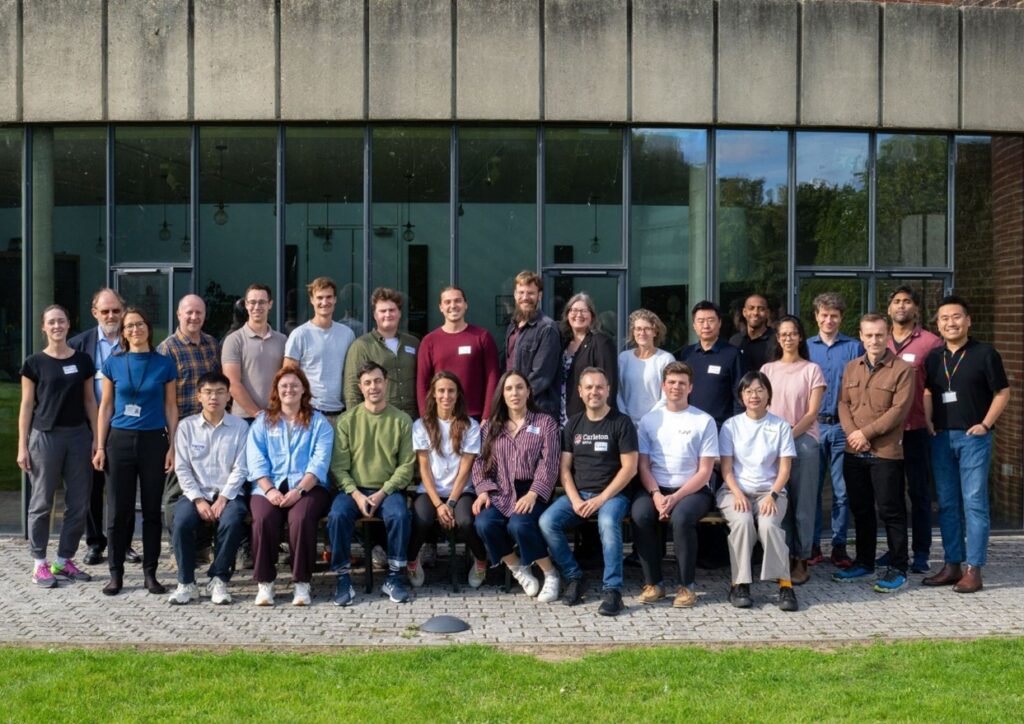
Carleton researcher co-leads international workshop on accelerating net-zero transitions
From September 8th through 10th, Carleton University’s Daniel Rosenbloom, Ivey Research Chair in Sustainability Transitions at the School of Public Policy and Administration, co-hosted an international paper development workshop at the University of Sussex Business School in Brighton, UK. Alongside Karoline Rogge (Professor at University of Sussex and Fraunhofer ISI) and Qi Song (King’s Global Sustainability Fellow, University of Cambridge), Rosenbloom served as co-guest editor guiding participants through three days of intensive discussion.
The workshop, supported by the European Research Council–funded EMPOCI project, brought together 18 draft manuscripts examining how societies might speed up the shift to net-zero emissions. Contributions were organized around three themes: the dimensions of acceleration (including time, technology, and system dynamics), interventions to accelerate change (such as regulation, finance, and institutional innovation), and tensions that can create resistance or inequities.
Discussions produced a shared conceptual vocabulary of acceleration: as a state where change intensifies, a process driven by reinforcing mechanisms, and an imperative tied to the climate crisis. At the same time, participants highlighted policy interventions that can translate this understanding into practice. Examples included empowering regulators with adaptive mandates, designing coherent mixes of incentives and regulations, and mobilizing public finance to de-risk clean technologies.
The workshop format combined close scholarly exchange with creative spaces for reflection, including a hike in the South Downs guided by Professor Andy Stirling. This setting encouraged both deep conceptual engagement and new cross-disciplinary connections.
“Acceleration is not simply about going faster – it’s about creating momentum in the right direction,” Rosenbloom said. “This workshop showed how interventions by firms, regulators, and communities can unlock feedbacks that drive transitions forward.”