CUIDS Distinguished Speaker Series : How Much Data Does It Take to Understand a Human?
Monday, November 30, 2026 from 1:00 pm to 2:00 pm
- In-Person event
- 4155, Herzberg Laboratories, Carleton University
- 1125 Colonel By Drive, Ottawa, ON, K1S 5B6
- Contact
- Carleton University Institute for Data Science , dsaai@cunet.carleton.ca, 613-520-4333
Lecture Title
How Much Data Does It Take to Understand a Human? Making sense of multimodal signals from the brain, heart, and body
Abstract
Beneath every thought, heartbeat, and physical movement lies a continuous stream of complex, interconnected data. At the CHEO Research Institute, Dr. Andrew Lapointe studies human physiology as a multimodal data problem, combining measures of brain activity, cardiac physiology, and movement to advance research in child and youth mental health.
Together, these technologies provide complementary views of human physiology while creating a challenging data problem: thousands of potential features, different timescales and sampling rates, measurement noise, individual variability, and redundancy across signals. Drawing on examples from pediatric mental health research, semi-autonomous systems, and multimodal sensing, this seminar will explore how signal processing and data science can move physiological recordings from raw signals to interpretable information.
Dr. Lapointe will showcase how his group addresses these challenges while highlighting concrete thesis and research opportunities for CUIDS and DSAAI students.
About the Speaker
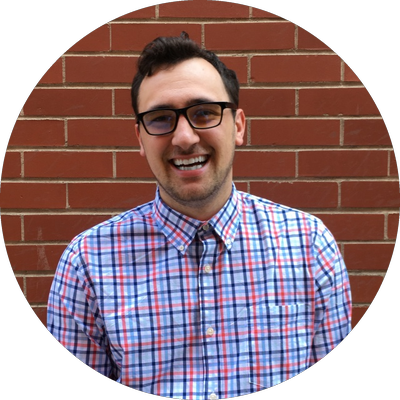
Dr. Andrew Lapointe is a Digital Health Technology Scientist at the Children’s Hospital of Eastern Ontario (CHEO) Research Institute within the Precision Child and Youth Mental Health (PCYMH) Collaboratory, and an Adjunct Professor in the Department of Cognitive Science at Carleton University.
Trained in neurophysiology, biomechanics, and quantitative signal analysis (PhD, University of Michigan), his work tackles the computational and engineering bottlenecks of real-world human monitoring. Dr. Lapointe leads an interdisciplinary research program that synchronizes multi-rate physiological streams (EEG, fNIRS, ECG, and accelerometry) to build reproducible, low-latency biomarkers for pediatric precision medicine.
Programming and computational methods are central to his research, from building pipelines to process and synchronize complex physiological signals to extracting, visualizing, and analyzing thousands of features across individuals and modalities. His work demonstrates how coding, signal processing, and data science can be applied to real-world questions about the brain, heart, and human behaviour.
Moderator: Matthew Holden