
Please scroll down to see a list of full abstracts and presenter biographies.
*
SYMPOSIUM PRESENTATION TITLES:
Bill Anthes (Pitzer College, Los Angeles): “Indian Painting in an Expanded Field: Mapping Modernism in Native North America”
Peter Brunt (Victoria University, New Zealand): “Falling into the World: The Art World of Aloï Pilioko and Nicolaï Michoutouchkine”
Elizabeth Harney (University of Toronto): “Challenging the Cartography of the Modern with the Coordinates of Pan-Africanism”
Sandra Klopper (University of Cape Town, South Africa): “Tivenyanga Qwabe and the (Re)invention of Zulu Tradition”
Ian McLean (University of Wollongong, Australia): “Across Cultures: Indigenous modernisms in Central Australia”
Kobena Mercer (Yale Univesity): “Romare Bearden: Afro-Modern Picture-Making between Photography and Museum”
Anitra Nettleton (University of Witwatersrand, South Africa): “Conditions of Engagement: Modernism and modernity in the art of two black Twentieth Century South African Artists”
Chika Okeke-Agulu (Princeton University): “Mbari International: Transacting modernism in post-Independence Nigeria”
Ruth Phillips (Carleton University): Symposium Introduction
W. Jackson Rushing III (University of Oklahoma): “George Morrison’s Surrealist Journey: Expatriation and Return of the Native Son”
Nicholas Thomas (University of Cambridge): “‘Artist of PNG’: Mathias Kauage and his contemporaries”
Susan Vogel (Independent Scholar, New York City): “El Anatsui: Ghanaian Modernist in Nigeria”
Norman Vorano (Canadian Museum of Civilization): “Our (foot)prints are Everywhere: Pootoogook, Houston, Hiratsuka and the politics of mobility in early Inuit printmaking”
*
EVENING RECEPTION:
The evening reception at the Canadian Museum of Civilization will feature a roundtable by members of the Aboriginal Curatorial Collective: Greg Hill, Bonnie Devine, Candice Hopkins, Heather Igloliorte, and Jason Baerg — see the evening reception page for details. {As of April 12th, the evening reception is now full.}
*
SYMPOSIUM ABSTRACTS & BIOGRAPHIES
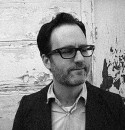 Bill Anthes (Pitzer College, Los Angeles)
“Indian Painting in an Expanded Field: Mapping Modernism in Native North America”
A primary focus of histories of modernism in Native North America has been easel painting, a novel art form introduced in Native communities during the last years of the 19th century. Shaped in large part by the unequal relationship between artists and their white patrons, by the 1920s and 1930s what was termed “traditional Indian painting” was characterized by stylized and sentimental depictions of the past, with little attention to the modern experiences of Native people. One narrative of Native Modernism has highlighted the break with this style and its institutional supports. Yanktonai Dakota painter Oscar Howe’s famous 1959 letter to the Philbrook Art Center in Tulsa, Oklahoma figures as a key statement by an ascendant critical Native voice: “There is much more to Indian art,” Howe wrote, “than pretty, stylized pictures.”
A focus on painting highlights an art easily recognized as “modernist,” but also reinscribes a notion of the individual creator – usually male – and the innovative, paradigm-shifting breakthrough. As such, singular attention to painting might be seen to reproduce the shortcomings of modernist art history that a focus on Native cultural production might otherwise hope to critique. Another narrative might consider painting as just one aesthetic practice in a field including the “traditional” artists and institutions against which Howe railed, as well as craft and souvenir production in ceramics and textiles, most often produced by women, and which tend to fall beyond the pale of histories of modernism. Considering painting in such an expanded field might allow for a more nuanced understanding of twentieth century Native North American art as an intercultural aesthetic commodity within the broader context of societal modernization.
Bill Anthes is an Associate Professor in the Art Field Group at Pitzer College and a member of the Claremont Colleges Cooperative Program Art History. His interdisciplinary work focuses on modern and contemporary art in terms of cross-cultural exchanges and multimedia practice. He has received awards from the Georgia O’Keeffe Museum Research Center, the Center for the Arts in Society at Carnegie Mellon University, the Smithsonian Center for Folklife and Cultural Heritage, and the Creative Capital/Warhol Foundation Art Writers Grant Program. His published writings have focused primarily on Native North American art and visual culture in the twentieth and twenty-first centuries, and on the history and theory of photography. His first book, Native Moderns: American Indian Painting, 1940-1960, was published by Duke University Press in 2006. He is a contributing author to the textbook, Reframing Photography: Theory and Practice (2010). He is currently writing the first monograph on the career of the Cheyenne-Arapaho contemporary artist, Hock E Aye Vi Edgar Heap of Birds.
*
 Peter Brunt (Victoria University, New Zealand)
“Falling into the World: The Art World of Aloï Pilioko and Nicolaï Michoutouchkine”
With the globalization of the contemporary art world, new attention is now being paid to the global dispersal of modernism in the twentieth century, and particularly in the decades following World War Two. In this paper, I want to examine the artistic partnership of Wallis Islander Aloï Pilioko (1935-) and his ‘mentor’, the French-Russian émigré Nicolaï Michoutouchkine (1929-2010). Most modernisms in the Pacific – Māori modernism, the Aboriginal acrylic painting movement, the Hale Hauā III collective in Hawai‘i, Papua New Guinean modernism and settler modernisms in New Zealand and Australia – have focused on the contested site of nationhood or indigenizing identity. The artistic project of Pilioko and Michoutouchkine stands apart from the latter in that their project was profoundly regional and global, stretching across the Pacific islands from New Caledonia to the Marquesas, and across the world from the Pacific to France, Switzerland, Russia, Japan and elsewhere. The continual travelling and exhibiting of their extraordinary careers span the transitions of decolonization at the same time as it prefigures the globalization of the contemporary art world. Yet it also gives rise to personal reconciliations between the modernist romance of permanently leaving ancestral homes and the new home both artists create in postcolonial Vanuatu.
Peter Brunt is Senior Lecturer in Art History at Victoria University of Wellington where he teaches and researches Pacific art, with an emphasis on the post-colonial era. He is co-author and editor of the multi-authored Art in Oceania: A History, to be published by Thames and Hudson in 2012. His recent publications include the co-edited book, Tatau: Photographs by Mark Adams: Samoan Tattoo, New Zealand Art, Global Culture (Te Papa Press, 2010), a book chapter on the work of Niuean-born New Zealand artist John Pule in Hauaga: The Art of John Pule (University of Otago Press 2010) and a round table on the concept of ‘Oceania’ convened for the journal Reading Room (Auckland Art Gallery 2010). In the past he has published on contemporary Maori art and was part of the Getty-funded research project ‘Tatau/Tattoo: Embodied Art and Cross-Cultural Exchange in the Pacific, which produced the book Tattoo: Bodies, Art and Exchange in the Pacific and the West (Duke University Press, 2005).
*
 Elizabeth Harney (University of Toronto)
Challenging the Cartography of the Modern with the Coordinates of Pan-Africanism
Framings of African modernist histories tend to situate artistic practices either in nationalist terms or in relation to European colonial axes of education and patronage. This paper will take a closer look at the cosmopolitan ideas and experiences informing the artistic practices of Senegalese painter Mor Faye and famed Ethiopian artist Skunder Boghossian. In formal and conceptual terms, both produced works that complicated these limited readings.
Mor Faye was an accomplished, art-school trained painter and collagist, a product and beneficiary of Leopold Senghor’s Negritude-inspired nationalist system of patronage in 1960s Senegal. He never travelled beyond his nation’s borders. And yet it was his status as a renegade—in the last, tormented years of his life—that brought his work brief international acclaim. In a posthumous exhibition, an American critic labelled Faye “a poor black Picasso,” a “medicine man,” even an “African saint.” Alexander “Skunder” Boghossian is the best-known of Ethiopian modernists, whose large corpus of paintings is matched only by the breadth of his peripatetic career, moving between Addis Ababa, London, Paris, Atlanta and Washington. In Paris of the late 1950s and 60s he worked with surrealists André Breton, Aimé Césaire, and Wifredo Lam. Western critics and Africanists alike have situated his work accordingly, as “mythic”, “visionary” “filled with “a purity of intention.”
This paper considers the art and histories of two very different African painters, whose practices nonetheless similarly contributed to and were marked by inter-continental, pan-Africanist theories of identity, transnational networks of patronage, and localized narratives of “belonging to the modern.” Despite being active in some of the most vibrant scenes of modernist art practice in mid-century, neither has escaped the often debilitating migratory discourse of European modernism which fixes their work as belated footnotes to the time-space of the artistic circles in which they operated.
Elizabeth Harney’s research focuses on global modernisms, contemporary art practices in Africa and its diasporas, postcolonial theory, and the politics of exhibition. Her first book, In Senghor’s Shadow (Duke 2004) investigated the contours of Senegalese modernism and Negritude philosophy and received the prestigious Arnold Rubin Book Award. She edited Ethiopian Passages: Contemporary Art from the Diaspora (National Museum of African Art and Philip Wilson Publishers, 2003). Her current book project looks at notions of cosmopolitanism with the field of art history, particularly as they pertain to African artists. Harney was the first curator of contemporary arts at the National Museum of African Art, Smithsonian Institution (1999-2003). She recently co-curated Inscribing Meaning: African Arts of Writing and Inscription, held at the Smithsonian and the UCLA Fowler Museum in Los Angeles. Harney is on the editorial boards of African Arts and NkA: Journal of Contemporary African Art.
*
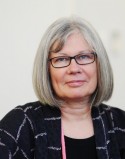 Sandra Klopper (University of Cape Town, South Africa)
“Tivenyanga Qwabe and the (Re)invention of Zulu Tradition”
This project traces the intersecting histories of Rebecca Reyher, an American suffragist who visited South Africa repeatedly in the course of the 1920s and 1930s, and the early 20th century Zulu-speaking carver, Tivenyanga Qwabe, who was born in rural Nongoma, but who as a young man sought employment intermittently in Durban as a migrant labourer. It explores the far-reaching implications for Qwabe’s subsequent artistic career of Reyher’s interest in the figurative relief carvings he began to produce while working as a rickshaw puller for the then burgeoning tourist industry in colonial Natal. But it also considers why Reyher’s encounters, not only with Qwabe and his circle, but also with the Cape Town-based Expressionist artist, Irma Stern, and with local colonial architectural and furniture styles, suggest that she repeatedly refused to honour some of the widely-accepted artistic hierarchies of her day. Journeying – both literally and figuratively – through unfamiliar landscapes, Reyher described South Africa on her second journey to the country in 1925, in somewhat exotic terms, as “breathlessly beautiful, maddening, and intoxicating.” But, as her moving biography of Christina, the first wife Zulu king Solomon attests, her efforts to make sense of the lives and experiences of the people she encountered were shaped by her early interest in challenging gender stereotypes and other clichés. Reyher’s 1937 article titled, “Natives who are artists in woodcarving: The work of the Qwabe brothers”, is the sole source of information on the early production of Qwabe and his circle, whom she met initially in 1927 and whose work she deemed “both interesting and good.” Responding to Reyher’s affirmation, Qwabe himself appears to have extended his market considerably, but his encounter with her also had far-reaching consequences for his career, encouraging him to make aesthetic and other choices that were at once liberating and limiting.
Sandra Klopper specialises in African Art History. Her publications include books on South African art, such as Amandebele, The Bantwane – Africa’s Unknown People and African Renaissance, as well as numerous chapters in books and articles in accredited journals. She has been involved in various exhibitions and was a chief curator for the exhibition Democracy X: marking the present, representing the past (2004-05) – which was chosen by the Royal Academy in 2004 as one of the 15 must-see international exhibitions. Her research has been supported by awards and grants from the Human Sciences Research Council, the National Research Foundation, and the Technology and Human Resources for Industry Programme. Sandra received her PhD at the University of the Witwatersrand in 1992 and is currently Deputy Vice-Chancellor at the University of Cape Town.
*
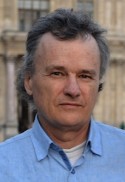 Ian McLean (University of Wollongong, Australia)
“Across cultures: Indigenous modernisms in Central Australia”
The most intensive engagement with modernity in central Australia during the first thirty years of the twentieth century occurred at the Lutheran Hermannsburg Mission. It was at its most intense in the arenas of philosophy (in particular theology) and media, it occurred against a background of shifting collective identities and at a time when the most powerful political and ideological forces were shifting from those of empire to nation states. Finally, the engagement was bi-a cultural and it was focused in the art and body of the most travelled Arrernte man, Albert Namatjira.
This paper will outline how Arrernte-speaking Elders, in dialogue with Lutheran missionaries, developed a modern Indigenous theology that culminated in an Indigenous modern art movement that, in turn, played a central role in the emerging discourses of Australian national identity and Aboriginality, and inspired the late-twentieth-century Western Desert art movement that would play a pivotal role in the conceptualization of contemporary art.
At a deeper level the paper will interrogate the terms of identity that are the main characters in this story – terms such as art, cultural, racial, tribal, national, Aboriginality, Indigenous, Lutheran, Arrernte, Namatjira, and ultimately, the terms modern and contemporary. During the course of this story, which occupies the whole twentieth century, each of these terms became reified ideas though most dissembled in the highly charged contestations of the time. Welcome to the jungle of modernity
Ian McLean is Research Professor of Art History at the University of Wollongong. He has published extensively on Australian art and particularly Aboriginal art. His books include How Aborigines Invented the Idea of Contemporary Art (2011), White Aborigines: Identity Politics in Australian Art (2009), and Art of Gordon Bennett (1996, with a chapter by Gordon Bennett). He is also on the advisory boards of Third Text, the international journal of postcolonial art, World Art and National Identities.
*
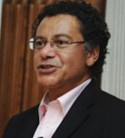 Kobena Mercer (Yale University)
“Romare Bearden: Afro-Modern Picture-Making between Photography and Museum”
Romare Bearden wrote critically on ‘race’ and representation in such articles as ‘The Negro Artist and Modern Art’ (1934), ‘The Negro Artist’s Dilemma,’ (1942) and his co-authored book, A History of African-American Artists (1993). Reading his article, ‘Rectangular Structure in My Montage Paintings,’ (1969) and the book he co-wrote with Carl Holty, The Painter’s Mind: A Study of the Relations of Structure and Space in Painting, (1969), this paper shows how Bearden’s formalist interests grew from his 1940s studio practice of using photo-stats to closely examine pictorial composition in Western art history and other canons. But was he copying or translating? In light of his engagement with Andre Malraux’s ‘Museum Without Walls,’ I focus on the return of photomechanical reproduction in Bearden’s 1960s breakthrough into collage to consider his Afro-Modernism as a differencing of formalism as its is predominantly understood. Bearden’s cross-cultural translations depart from dualistic reasoning and call instead to Bakhtin’s double-voicing as a model for understanding connective networks among multiple modernisms.
Kobena Mercer writes and teaches on the visual arts of the black diaspora, examining African American, Caribbean, and Black British artists in modern and contemporary art. His courses and research address cross-cultural aesthetics in transnational contexts where issues of race, sexuality, and identity converge. His first book, Welcome to the Jungle (1994), introduced new lines of inquiry in art, photography, and film, and his work features in several interdisciplinary anthologies. Mercer is the author of monographic studies on Rotimi Fani-Kayode, Isaac Julien, Renee Green, and Keith Piper, as well as historical studies of James VanDer Zee, Romare Bearden, and Adrian Piper. He is the editor of the Annotating Art’s Histories series, published by MIT and INIVA, whose titles are Cosmopolitan Modernisms (2005), Discrepant Abstraction (2006), Pop Art and Vernacular Cultures (2007), and Exiles, Diasporas & Strangers (2008). An inaugural recipient of the Clark Prize for Excellence in Arts Writing, he is currently working on an essay collection, Travel & See: Writings on Black Diaspora Art, and will contribute a chapter to The Image of the Black in Western Art: Volume V, The Twentieth Century (Harvard University Press).
*
 Anitra Nettleton (University of Witwatersrand, South Africa)
“Conditions of Engagement: Modernism and modernity in the art of two black Twentieth Century South African Artists”
In this paper I compare two South African artists, Kumalo and Hlungwane, both black, both descendants of rural dwellers, who engaged in very different ways with the contemporary art world of South Africa, whose lives were coeval, but whose artistic careers barely overlapped. In exploring the careers and work of these two artists, I peel back some of the assumptions made about modernity and modernisms in relation to the urban and rural as they are mapped on a global terrain. I explore Modernity as a phenomenon or a condition of production of art, as distinct from, the historical ‘moment’ of a singular European Modernism. Williams’s (1989) question “When was Modernism” offers a way of challenging the idea that Modernism is, in global terms, a temporal category, through an understanding of modernity as an ahistorical condition, or one that is not periodisable.
I have taken Kumalo and Hlungwane as case studies because, while they were contemporaries, they engaged with modernism and modernity at different times. I argue that the conditions of their engagement are crucial to a wider understanding of multiple modernities, to an un-seating of singular modernity and its corollary modernism as an exclusively Western phenomenon. I examine the ways the discourse of the “authentic” / “African” is differently inflected for urban and rural artists, separating them from mainstream modernists.
Anitra Nettleton is currently Personal Professor in the discipline of History of Art at the Wits School of Arts, University of the Witwatersrand. She is the Academic Head of WAM. She earned the first PhD in South Africa in the field of African art studies and is a leading scholar on African art. Professor Nettleton has published widely on the indigenous arts of Southern Africa, especially the arts of the Venda, Shona and Tsonga-speaking peoples. She has also published on Central and West African art and on contemporary African artists. She has presented papers at a number of international conferences. She is author of a major book on African headrests published in 2007.
*
 Chika Okeke-Agulu (Princeton University)
“Mbari International: Transacting modernism in post-Independence Nigeria”
Histories of modern art in Africa often describe the role of European critics and mentors who, having established art workshops, unilaterally chaperoned modernist work in the decade before and after political independence. This paper sidesteps such narratives, examining instead a different, arguably more significant intellectual history of the production and transaction of modernism in mid-20th century Africa. I focus on the intricate networks of African, European and African diaspora artists, critics, and writers convened in the early 1960s under the auspices of the Mbari Artists and Writers Club, Ibadan in Nigeria. The Mbari Club provided unprecedented space and resources for production, presentation and critique of new art and literature, as well as the platform for robust debate on the constitution of postcolonial artistic subjectivity, and the language of its expression. This paper shows the extent to which the postcolonial modernism that emerged in Mbari Ibadan depended on the discrepant mobilization, by an international cast of artists and critics, of African and European artistic resources in order to radically imagine and to articulate their unfolding postcolonial condition.
Chika Okeke-Agulu is assistant professor in the Department of Art & Archaeology and Center for African American Studies, Princeton University. He specializes in classical, modern, and contemporary African and African Diaspora art history and theory. He was the Robert Sterling Clark Visiting Professor of Art History at Williams College (2007), and Clark Fellow at the Sterling and Francine Clark Art Institute (2008). In 2006, he edited the first ever issue of African Arts dedicated to African modernism. He has organized or co-organized several exhibitions, including the Nigerian Pavilion at the First Johannesburg Biennale, 1995; Seven Stories About Modern Art in Africa (Whitechapel Art Gallery, London, 1995); The Short Century: Independence and Liberation Movements in Africa, 1945-1994 (Museum Villa Stuck, Munich, 2001); Fifth Gwangju Biennale, South Korea (2004) and Who Knows Tomorrow (Nationalgalerie, Berlin, 2010). He is co-editor of Who Knows Tomorrow (2010), and co-author of Contemporary African Art Since 1980 (2009). He is editor of Nka: Journal of Contemporary African Art.
*
 Ruth Phillips (Carleton University)
“Symposium Introduction”
Ruth B. Phillips holds a Canada Research Chair in Aboriginal Art and Culture and is Professor of Art History at Carleton University; she served from 1997-2002 as Director of the University of British Columbia Museum of Anthropology in Vancouver. She has researched and published on African art and on Native North American arts with a focus on the Great Lakes region. She is the author of Trading Identities: The Souvenir in Native North American Art from the Northeast, 1700-1900; Native North American Art for the Oxford History of Art (with Janet Catherine Berlo), and most recently, Museum Pieces: Toward the Indigenization of Canadian Museums. Her longstanding interest in the work of Norval Morrisseau has led to her initiation of the current Multiple Modernisms project.
*
 W. Jackson Rushing III (University of Oklahoma)
“George Morrison’s Surrealist Journey: Expatriation and Return of the Native Son”
The Ojibway modernist painter and sculptor George Morrison (1919-2000) was born and raised near the Grand Portage Reservation in Chippewa City, a now-vanished Indian fishing village on the north shore of Lake Superior. While studying at the Minnesota School of Art in the late 1930s, he dreamed of a bohemian life in New York City, which he ultimately lived, and with gusto. Studying in Manhattan at the Art Students League (1943-46), his conversion to a modernism that synthesized Cubism, Expressionism, and Surrealism was swift and complete. Already well versed in the visual paradigms of the international avant-garde, Morrison’s awareness of European modernism deepened when a Fulbright Fellowship in 1952-53 enabled him to study, work, and exhibit in Paris and in the south of France, where he made numerous small works on paper that started with automatic drawing. From 1943 to 1963 he led an itinerant life, mostly based in New York, but punctuated with fellowships and visiting teaching appointments in France, Minnesota, and elsewhere in the Midwest and on the east coast. He was simultaneously a willful expatriate, whose work was keenly responsive to place, and an estranged “Indian,” longing (in his words) to be in his own country, near his people. Indeed, his oil painting, Ex-Patriot (1964), is surely a complicated visualization of expatriation and the desire to go home. When Morrison returned to Minnesota permanently in 1970, Chippewa City was gone and he was re-regionalized, celebrated not so much as an international artist, who had exhibited in both Paris and Tokyo, but as a Native son.
W. Jackson Rushing III is Adkins Presidential Professor of Art History and Mary Lou Milner Carver Chair in Native American Art. He works in several intersecting areas: Native American art; modern and contemporary art; Southwest modernism; theory, criticism, and methodology; museum studies; and post-colonialism and visual culture. His teaching and scholarship explore the interstitial zone between (Native) American studies, anthropology, and art history. For more than twenty years now he has pursued a duality—Native-inspired modernist primitivism and indigenous modernism in the United States and Canada. Dr Rushing is the author of Native American Art and the New York Avant-Garde (1995), Teresa Marshall: A Bed to the Bones, (1998) and Allan Houser: An American Master (2004); editor of Native American Art in the Twentieth Century (1999) and After the Storm (2001); and co-author of Modern By Tradition (1995), which received The Southwest Book Award. Dr. Rushing has lectured widely in Canada, the U.S., and the U.K. and been a Director of the College Art Association of America.
*
 Nicholas Thomas (University of Cambridge)
“‘Artist of PNG’: Mathias Kauage and his contemporaries”
Mathias Kauage (c1944-2003) was a founding figure of modern art in the Pacific, and is still the most widely celebrated Papua New Guinean artist to have worked in modern media. He is particularly salient to the Mapping Modernisms project because he was not only a modern artist – one of the many who adopted modern media and pictorial conventions, the upshot of engagement with an expatriate mentor – but an artist of modernity. Unlike his important immediate precursor, Akis, he made urban life, new subjectivities, political events and the independent nation his subject matter. He came to sign his works, ‘Kauage – Artist of PNG’.
Kauage’s engagement with modernity was paradoxical. He embraced the status of ‘artist of PNG’, was proud to represent his nation and delighted to meet the Queen. He became a painter of manifold aspects of Melanesian and international modernity, and of the colonial history that connected both. Yet he represented modern events and modern life via a Chimbu aesthetic. In one sense, Kauage’s practice, and the New Guinea printmaking movement of the 1970s, are closely comparable to, and closely associated with, the practices of local and native artists in various other parts of the world. Yet it is striking that Kauage’s work is unlike almost anything else – it is even unlike the work of other PNG artists – in the particular manner in which an ancestral aesthetic mediates the representation of diverse, modern subjects. He invites comparison, perhaps, with other artists in decolonising nations who made the nation and its history their subject matter – Cheri Samba and Tshibumba are distinguished examples. But the apparent affinity underscores the near-incommensurability of Kauage’s project. The success of his work is attributable in part to its engaging, accessible, qualities; but this accessibility is in some respects deceptive: the interplay between the Highlands aesthetic and a modern practice is at once obvious and almost indefinable. The multiplicity of modernity and modernisms is not the proliferation of expressions of the same dynamic. It is the engendering of cultural expressions, many empowered by nonmodern ways of seeing, that remain genuinely diverse and surprising.
Nicholas Thomas is a professorial fellow of Trinity College and Director of the Museum of Archaeology and Anthropology at the University of Cambridge, where he has worked on various historical and art-related projects in museum collections and curated a number of exhibitions for museums and art institutions in Australia, New Zealand, and the UK. Born in Sydney, he has travelled in the Pacific, and researched and written about Pacific history, art and anthropology since the 1980s. His books include Entangled Objects (1991), Oceanic Art (1995), Discoveries: the voyages of Captain Cook (2003) and Possessions: Indigenous Art/Colonial Culture (1999). With John Pule he has written Hiapo: Past and Present in Niuean Barkcloth (2005). Nicholas Thomas has worked on several projects with Mark Adams and published two books with him: Cook’s Sites: Revisiting History (1999) and Rauru: Tene Waitere, Maori Carving, Colonial History (2009). His recent book, Islanders: the Pacific in the Age of Empire, traces a larger story of empire through the lives of men and women, Islanders and Europeans, over the course of the nineteenth century, and in particular foregrounds the travels of Islanders themselves, within and beyond the Pacific – it was awarded the Wolfson History Prize in 2011.
*
 Susan Vogel (Independent Scholar)
“El Anatsui: Ghanaian Modernist in Nigeria”
Born in the ethnic Ewe region of Ghana in 1944, El Anatsui received traditional academic art training from an international faculty, and joined the early post-independence movement to create a new modern Ghanaian art. At the age of 31, he left Ghana to join the faculty of the Department of Fine and Applied Arts at the University of Nigeria, Nsukka – a move that would turn out to be permanent.
Anatsui arrived in the ethnic Igbo region in the aftermath of the Biafran war which had ended in defeat for the mainly Igbo secessionists. The faculty of the Department of Fine and Applied Arts by that time was almost entirely composed of ethnic Igbos and the emphasis was on “Ulism” a painting style that drew on Igbo wall painting and body decoration.
A non-Igbo speaker for whom “home” remained a seldom visited place, Anatsui was simultaneously outlier and insider in the Department. This paper will trace Anatsui’s moves – skillful, tactful, and tactical during the period when he forged his own modernist discourse based on his own definition of heritage and numerous sources not least of which was the solid grounding he had acquired in art school from German and Ghanaian instructors.
Susan Vogel lives in New York, grew up in Beirut, and has lived for long periods in a village in Ivory Coast, and a medieval city in Mali. She has published many books, and written a few, founded an art museum in New York – that survived her departure – and directed two museums; she then successfully completed two years as MFA student at NYU’s Tisch School of the Arts, and became a successful filmmaker and producer. Vogel has a PhD in African art history and has held the positions of curator at the Metropolitan Museum of Art, Founding Director of the Museum for African Art, Director of the Yale University Art Gallery, and Professor of Art History at Columbia. Her last book, BAULE: African Art/Western Eyes, received the African Studies Association’s highest honor for original research on Africa, the Herskovits Prize. Her body of work was recently recognized with the prestigious Leadership Award of the Arts Council of the African Studies Association. She is currently finishing a book titled El Anatsui: Art and Life for publication September 2012, and curating an exhibition of tents from the Sahara and Arabian deserts designed by Zaha Hadid that will open at I.M. Pei’s beautiful Museum of Islamic Arts in Doha in 2014.
*
 Norman Vorano (Canadian Museum of Civilization)
“Our (foot)prints are Everywhere: Pootoogook, Houston, Hiratsuka and the politics of mobility in early Inuit printmaking”
This presentation examines the disjunctures between the practices and rhetorics of travel and mobility in the early years of Inuit printmaking from Cape Dorset, arguing that within the context of colonial North America, the regulation of mobility must be seen as part of the global framework to understand and contextualize the flow of modernism’s global flâneurs—be they artists, middlemen or promoters. The presentation contrasts the experiences of travel, real or imagined, by 3 interrelated agents who are entangled in the early history of the Cape Dorset print studio: James Houston, Un’ichi Hiratsuka, and Joseph Pootoogook. Seeing a Time magazine article on modern Japanese printmaking, the Canadian artist and cultural intermediary, James Houston, traveled to Japan in 1958 to learn printmaking with Un’ichi Hiratsuka, proponent of Japan’s cosmopolitan sōsaku hanga (“creative print”) movement. After three months of study, Houston returned to the Canadian Arctic with Japanese prints and knowledge of Japanese hand printing techniques, and helped facilitate the production of prints with Inuit graphic artists in Cape Dorset, such as Joseph Pootoogook. More than a simple teacher, Houston also wrote many of they key promotional texts about Inuit printmaking that would be used in the south for marketing. His travels through Japan and the Arctic fed into his own promotional strategy in his writing and media interviews about Inuit printmaking, and throw into relief the politics of mobility as exemplified in the life of Inuit artists like Pootoogook.
Norman Vorano is the Curator of Contemporary Inuit Art at the Canadian Museum of Civilization, Canada’s national museum of social and cultural history. His most recent exhibition and catalogue, Inuit Prints, Japanese Inspiration: Early Printmaking in the Canadian Arctic, examines the historical linkage between Japanese modern printmaking and the Cape Dorset print studio in the late 1950s, a link created by the artist James Houston, the cultural intermediary who introduced printmaking to the Arctic. A graduate of the Program in Visual and Cultural Studies, University of Rochester, NY, Vorano’s doctoral dissertation critically examines the art-world discourses, institutional practices and the roles played by key-cultural brokers in the development of the formal marketing structure for Inuit stone- and ivory-carving in the mid twentieth century. Over the past five years, he has continued to explore the local of global dynamics of Inuit arts while working with emerging and senior contemporary artists in Cape Dorset, Pangnirtung and Ottawa. He maintains an Adjunct Research Professor status in the department of art history at Carleton University and sits on the board of the Native American Art Studies Association.