
EVENING RECEPTION AND CANADIAN ABORIGINAL ART ROUNDTABLE:
An evening reception hosted by the Canadian Museum of Civilization will follow the symposium. It will feature a roundtable discussion in which members of the Aboriginal Curatorial Collective will respond to the day’s presentations from the perspective of Canadian Aboriginal modernisms. This evening event will enable attendees to meet the symposium speakers and continue discussion informally over a light supper. It is designed to encourage the formation of a network of scholars, curators, artists, cultural officers and teachers with shared interests in multiple modernisms who can generate and participate in future projects and symposia. As places for the evening event are limited, please email us at mappingmodernisms@carleton.ca by April 10th stating your desire to attend and outlining your interest in multiple modernisms.
** Note: as of 12 April 2012, the evening reception is full. We can add you to a waiting list if you are interested in attending. **
ABORIGINAL CURATORIAL COLLECTIVE ROUNDTABLE:
The roundtable will feature presentations by Greg Hill, Candice Hopkins, Heather Igloliorte, Jason Baerg and Bonnie Devine. Please see their biographies below:
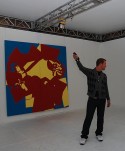 Jason Baerg
As a Cree-Metis Visual Artist, Baerg has presented at such international art events as the Luminato Festival, the Toronto International Art Fair, and Art Basel Miami. Jason Baerg has given formal artist talks at such institutions as the University of British Columbia Okanagan, New York City’s Parsons School of Design and the University of Toronto. He has sat on numerous art juries and won awards through such facilitators as the Canada Council for the Arts, the Ontario Arts Council and The Toronto Arts Council. Dedicated to community development, Jason Baerg continues to contribute to such national arts organizations as a board member for the Aboriginal Curatorial Collective, The National Indigenous Media Arts Coalition and the Independent Media Arts Alliance.
*
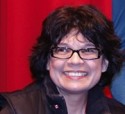
(Photo by David Devine)
Bonnie Devine
An installation artist, curator, writer and educator, Bonnie Devine is a member of the Serpent River First Nation of Northern Ontario (Anishinaabe/Ojibwa). She holds fine art degrees in sculpture and installation from OCAD and York Universities. Devine’s installation and video works have been exhibited in exhibitions and film festivals in Canada, the USA, Russia and Europe. As a curator Devine has worked with emerging and established Aboriginal artists since 1997 and curated The Drawings and Paintings of Daphne Odjig: A Retrospective Exhibition in 2007, the first solo exhibition by a female Aboriginal artist at the National Gallery of Canada. Devine’s accompanying catalogue broke important ground as the first publication by the National Gallery in the Anishinaabemowin (Ojibwa) language. Devine is an associate professor at OCAD University and serves as Founding Chair of OCAD University’s Aboriginal Visual Culture Program. She was awarded an Eiteljorg Fellowship for Native American Fine Art in 2011.
*
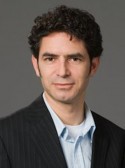 Greg Hill
Greg Hill’s curatorial work began in 1996 with research and curatorial contracts at the Canadian Museum of Civilization, First Peoples Hall project. He then curated independent exhibitions 1998-9, followed by employment at the National Gallery of Canada (NGC) beginning in 2000 to work on the integration of Aboriginal art within the Gallery’s Canadian Art galleries. In 2006, as an Assistant Curator of Contemporary Art, Hill curated the first-ever NGC solo exhibition for a First Nations artist, Norval Morrisseau: Shaman Artist. In 2007, Greg was appointed to the position of Audain Curator of Indigenous Art and head of the National Gallery of Canada’s newly formed department of Indigenous Art. In 2010, Greg organized the retrospective Carl Beam: The Poetics of Being. With Christine Lalonde and Candice Hopkins, Hill is one of the co-curators for the upcoming first quinquennial of international contemporary Indigenous art, Indigenopolis (2013). Hill regularly speaks at symposia and conferences on aspects of the collection and contemporary Indigenous art as well as contributing essays to Gallery and independent publications.
*

(Photo by Scott Benesiinaabandan)
Candice Hopkins
Candice Hopkins is the Elizabeth Simonfay Assistant Curator, Indigenous Art, at the National Gallery of Canada and formerly Director and Curator of exhibitions, the Western Front, Vancouver. She has an MA from the Center for Curatorial Studies and Art in Contemporary Culture, Bard College, New York, where she received the Ramapo Curatorial Prize for the exhibition “Every Stone Tells a Story: The Performance Work of David Hammons and Jimmie Durham” (2004). Her writing has been published by MIT Press, BlackDog Publishing, New York University, Catriona Jeffries Gallery, Fillip, Banff Centre Press, and National Museum of the American Indian, among others and she has lectured at venues including the Witte de With, Tate Modern, Dakar Biennale, Tate Britain and the University of British Columbia. In 2011 she was guest curator of Zone A for Nuit Blanche, Toronto and in 2010 co-curator of “Close Encounters: The Next 500 Years,” a multi-venue exhibition in Winnipeg, Canada. Hopkins is an invited speaker for dOCUMENTA (13) for the symposium “Art, Cultural Heritage and 1st Nations” and symposium convenor for Indigenous Aesthetics & the Remaking of Art History taking place at the Art Gallery of Alberta on June 24, 2012.
*
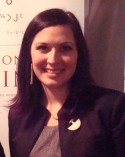 Heather Igloliorte
Heather Igloliorte is an Inuk curator and art historian from the Nunatsiavut Territory of Labrador. Igloliorte is currently pursuing a PhD in Cultural Mediations at Carleton University, specializing in global Indigenous art histories. In July of 2012 she will join the Faculty of Fine Arts at Concordia University as Assistant Professor of Aboriginal Art. Her recent curatorial projects include Decolonize Me (Ottawa Art Gallery, 2011); the online collaborative exhibition Inuit Art Alive (www.inuitartalive.ca); and “we were so far away”: The Inuit Experience of Residential Schools (Legacy of Hope Foundation, 2009). Her teaching and research interests centre on the global exhibition of Indigenous arts and culture, mid-century modernist primitivism, and issues of colonization, sovereignty, resistance and resilience. Her recent publications related to this work include chapters and catalogue essays in Response, Responsibility, and Renewal: Canada’s Truth and Reconciliation Journey (2009); Inuit Modern (2010); Curating Difficult Knowledge (2011); Changing Hands: Art Without Reservation 3 (forthcoming, 2012); and Negotiations in a Vacant Lot: Studying the Visual in Canada (forthcoming, 2012).