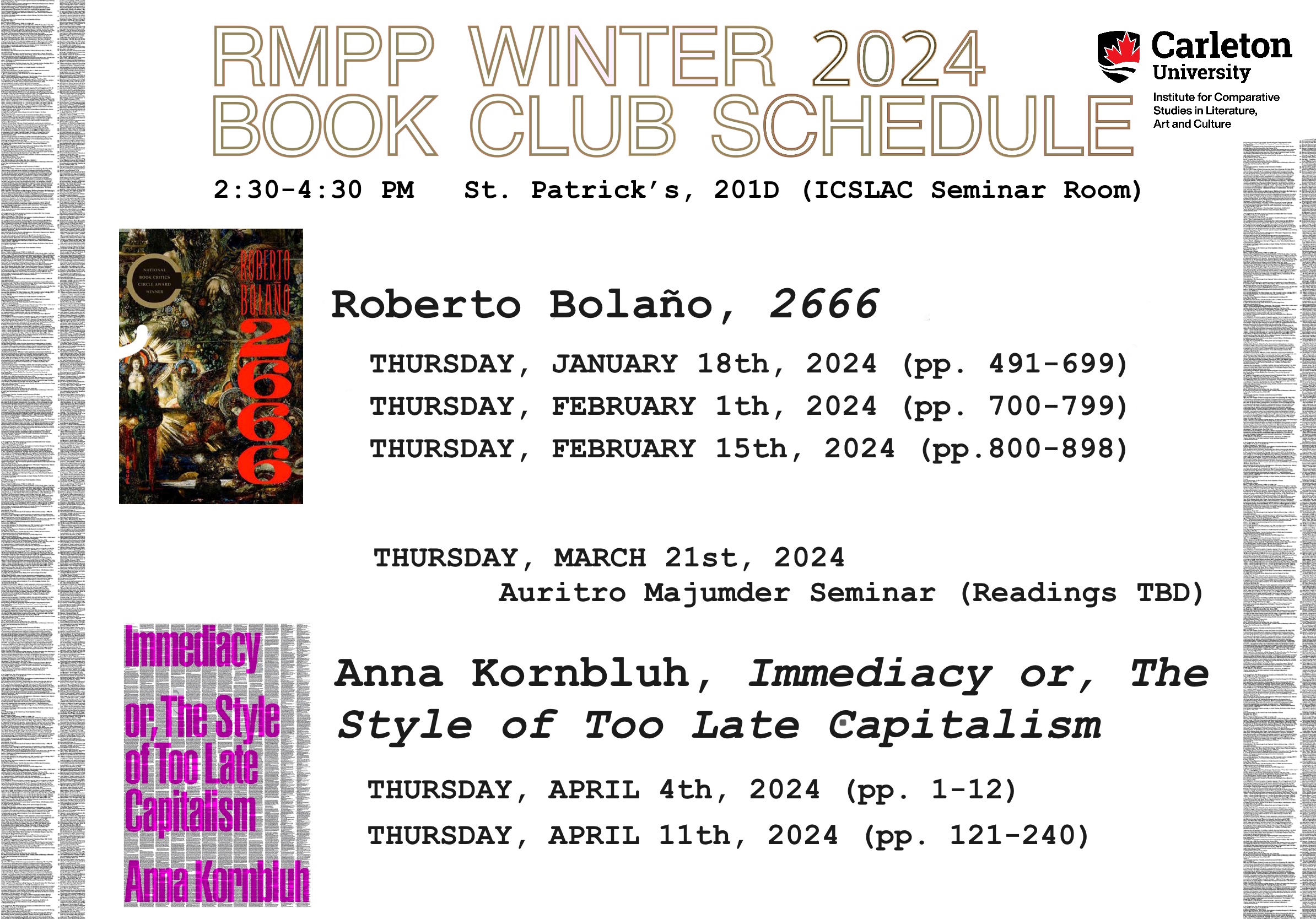
Dr. Philip Kaisary (2023-2025)
Directions and Dead Ends in the ‘Law and Literature’ Movement
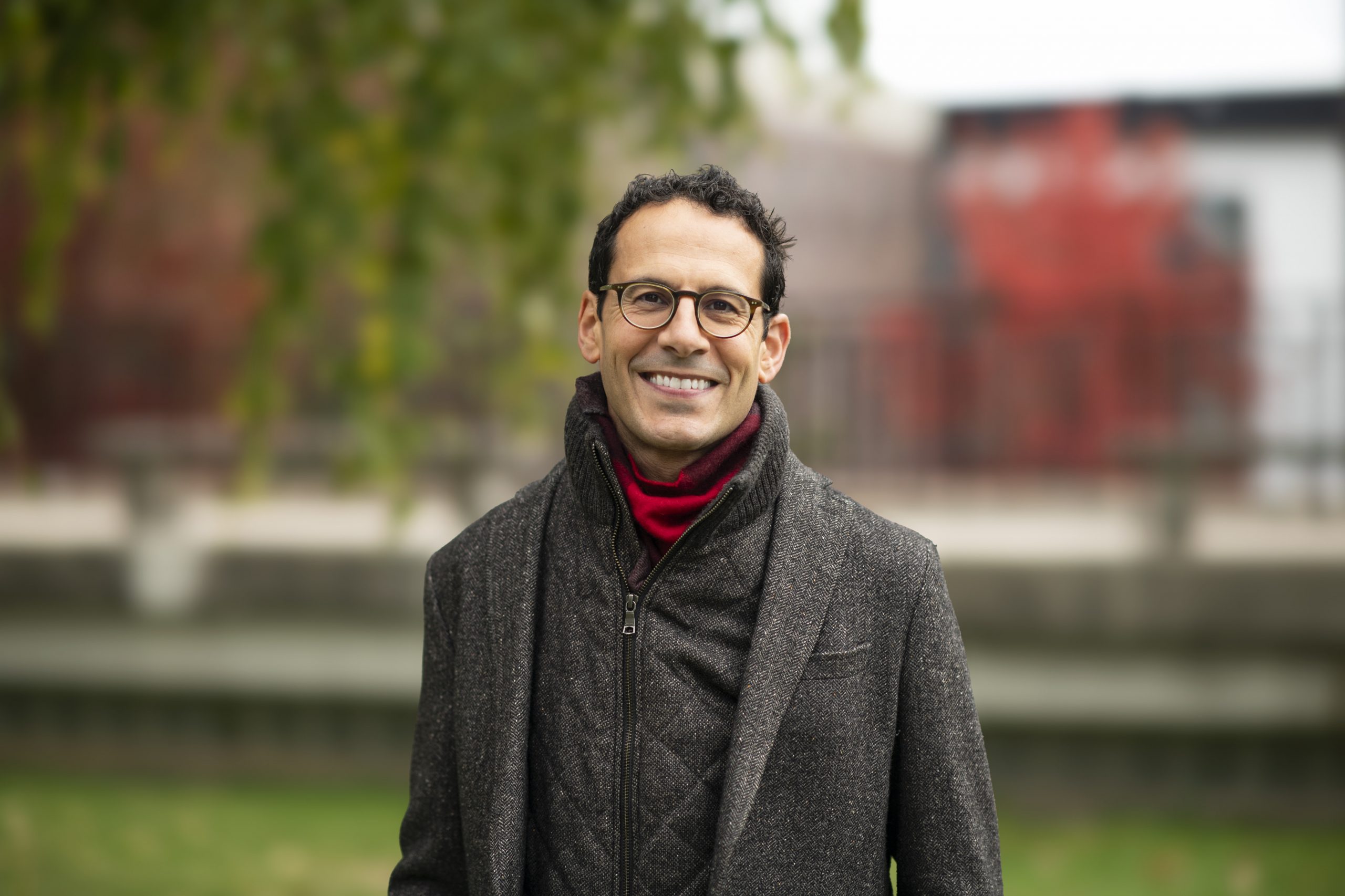
Dr. Philip Kaisary is the author of The Haitian Revolution in the Literary Imagination: Radical Horizons, Conservative Constraints (University of Virginia Press, 2014) and From Havana to Hollywood: Slave Resistance in the Cinematic Imaginary (forthcoming, SUNY Press). His writing has appeared in Atlantic Studies, Law & Humanities, MELUS (Multi-Ethnic Literature of the United States), and Slavery & Abolition, among other publications. He has received fellowships and grants from organizations including the Fulbright Program and the Canadian Social Sciences and Humanities Research Council.
He is the 2023–25 Ruth and Mark Phillips Professor in Cultural Mediations and an Associate Professor in the Department of Law & Legal Studies, the Department of English Language and Literature, and the Institute for Comparative Studies in Literature, Art, and Culture at Carleton University, Ottawa, Canada. His current research comprises a critique of the ‘Law and Literature’ movement and a proposal for the field’s reconstruction along more globally inclusive and materialist lines.
2023-2025 Theme: Directions and Dead Ends in the ‘Law and Literature’ Movement
“When it emerged in the 1980s and 1990s, the interdisciplinary field of Law and Literature cast itself as a “movement.”
Professor Philip Kaisary’s 2023–25 Ruth and Mark Phillips Professorship project in Cultural Mediations, Directions and Dead Ends in the ‘Law and Literature’ Movement, takes up the stakes of that claim. First, by paying close attention to Law and Literature’s formation, goals, situation, theoretical investments, and ideological thrust, it will demonstrate that the radicalness and political praxis implicit in the rhetoric of a “movement” promised more than the field could deliver. Second, by drawing on recent debates within world literary studies and the critical tradition of cultural materialism, it will offer the field of Law and Literature, and by extension, the broader field of Law, Culture, and the Humanities, a way to live up to not only the claim, but also the responsibility, of being a movement. Undertaking research in the modes of critique and reconstruction, the project’s central objective is to shift fundamentally the grounds of the field, arguing for the reconstruction of Law and Literature along more globally inclusive and materialist lines.”
Upcoming Events 2025:
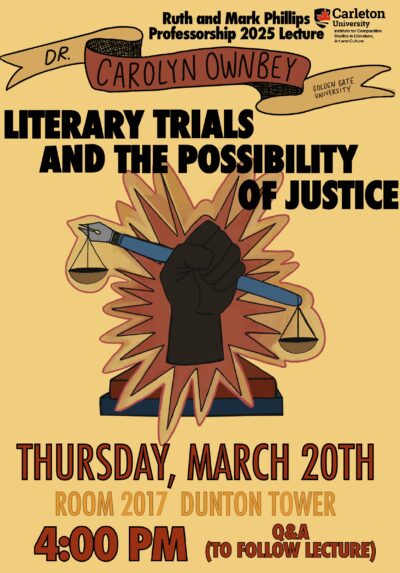
RMPP 2025 Flagship Lecture and Workshop: Dr. Carolyn Ownbey (Golden Gate University)
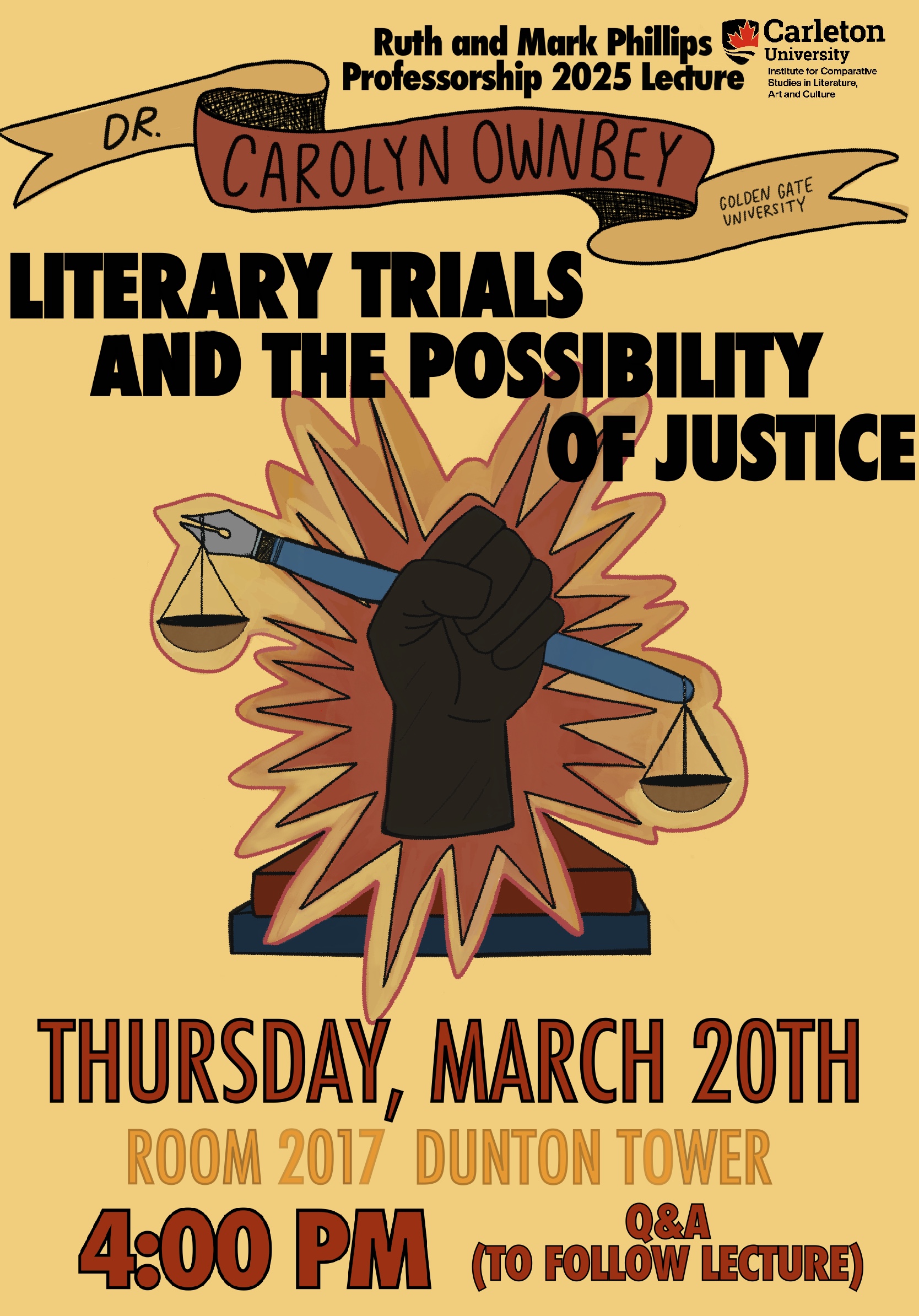
“Literary Trials and the Possibility of Justice” Abstract:
What purpose does the discipline of law and literature studies, as well as the literature and other media utilized within the discipline, serve? Many scholars have argued that their purpose is properly to serve law—that is, to illuminate the ways in which law and legal practice may be improved to better serve justice. This lecture will consider whether and how the scope and function of law and literature studies and its objects exceeds those legal bounds, and to what end, through a consideration of literary trials. Trials (and the law more generally) do not functionally “make a sharp and necessary break with the social relations that underpin” their crimes, to quote Rinaldo Walcott in a different context. It is difficult to overstate the stakes of this failure, though often relatively easy to cite its consequence—repetition of the crime because the conditions of that crime’s happening have not fundamentally changed. Does law (and/as the form of the trial) have the capacity to make such a break, and if so, might literary studies be an avenue through which to do so?
To consider the place of literature in helping us to understand the capacity of law as it relates to trials and the social underpinnings of their crimes, I will focus on the work of two authors as primary case studies: Rebecca West and Caryl Phillips. Writing at different moments in the 20th and early 21st centuries, West and Phillips nonetheless cover curiously common ground. The trials that appear in their works, nonfiction and/or fiction(alized), highlight in particular the social conditions before and social legacies after crimes and trials—in Nuremberg, Leeds, and elsewhere—in addition to the ways in which trials narrate, or fail to narrate, their crimes. Each author provides a lens through which to focus on the place of literature and the possibilities of justice within and outside of the law.
About Our 2025 Speaker:
Dr. Carolyn Ownbey (she/her) is a scholar of anticoloniality, citizenship, and human rights in literature and other media since the mid-20th century. She is presently Assistant Professor at Golden Gate University in San Francisco, where she previously served as Chair of English, Communications, and Literature and Faculty Director of the Degrees+ Programs. Her scholarship and teaching focus on anticolonial literature and other media; law, human rights and narrative; and theories of democracy and citizenship. Her current book in progress is an interdisciplinary project focused on questions of law, human and civil rights, nation, and state in several modes of political resistance writing since 1945.
She has essays published in Law & Literature, Textual Practice, Critique: Studies in Contemporary Fiction, and Safundi: The Journal of South African and American Studies (2 essays and a review), among others, as well as in a number of edited volumes such as In the Crossfire of History: Women’s War Resistance Discourse in the Global South (2022, Rutgers UP). She recently co-edited Global South Studies‘ inaugural Book Forum with Dr. Kerry Bystrom (Bard College Berlin) on the subject of Monica Popescu’s At Penpoint: African Literatures, Postcolonial Studies, and the Cold War (Duke UP, 2020), and to which she contributed an essay, in addition to the co-written introduction. She is co-editor of the collection Pandemic Play: Community in Performance, Gaming, and the Arts(Palgrave) with Dr. Catherine Quirk (Edge Hill University).
The 2025 RMPP Book Club: The Savage Detectives (Roberto Bolaño)
Thursdays, February 27th, March 13th and April 3rd, 2025
2:45pm, ICSLAC Seminar Room (St. Pat’s 201-D)

Previous Events:
RMPP Book Talk: Dr. Myka Tucker-Abramson (Warwick University)
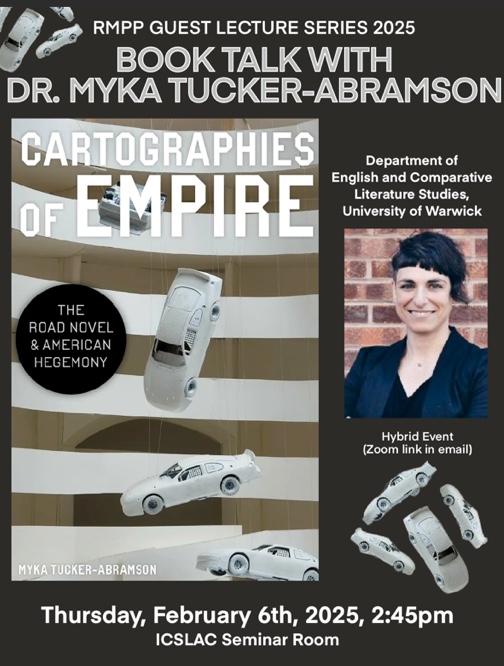
Challenging dominant conceptions of the road novel as a distinctly American genre that reckons with domestic questions of national identity, this talk offers a new set of spatial and temporal coordinates for our understanding of the genre. I reread the road novel as a genre specific to, coterminous with, and illuminating of US hegemony’s global trajectory from its emergence to decline. More specifically, I argue that the genre takes up the tropes of automobility and travel in order to map out violent and vertiginous processes of capitalist modernization, while equally obfuscating these harsh truths through narratives of individual success and failure in achieving the so-called “American way of life.” To illustrate these claims, I turn to three road novels that emerge at different moments across US hegemony’s arc: Jack Kerouac’s paradigmatic 1956 road novel On the Road, which marks the emergence and consolidation of US hegemony; Iva Pekárková’s post-socialist transition road novel Truck Stop Rainbows (1989) which, tracking the primitive accumulation of the socialist state, presents the emergence of US unipolarity amid the Soviet Union’s collapse; and Adania Shibli’s Palestinian road novel Minor Detail (2018) that, by tethering its apartheid landscape to the US military and economic support underpinning it, refracts the terminal crisis of US hegemony. Taken together, this talk aims to reperiodise and reorganise our understanding of the genre of the road novel and its role as both key cultural product and critical lens on US hegemony.
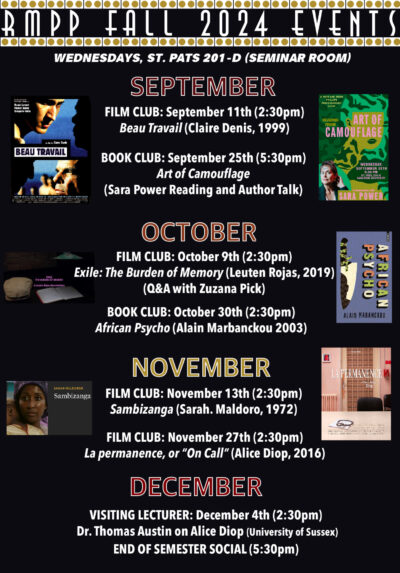
In Conversation with Sara Power and reading from debut short fiction collection, Art of Camouflage
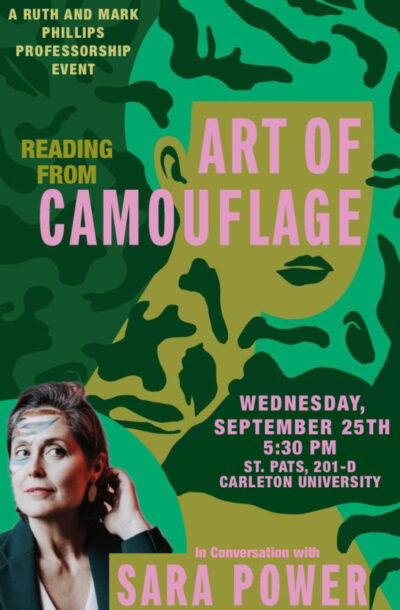
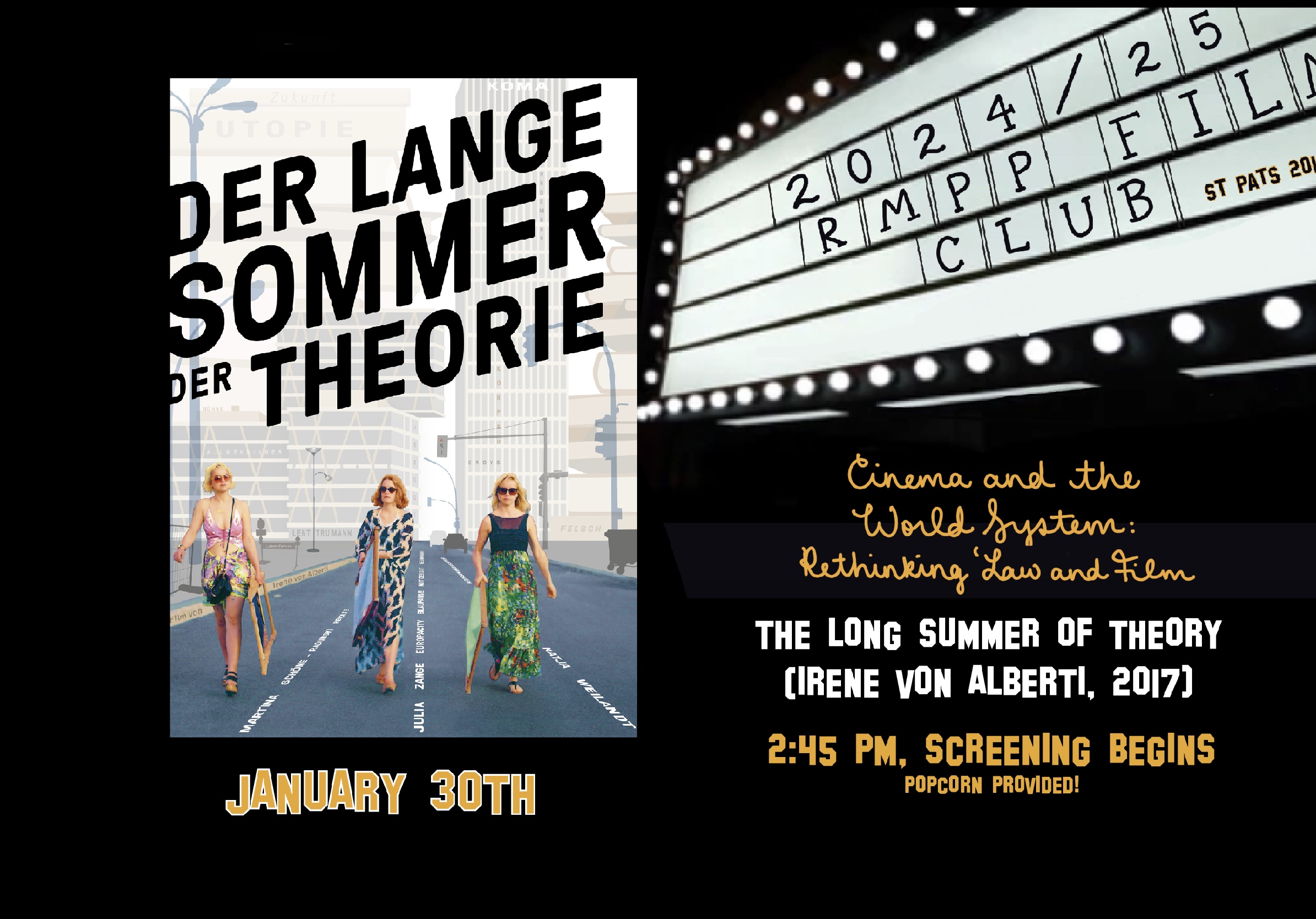
RMPP 2023/2024 Film and Book Club
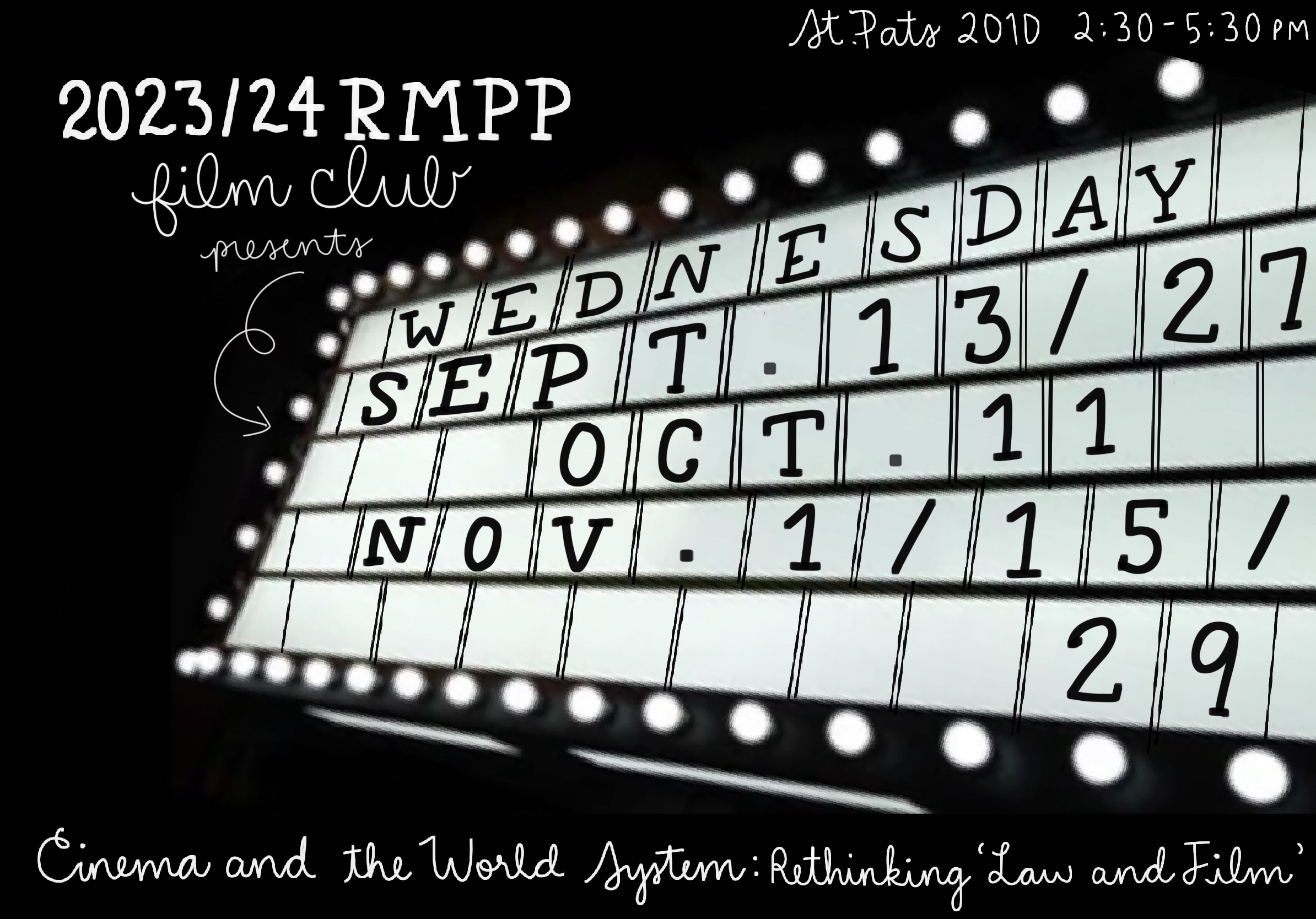
2024 Ruth and Mark Philips Professorship Flagship Lecture, Wednesday, March 20, 2024.
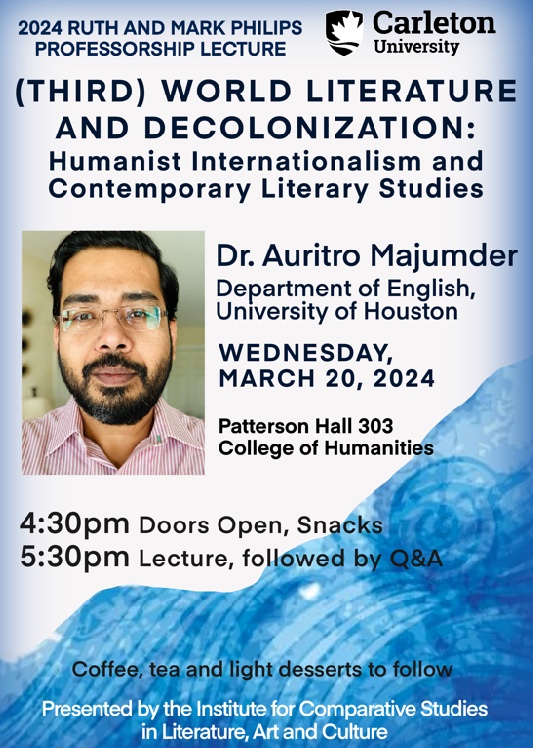
For the 2024 Ruth and Mark Phillips Professorship (RMPP) Lecture, Dr. Philip Kaisary welcomes Dr. Auritro Majumder, University of Houston, for his talk entitled “(Third) World Literature and Decolonization: Humanist Internationalism and Contemporary Literary Studies.”
This talk discusses the revolutionary genealogies of the third world (1945-1991), exploring both its earlier antecedents and subsequent legacies. While recent scholarship has focused on the mediations around the idea of world literature, from European colonization to US-led globalization, much less discussed are the concepts that were articulated from, and grounded in the realities of, the peripheries and margins of the Euro-US dominated world. Considerations of literature, and culture more broadly, played an enormous role in the mass mobilizations of 19C and 20C decolonization: there also took place significant rethinking of the issues of textuality, forms, and language, as well as the relations between theory and practice, city and country, society and nature, urban middle classes and rural subaltern groups, to mention only a few. In this radical frame, the overall emphasis was on a “new humanism” — drawing on vital but neglected intellectuals of the third world, from Asia, Africa, and Latin America, the talk addresses how their humanist work, and vision, speak to the contemporary global situation of the literary humanities.”
Dr. Auritro Majumder is Associate Professor of English at the University of Houston and author of Insurgent Imaginations: World Literature and the Periphery (Cambridge University Press, 2020). His current research comprises a book project exploring ideas of the human, “The Global South in Literature and Theory,” and a co-edited anthology, “Cultures of the Cold War in South Asia.”
Majumder has authored over a dozen essays, appearing in academic journals including Critical Asian Studies, Comparative Literature Studies, Interventions, Journal of Multicultural Discourses, Journal of Postcolonial Writing, Mediations, Research in African Literatures, and South Asian Review.