Skepticism, Alienation and Perceptions of Internal Instability in Public Opinion: Are NATO’s Baltic Operations Succeeding at Reassuring All Segments of their Populations?
By Sophie LeBoeuf, Carleton University
Key Takeaways
- In Estonia and Latvia, border residents, ethnic Russians, and Russian-speakers differ from the general population in their perception of security threats. They are more likely to view domestic political instability as their country’s primary security threat, rather than Russia.
- This segment of Estonians and Latvians also tend to feel disenfranchised and helpless regarding national defence, with the majority more likely to respond that their countries are “on their own” if faced by a military threat.
- NATO should take a regionally focused outreach, using the Russian language as a medium and utilize transparent intelligence disclosure to assure and rebuild trust among these vulnerable populations. Furthermore, using visible and well-tested approaches such as tangible first-responder training and on-the-ground capacity-building measures could help address local skepticism.
Background
While the North Atlantic Treaty Organization (NATO) focuses on defending the Baltics from external Russian aggression, a critical segment of the population – namely border residents, ethnic Russians, and Russian-speakers – are more concerned with internal political instability than external threats for its national security. In addition, many of these respondents express a feeling of helplessness and alienation, believing neither the West nor Russia would come to their aid should their country face a military or security threat. Thus far, NATO operations aimed at reassuring Baltic residents are not succeeding with instilling confidence in current national security frameworks. Recognizing the diversity of security beliefs with a particular regional and linguistic focus could better inform NATO strategies that address security threat responses in the Baltics, helping to reassure these skeptical and disenfranchised populations.
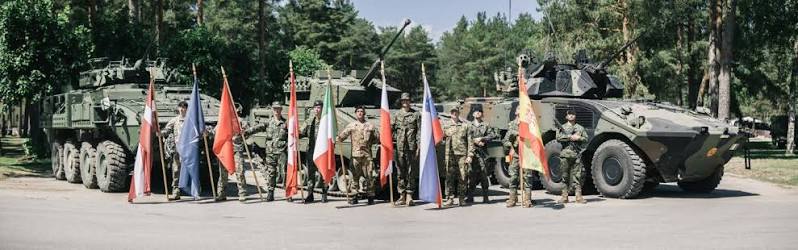
Russia’s full-scale invasion of Ukraine in 2022 has fundamentally transformed the international security landscape, prompting NATO’s response to reassure its Baltic members that, should it face a threat, NATO will come to their defence. NATO’s operations in Latvia and Estonia are a part of its broader efforts at deterrence and defence on its eastern flank by increasing its presence in the region, with Canada leading the Multinational Brigade in Latvia through Operation REASSURANCE, and the United Kingdom leading in Estonia with Operation CABRIT. Latvia and Estonia are both active participants in various NATO-accredited Centres of Excellence (COEs) that conduct collaborative research with NATO Allies to better address security threats, many by malign Russian influence through hybrid tactics. For example, the NATO Strategic Communications COE, located in Riga, Latvia, monitors and counters information-manipulation threats in real time. Russia’s information operations in these countries exploit pre-existing societal divisions among ethnic, regional, and linguistic lines, promoting extremist sentiments and skepticism against their governments and Western partners. Common narratives accuse Estonian and Latvian governments of being anti-Russian and incapable of defending their countries against any threat.
Existing studies suggest that Russophone, ethnic Russian, and borderland populations in both Latvia and Estonia are more skeptical towards NATO and existing national security frameworks. They are found to be less likely to come to a country’s defence, and do not feel safe because of their respective countries’ NATO membership. A widespread nostalgia for the Soviet Union is found to be a salient factor, associated with decreased support for present (often liberal democratic) regimes. In the context of the ongoing war against Ukraine, these populations are less likely to support sanctions against Russia, and many do not blame Russia for starting the war. Furthermore, they are less likely to perceive Russia as a threat, and do not view an invasion as probable.
However, public opinion amongst these groups in Estonia and Latvia is proving to be more nuanced; many in these populations express a complex belief system surrounding national security that is not entirely subversive or indicative of disloyalty. Many among them blame Russia for the war in Ukraine, while others see Russia as a threat to their national security, meaning that public opinion among Russophones in Latvia and Estonia is heterogenous. Given these insights, policy aimed at developing trust with these populations and fostering participation in national security frameworks should reflect this variety of beliefs, and address skepticism through regionally and linguistically mindful outreach initiatives.
Belief in ‘Domestic Political Instability’ as the Greatest National Security Threat
A survey conducted by the Carleton University Eastern European and Transatlantic Network (EETN) in Latvia and Estonia between March and May 2025 indicates that while Russia and the war in Ukraine are still prevalent security threats, 26% of Latvians and 22% of Estonians perceive “domestic political instability” as the most important threat. These opinions are particularly widespread among the border-region populations, among Russian speakers, and ethnic Russians. For example, in Latgale (Latvia’s border region) 52% chose “domestic political instability” as the greatest threat; only 7% picked Russia, and 12% the war in Ukraine. Similarly, in Northeastern Estonia, an area that borders Russia, 47% consider domestic political instability as a main security threat while only 17% consider Russia as the greatest threat. In Latvia, Russian speakers were far more likely to hold this belief compared to respondents who speak the titular language; language was not a measured factor in the Estonia survey.
These groups are all more likely than their counterparts to feel personally “unsafe,” with 51% of Latgale residents and 30% of Russian speakers in Latvia choosing “unsafe” when asked about their personal safety. In Northeastern Estonia, 31% also personally feel “unsafe.” Skeptics tend to attribute threats to personal safety on internal concerns rather than external actors. In both countries, those who share this belief have a higher likelihood to view Russia as most helpful for their national security. For example, in Latvia 26% of respondents chose “domestic political instability” as the greatest threat to personal safety, and among these respondents 61% chose Russia as the most helpful external actor to Latvia in the case of a military threat- pointing to an intersection between positive perceptions of Russia and concerns over internal concerns. Similarly, for the same question in Estonia, 22% chose “domestic political instability,” and of this group 77% also picked Russia to come to their aid.
In addition, those concerned with domestic security are more likely to be skeptical of the EU, NATO, and the West. In both countries, such respondents are least likely to choose “the West” as most helpful should they face a military threat, with only 12% in Latvia, and 18% in Estonia. Furthermore, among those who share this belief is a higher likelihood to vote “no/leave” in hypothetical referendums for the EU and NATO respectively.
Feelings of Alienation, NATO Skepticism and Internal Instability Belief
Among respondents who share a belief regarding domestic political instability and specifically in the Russophone, ethnic Russian, and borderland populations is a common feeling of alienation from current security mechanisms and parliamentary processes. Respondents who share this belief also often expressed disenfranchisement, believing that if their country faces a military threat that they will be helped by no one. When asked the same question, Russophones in Latvia proved that they are least likely to choose NATO and most likely to choose “Nobody will help us/we are here for ourselves”.
Residents of Northeastern Estonia and Latgale are the least likely among Estonia’s macro-regions to choose “closer to NATO” (only 34% in Northeast Estonia and 41% in Latgale) and are most likely among all regions to pick either “closer to Russia” (22% in Northeast Estonia, 21% in Latgale) or “closer to both/neither” (31% in Northeast Estonia, 25% in Latgale).
It seems that such skepticism towards common security architecture reflects a greater disbelief in the national political system. Although a majority of respondents who also share the belief of alienation would vote “yes/stay” in the hypothetical referendums to remain in NATO or the EU, their support is weaker than the general population. To conclude, Russophones, border-region residents, and respondents who share their “domestic political instability belief more often express feelings of alienation and disenfranchisement from political processes rather than a desire to deepen ties with Russia.
Conclusion and Policy Recommendations
Feelings of skepticism, alienation, and disenfranchisement in the border regions cannot be attributed to ethnic and linguistic identification alone. Being Russian or Russophone in a border region does not inherently make someone vulnerable to Russian influence. Socioeconomic disparities in these regions paired with titular language mandates in both countries can contribute to feelings of alienation, though further research is needed in order to uncover a clearer picture of these citizens’ experiences. A more in-depth understanding will further restore agency to this population, as their beliefs are likely acquired through more complex routes than simply absorbing Kremlin media. One study argues that Russian media did not have an independent effect on one’s willingness to defend their country and instead infers that many respondents who consume Russian media have a distrust of media in general, further highlighting a need for a more nuanced understanding of skepticism among Russophones.
1. Further research on best practices through NATO COEs is needed to address alienation and helplessness
NATO Allies utilize different COE’s to share best practices for countermeasures and confidence-building initiatives and to build societal resilience against malign information influence. A transnational study on best practices for building confidence among ethnic minorities would fill a sizable gap in current research and would provide a basis for which to design public outreach campaigns for populations experiencing alienation and skepticism. In addition, further research can investigate the security perceptions and feelings of alienation in public opinion. This would provide a more accurate foundation for which to form policy on public outreach, rather than simply attributing the security concerns of Russophones to inherent Russian-tendencies that favor Kremlin-intervention.
2. Targeted and regionally mindful outreach for key groups could have important impacts
Further regionally-focused outreach for these specific Russophone, ethnic Russian, and borderland populations using a NATO Strategic Communications framework, with tactics such as intelligence disclosures (gathered through the NATO Intelligence, Surveillance and Reconnaissance Force, or NISRF), can effectively rebuild credibility and better reassure these populations of NATO’s defence commitments and decision-making. Furthermore, intelligence disclosures through accessible media can inform users on external security threats and potentially increase risk awareness and trust in public institutions through transparency measures.
Given that a significant amount of information laundering targeting users in Estonia and Latvia is conducted by Russian-language media, it is tantamount to consider this population’s linguistic preference as a tool of engagement rather than a characteristic to exclude from policy measures to counteract Russian influence.
3. Share key expertise within NATO frameworks, and make it visible to key groups
A previous study conducted in Latvia found that any citizen regardless of ethnicity is more open to helping in their country’s defences if they are reassured by a powerful patron, one that they have confidence in. In 2023, NATO and Ukraine cooperated through training events, sharing best practices for preparedness among first responders. Similar efforts in Latvia and Estonia could reach NATO-skeptical populations among citizens working in the public sector for emergency response. Sharing key expertise in similar sectors can potentially build trust among skeptical groups and increase NATO’s visibility among local populations, offering a firsthand account of NATO’s efforts instead of through malign narratives online.