Beyond the Growing Season: Discovering New Possibilities Through Co-op
By Adam Landry
What happens to the plants left behind after a growing season ends?
For Asma Muhyedin, answering that seemingly simple question meant looking well beyond Ontario.
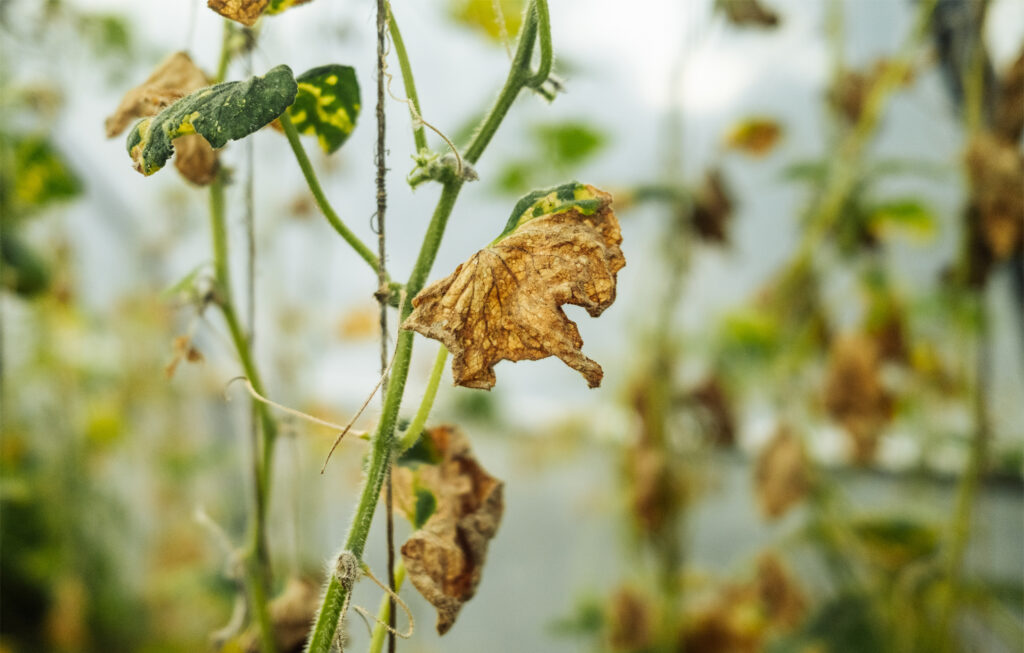
As an Environmental Engineering stream student in Carleton University’s Master of Engineering Practice (EP) program, Asma spent four months during summer 2026 on her first co-op work term with the Ontario Ministry of Agriculture, Food and Agribusiness (OMAFA). Her work focused on how greenhouse crop residues — including stems, vines, leaves and discarded produce — are managed in Canada and other parts of the world.
The goal was to explore what Ontario could learn from other jurisdictions as it looks for ways to keep more organic waste out of landfills, where available space is increasingly limited.
“It’s been a very pressing issue in Ontario because of increased tipping fees and reduced landfill capacity,” says Asma. “I’ve been researching what other solutions are available in other regions or jurisdictions that Ontario can learn from and potentially use to inform future policy.”
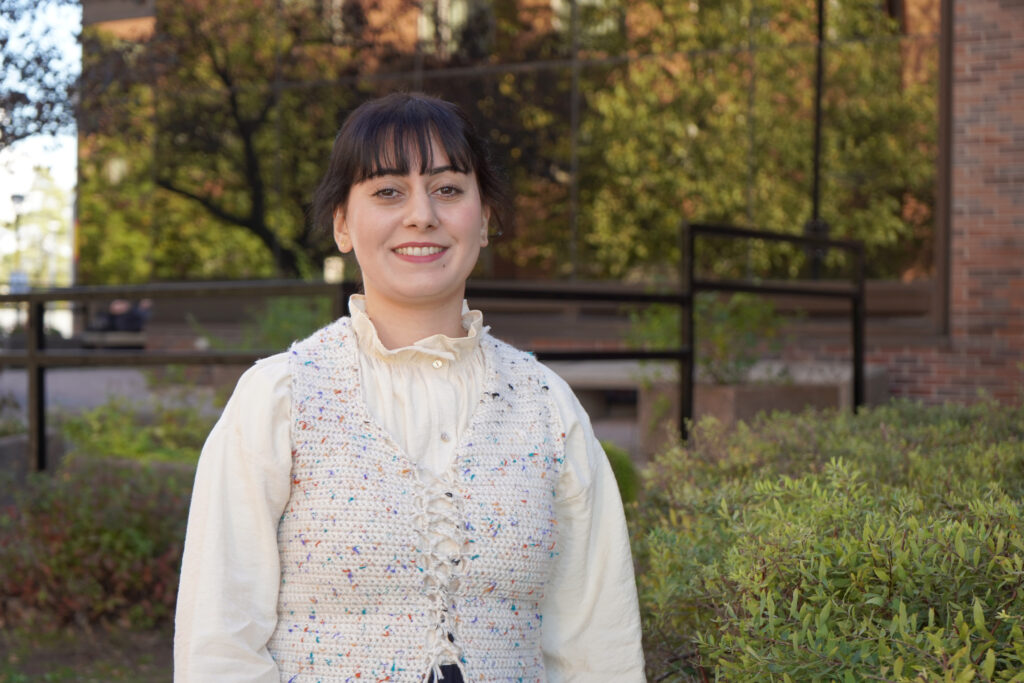
For Asma, the project also opened up a side of environmental engineering she hadn’t seriously considered before.
Looking Beyond Ontario
Working as an Environmental Assistant with OMAFA’s Engineering and Innovation Unit, Asma compared approaches in seven jurisdictions spanning Canada, the United States, the Netherlands and Spain.
That meant looking not only at how greenhouse residues could be composted, digested or reused, but at the regulations and practical considerations that determine whether those options can actually be implemented.
One of her biggest discoveries was how much could depend on the fine print.
Even determining what qualifies as “greenhouse crop residue” proved complicated, with regulations and terminology differing between jurisdictions and some not clearly defining the material at all. Rather than treating those gaps as missing information, Asma learned that they could be important findings themselves.
“I learned to look at what a regulation clearly says, but also what it doesn’t say,” she explains. “The wording can affect what options are actually available, so it was important to document the descriptions, limitations and uncertainties very carefully.”
Asma then compiled her findings into a comprehensive report and presentation for the ministry.
“Asma quickly became a productive member of the team, taking ownership of assigned tasks and consistently delivering high-quality progress reports,” says Kevin Baines, Senior Engineer, Agri-Food Systems at OMAFA.
“Her findings will help inform the next steps in developing best management practices for greenhouse crop residues across Ontario.”
Seeing the Bigger Picture
While much of Asma’s co-op involved research, the work term also gave her opportunities to see the agricultural sector she was studying firsthand.
With OMAFA employees located throughout the province, a summer unit meeting brought members of the team together and included visits to farms near Ottawa — Asma’s first farm visits in Canada.
“Most of what you study at university is theoretical, so getting to see everything in real life helps you understand the information you’ve been studying for so long,” she says.
“It helps you connect the dots of what you might have been missing in the classroom.”
The position also gave Asma an opportunity to put both sides of the Engineering Practice curriculum to work. Courses in solid waste and wastewater management provided technical grounding for the environmental issues she was researching, while Engineering Communications and Research Methods for Engineering Practitioners helped her analyze information, prepare reports and presentations, and share her findings with colleagues.
She also began to see how the impact of her work could extend well beyond the project itself.
“When you work in the private sector, your clients are your stakeholders. But working in the public sector, the public is your stakeholder,” she says. “It was rewarding to see on a larger scale how the work being done here can benefit the overall province.”
Building Confidence Along the Way
Asma found the OMAFA opportunity through Carleton’s co-op portal and, after receiving an interview, booked a mock interview with Carleton’s Co-op Office to practise her responses and receive feedback tailored to the position.
But some of the most important confidence came after she started working.
“When you’re starting your first experience in an industry, sometimes you don’t have enough confidence to state your professional opinion,” says Asma. “You wonder, ‘Could I be mistaken?’ But getting this type of experience before graduation helps build that confidence.”
As that confidence grew, so did Asma’s comfort asking questions, sharing her perspective and taking ownership of work that would contribute to a larger ministry project.
A Different Direction
The work term also opened Asma’s eyes to career paths in environmental engineering she hadn’t previously considered.
“Before I accepted this co-op, I was mostly interested in applied engineering jobs. I hadn’t really considered research-focused or public-sector roles,” says Asma.
“This experience made me realize there are more opportunities out there besides traditional engineering positions.”
It’s a shift that reflects what she enjoyed most about the position: taking complex environmental information, making sense of it and seeing how that research could eventually support decisions affecting people across Ontario.
And in the process, the experience may have planted the seeds for what comes next.