Putting Software Engineering into Practice at Statistics Canada
By Adam Landry
When Adithya Thaninki arrived at Statistics Canada for his first day of co-op, he had never worked with SAS — a statistical analysis platform and programming language behind many of the systems he had just been hired to help modernize.
A few months later, he was helping design new data architecture, preparing to present his work to senior leadership and getting ready to help two newly hired students learn the ropes.
“They’ve given me a huge responsibility,” says Adithya, a Software Engineering stream student in Carleton University’s Master of Engineering Practice (EP) program.
“I’m working on code that contributes to data products many people rely upon. That makes the work feel meaningful in a way that’s different from a course assignment.”
Since joining Statistics Canada’s Individual Tax Data Processing Section in May, Adithya has contributed to a larger effort to modernize systems used to produce and maintain tax data for statistical programs across the agency.

Much of his work involves taking programs written using older technology, rebuilding them with modern, open-source tools such as Python and carefully checking the results to make sure nothing gets lost along the way.
For Adithya, it was also unfamiliar territory.
Learning on the Job
While he came into the role with experience in Python and Java, Adithya had never worked with SAS, leaving him to learn a new programming language while making sense of programs developed years earlier.
“The biggest challenge was understanding code that had been written a long time ago in a language I’d never worked with before,” he says. “I couldn’t just translate it line by line. I had to understand what the program was actually trying to do and then make sure the new version produced exactly the same result.”
As his work shifted toward Microsoft Fabric, a newer cloud-based data platform, Adithya found himself learning alongside members of the team, with his responsibilities growing alongside his familiarity with the work.
His duties soon expanded beyond converting existing programs to building automated data processes and contributing to the architecture supporting Statistics Canada’s tax programs. He was also tasked with preparing a presentation of his work for a director and helping two newly hired students learn how to build data pipelines.

For Adithya, that level of responsibility has been one of the biggest differences between his co-op experience and his previous professional experience in India.
“In my early experiences, I didn’t have the same opportunity to take ownership of something,” he says.
“Here, I’m getting that responsibility and I’m able to see the benefits of what I’m creating. That’s been a big difference for me.”
It’s an impact he expects will last beyond his own work term.
“My legacy will be there,” he says of the systems he has helped modernize. “The program I’m creating is really helpful for them.”
That contribution has also stood out to his supervisor, Alex von Schilling, Unit Head, Tax Data Processing at Statistics Canada.
“Adithya’s work is high quality and robust,” says von Schilling. “He’s brought current skills and new approaches to the team while contributing to our transition from legacy software to open-source, Python-based data pipelines.”
More than Technical Experience
Not all of Adithya’s learning has happened behind a computer. As a newcomer to Canada, he initially found communicating in meetings challenging, particularly when trying to express his ideas clearly to managers.
“Early in the term, I sometimes held back in meetings because I wasn’t confident I would explain my ideas clearly,” says Adithya. “I started preparing the points I wanted to make before meetings, and I realized that wasn’t a workaround — it was just good practice. The conversations were more productive when I had thought through what I wanted to say.”
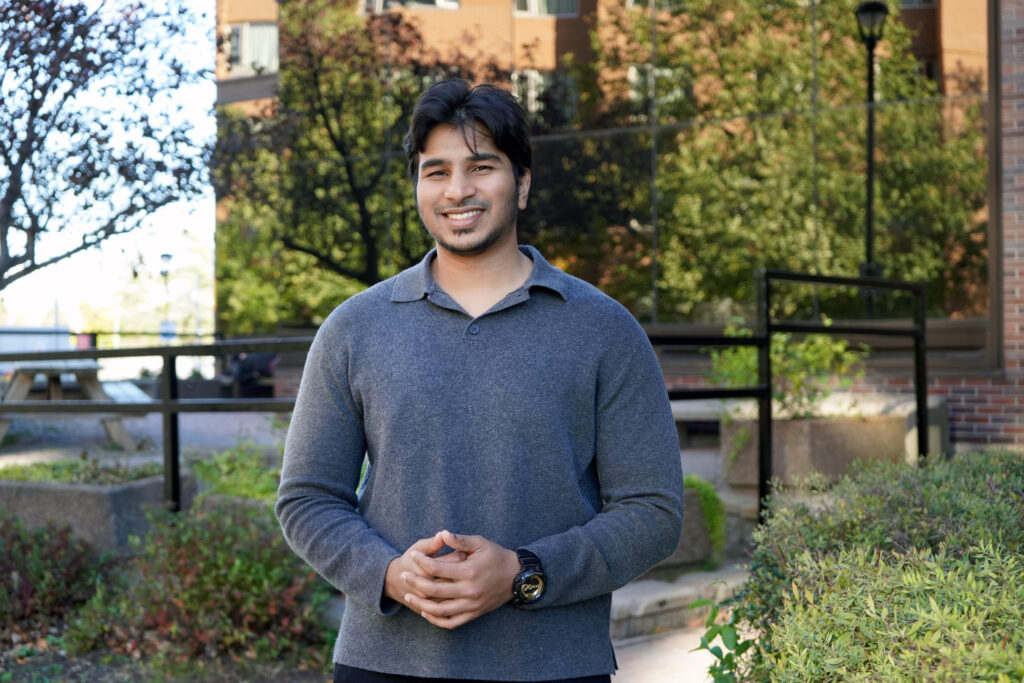
As his confidence grew, Adithya drew upon techniques from his Engineering Communication course, along with experience using SQL from his Database Systems for Engineers course — both part of the EP curriculum and directly applicable to his work.
Adithya initially found the opportunity through Carleton’s co-op job portal and prepared extensively for a technical interview focused on the skills he would need in the role. He credits the guidance and encouragement he received from Carleton’s Co-op Office with helping him secure the position.
“Looking for work can be challenging, especially if you are a new arrival to Canada, but we are here to help,” says Katie LeBlanc, Manager, Co-operative Education at Carleton. “Co-op students have access to dedicated one-on-one support from their Co-op Student Advisor, who can help create a job search plan, write professional documents and practice interview skills.”
Building Toward What’s Next
That support helped Adithya secure an initial four-month placement at Statistics Canada, which has since been extended to eight months.
“For an international student, having eight months of professional experience in Canada before graduating is really valuable,” says Adithya.
“I’m not only getting the engineering experience — I’m building connections, growing my network and learning what it’s like to work as part of a professional team here.”
While Adithya entered his placement already considering a future in data engineering and cloud technology, his experience at Statistics Canada has helped bring that career path into sharper focus.
“I came into the placement with a general interest in data engineering and cloud infrastructure, but now I have a much clearer picture of what I want to do,” says Adithya. “The work I enjoyed most was building the systems that move data reliably and automate how everything gets deployed. That’s the direction I’d like to keep exploring after graduation.”
Where Could Co-op Take You?
Carleton’s Master of Engineering Practice co-op pathway gives eligible students the opportunity to gain paid work experience in Canada, apply their engineering skills and build professional connections.