Spotlight on Research: Professor Mayurika Chakravorty sits down with Professor Adam Barrows to discuss her new book and her research
This month, the English Department’s Professor Adam Barrows sat down with Professor Mayurika Chavravorty, who is cross-appointed between English and Childhood and Youth Studies, to talk to her about her recent book with Bloomsbury Press, her work on fantasy, postcoloniality, and global girlhood.
AB: Were you an avid reader of fantasy before you came to it as an object of study? Did you grow up reading Sukumar Ray, for example, or other fantasy writers from inside or outside the Bengali literary tradition? Or did you discover this corpus of work as an academic when you realized it was understudied?
MC: Yes! I did grow up reading Upendrakishore Raychaudhuri, Sukumar Ray, Satyajit Ray, Abanindranath Tagore, Rabindranath Tagore and others from the Bengali literary tradition, alongside classic British children’s fantasies like Peter Pan, The Wind in the Willows, Alice’s Adventures in Wonderland, and later Tolkien and many others. Growing up in 1980s Calcutta, we were lucky to have access to a lot of Russian children’s books and periodicals too. I remember listening to and later reading stories from the Arabian Nights, Panchatantra, and fairy tales from Indian and European traditions (Grimm, Anderson). I also had a beautifully illustrated book with Arthurian legends for children. This rich and early exposure certainly instilled in me a life-long love of fantasy which later developed into an interest in studying fantasy literature more deeply as a literary scholar.
AB: You developed this work at the University of London. Did you experience any pushback there in terms of this body of work (fantasy) not being considered “serious” enough to merit study?
MC: Not at all. The School of Oriental and African Studies where I did my Ph.D. has a very long tradition of scholarship in South Asian literatures and cultures, and my supervisor was a leading scholar in the field. London is perhaps the best place to work on colonial India because of its unparalleled wealth of archival resources from the period. Until 1947, a copy of every book, periodical, and pamphlet published in any language in India had to deposited with the British Library (India Office), and many of those texts are better preserved there than in India!
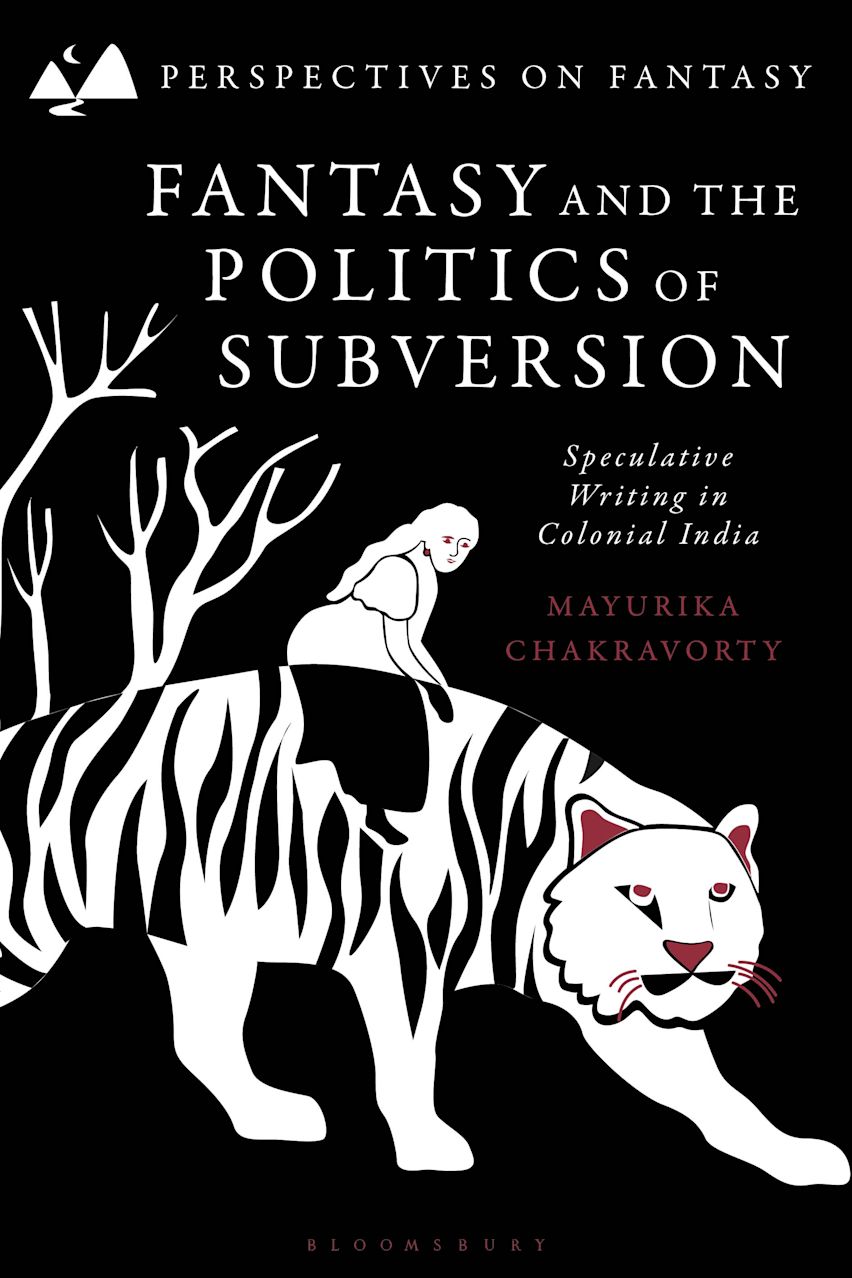
AB: Fantasy obviously has a lot to tell us about the “real” world in which we live. Your book, though, makes a strong argument that fantasy is particularly important in a colonial/anti-colonial/neo-colonial context. Can you explain why fantasy matters in a colonial context?
MC: Fantasy literature can not only tell us about the real world but can also subvert authority and challenge hegemonic structures of power including colonialism. In the colonial context, when authors had to write from within a tight grid of proscription and control, fantasy texts became sites of resistance and endurance. Behind the façade of fantasy, they critiqued colonial exploitation as well as social injustices and drew attention to the impossible predicament of the colonized individual during a tumultuous juncture in history. Children’s fantasies from the colonial period in India also operated along the axes of identity, agency, and futurity to restore the fractured colonial selfhood through what I call ‘restorative wonder’ in my book.
AB: You are cross-appointed with Childhood and Youth Studies here at Carleton, and much of your recent work has been interested in the situation globally of young women and girls. You wrote quite eloquently at the end of Donald Trump’s first term that a nightmarish era for girlhood was coming to at least a pause. We have, of course, not been spared a second term of Donald Trump, and Trump 2.0 has in many ways been a more aggressive and unapologetic version of 1.0. Do you worry about global girlhood in the coming years?
MC: Yes, I worry about global girlhood and childhood in general. These are difficult times to grow up in as there are so few certainties anymore, and human values and ideals are getting destroyed daily. It is quite telling that horror and dystopian literature are rising in popularity. On a positive note, however, children and youth are also exercising their agency and rights and are leading global movements. As a literary scholar who works with fantasy and speculative literature, my hope is that the young readers will not turn to fantasy for escape from the dark times but will discover the radical potential of the fantastic, be it through the imagination of a more just and egalitarian future or through fantasy’s potential to challenge power.
AB: What are you working on now? Are there plans (big or small) in the works?
MC: I am currently working on a short introduction to fantasy literature in India and on a project on South-Asian Canadian children’s literature.
See Professor Chakravorty’s book here.