College of the Humanities Celebrates 30 Years of the Great Conversation
How do you teach university students how to think deeply? How do you help them understand the fundamental issues of our time? Most importantly, how do you equip the next generation of leaders to find thoughtful, nuanced answers to difficult problems?
These are the questions that inspired a group of professors across different disciplines, led by the late political philosopher Dr. Peter Emberley, to establish Carleton University’s College of the Humanities, exactly 30 years ago in 1996.
Over the first weekend in October, the College welcomed alumni and their families back to campus for a 30th anniversary reunion. The three-day celebration featured engaging TED Talk-style speeches delivered by alumni Shannon Charlebois, Alexandra Garigue, Catherine Keresztesi and Cody Pelletier, punctuated by a pub night, brunch and banquet-style dinner for alumni, faculty, and staff to catch up and reconnect.
“The 30th anniversary reunion is a wonderful occasion for our alumni and all those who have participated in the life of the College over these three decades,” said Prof. Shane Hawkins, director of the College of the Humanities. “We’re grateful for the scholarly community that we have been able to build, and we have great hopes for the future.”
The College challenges its Bachelor of Humanities students to read their way through some of the world’s “great books” – a collection of notable texts that were penned, scratched and orated over centuries by a motley crew of philosophers, historians, scientists, novelists, poets, and political theorists all trying to work out answers to some of the fundamental questions about human existence. Through close reading and small discussion groups, students develop a comprehensive knowledge of religion, history, literature, music and political theory, while simultaneously learning how to effectively build and unpack an argument, evaluate different viewpoints around a single topic, and persuasively communicate their own ideas.
This unique, intensive approach also results in long-term friendships forged over afternoons of lively debate in the student common room, mentorships with faculty that persist well after convocation, and a formidable alumni community whose members are continuing the “Great Conversation” they were introduced to as undergraduate students in the art galleries, hospital ORs, newsrooms, television studios, and think tanks where they work.
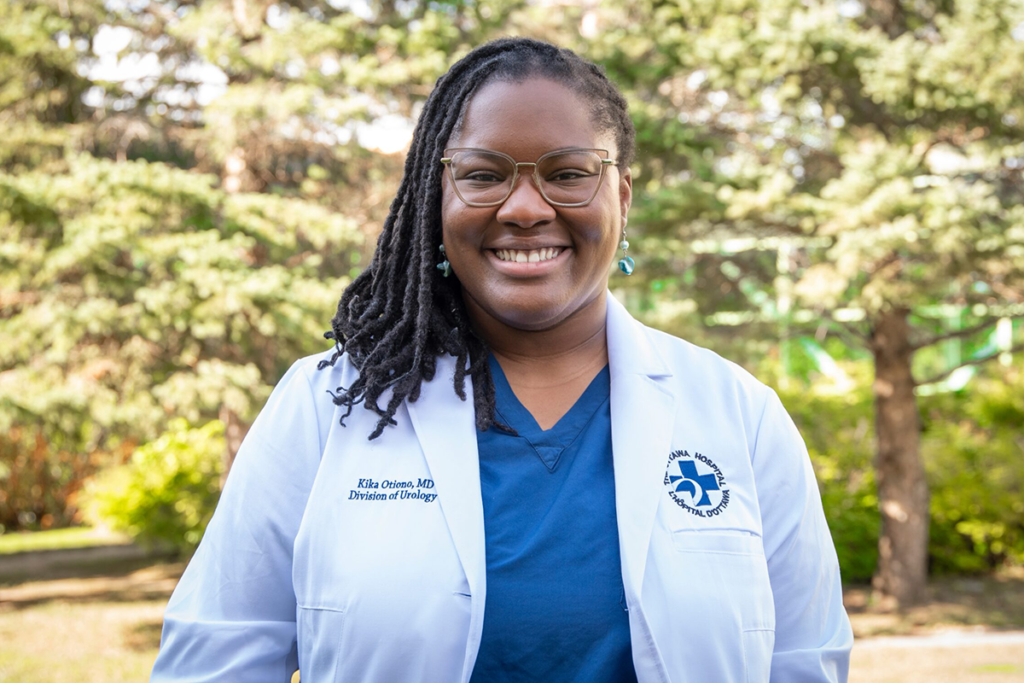
Kika Otiono (BHum 2019)
A Nigerian Canadian who grew up in Edmonton and Ottawa, Kika Otiono knew she wanted to be a doctor for as long as she could remember. She chose Carleton University’s Bachelor of Humanities and Biology program because its distinctive combination of disciplines offered both the scientific foundation and broader intellectual preparation she was looking for. Today, Kika is a Surgical Resident in Urology at The Ottawa Hospital with a Doctor of Medicine from the Michael G. DeGroote School of Medicine at McMaster University.
“A combined degree in Humanities and Biology prepared me for my career in surgery in ways that I did not anticipate as an undergraduate student. Studying biology grounded me in the science of human systems while the humanities taught me to think critically, to communicate clearly, and to approach patient care with curiosity and compassion. The surgeon I am becoming has been shaped as much by the humanities as by anything I have learned in a lecture hall or operating room.”
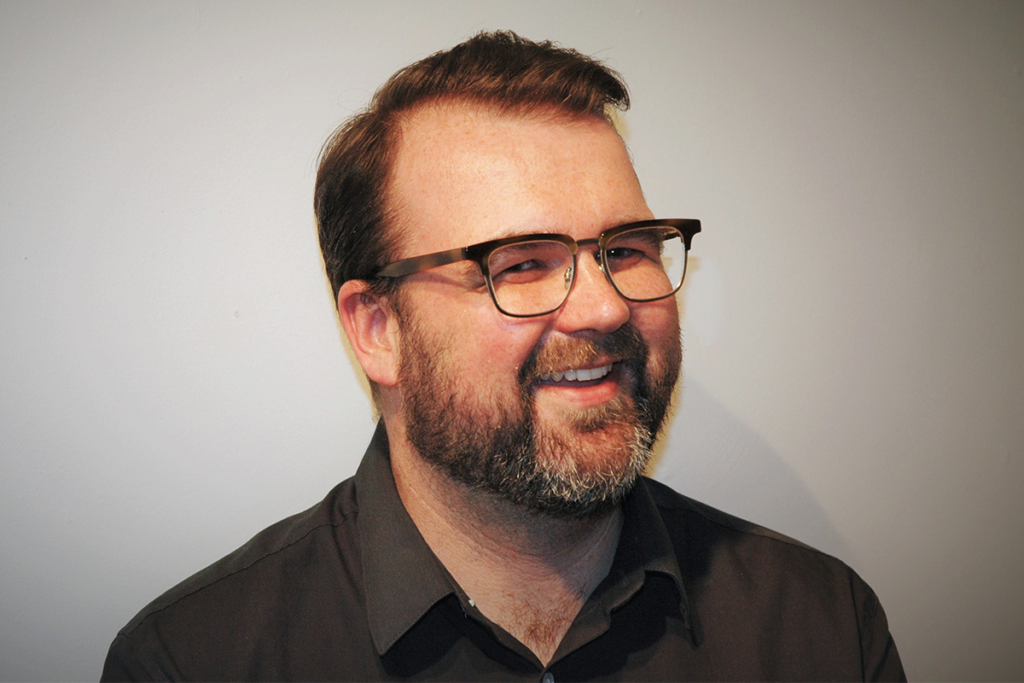
Sebastian Major (BHum 2007)
Sebastian Major is an author, educator, musician, and storyteller best known as the creator and host of Our Fake History, a chart-topping podcast that explores historical myths and misconceptions. Throughout the podcast’s 12 seasons, Sebastian has interviewed New York Times bestselling authors, internationally recognized academics, Grammy Award Winners, MacArthur Genius Grant recipients, and Pulitzer Prize Winners. After completing his Bachelor of Humanities, Sebastian returned to Carleton to complete a Master of Arts in Public History, followed by a Bachelor of Education from York University. His first non-fiction book, Frauds, Imposters, and Humbug Artists: Lessons from History for the Age of the Con-Man, is set to hit bookstore shelves in late 2027.
“I owe a great deal to the College of Humanities. Not only did it give me an excellent grounding in the subjects that I taught while working as a high school teacher, my career as a podcaster and an author is deeply linked to my humanities education. The skills I learned as a researcher, writer, and critical thinker are what make my podcast possible. There was also a wonderful sense of community in the College that made it feel like I was part of something unique. Humanities students tended to be quirky, whip smart, and often hilarious. Some of my best friends to this day are people whom I met while at the college.”
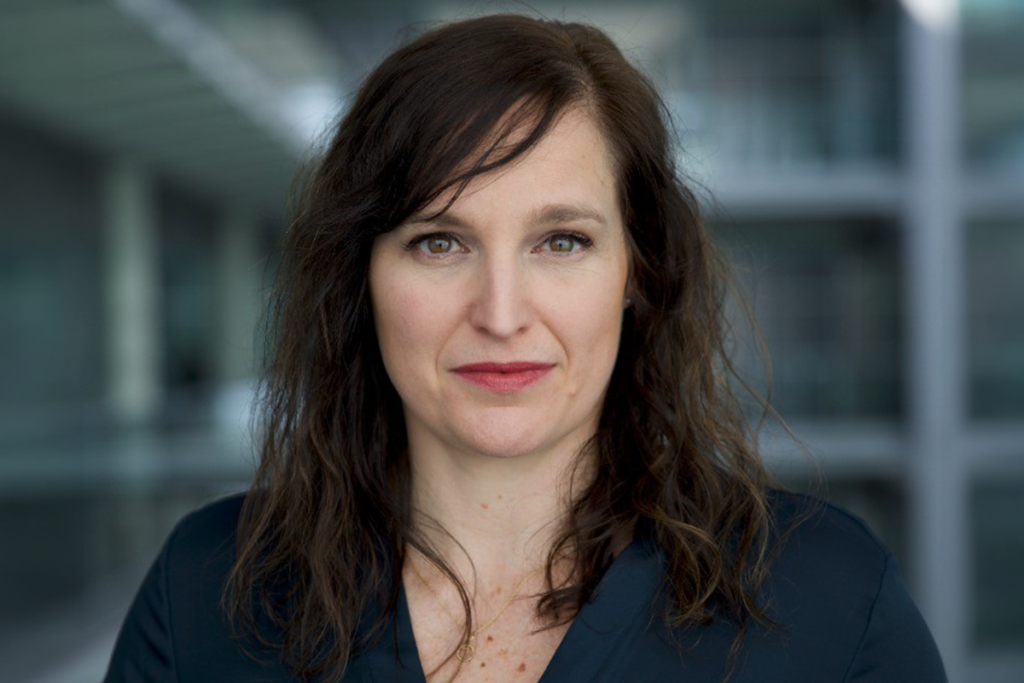
Jen Carswell (BHum 2005)
Two days after graduating from Carleton’s College of the Humanities, Jen Carswell hot-footed it to the airport with a ticket to Europe and has lived abroad ever since. After several years in Paris, with short stopovers in Morocco and Mumbai, she now calls London home and spends most of her days in the BBC newsroom where she works as a senior broadcast journalist and digital video producer with 15 years of experience in the industry.
“My love of stories, as a window into humanity and what makes us truly human, took root during the Bachelor of Humanities program and has blossomed ever since. On a regular basis, I go back to humanities basics by examining original sources and documents. I use the critical thinking skills that I developed and crafted at the College of the Humanities to decipher the information that bombards me daily and turn it into something that other people can understand. I work in the world of media, which can be a never-ending news factory. But having the ability to step back and think – actually think – is something that has not only saved me on many occasions but has allowed me to find the joy in all the chaos.”
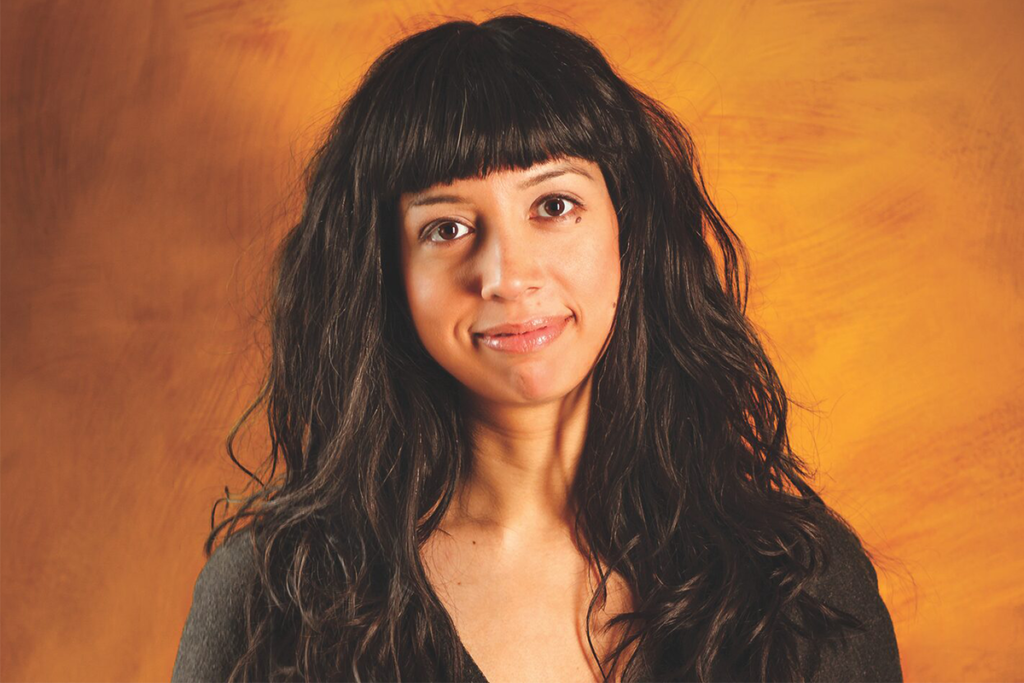
Saleema Nawaz (BHum 2003)
Saleema Nawaz followed up her Bachelor of Humanities at Carleton with a Master of Arts in English from the University of Manitoba. Today, she is an award-winning author of novels, short stories, non-fiction essays and reviews. Her most recent novel, Songs for the End of the World, was an instant national bestseller as well as a Globe Best Book, and her previous novel, Bone and Bread, was a Canada Reads finalist and won the Quebec Writers’ Federation Paragraphe Hugh MacLennan Prize for Fiction. In addition to writing for video games and publishing a newspaper column in the Montreal Gazette, Saleema has taught creative writing at McGill University, the Banff Centre, Simon Fraser University, and Bishop’s University. She is currently working as a TV writer for Murdoch Mysteries — definitely the most fun job she’s ever had – while penning two musicals on the side.
“As a novelist, it is heartening to remember that words matter, and that there are places like the College of the Humanities where books and deep thinking are still taught and valued. It was a very special and unique university experience. I feel very lucky to have had that dedicated time to be immersed in that curriculum and engaged so deeply in those texts and ideas. One moment that stayed with me was the feedback I received on an Aristotle essay in which the professor said my analysis basically lined up with contemporary criticism on the topic — in other words, even though we weren’t allowed to consult secondary sources, I’d arrived at the same conclusion as much more experienced scholars. Moments like that gave me an unshakeable confidence in my own point of view when it comes to engaging deeply with primary texts.”
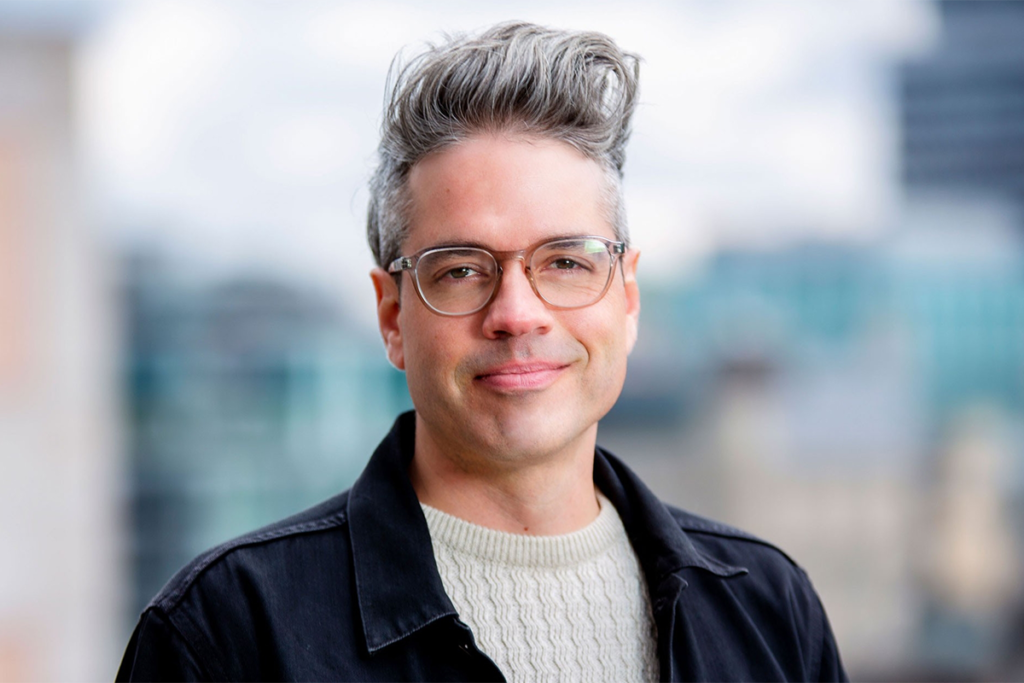
Jean-Noé Landry (BHum 2001)
Jean-Noé Landry is a leader in data governance, digital transformation, systems mediation, and multi-stakeholder collaboration. He currently leads the development of the Federated Data Hub at the Institut de la résilience et de l’innovation urbaine, a public-interest digital infrastructure supporting community-led resilience, digital sovereignty, and responsible data collaboration. He previously served as Executive Director of Open North, co-founded Montréal Ouvert and Québec Ouvert, and was selected as an Obama Scholar at Columbia University in 2021–22. In addition to his Bachelor of Humanities degree from Carleton University, he has a Master of Philosophy in Peace and Conflict Studies from Trinity College Dublin.
“The College of the Humanities gave me a way of thinking from first principles. It taught me to read carefully, question boldly, listen seriously, and situate ideas within long historical arcs. It also taught me that institutions are not merely technical arrangements. They are built from values, narratives, conflicts, compromises, and shared understandings of what human beings owe to one another. The Humanities taught me that ideas matter because they shape the worlds we build. My work since leaving Carleton has been, in one way or another, an attempt to help build institutions, technologies, and forms of collaboration that remain worthy of human dignity, democratic life, and the common good.”
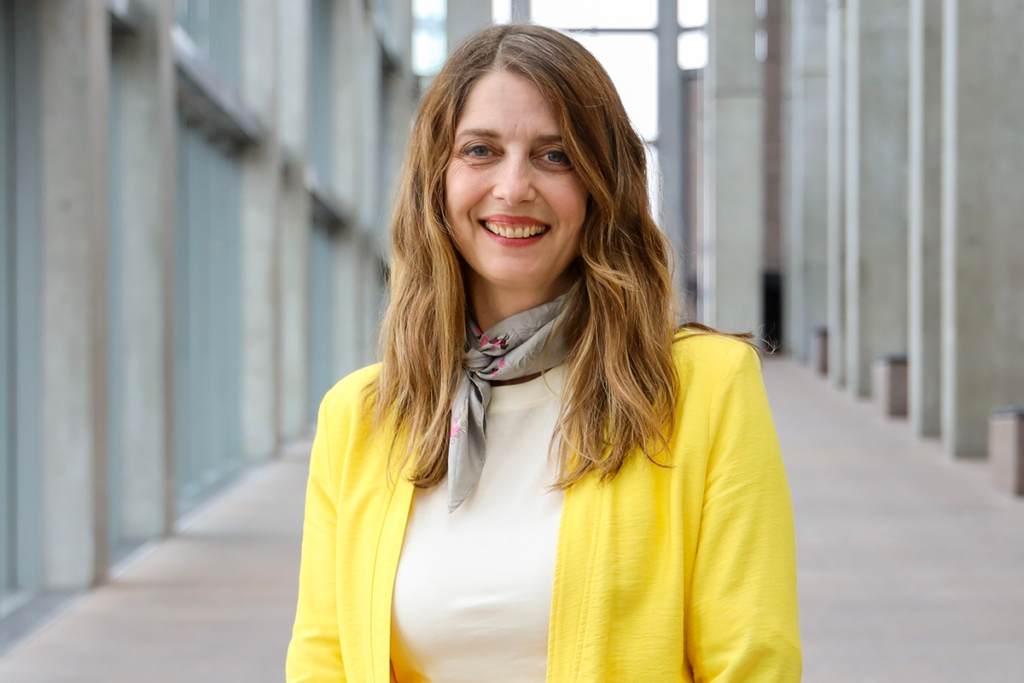
Catherine Sinclair (BHum 2001)
For Catherine Sinclair, an arts education at Carleton became the foundation for a career that would take her from local galleries to one of the country’s leading cultural institutions. After completing her Bachelor of Humanities degree, Sinclair travelled and taught English in Japan before returning to Carleton to pursue a Master of Arts in Art History. Today, as Director of Exhibitions, Conservation and Production at the National Gallery of Canada, she helps oversee the strategic planning and delivery of major exhibitions that reach audiences nationwide. Catherine previously served as Deputy Director, Chief Curator at the Ottawa Art Gallery (OAG), where her curatorial work included over 50 exhibitions.
“I first heard about the Bachelor of Humanities when I was at Dawson College CEGEP in Montreal taking a Liberal Arts DEC (Diplôme d’Études Collégiales) in 1997. I soon beelined it for Ottawa, where I began at the College of the Humanities and embarked on my journey of obtaining a strong foundation in a solid, classical education, and making what are now lifelong friends. My humanities education certainly contributed to where I am today. The degree was instrumental in building my foundation in knowing how to research, think critically, write, articulate, present and argue a point.”