New Seed Library Takes Root at Carleton

Last summer, Environmental Studies student Joey Slinger had the seed of a great idea. All he needed was the support to help it grow.
Joey was one of five undergraduate students across the Faculty of Arts and Social Sciences selected for a 2025 Carleton University Research Opportunity Program (CUROP) internship. CUROP interns receive a $10,000 stipend to help cover costs as they design and complete their own research project over the summer term.
Thanks to this support, and with Prof. Patricia Ballamingie acting as his project supervisor, Joey spent the summer researching how to design and launch an academic seed library at Carleton.
“I got into farming shortly after starting my degree at Carleton and was looking into seed saving and sharing,” Joey explains. “I quickly found out about seed libraries and was impressed by how they bolstered both interhuman relations and human-ecosystem relations. That’s because when you participate in plant breeding, you’re not only caring for the plant, but also its progeny and the humans, animals, fungi, and bacteria that rely on and interact with that plant.”
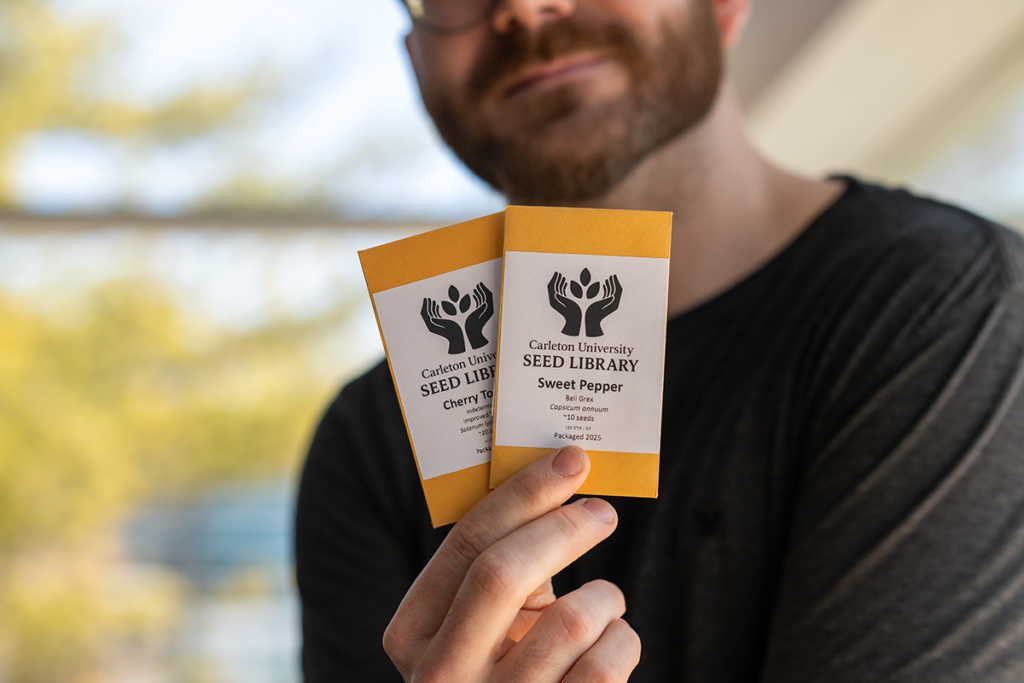
What is a seed library?
A seed library “lends out” packets of seeds to patrons, who grow the plants and return the seeds they produce to replenish the library, for future patrons to use in their own gardens. The goal of seed-sharing initiatives like this is to empower gardeners of all levels to grow their own food, strengthening local food resilience as grocery costs rise, while also helping to preserve biodiversity in our region.
“It’s an opportunity for you to explore gardening and community building and interact with soil on a very grounding level,” says Joey.
For his project, Joey interviewed seed librarians working at Canadian academic institutions, as well as people who have developed and manage thriving seed libraries in their communities. He also reached out to local seed farmers to learn from their experiences and invite them to partner with him.
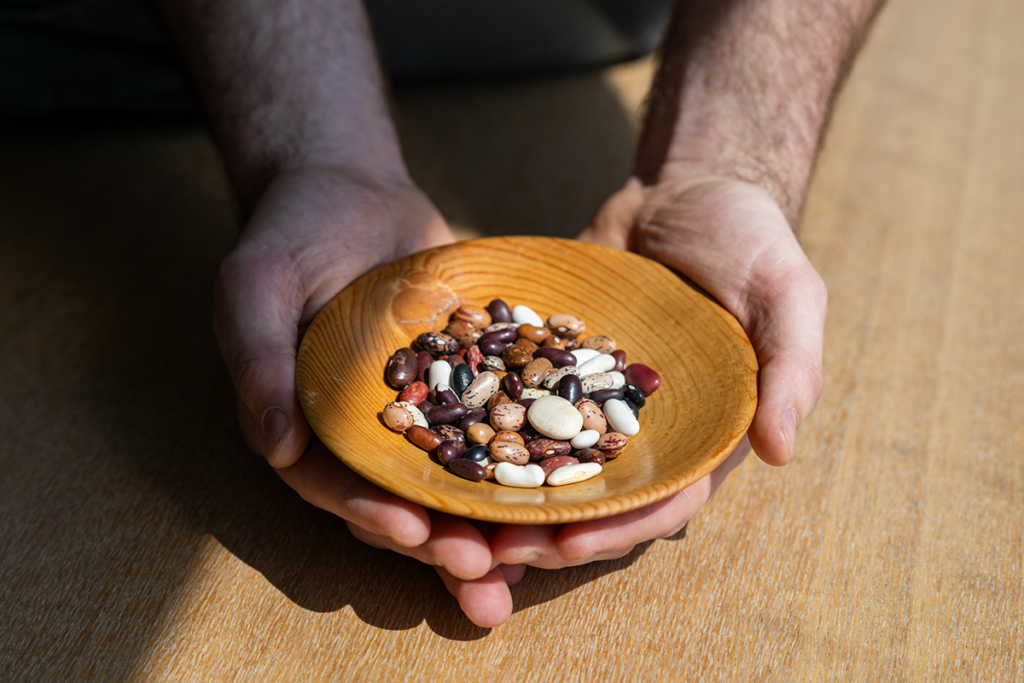
How it works
Fast forward through winter and as the first snowdrops and crocuses are bravely pushing their way up through the dirt, the Carleton University Seed Library is now officially up and running at the MacOdrum library.
Carleton community members are encouraged to browse the seed collection, conveniently stored and labelled in a vintage card catalogue near the Library Services Desk on the second floor, and can take home up to five packets of flower, herb, grain, or vegetable seeds. Each packet also includes growing instructions, so no prior gardening experience or green thumb are required.
“My biggest goal is that people plant a seed and interact consciously with this miraculous environment that we rely on for everything in life.”
When asked about his preferred seed varieties to grow, Joey says it’s hard to pick favourites.
“In terms of presentation, it would have to be the colourful grexes (i.e. mixes) of corn, as well as beans, which have such a beautiful display of phenotypic diversity. My favourite varieties for eating would have to be sweet fruits like ground cherry, watermelon, and cantaloupe. And in terms of impressive growers, you really can’t go wrong with the squash, corn, and sunflower grexes.”
The Seed Library is available on the second floor (i.e. ground level) of the MacOdrum Library, near the Library Services Desk, from now until Friday, July 3.
Curious to learn more about the program? Send your questions to carletonuseedlibrary@gmail.com.