Rereading Women’s Liberation
By Ayla Sully
About Ayla
Ayla Sully is a fourth-year English student who loves writing, reading Brontë and Dostoevsky, studying history, and engaging with our cultural moment. She encourages all Arts and Social Sciences students to interrogate, reflect and think critically on the debates happening around them — if it’s interesting, talk about it!
How can we understand history in relation to our current moment?
The work of students in Prof. Jennifer Henderson’s graduate English course Rereading Women’s Liberation does just this. Drawing on archival materials and media representations from the women’s liberation movement of the 1970s alongside recent scholarship, they work to untangle the complex legacies of the period.
Although the subject of study occurred over 50 years prior to 2026, there is much we can carry forward into the present. Henderson notes that “the course is very much about the feeling of the period’s discourses and styles of activism—very energetic and wildly ambitious about building collectivity. The course is about immersion in that feeling, reflection on what seems distant about it and maybe at the same time, what could be a resource, something to be drawn upon in our moment of rising right-wing politics.”
As part of the course, students were asked to interact with archival material at the Women’s Archives collections at the University of Ottawa Library. They were then instructed to research the broader significance of the materials, with the end result taking the form of a blog post. Three of these posts were published by uOttawa, authored by students Abby Denne, Mary Gunn, and Rosemary Kasiobi Nwadike.
Abby Denne
Abby Denne, a fourth-year undergraduate student in English with a concentration in Creative Writing, focused her research on the organization Gays and Lesbians against the Right Everywhere (GLARE) and their intersectional approach to activism in her blog post, “Our Enemy as well!”: The Coalescence of Gay Liberation, Anti-Racism, and Feminism in 1980s Toronto. Established in the early 1980s, this group worked to attack oppression across all fronts, before the term ‘intersectional’ was coined.
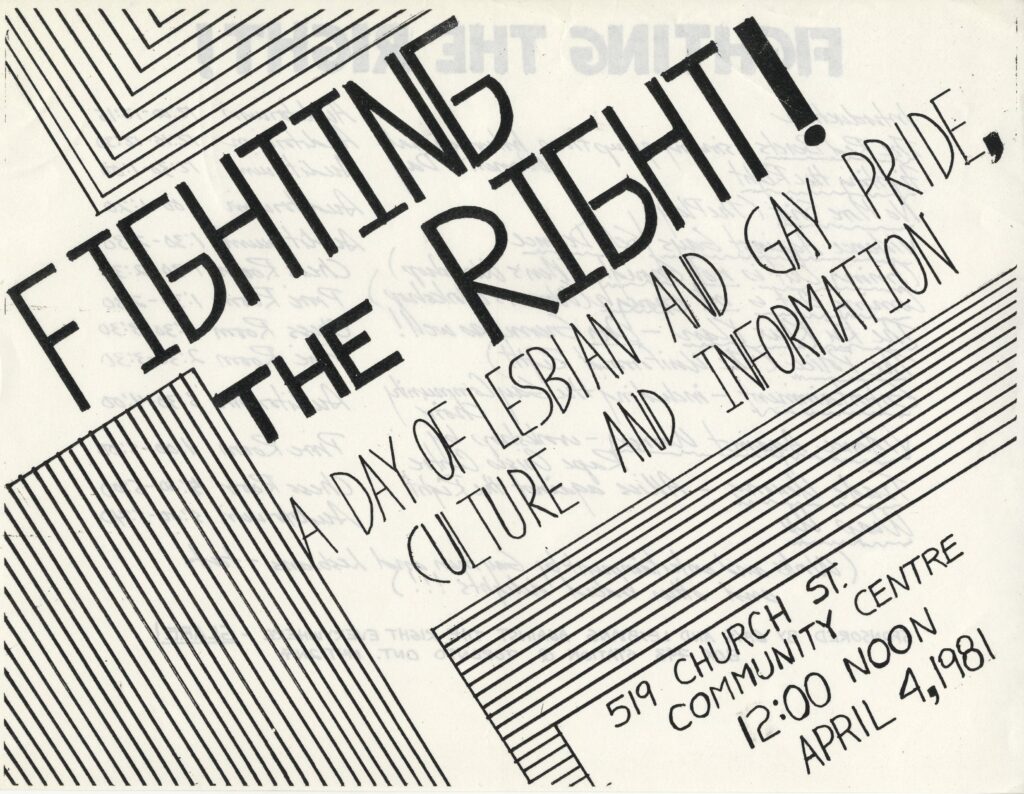
“Gay men were learning about the inequalities faced by women; women were learning to appreciate struggles within the queer community in return; and both were adopting anti-racist practices to address the issues facing racialized women and queer people.”
– Abby Denne
For Denne, the relevance of this history is immediate. She points to a “sense of hopelessness” attached to modern activism, which is largely staged online. GLARE offers an opposing model, grounded in physical space and sustained collaboration, acting as a potential alternative to many modern approaches to activism. This is what inspired Denne:
“What drew me to GLARE was its ability to gather multiple gendered, racial and sexual identity categories into one physical space with the interest of creating a united community educated on a plethora of systemic issues. Through these workshops they were able to build a level of empathy which the internet can often numb us to. Spotlighting GLARE as a concrete example of the type of lasting change political activists can create by investing in a third space and intersectional politics is a great way to help combat some of the hopelessness felt by marginalized groups today.”
Mary Gunn
Mary Gunn, an MA student in History, focuses on Indigenous women’s organizing in her blog post, Indigenous Women’s Activism in Alberta: The First Provincial Conference, 1968. She examines how Indigenous women mobilized in the late 1960s to address issues such as health, rights and governance. Her work highlights the first Alberta Native Women’s Conference and the importance of this and associated events, including the formation of Voice of Alberta’s Native Women’s Society (VANWS), which remains active today.
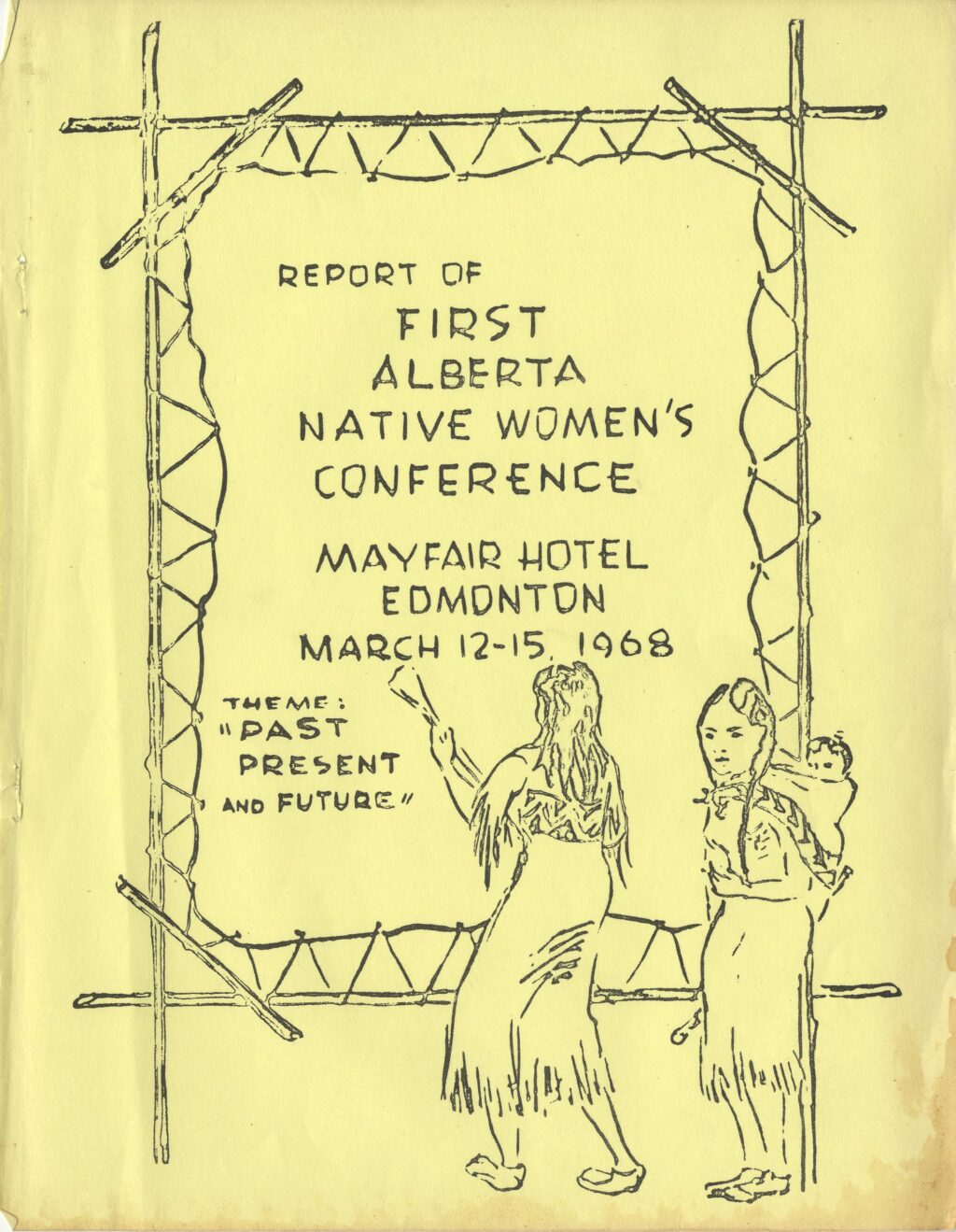
“Bringing women together in provincial conferences in the late 1960s signaled Indigenous women’s increasing emphasis on unity and the necessity for political action. Such conferences were also vital in the formation of provincial political organizations and eventually led to the creation of a national organization, The Native Women’s Association of Canada (NWAC), in 1974.”
– Mary Gunn
Like, Denne, Gunn situates this work in the present:
“As in the past, Indigenous women today are organized and speaking out against the ongoing injustice they face from the Canadian colonial state and society. The genocide of Missing and Murdered Indigenous Women and Girls is but one example. History can provide important insights as to how we choose to act and present today.”
Rosemary Kasiobi Nwadike
Rosemary Kasiobi Nwadike, a doctoral student in English with a collaborative specialization in African Studies, extends this line of thinking in her blog post, “Give us time to grow and WE WILL”: Grassroots Development Work by Immigrant Women, for Immigrant Women. She spotlights Women Working with Immigrant Women (WWIW), a group founded in 1974 who worked to address the needs of immigrant women, and to build a community founded on shared experience and advocacy.
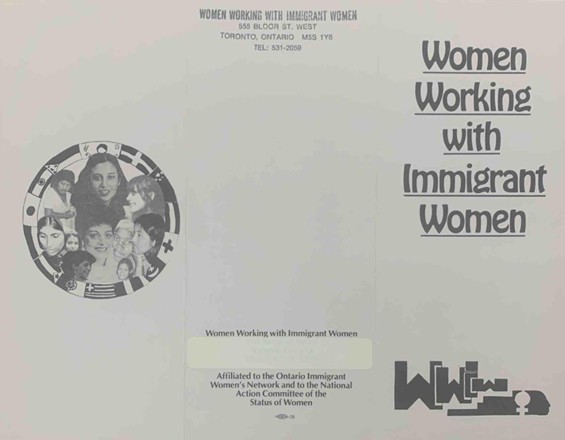
“Through its Information Kit, the organization published stories written by and about immigrant women, addressing themes such as employment, family life, and mental health. This platform enabled immigrant women to articulate their own experiences, directly contributing to broader conversations within the women’s liberation movement. […] It argued for immigrant women to become primary producers of knowledge about their own lives, educating both the women’s movement and wider society about their circumstances, concerns, and demands for change.”
– Rosemary Kasiobi Nwadike
Nwadike also reorients how we understand the archive itself. History is not only something we inherit; it is something we are able to shape. She explains how our current narratives of the Women’s Movement often obscure and invisibilize immigrant women by prioritizing the narratives of white, middle-class women.
“By researching and highlighting how immigrant women’s organizations and organizing contributed to grassroots development work for other immigrant and socially, politically and economically marginalized women, I recenter their impact in the global feminist discourse. If everyone knows that women’s movements were part of North American history, they should also know that immigrant women played pivotal roles in these movements.”
Crucial to this archival assignment was Meghan Tibbits-Lamirande, an archivist at uOttawa and a PhD graduate of Carleton’s English Language and Literature program. She aided Henderson in the design of the assignment, assisted students in finding material, and was responsible for the curating work done in advance of the class’s visit.
She builds upon and reinforces the students’ arguments in asserting that history plays a critical role in understanding present-day issues and concerns. One such example Tibbits-Lamirande provides is a feminist warning which was given in opposition to the free trade agreement between Canada and the United States: “These feminists warned that free trade agreements between Canada and the United States would render us increasingly dependent on the U.S. for our economic stability. Some feminists even warned that NAFTA could turn Canada into ‘the 51st state.’”
Additionally, in an age increasingly shaped by artificial intelligence, the archives are incredibly valuable, as they cannot be altered, existing in a material state. “Put simply, if I hold an archival photograph in my hands, I can verify that it does in fact exist. For this reason, as the scope of AI expands and its technicality improves, I think it will become increasingly important to train students around archival research and archival literacy,” says Tibbits-Lamirande.
Tibbits-Lamirande points out that, not only do we benefit from history, but the archives benefit from scholarship such as Denne’s, Gunn’s and Nwadike’s. This relationship is truly reciprocal.
“When I work closely with students, I often learn something new about our material. Just look at the variety of topics covered by Prof. Henderson’s students — Abby’s post about gay and lesbian coalitions against right-wing violence, Mary’s post about Indigenous women’s organizing in Alberta, and Rosemary’s post about Women Working with Immigrant Women. They’re all so different, but each one is a beautiful and carefully written investigation into an untold or rarely told story of feminist activism in Canada. Not only did the students benefit from training in archival research and editing for publication, but the archive also benefitted from receiving high quality student-led content for our website.”